Nidal Hasan execution livestream
The Pentagon confirmed Thursday that the U.S. military will livestream the firing-squad execution of Nidal Hasan, the former Army psychiatrist who killed 13 people in the 2009 Fort Hood massacre — a broadcast that would make it the first public execution in the United States since the 1930s and, according to experts cited by Reuters, the first known livestream of a lawful execution by any government in the modern era.
The underlying sentence and the decision to broadcast it are separate matters. President Donald Trump has approved the execution required under military law, and the Army has set a date. The livestream, by contrast, opens a new dispute over whether the government may transform an execution conducted inside a military installation into a spectacle available to anyone with a screen.
What the Pentagon announced
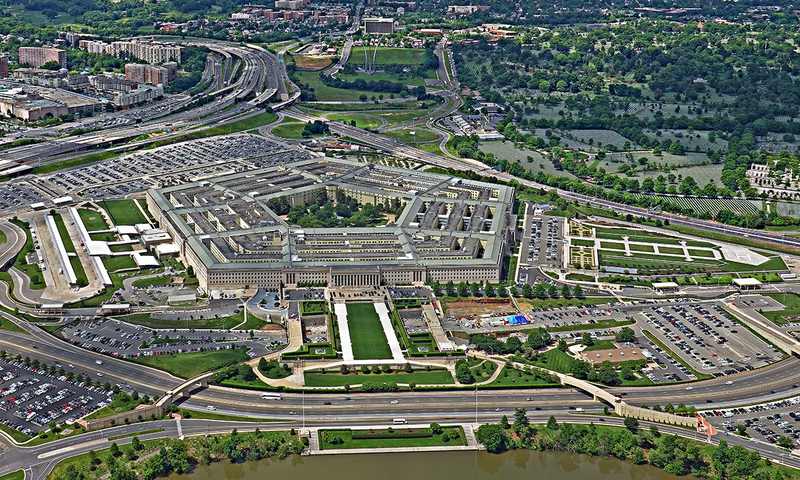
Defense Secretary Pete Hegseth first made the public-broadcast promise in interviews Wednesday aboard the USS Abraham Lincoln, speaking to Real America's Voice News and to the Human Events Daily program with Jack Posobiec. “We'll make sure that people are able to watch it, that it's public,” he said, presenting visibility as part of the intended deterrent effect.
A Pentagon official then gave Reuters the crucial confirmation on Thursday: “It will be livestreamed. Details will follow.” Hegseth separately affirmed the plan in an X post. Those are the confirmed facts as of Friday; the government has not yet identified the platform, camera rules, delay, audience safeguards or whether any portion will be withheld.
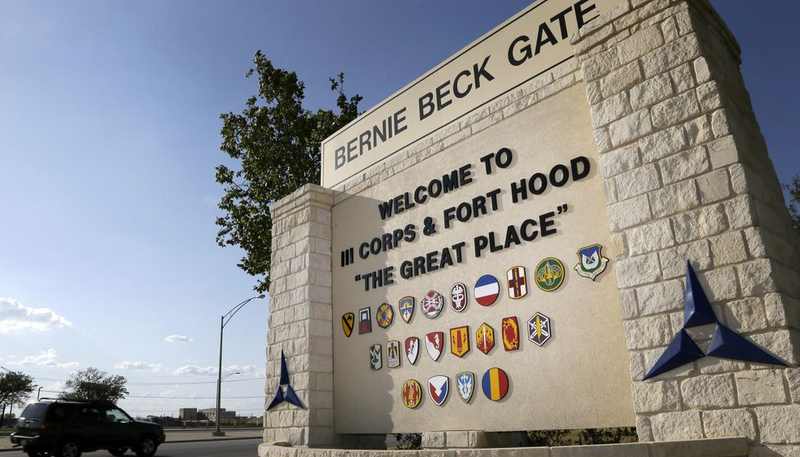
Acting Secretary of the Army Adam Telle set the execution for December 3 at 1 p.m. local time at Fort Hood, Texas. December 3, 2026, falls on a Thursday — the same weekday as the November 5, 2009 shooting — and Hegseth said the hour was chosen to echo the time of the attack. He described soldiers carrying out the firing squad and, when asked about Hasan's final requests, replied: “Don't care. We'll see him on December 3rd.”
President Trump approved the execution on Hegseth's recommendation, Pentagon spokesperson Sean Parnell said Monday. Under military law, a president must approve a military death sentence before it can be carried out. The execution would be the military's first by firing squad since Army Pvt. Eddie Slovik was shot for desertion in France in 1945; the last U.S. military execution by any method occurred in 1961.
Why this matters
The execution itself would be historically rare. The broadcast would be something else entirely. No country is known to televise or livestream a lawful execution, according to reporting by Reuters and USA Today, and American courts have repeatedly rejected media efforts to place cameras in execution chambers. The administration is proposing not merely to relax those limits but to invert them: the state, rather than the press, would operate the feed.
The United Nations Office of the High Commissioner for Human Rights said Friday that livestreaming is “tantamount to a public execution” and would breach the absolute prohibition of torture. The office pointed to the same objection it has made about public executions in Afghanistan and Iran. Amnesty International recorded at least 17 public executions in 2025 — six in Afghanistan and 11 in Iran — a comparison that critics say places the United States beside governments it normally condemns.
Supporters argue that public access makes punishment transparent and reinforces consequences for an attack on soldiers. Critics answer that transparency is not the same as mass distribution, especially when replay, clipping and algorithmic circulation can outlive the event. The last legally sanctioned public execution in the United States was the 1936 hanging of Rainey Bethea in Kentucky before thousands of spectators. A livestream would revive that discarded civic ritual with a potential audience measured not in city blocks but continents.
How we got here
On November 5, 2009, Hasan, then an Army major and psychiatrist, opened fire with a laser-sighted handgun at Fort Hood's Soldier Readiness Processing Center, where service members were preparing to deploy. Thirteen people were killed and 32 were wounded in one of the deadliest attacks ever at a U.S. military installation.
In July 2013, a panel of 13 officers convicted Hasan of 13 counts of premeditated murder and 32 counts of attempted murder. He acknowledged carrying out the attack and told the court-martial that he considered the soldiers headed for what he called an “illegal war.” The victims and their families then entered a long wait as mandatory appeals and military review moved through a system that had not conducted an execution since 1961.
The Trump administration revived the case as part of a broader push to resume capital punishment. Hegseth championed a firing squad as a practical alternative to lethal injection, an argument sharpened by the disputed, reportedly botched execution of Tennessee prisoner Christa Pike last week. Our earlier report explains how Trump approved Hasan's firing-squad sentence and why December 3 was selected; a separate account examines the questions raised by Pike's execution.
The administration's deliberate staging — same base, same weekday, approximately the same hour — is not an administrative detail. It is political communication: punishment designed to mirror the crime's setting and timing. Supporters call that moral clarity and deterrence. Critics call it theater built around a man's death. Both descriptions recognize the same feature: the symbolism is intentional.
The legal minefield
Courts have consistently blocked attempts by news organizations to televise U.S. executions. That history does not automatically decide this case because the executive branch, not an outside media outlet, would control the camera. But it leaves the Pentagon without a direct judicial precedent supporting what it proposes.
Dignity, motive and military authority
Legal scholars including Villanova professor Brenner Fissell of the National Institute of Military Justice and Elisabeth Semel of UC Berkeley's Death Penalty Clinic have raised questions about prisoner dignity, government motive and public policy. Fissell told The Times that firing squads carry a perceived “masculinity and military-ness,” language he connected to Hegseth's emphasis on a “lethality culture.” That observation goes to motive: whether the method and broadcast serve a lawful administrative purpose or a political performance.
What Hasan could challenge
Hasan's military defense counsel could challenge the method, the broadcast, or both. The legal routes are narrow after years of appeals, but the livestream announcement introduces a new government action that previous courts did not review. Litigation could focus on constitutional protections against cruel punishment, privacy and dignity interests, the military's own execution regulations, or whether public transmission creates a separate injury from the sentence itself.
None of those arguments guarantees a stay. Nor does presidential approval guarantee the broadcast will survive. The most accurate description is uncertain legal terrain: a lawfully approved sentence attached to a communications plan without an American precedent.

Who wins, who loses
The administration
For the White House and Pentagon leadership, a public execution delivers a vivid deterrence message and a stark demonstration of punishment for an attack on U.S. troops. It also creates a made-for-attention event weeks after the midterm elections, one likely to dominate the political conversation whether the feed goes forward or a court blocks it. That is analysis, not a stated government motive.
Victims' families
Some relatives have waited 17 years to see the sentence carried out and may view public visibility as overdue recognition of the crime's scale. Others could see the broadcast as an unwanted reopening of trauma or a shift in attention from those killed and wounded to the mechanics of Hasan's death. Families are not a single constituency, and their views should not be treated as interchangeable.
Critics and the military justice system
Civil-liberties groups, international allies and UN officials say the plan could damage American standing, offer propaganda to adversaries and cross a line even many countries that retain capital punishment do not cross. The military justice system faces a different cost: a precedent future presidents of either party could invoke in cases with very different facts. Rules written around an infamous defendant rarely remain confined to that defendant.
What the numbers say
13 dead and 32 wounded: the human toll of the 2009 attack. Those figures are mirrored in the 2013 verdict — 13 counts of premeditated murder and 32 counts of attempted murder — and explain why this case has carried such weight inside the Army for nearly two decades.
81 years: the interval from the military's last firing-squad execution in 1945 to the scheduled execution in 2026. Roughly 90 years: the distance from the 1936 Kentucky hanging generally identified as America's last sanctioned public execution.
17 public executions worldwide in 2025: Amnesty International's recorded total, including 11 in Iran and six in Afghanistan. The number is necessarily a minimum because executions in closed systems can go unreported, but it shows how unusual public punishment has become — and why a U.S. livestream would attract scrutiny far beyond the death-penalty debate at home.
What happens next
“Details will follow,” the Pentagon said. Those details will determine whether the proposal resembles a restricted pool feed, a delayed government video, or an unrestricted public stream. Camera placement, delay length, moderation, age gates, archiving and whether the moment of death is shown are not technical footnotes; they define the legal and ethical character of the broadcast.
Lawsuits are likely before December 3, potentially from Hasan's counsel and civil-liberties organizations. Media groups occupy a more complicated position: they have historically sued for camera access, yet a government-produced stream raises different questions about editorial independence and state control. Congress could also intervene through oversight or legislation, although the timetable is short.
The decisive test will be whether the livestream survives contact with a judiciary that has blocked every previous effort to televise an American execution. Until a court rules or the Pentagon publishes its protocol, the execution date is confirmed; the broadcast's final form is not.
Sources and reporting notes
- CNN, October 8, 2026 — Pentagon confirmation and Hegseth's public-broadcast pledge.
- Reuters via LA Post, October 8, 2026 — the livestream confirmation, historical comparisons and expert analysis.
- The Times, October 9, 2026 — the UN human-rights response and legal commentary.
- BBC News, republished by Wave News Today, October 8, 2026 — Pentagon and White House confirmation.
- New York Post / Associated Press, October 8, 2026 — date, time and remarks surrounding the announcement.
Confirmed facts are attributed to the Pentagon, Army and named officials. Legal outcomes, political effects and institutional consequences are analysis. The government has not yet released the livestream protocol.