Published October 1, 2026 at 11:30 p.m. P2026-10-01T23:30:00-07:00
Trump $500 checks who qualifies which states
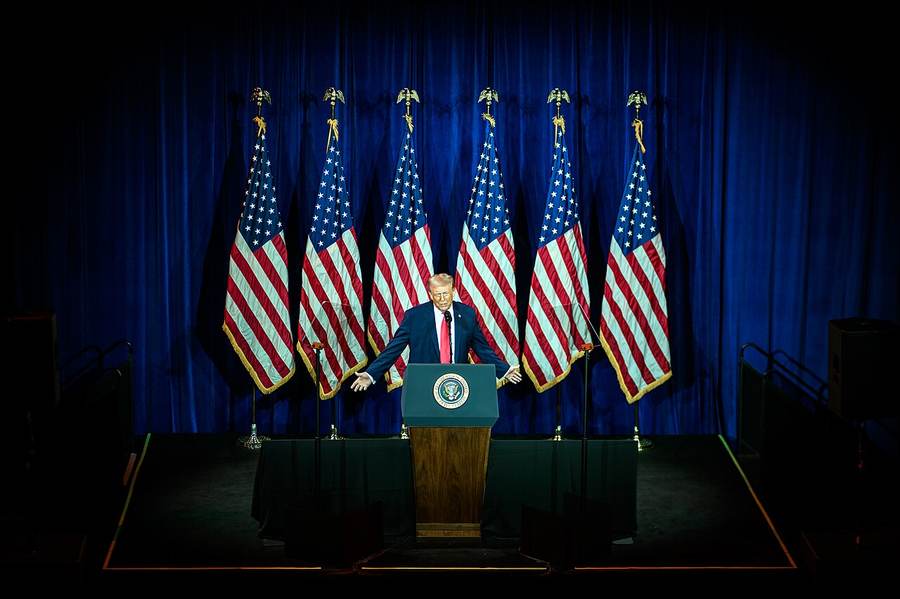
WASHINGTON — Two of Donald Trump's most talked-about check promises are colliding in voters' mailboxes and group chats this week — and they could not be more different. The $500 checks are real money, in the mail now, landing automatically for more than 950,000 people across 30 states. The $5,000 dividend is a campaign promise that does not exist yet, would cost an estimated $1.2 trillion, and can only happen if Republicans hold the House and Senate in the November 3 midterms and Congress authorizes it.
Confusion is the point of vulnerability. With both numbers circulating at once — one on Treasury envelopes, one on rally stages — households are asking the same questions: Do I qualify? Which states are included? When does mine arrive? And is the $5,000 check coming too? This is the side-by-side breakdown nobody has published: what each payment is, who gets it, where the money comes from, and what has to happen before a dollar of the bigger one moves.
The $500 checks: what's actually happening
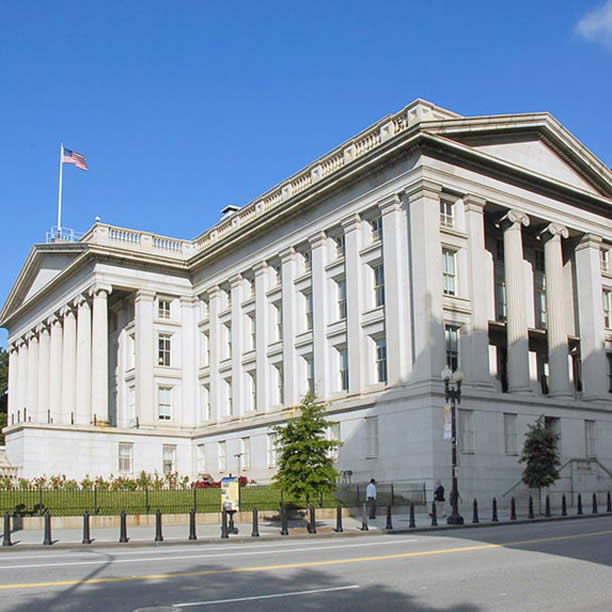
The $500 payments are Obamacare rebate checks, and they have moved from announcement to delivery. The Treasury Department began mailing them to more than 950,000 people in 30 HealthCare.gov states, drawn from roughly $500 million in surplus Affordable Care Act user fees — money collected from insurers and consumers that was never spent. Each qualifying enrollee gets about $500, and the payment is automatic: no application, no claim form, no website to register on. If you qualify, the check or direct deposit simply arrives with a letter explaining what it is.
Who qualifies comes down to where you bought coverage. The checks go to people enrolled through HealthCare.gov in the 30 states that use the federal marketplace, and the rebates trace to overcharges on fees baked into premiums. Two states dominate the rolls: Texas, with roughly 139,000 recipients, and Florida, with about 127,900 — together nearly 30% of all payments. A Reuters analysis found that 71% of the funds are flowing to 13 battleground states, a distribution the White House calls coincidence and Democrats call election-season targeting, with checks landing 33 days before the midterms.
The timing is not accidental in a second sense. The payments arrive just as enhanced ACA premium subsidies have expired, leaving many of the same households facing sharply higher 2026 premiums. For recipients, the $500 functions as a partial offset — real money against a real bill increase, delivered without paperwork.
The $5,000 dividend: what was promised
The $5,000 dividend is an entirely different animal: a conditional campaign promise, not a program. Trump has pitched it as a "tariff dividend" — a share of tariff revenue returned to Americans — but only if Republicans win Congress in November. The estimated price tag is about $1.2 trillion, which makes it one of the largest single spending promises of the cycle.
Three hard conditions stand between the promise and your mailbox. First, Republicans must hold the House and keep or grow their Senate position on November 3; a Democratic chamber kills it outright. Second, Congress must pass authorizing legislation and appropriate the money — a president cannot cut $1.2 trillion in checks by executive order. Third, the funding math has to work: analysts note tariff revenue covers less than 10% of the estimated cost, which means the dividend would require either massive new borrowing or cuts elsewhere. None of those steps has happened. As of today, the $5,000 dividend exists only as a pledge.
Side by side: $500 vs $5,000
| $500 checks | $5,000 dividend | |
|---|---|---|
| What it is | Refund of surplus ACA user fees | Proposed "tariff dividend" payment |
| Status | In the mail now | Does not exist yet |
| Who qualifies | 950,000+ HealthCare.gov enrollees in 30 states | Undefined — would need Congress to set rules |
| Amount | About $500 per qualifying enrollee | $5,000 per recipient (as pitched) |
| Total cost | ~$500 million | ~$1.2 trillion (estimated) |
| Funding source | Surplus ACA user fees already collected | Tariff revenue (covers <10%) + borrowing or cuts |
| Action needed | None — automatic | None possible — no program to apply to |
| Conditions | None | GOP must win Congress; bill must pass |
| Likelihood | Certain — delivery underway | Conditional on the midterms and legislation |
Which states get the $500 checks
The 30 states are the ones that use the federal HealthCare.gov marketplace rather than running their own exchange. Texas (~139,000 recipients) and Florida (127,900) lead by far, reflecting their large ACA enrollments. The battleground tilt is the political story: 13 contested states absorb 71% of payouts, which means the checks are landing hardest exactly where the House majority will be decided. If you live in a state with its own exchange — California, New York and others — you are not in this round, because the surplus fees at issue were collected through the federal platform.
Scam warning: don't get played
Whenever the government mails money, scammers follow the mail truck. Fraud watchdogs are already warning about fake texts, calls and emails exploiting the $500 check letters — messages claiming you must "verify" banking details, pay a processing fee, or click a link to release your payment. The rules are simple: the $500 checks require no application and no fee. The Treasury will not call, text or email asking for your Social Security number or bank login to deliver a check. Anyone who does is running a con. If you get a suspicious message, ignore it and check your status only through HealthCare.gov or the IRS — never through a link in a text.
The same skepticism applies to the $5,000 dividend. Because no program exists, anyone offering to "pre-register" you for the dividend is scamming you. There is no waitlist, no early-bird signup, and no official who can put your name on a list that does not exist.
Why this matters
The two checks tell opposite stories about how this White House does economics — and voters will experience both before November 3. The $500 checks are the rare policy that is simultaneously technocratic and tangible: a fee refund, calculated and mailed, landing in the accounts of people facing higher premiums. Whether or not the battleground skew was intentional, the electoral effect is identical to a targeted rebate in the final month of a campaign.
The $5,000 dividend is the mirror image: a promise scaled for rally stages, priced at $1.2 trillion, whose funding covers less than a tenth of the bill. Its real function may be turnout — giving supporters a reason to believe the midterms have a direct cash payoff. The risk for the White House is the gap between the two: voters who cash a real $500 check in October and then watch a $5,000 promise evaporate in November will have learned exactly how much each kind of promise was worth.
What happens next
Watch your mailbox and your bank account: Treasury says the $500 checks are mailing now, and recipients should compare any accompanying notice against their 2026 HealthCare.gov coverage record. If a check does not arrive and you believe you qualify, the paper trail runs through your marketplace account — not through any phone number in an unsolicited text. For the $5,000 dividend, the only date that matters is November 3: if Republicans hold Congress, expect authorizing legislation to be drafted within weeks; if they don't, the promise dies quietly. Either way, no one should pay anyone anything, click anything, or "register" anywhere in the meantime.
Sources
- CNN — reporting on the $500 check mailings, October 1, 2026
- Reuters — analysis of check distribution and battleground share, October 1, 2026
- Investopedia — explainer on the proposed tariff dividend
- Motley Fool — analysis of dividend cost estimates
- govtschemes.org — program details on federal payment schemes