Trump ACA refund checks
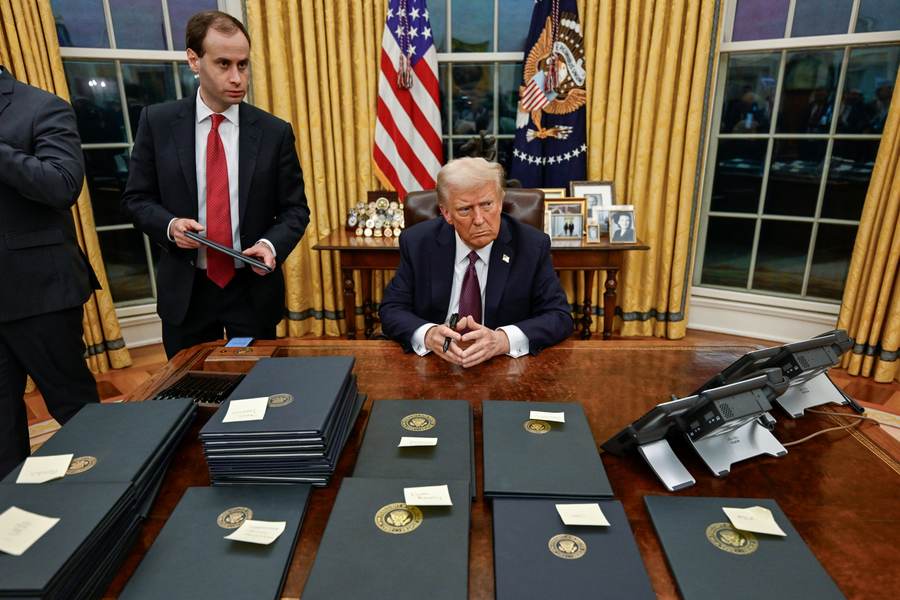
WASHINGTON — President Donald Trump on Wednesday begins sending $500 refund checks to nearly 1 million Americans his administration says were overcharged through the Affordable Care Act’s federal exchange, with Treasury Department checks and letters signed by Trump going out to more than 950,000 people across 30 states, according to an administration official cited by USA TODAY. The checks are expected to start arriving in mailboxes in October.
The letter accompanying each check is unsparing about who the White House blames. “For years, the Biden administration overcharged you to fund the operation of HealthCare.gov,” Trump writes in the letter, a copy of which was viewed by USA TODAY. “That money belongs to hard-working Americans, not the Government, and now I’m returning it to you!” The letter adds: “You have paid into this flawed System, and now you are finally getting something back.”
Who gets the $500 — and who doesn’t
Eligibility is narrow. According to the White House fact sheet “President Donald J. Trump Announces the Working Families Obamacare Refunds,” the refunds go to people who paid the full cost of their 2026 coverage through the federal HealthCare.gov marketplace without receiving premium tax credits or other federal premium assistance — the enrollees who, in the administration’s telling, absorbed the user-fee costs directly. The White House says most recipients earn about 400 percent of the federal poverty line — roughly $64,000 for a single person or $132,000 for a family of four — though the group also includes some people earning between 100 and 400 percent of the poverty line who did not receive assistance.
Geography is the other filter. Only the 30 states that rely on the federal exchange — Alabama, Alaska, Arizona, Arkansas, Delaware, Florida, Hawaii, Indiana, Iowa, Kansas, Louisiana, Michigan, Mississippi, Missouri, Montana, Nebraska, New Hampshire, North Carolina, North Dakota, Ohio, Oklahoma, Oregon, South Carolina, South Dakota, Tennessee, Texas, Utah, West Virginia, Wisconsin and Wyoming — are included. Residents of the other 20 states get nothing from this program, because those states run their own ACA exchanges and the federal government never collected the user fees there.
The White House’s case: a surplus of user fees
The administration’s argument, laid out in the September 10 fact sheet, is that the Biden administration collected marketplace “user fees” from health insurers that were passed on to consumers as higher premiums — and that the collections ran “far in excess of what was needed” to operate the federal exchange, leaving a significant surplus sitting in Washington. Trump announced the refunds in a White House video on September 10; the plan had first been reported by Axios a day earlier. The administration puts the total payout at roughly $500 million and frames it as restitution, not new spending: money drawn from existing balances, returned to the people who paid it.
The surplus accounting is the administration’s own, and independent analysts will now be able to test it as the payments roll out. Democrats have already attacked both this program and Trump’s separate $5,000 dividend promise as an attempt to buy votes ahead of the midterms, a charge the White House rejects as a defense of money it says was never the government’s to keep.
Why this matters
Start with the calendar: the checks go out five weeks before the November midterm elections, as anxiety over high costs and affordability weighs on Republicans trying to hold Congress. A tangible $500 check with the president’s signature on the letter is a rare pre-election deliverable — and the White House paired the September 10 announcement with the Republican midterm convention in Dallas the same week.
The timing also collides with a harsher reality for the same households. The enhanced ACA subsidies expired at the end of 2025 after Trump and congressional Republicans refused to extend them, making insurance more expensive for millions of consumers in 2026. For the roughly 950,000 people getting checks, $500 softens that blow; for the millions of subsidized enrollees facing steeper premiums — and for residents of the 20 excluded states — it does nothing. That contrast is the core of the Democrats’ criticism and the core of the White House’s gamble: that returning a visible surplus outweighs the anger over the subsidies it let lapse. For the midterm stakes, see Signal Post News’s midterm polling coverage.
Who wins, who loses
Winners: the more than 950,000 recipients, disproportionately unsubsidized middle- and higher-income enrollees who paid full freight for their coverage and get a direct rebate; and the White House, which converts an obscure fee dispute into checks bearing the president’s name weeks before voting. Losers: anyone in the 20 state-run-exchange states, who are excluded entirely; subsidized enrollees absorbing higher 2026 premiums after the subsidy expiry, for whom $500 would not close the gap anyway; and insurers, who now face a precedent of federal fee collections being second-guessed and clawed back. The administration’s parallel ACA fraud crackdown shows the same posture: the exchange as a system the White House believes was mismanaged, and is now remaking.
By the numbers
$500 per person. More than 950,000 recipients — “nearly 1 million,” in the White House’s phrasing. About $500 million in total payouts. 30 states on the federal exchange; 20 excluded. Mailing begins September 30; delivery expected through October.
What happens next
Watch the mailboxes in October — the rollout’s speed and error rate will determine whether this reads as competent restitution or a pre-election stunt that stumbled. Expect oversight fights over the surplus accounting and the legal authority for the refunds, with Democrats already framing both the $500 checks and the $5,000 dividend as election-year payments. And watch whether state-run exchanges face pressure to mirror the refunds for their own enrollees; nothing in the federal program requires it, but the politics of 20 excluded states could create their own demand. The bigger check — the $5,000 dividend Trump has vowed to send every adult American — remains contingent on Republicans keeping Congress in November. Today’s $500 is the down payment on that argument.
Sources
- USA TODAY (Joey Garrison): Trump to begin sending $500 ACA refund checks to 1 million Americans (September 30, 2026)
- The White House: Fact Sheet — President Donald J. Trump Announces the Working Families Obamacare Refunds (September 10, 2026)
- Money.com: Obamacare refund checks eligibility (Axios first reported the plan September 9; Democrats criticize both check plans as vote-buying)
- MoneyTalksNews: 30-state list and recipient income profile (~400% of poverty line)
- NorthJersey.com: Who qualifies — payments expected to total about $500 million
- El Paso Times: Checks expected to begin arriving in October 2026
Reporting cutoff: September 30, 2026. Letter quotations are as reported by USA TODAY, which viewed a copy of the letter. Recipient and income figures are per the White House fact sheet and administration officials. Analysis is Signal Post News’s.