Trump gas tax suspension
U.S. / Politics / Economy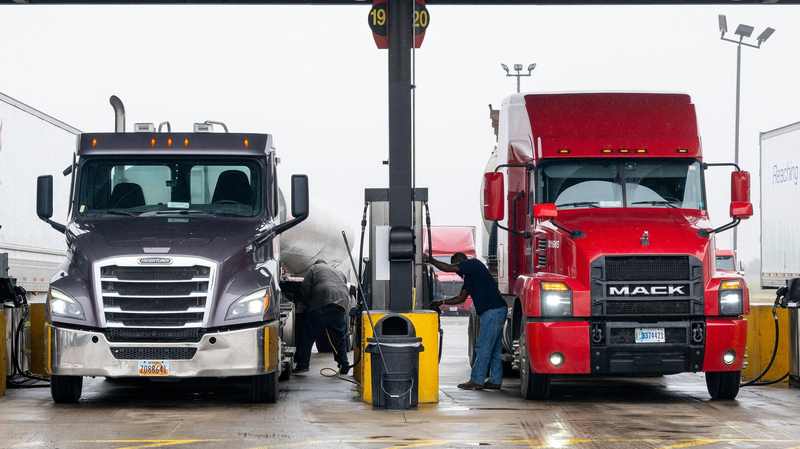
WASHINGTON — A Trump gas tax suspension moved from campaign talking point to a live White House option Tuesday, when President Donald Trump told reporters, “We’re thinking about that.” The proposal could remove 18.4 cents from the federal levy on each gallon of gasoline and 24.4 cents from diesel. But it cannot happen through a presidential announcement alone: Congress would have to pass it, and lawmakers are not scheduled to return before the November 3 midterm elections.
The timing puts a simple consumer message against a complicated policy trade-off. Four states have already suspended their own fuel taxes, according to reports published Tuesday, while the administration has taken a narrower step for trucking. On Monday, Trump signed an executive order allowing truckers to buy tax-free “red dye” diesel through December 31.
Why this matters
A gas-tax pause is unusually visible economic policy. Drivers see the price on roadside signs and again on every receipt. At a national average of $4.37 a gallon, removing the entire 18.4-cent federal levy would equal about 4.2% of the posted price, assuming the full reduction reaches the pump.
For a 15-gallon fill-up, the maximum direct saving would be $2.76. A driver buying 50 gallons in a month would save $9.20; at 100 gallons, the saving would be $18.40. Those figures are meaningful to some stretched households, but they are much smaller than the year-over-year change. AAA’s reported average is $1.24 above the $3.13 level a year ago. The tax accounts for less than 15% of that increase.
That arithmetic explains both the appeal and the criticism. Supporters can point to an immediate, broadly distributed reduction without waiting for a rebate system. Skeptics can argue that the policy addresses only a fraction of the surge while interrupting a dedicated source of money for roads, bridges and transit.
The midterm clock is the first obstacle
With Election Day four weeks away, both parties have an incentive to define the proposal before Congress can vote. Republican supporters can present it as direct relief from a cost voters confront every week. GOP candidates in competitive states may also cite the state suspensions as proof the idea can move quickly when legislators are in session.
Democratic critics are likely to press two arguments: that the administration’s foreign-policy and energy choices contributed to the price shock, and that a temporary tax holiday does not guarantee consumers receive every cent. They can also question why Republican congressional leaders did not move a bill before leaving Washington. Those are political arguments rather than settled economic conclusions, but they shape how the proposal will be debated.
How fuel prices reached this point
The current debate follows a sharp energy shock. Fuel prices climbed after the Iran war disrupted expectations for global oil supply and Ukrainian strikes damaged Russian refining capacity. On Friday, Group of Seven countries agreed to release 100 million barrels from strategic reserves, an effort to add supply and calm markets.
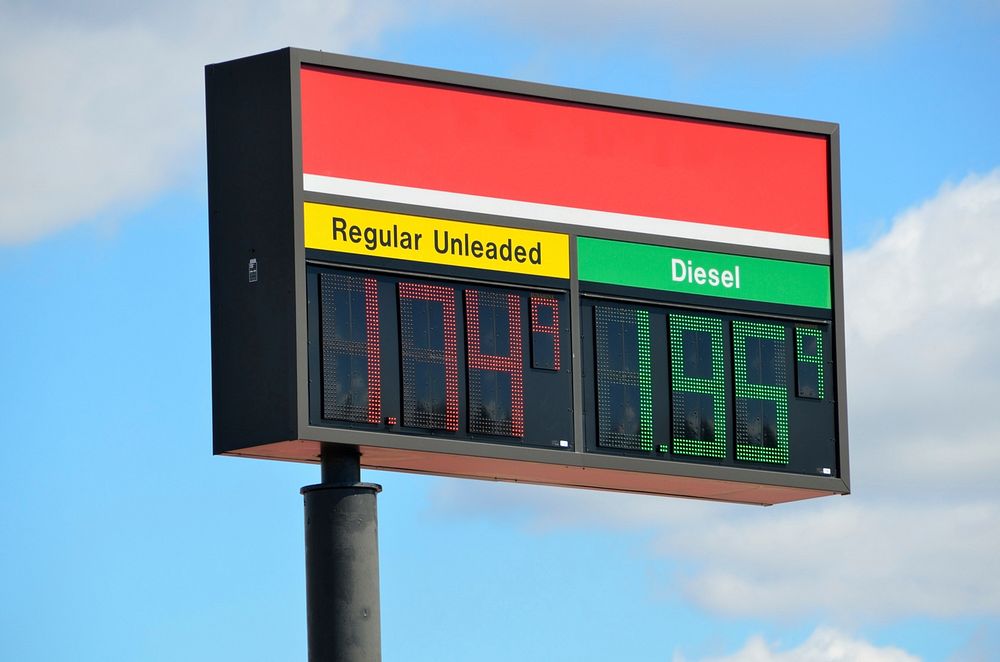
AAA data cited in Tuesday’s reports put regular gasoline at $4.37 a gallon, up from $3.13 a year earlier. Diesel averaged $6.32, compared with $3.68 a year ago. Diesel has retreated from a record $6.53 reached on September 22, but the current level still represents a $2.64 year-over-year increase — roughly 72%.
Those moves matter beyond motorists. Gasoline hits household budgets directly, particularly for workers without practical transit options and for rural residents who drive longer distances. Diesel moves through the economy indirectly because trucks transport food, building materials and consumer goods. Carriers may absorb a cost increase temporarily, add fuel surcharges, renegotiate contracts or pass higher expenses into prices. The timing and size of that pass-through differ by route, contract and industry.
Gas-tax holidays have a familiar debate
Previous federal and state gas-tax-holiday proposals have turned on three questions: how much of the tax cut retailers pass through, how quickly supply responds and how governments replace lost transportation revenue. In a competitive retail market, stations have reason to lower prices when their tax cost falls. Yet economists have long cautioned that tight supply can let part of the benefit flow to producers or sellers instead, especially if lower prices encourage more demand.
A temporary pause can also produce timing effects. Prices may fall when the holiday begins and rise when it expires, concentrating public attention on two abrupt changes. The result depends on oil prices, refinery capacity, distribution constraints and competition at the same time; the tax reduction is not the only moving part.
Who could gain — and who is warning about the cost
Drivers, truckers and candidates
Drivers who use the most fuel would receive the largest dollar benefit. That favors long-distance commuters, rural households and workers whose jobs require driving. It also means people who drive less, do not own cars or use electric vehicles receive little or no direct relief.
Truckers could see a larger per-gallon benefit because the federal diesel tax is 24.4 cents, though Monday’s red dye diesel executive order already creates a separate temporary channel for tax-free fuel through year-end. How broadly operators can use that measure — and how enforcement distinguishes authorized use — will help determine its real value. The order signals that the administration is willing to use executive authority where it believes it has room, while acknowledging that a general federal levy requires Congress.
Politically, a federal gas tax holiday would give Trump and Republican candidates a concrete answer to questions about fuel costs. Trump had previewed the concept in May, telling CBS he would “take off the gas tax for a period of time.” Tuesday’s comment revived that promise when prices are substantially higher and voters are closer to casting ballots.
Highway funding advocates and fiscal hawks
Federal gasoline and diesel taxes support the Highway Trust Fund, which finances highway and bridge programs and transit spending. Suspending the levies without replacing the revenue would reduce money flowing into that account. Congress could transfer general Treasury funds to cover the gap, as it has done before, but that shifts rather than eliminates the fiscal cost.
Transportation advocates can therefore oppose a suspension even while recognizing the pressure on drivers. Their concern is that deferred maintenance can become more expensive and that uncertainty makes multiyear infrastructure planning harder. Fiscal conservatives face a related choice: accept lower dedicated revenue, identify spending reductions, or support a general-fund transfer that adds pressure elsewhere in the budget.
The data: relief in cents, price shock in dollars
The cleanest way to assess the proposal is to separate the tax from the wider price. The 18.4-cent gasoline levy has not risen with the current crisis; the retail price has. At $4.37 a gallon, the federal tax is about one dollar out of every $23.75 spent at the pump. Eliminating it would not return prices to last year’s level.
Even the theoretical maximum saving is not automatic. If wholesale costs rise by 10 cents while a tax holiday begins, the pump price might fall by only 8.4 cents. Conversely, if oil and wholesale gasoline prices decline at the same time, motorists could see a larger drop than the tax alone. That is why any evaluation would need to compare retail prices with wholesale benchmarks and nearby markets, not simply the price before and after one date.
Diesel’s economic footprint is broader. A 24.4-cent reduction equals about 3.9% of the current $6.32 average, while the $2.64 annual increase equals nearly eleven times the tax. For a truck buying 1,000 gallons, the tax value is $244. That can matter to a small carrier, but the remaining fuel bill would still exceed $6,000 at the current average. Whether consumers eventually benefit depends on contract terms, competition and how long lower costs persist.
Congress, the Harris bill and what happens next
Representative Andy Harris introduced a federal suspension bill on September 15. Speaker Mike Johnson shelved a planned vote after Republicans split over the measure, with House Transportation and Infrastructure Committee Chairman Sam Graves among those opposed. That history shows the central problem is not only partisan control; the governing party has internal disagreements about infrastructure revenue and fiscal policy.
The House and Senate are not scheduled to return until after the November 3 election, so a broad suspension before then would require lawmakers to change their calendars. After the election, the political math could shift in several ways.
- A short, fully offset holiday: Congress could suspend the tax for a defined period and transfer money to the Highway Trust Fund. That may attract lawmakers who want relief without reducing transportation commitments, but it carries a general-budget cost.
- A narrower diesel measure: Lawmakers could target commercial transport or codify parts of the administration’s temporary fuel order. That would focus relief on freight but provide less direct help to most drivers.
- No legislation: If prices retreat after reserve releases or geopolitical tensions ease, congressional urgency may fade. If prices remain high, supporters could reintroduce the Harris approach in the post-election session.
- A broader energy package: Tax relief could be paired with production, reserve or infrastructure provisions, spreading support while making the bill more complex.
The December 31 expiration of the red-dye diesel policy creates another deadline. It gives the administration weeks of operational data before Congress reconvenes and may show whether tax relief can reach truckers without major compliance problems. It does not, however, substitute for the act of Congress required to suspend the nationwide gasoline and on-road diesel taxes.
What to watch
Three signals will determine whether “we’re thinking about that” becomes legislation. First is whether Trump publicly endorses a specific duration and a way to replace Highway Trust Fund revenue. Second is whether Johnson puts the Andy Harris gas tax bill back on the House calendar after the election. Third is whether enough senators from both parties see a temporary holiday as preferable to other forms of relief.
Prices themselves may decide the pace. A sustained decline after the G-7 reserve release would reduce pressure for a tax holiday; another disruption to oil supply or refining could intensify it. For drivers, the proposal promises an easily understood discount. For Congress, it opens a larger argument over who captures the saving, who pays for the missing revenue and whether a temporary cut can meaningfully address a global energy shock.
Sources and methodology
- This report uses the president’s remarks, congressional details, AAA price figures and policy actions reported October 6, 2026 by the New York Post and the Daily Caller. The Daily Caller report cites Reuters and CBS News reporting. Savings calculations multiply the statutory tax by stated fuel volumes and assume full pass-through; actual retail effects may differ.