BREAKING NEWS · ANALYSIS
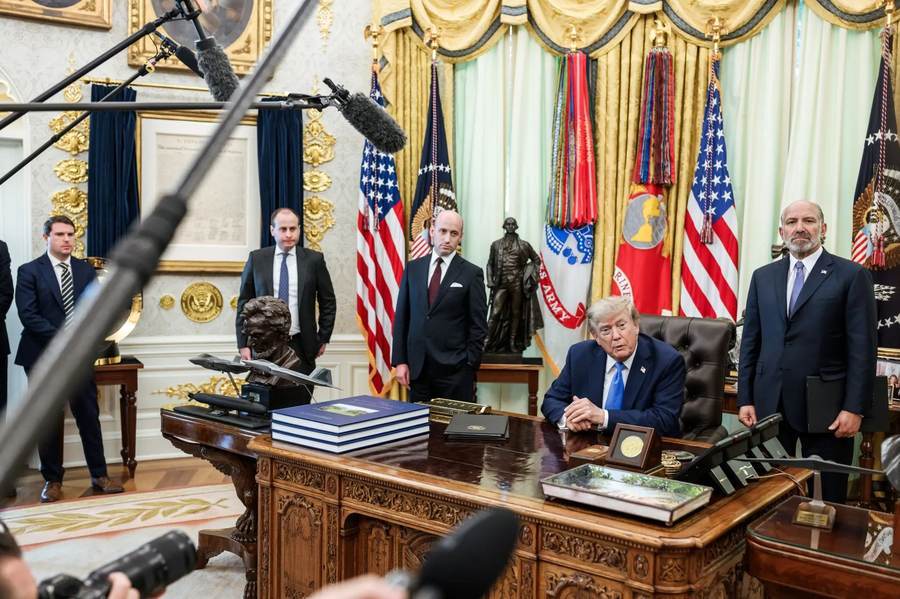
WASHINGTON — The checks are no longer a future promise. The U.S. Treasury began sending $500 payments Wednesday to more than 950,000 people who bought 2026 health coverage through the federal Affordable Care Act marketplace without premium tax credits. Qualifying households may receive more than one payment when multiple family members meet the rules, and Treasury says delivery will come by mailed check or direct deposit.
The October mailing is both a health-policy refund and a piece of election-year political theater. Each recipient gets money drawn from HealthCare.gov user-fee balances and a letter signed by President Donald Trump. According to reporting by the New York Post, the letter tells recipients they were overcharged to operate the federal exchange and says the money belongs to them rather than the government.
Now the distribution map has become part of the story. A Reuters analysis published Thursday found that 71% of the payments — about $339 million — are going to 13 states that include eight of the nine most competitive Senate contests and 10 of the 12 most competitive governor's races. That does not establish that the program was designed around the electoral map: eligibility follows who paid full-price premiums through the federal exchange. It does establish that policy and politics are arriving in the same envelope.
What is happening with the Obamacare rebate checks in 2026?
Treasury started the mailing on September 30, one day before this report, after Trump announced the program in a White House video on September 10. The administration calls the payments “Working Families Obamacare Refunds.” They are separate from Trump's proposed $5,000 “dividend,” which he has tied to Republicans retaining control of Congress and which has not become a universal payment program.
The $500 payment is based on a pool of federal marketplace user fees. Insurers that sell plans through HealthCare.gov pay a percentage of premiums to support the exchange. Insurers generally build those costs into premiums, so the administration's position is that consumers ultimately supplied the money. When collections exceeded operating costs, the White House says, the remaining balance became an overcharge that should return to full-price enrollees.
That is a political interpretation as well as an accounting decision. The fees were imposed and adjusted across multiple administrations, including Trump's first term. The White House is assigning blame to the Biden administration because the unspent balance grew while Joe Biden was president; critics answer that the fee system itself was bipartisan in practice and that only one slice of ACA consumers is receiving money now.
Who gets a $500 ACA check?
ACA rebate check eligibility is narrower than “Obamacare enrollee”
The central rule is simple: recipients enrolled in 2026 coverage through HealthCare.gov and paid the full premium without federal premium tax credits. Most are people with income above the old subsidy cutoff of 400% of the federal poverty level — roughly $62,600 for one person or $128,600 for a family of four — although some lower-income consumers who did not receive assistance can also qualify.
There is no new application described by the administration. Treasury is using enrollment and payment records to identify recipients. A qualifying family can receive multiple $500 payments, one for each eligible enrollee. That makes the household value potentially larger than the headline amount, but it also means people who received even partial premium assistance generally are not in this round.
Texas has the largest recipient population. Florida follows with about 127,900 recipients, and Ohio with roughly 65,700, according to figures reported by CNN. Those totals help explain why the federal exchange map overlaps so strongly with the 2026 political map.
Which Obamacare overcharge refund states are included?
The checks go only to residents of the 30 states using the federal HealthCare.gov platform. The 20 states and the District of Columbia that operate state-based exchanges are excluded because their marketplaces did not contribute to the federal user-fee balance in the same way. This is not a national stimulus check and it is not an automatic refund for everyone with ACA insurance.
The geographic split creates an uneven result. Two people with similar incomes and similarly priced marketplace plans can receive different treatment solely because one lives in a federal-exchange state and the other lives in a state-run-exchange jurisdiction. That distinction may be defensible under the program's funding logic, but it is politically hard to explain as a broad response to insurance affordability.

Why the healthcare.gov fee refund exists
The administration says federal exchange fees produced far more money than HealthCare.gov needed. Its account points to a surplus that reached roughly $1.2 billion by 2021, followed by about $500 million in Biden-era spending. The remaining pot finances a payout of roughly half a billion dollars.
The strongest version of the White House argument is consumer restitution: if insurers passed the fee through in premium prices and the exchange did not need all the money, returning the excess is cleaner than letting it accumulate. The weakest version is selective restitution: the government cannot trace a specific dollar of fee revenue back to a specific policyholder, and it has chosen a flat payment rather than calculating each enrollee's actual contribution.
HealthCare.gov also changed substantially while the surplus accumulated. Enrollment roughly doubled to about 22 million, according to KFF figures cited in coverage of the refunds. A growing exchange requires outreach, technology, call centers and oversight. The fact that money remained unspent does not by itself prove every dollar was unnecessary; the administration's claim is that the cushion became excessive.
Why 71% of the money goes to battlegrounds
Reuters' state-by-state analysis gives the rollout its sharpest political edge. About $339 million of the roughly $478 million in mapped payments goes to 13 battleground states. The concentration tracks the federal-exchange footprint: many of the states that outsourced their ACA marketplace to Washington are also states where control of the Senate, governorships or closely divided House districts is at stake.
The timing is impossible to separate from perception. The midterm election is November 3, just over a month after the mailing began. The checks arrive with the president's name and a political argument in the accompanying letter. New Hampshire Democratic Senate nominee Chris Pappas summarized the opposition response to Reuters: “Voters aren't looking for Donald Trump to cut them a check.”
Supporters answer that election timing does not make a refund illegitimate. If the government collected excess money, recipients do not lose their claim to it because an election is near. The harder question is why this population, this flat amount and this delivery mechanism were chosen now. The administration has supplied a policy rationale; the letters make clear it also sees a campaign message.
The $500 check meets a much larger premium problem
Obamacare premium subsidies expired in 2026
The political limit of a one-time check is visible in monthly premium bills. Enhanced ACA subsidies expired at the end of 2025, increasing the net cost of coverage for millions of marketplace enrollees. KFF found that for some consumers, the increase in a single month's premium is larger than the entire $500 refund.
That comparison does not erase the value of $500 to a recipient. It does put the scale in context. A one-time payment can offset part of an annual premium increase, a deductible or a prescription bill. It cannot substitute for a durable affordability policy, and it does nothing for subsidized enrollees who are ineligible for this payment but face higher net premiums.
The administration's broader ACA argument is that it is cutting waste and returning savings directly. Vice President JD Vance says removing about 750,000 suspected fraudulent enrollees saved approximately $2.2 billion. That campaign is covered separately in Signal Post News's report on the Trump administration's ACA enrollment crackdown. The policy test is whether those savings lower systemwide costs without wrongly cutting eligible people off coverage.
Who wins, who loses and what each side can claim
Unsubsidized federal-exchange enrollees win immediately. They get a real payment with no new application. Families with more than one qualifying member can receive more than $500, making this one of the few administration health-policy moves that shows up directly in a bank account or mailbox.
The White House gains a concrete affordability message. Abstract claims about fees and marketplace efficiency become a check with Trump's signature. That is especially valuable while broader economic sentiment is weak and the president's party is fighting difficult races.
Subsidized enrollees and state-exchange customers are left out. Many of them face the same or larger premium pressure but do not meet the payment rules. Democratic-led states that built their own marketplaces are excluded, even though their residents pay federal taxes and participate in the same federal health-law framework.
Republican candidates inherit both the benefit and the liability. They can point to money returned. They must also answer why the check arrives weeks before voting, why 71% of the funds land in battlegrounds and why the administration let enhanced subsidies expire. For the wider electoral backdrop, see Signal Post News's coverage of Trump's latest approval numbers.
What happens next
The first test is delivery. Recipients should watch for a Treasury check or direct deposit and compare any accompanying notice with their 2026 HealthCare.gov enrollment. The administration's public description does not require consumers to pay a fee, share banking credentials or click a private link to claim the money; any message asking for those steps deserves skepticism.
The second test starts November 1, when open enrollment begins for 2027 plans. Premiums are expected to rise again, making the annual price shown on HealthCare.gov more politically important than a one-time refund. If premiums jump by more than $500 over the year, the check may feel less like relief than a credit against a larger bill.
The third test is electoral. November 3 will show whether a targeted, tangible payment changes voters' judgment on health costs or merely sharpens criticism that the administration chose a headline check over sustained subsidies. Signal Post News's September 30 report explains how the refund program was announced and funded; today's update is about execution and the map of who receives it.
The bottom line is narrower than either party's slogan. The payments are real, the eligibility rules exclude most ACA consumers, and the battleground concentration follows a federal-exchange map with obvious electoral consequences. Whether voters read that as overdue restitution or pre-election persuasion will depend less on the letter than on the next premium bill.
Sources
- Reuters, October 1, 2026: payments land in prime political battlegrounds
- CNN, October 1, 2026: eligibility, state totals and the policy debate
- USA Today, September 30, 2026: Treasury mailing and Trump letter
- New York Post, September 30, 2026: letter language and rollout details
- White House fact sheet: Working Families Obamacare Refunds
Reporting note: Payment, eligibility and state-distribution figures are attributed to the cited reporting and administration materials. The electoral and policy analysis is Signal Post News's. This is a fixed October 1, 2026 reporting snapshot.