A Truth Social post, repeated under the wing of Air Force One, puts a seven-figure bounty on election fraud — with no published rules, no named fund, and eight days to the vote.
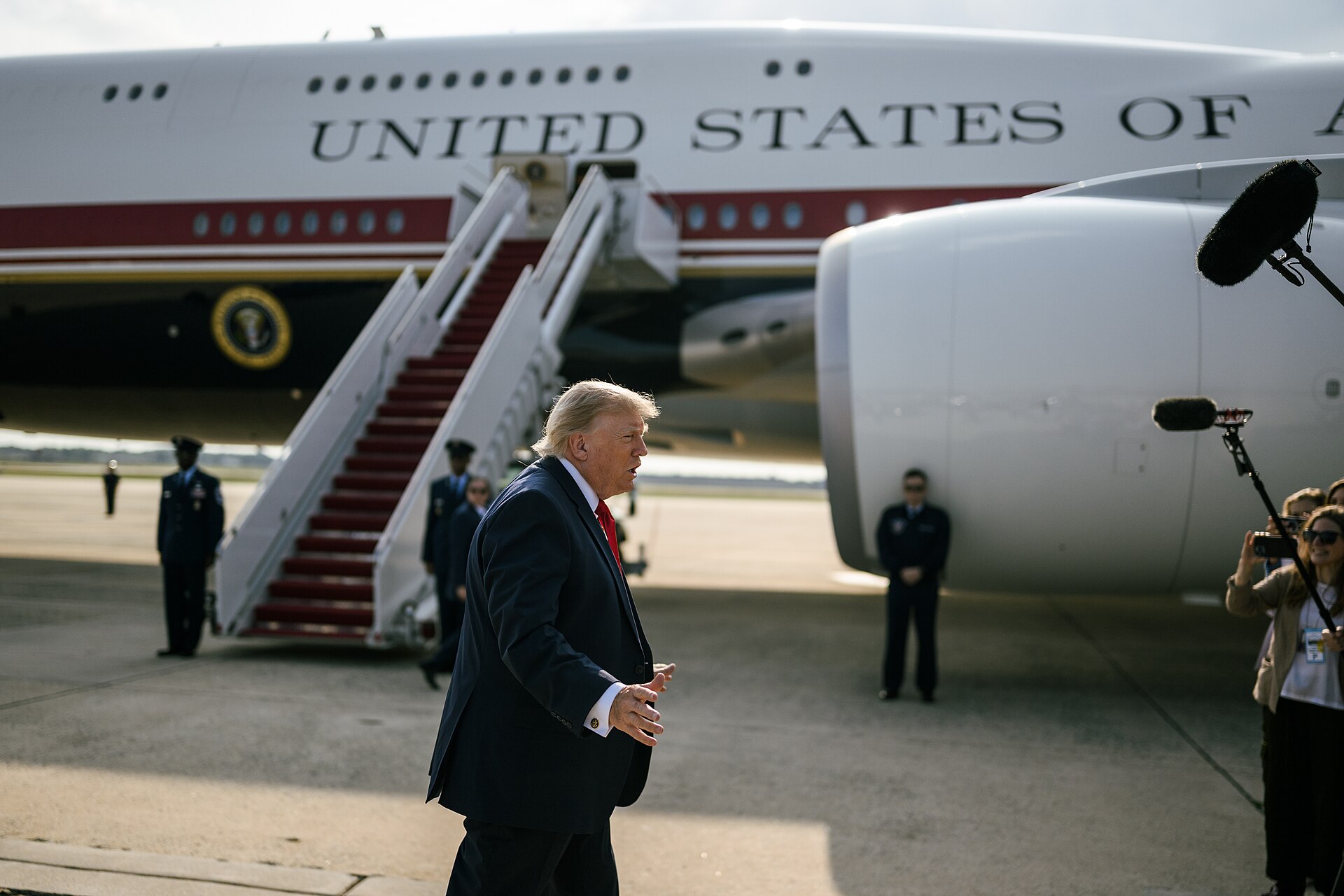
The Trump $1 million voter fraud reward is, for now, exactly two things: a social media post and a promise repeated to reporters on an airfield. On Monday, October 26, at 3:31 p.m. ET, President Donald Trump wrote on Truth Social: “Anybody reporting Voter Fraud in the past Elections, or the upcoming 2026 Midterm Election, will be paid $1,000,000 upon the arrest and conviction of those that created the Fraud!” Hours later, before boarding Air Force One at Joint Base Andrews for a campaign rally in Corinth, Mississippi, he said it again, out loud: “I’m also going to be issuing a $1 million bonus or reward, or whatever you want to call it, for anybody that reports voter fraud, leading to the arrest and conviction of somebody.” Then, more plainly: “We give you, that person, a million dollars.”
The offer, as stated, is sweeping. It covers alleged fraud in past elections as well as in the midterm elections of November 3, 2026, now eight days away. It is not a payment for a tip, a hotline report or an allegation that checks out on first inspection: by the president’s own wording, the money is payable only upon the arrest and conviction of the person the tip identifies — the end of a criminal process that, in election cases, typically takes months or years. And as of Monday night, according to Reuters, the offer came with no published mechanism for reporting, no named office to judge claims, and no statement of whether the money would come from government funds or from the president’s personal resources.
What we know — and what we don’t
A Trump voter fraud reward midterms offer with no published rules
Start with what is established. The post exists, timestamped Monday afternoon. The remarks at Joint Base Andrews were made on camera, to the travelling press, before a campaign trip — not at a policy rollout, with no accompanying fact sheet, executive order or agency announcement reported by Monday night. The condition attached to the money is consistent across both versions: reporting alone earns nothing; the reported conduct must end in an arrest and a conviction. The scope is also consistent: past elections and the upcoming midterms alike.
Almost everything that would make the offer an actual programme is, so far, missing. Reuters reported that Trump did not specify a reporting mechanism — no hotline, website or office was named — nor who would judge the claims, nor whether government funds or his personal resources would pay. That gap matters more than it might seem. A reward is a contract-like promise: someone must receive the claim, preserve the tipster’s priority if two people report the same conduct, decide whether the conviction that eventually results was genuinely caused by the tip, and write the cheque. None of that machinery has been described. There is also the legal question any federal payment scheme would raise: an appropriation. Presidents cannot spend public money that Congress has not appropriated, and a seven-figure-per-conviction bounty, if paid from the Treasury, would ordinarily need a funding source and administering rules. If the money is personal, different questions follow — about who administers a private bounty on public prosecutions, and how a tipster enforces the promise. The White House had not answered those questions in the reporting published Monday.
The arrest-and-conviction condition is the whole ballgame
The single most important phrase in the offer is the one most likely to be skimmed: “upon the arrest and conviction.” A voter fraud reward arrest and conviction standard is a far higher bar than the standard used by most tip programmes, which typically pay on arrest, on charges filed, or on recovery of funds. Conviction means a prosecutor — in election cases, usually a county or state prosecutor, since elections are administered by states and most election crimes are prosecuted under state law — must take the tip, build a case, win at trial or secure a guilty plea, and survive any appeal window the programme might recognise. Each of those steps filters out most allegations. The condition protects the offer against paying for noise; it also means that, whatever its political effect this week, the number of cheques ever written under it may be very small. Both of those things can be true at once, and both sides of the argument, below, lean on one half of that sentence.
Why this matters: a bounty changes the incentives around an election
Supporters of the offer make a deterrence argument, and it deserves to be stated in its strongest form. Election fraud, where it occurs, is a low-visibility crime: a ballot cast by someone ineligible, a registration submitted for someone else, a ballot harvested or altered in ways the voter never sees. Detection depends heavily on insiders and witnesses — the co-worker who knows, the family member who saw the ballot filled in. A large, publicised reward speaks directly to those people. In the administration’s broader framing, as Reuters reported, stricter measures are needed to maintain public confidence in elections, and the prospect that anyone around a fraud scheme might be a million dollars richer for reporting it raises the risk of participating in one. On this view, the conviction condition is a feature: it pays only for real cases, proved in court, and costs nothing for allegations that go nowhere.
Critics — including political experts and Democratic and some Republican election officials, in Reuters’ reporting — make the opposite argument about the same incentives. A million-dollar headline, eight days before an election, does not arrive in a vacuum; it arrives in a country where election offices already field large volumes of unfounded reports in ordinary cycles, and where a bounty attached to a president’s fraud claims could flood tip lines and county offices with allegations that officials must log, check and answer during the busiest fortnight of the cycle. Some election officials told Reuters they are already preparing for potential federal interference in the midterms, and critics describe the administration’s broader approach — pressing states for voter-registration data, demanding stricter measures — as federal overreach into a function the Constitution leaves primarily to the states. On this view, the conviction condition is also a feature, but of a different kind: a bar so high that the reward functions less as a programme than as a message, one that tells voters, before a single ballot is counted, that fraud is common enough to carry a seven-figure price.
Both arguments are really arguments about trust. The administration’s case is that visible enforcement — data demands, litigation, rewards — rebuilds confidence by showing the system is policed. The critics’ case is that confidence is itself the casualty: that repeatedly pricing fraud at a million dollars, without a mechanism or a funding source attached, teaches voters to distrust results in advance, including results produced by officials of the president’s own party in states his party runs. The midterms will be administered, as all American elections are, by a patchwork of state and county officials of both parties. A federal bounty sits on top of that system without, so far, any described connection to it — no referral protocol to the prosecutors who would have to win the convictions, no coordination with the officials who would receive the tips. That federalism gap is not a technicality. It is the difference between an announcement and an apparatus.
The wider pattern: WHIP, the Justice Department, and a season of payments
Monday’s offer did not come from nowhere; it is the third reward-shaped announcement in a matter of days, and the largest by an order of magnitude. Last week, the administration launched the Trump-Vance WHIP fraud whistleblower programme, which offers tipsters a 1% commission — with no cap — on fraud against government programmes recovered because of their information, a structure Signal Post News examined in Trump, Vance Launch WHIP Fraud Whistleblower Program. Separately, the New York Post reported, the Justice Department rolled out a $30,000 bounty for tips leading to fraud charges. Set side by side, the ladder is striking: $30,000 at the Justice Department for fraud charges, 1% uncapped under WHIP for programme fraud recovered — and now $1 million, personally announced by the president, for election fraud convictions.
The election-specific track has been building too. The administration has pressed states for voter-registration data and taken its demands to court, a fight Signal Post News covered in DOJ Orders California Counties to Set Aside Suspected Noncitizen Ballots Within 48 Hours, where Attorney General Todd Blanche warned that lawsuits against other states could follow, and Los Angeles County’s registrar-recorder, Dean Logan, became a named figure in the dispute over how ballots are handled. The reward extends that pattern from institutions to individuals: where the data demands and the litigation pressure election officials, the bounty recruits the public — anyone who believes they have seen fraud — into the same project, with a life-changing sum as the inducement.
USA Today placed the offer in a second pattern as well: a season of headline payments associated with the president. Trump has sent $500 Affordable Care Act rebate checks to about 1 million Americans and $90 payments to 21 million seniors, and has promised $5,000 dividend checks to all adults if Republicans win Congress — a promise that, USA Today noted, even some allies criticised as resembling a payment for votes. The voter-fraud reward is not a payment to voters, and its condition — a conviction — is genuinely demanding. But its arrival in the same eight-day window as a promised dividend conditional on the election’s outcome is part of why the announcement landed as a campaign event as much as a policy one: the president made it on the way to a rally, in a race where his party’s hold on Congress is the prize.
Background: 2020, January 6, and claims the courts tested
No account of this offer is complete without the history Reuters attached to its report: the president has made false claims about elections in the past, including refusing to acknowledge his defeat in 2020 — a refusal that ended, after weeks of litigation and pressure, with his supporters storming the Capitol on January 6, 2021. The 2020 claims were tested extensively in court, in recounts and in audits, and were rejected: dozens of lawsuits failed, and no court found fraud sufficient to alter the outcome in any state. That record is why election officials and experts react to a fraud bounty with alarm rather than applause — they hear it as the latest chapter of a six-year argument. It is also, supporters counter, precisely the point: the president and his voters believe the system failed to look hard enough in 2020, and a reward that pays only on conviction is, on their account, an invitation to prove cases the proper way this time — in court, beyond a reasonable doubt, rather than in press conferences. The offer’s own terms, notably, point toward the courtroom: arrest and conviction are legal events, not rhetorical ones. Which of those two readings the next eight days vindicate depends on machinery that does not yet publicly exist.

How rare prosecuted voter fraud is, in context
The data context is worth stating carefully, because both sides cite it. Election research in the United States — academic studies, news investigations and prosecutorial records reviewed over multiple cycles — has consistently found that proven voter fraud is rare relative to the number of ballots cast: individual cases of ineligible voting, double voting or ballot mishandling surface in every large election, are prosecuted in ones and twos per jurisdiction, and amount to a minute fraction of the more than 150 million ballots cast in a national cycle. That rarity is the foundation of the critics’ argument: a million-dollar bounty aimed at a crime measured in single digits per state is, on this view, a solution scaled to the politics rather than the incidence. It is also, supporters respond, exactly what deterrence looks like — rare crimes with willing witnesses are the ones big rewards are designed to surface, and the absence of prosecutions may reflect the absence of incentives to report as much as the absence of offences. What the record does support, without taking either side, is the arithmetic of the offer itself: because payment requires a conviction, the historical base rate of prosecuted fraud implies that even a perfectly administered programme would be expected to pay out rarely. The reward’s practical significance in 2026 is therefore unlikely to be the money. It is the attention — and the behaviour, by tipsters, officials and campaigns, that a million-dollar headline produces in the final week.
The politics: narrow majorities, a hard map — and a word about Brazil
The timing is not incidental, and Reuters’ political context explains why. Republicans hold narrow majorities in both the House and the Senate, and polls show a difficult midterm environment for the party, with the president’s approval weighed down by cost-of-living concerns and fuel prices linked to the U.S.-Israeli war on Iran. In a map that tight, the composition of the electorate and confidence in the count are not abstractions; they are the margin. An election-integrity message mobilises the president’s base, and a fraud framework announced in advance also shapes how a close or adverse result will be argued about afterwards — a dynamic both parties understand, and one reason Democratic officials and some Republican election administrators have publicly braced for disputes over the count.
The same day’s remarks underlined that the fraud frame is not only domestic. The New York Post reported that Trump also described Brazil’s election — won by President Luiz Inácio Lula da Silva — as “another rigged election” that “looked so corrupt, so terrible.” The result itself, in Brazil’s official count, was a Lula victory in Sunday’s runoff, which Signal Post News reported in Lula Wins Brazil Presidential Runoff, Beating Flávio Bolsonaro to a Fourth Term. No evidence accompanied the “rigged” characterisation in the remarks as reported. Placed beside the million-dollar offer, the Brazil comment shows the frame travelling: elections the president’s allies lose are suspect; elections at home are to be policed by bounty. Allies hear consistency — a refusal to defer to electoral establishments anywhere. Critics hear the same thing, and call it the problem.
Who benefits, who loses
The clearest beneficiary, in the short term, is the president’s campaign argument. The offer costs nothing unless convictions follow, dominates a news cycle eight days out, and converts an abstract theme — election integrity — into a number every voter can repeat. Republican candidates in close races gain a turnout message aimed at voters who believe 2020 was stolen, a constituency campaigns do not need to persuade, only to mobilise. The clearest losers, on the critics’ account, are the officials who must run the election under a fraud spotlight: county administrators, many of them Republicans, who will field the tips, absorb the suspicion and certify results that a bounty has pre-framed as suspect. Prosecutors occupy the uncomfortable middle — the offer implicitly promises their future convictions as a product, without, so far, any sign they were consulted. And tipsters themselves face a real risk the announcement does not mention: a report made to claim a reward is still a statement to authorities, and knowingly false reports carry legal exposure of their own. A programme with published rules would spell that out. An announcement cannot.
What happens next
Eight days is not long, and the scenarios are concrete. The first question is whether a formal programme appears before November 3: a named reporting channel, eligibility rules, a funding source, and a statement of who adjudicates competing claims. If that machinery is published, the offer becomes testable — and election officials, state attorneys general and campaigns will react to the details, including the federalism question of a federal reward for state-prosecuted crimes. If no machinery appears, the offer remains what it is today: a presidential promise, enforceable mainly in the court of public opinion. The second question is the states. Governors and secretaries of state of both parties will be asked whether they will cooperate with, ignore or oppose a federal bounty operating over their elections; watch especially for responses from Republican officials in states the administration has already sued over voter data. The third is what a first claimed payout would actually require: a tip filed through whatever channel exists, an investigation, an arrest, a prosecution won — a sequence that cannot plausibly complete before the midterms are certified, which means the reward’s real test, if it comes, will arrive long after the votes it was announced to police.
That is the honest summary of Monday’s announcement. A president has put a million-dollar price on a voter-fraud conviction, a week before an election his party is fighting to keep from slipping away, in a country still arguing about the last election he lost. Supporters see a deterrent with a courtroom standard attached. Critics see a headline in search of a programme, aimed at trust itself. What neither side can yet point to is the programme: the rules, the fund, the phone number. Until those exist, the Trump $1 million voter fraud reward is best understood as the loudest sentence of the midterms’ final week — and the week will be louder for it.
Sources
Reuters, “Trump offers $1 million for tipoffs that lead to voter fraud convictions” (the Truth Social post of 3:31 p.m. ET on October 26, 2026; the remarks before boarding Air Force One at Joint Base Andrews en route to Corinth, Mississippi; the absence of a specified reporting mechanism, judging authority or funding source; the administration’s voter-data demands and the overreach criticism from experts and election officials; the 2020 and January 6 background; the midterm polling context), as published by The Hindu BusinessLine, thehindubusinessline.com. USA Today, “Trump offers $1M reward for tips on voter fraud ahead of midterms” (the WHIP programme’s 1% uncapped commission; the $500 Affordable Care Act rebate checks and $90 senior payments; the promised $5,000 dividend checks and allied criticism), usatoday.com. New York Post, “Trump offers $1M for voter fraud reports 8 days before midterms” (the Justice Department’s $30,000 bounty for tips leading to fraud charges; the president’s description of Brazil’s election as “another rigged election”), nypost.com. Primary source: President Donald J. Trump, Truth Social post, October 26, 2026 (“Anybody reporting Voter Fraud in the past Elections, or the upcoming 2026 Midterm Election, will be paid $1,000,000 upon the arrest and conviction of those that created the Fraud!”).