A three-year Warsaw Defence Plan ties Britain and Poland together on missiles, drones, cyber defence, warships and ammunition — and Warsaw says it should also pull Britain closer to the European Union's defence money, without loosening either country's grip on the alliance with Washington.
Track it live: Live Global Trackers — Wars and armed conflicts
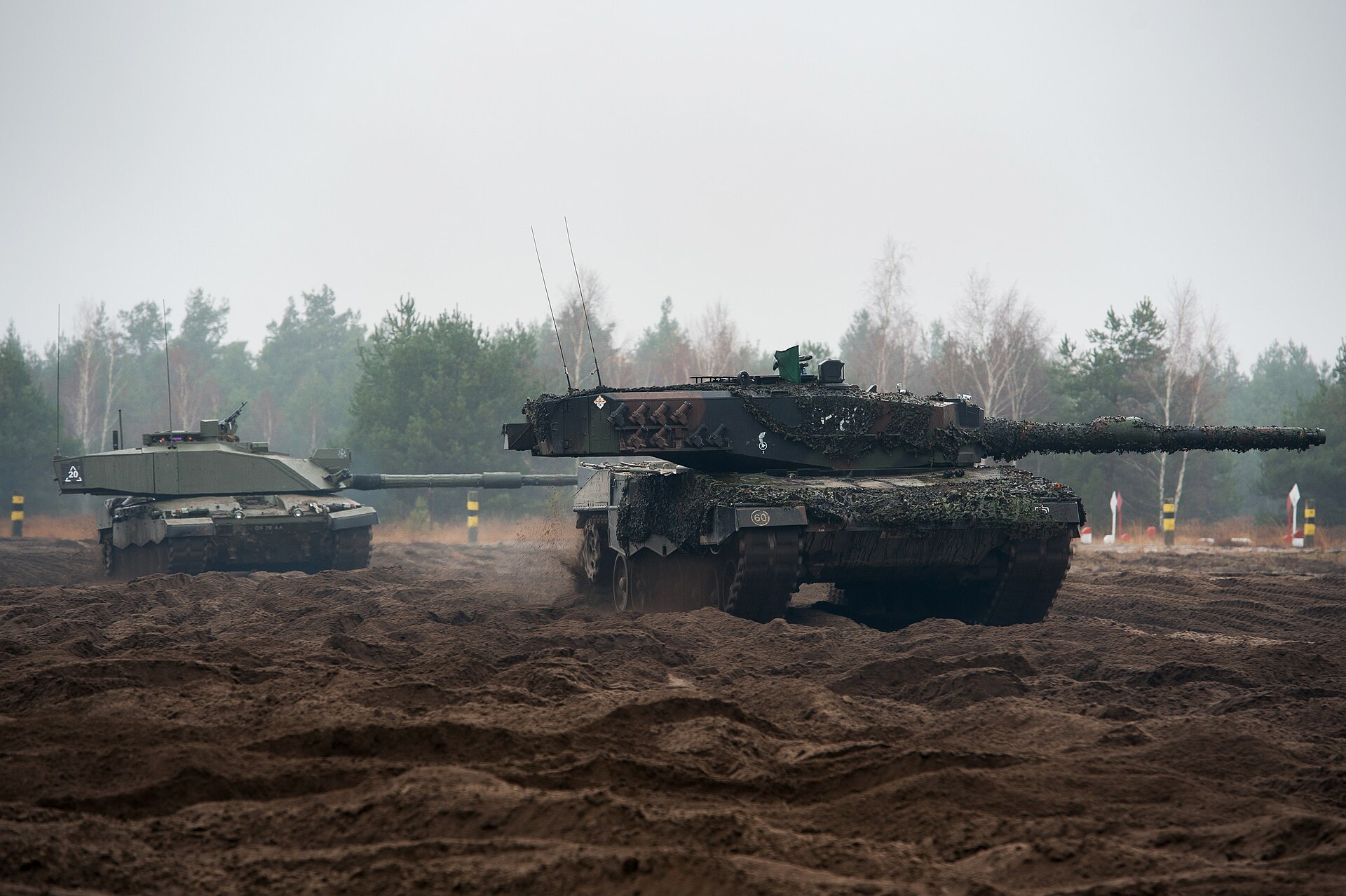
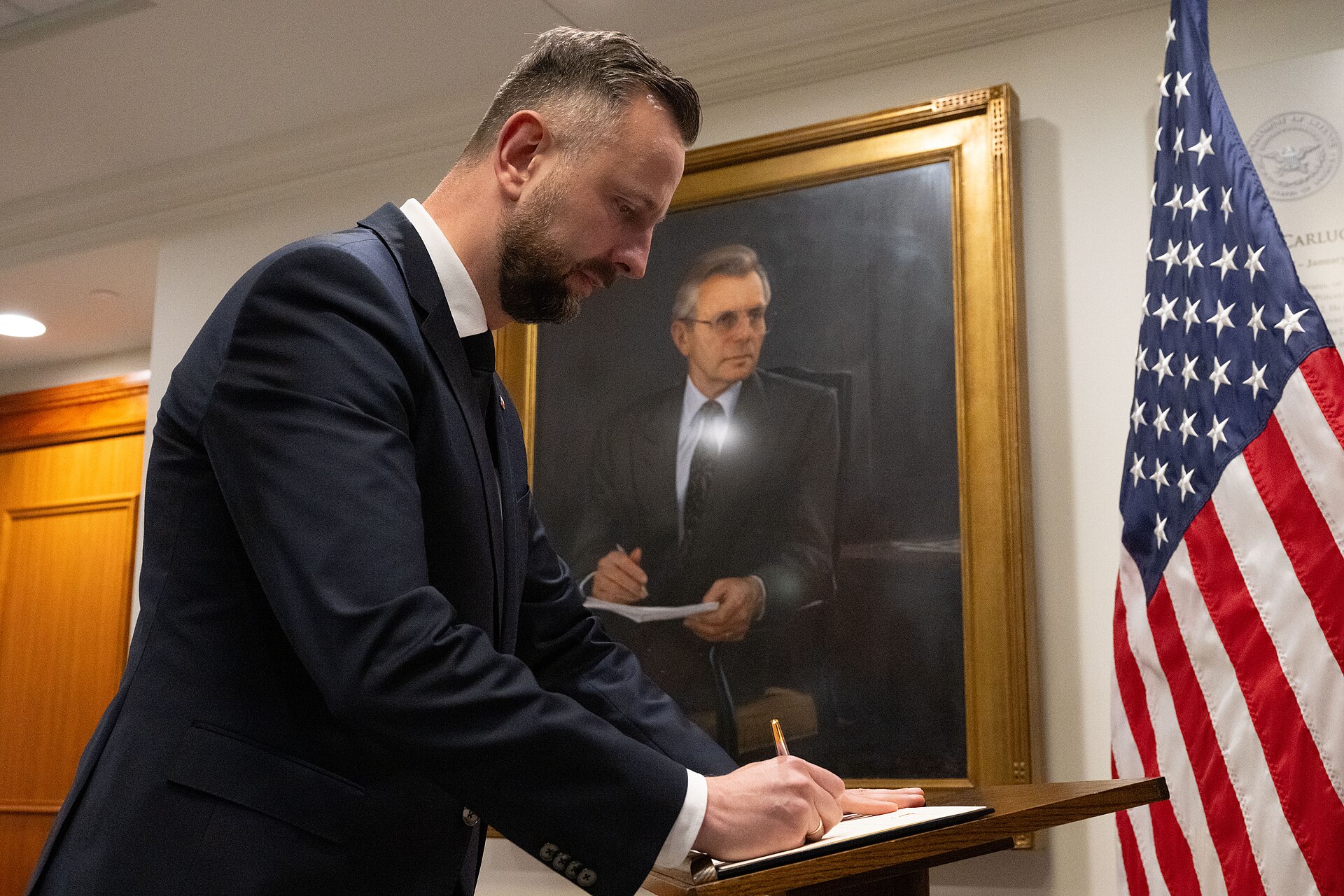
The UK Poland defence plan was signed in Warsaw on Tuesday, October 27, 2026, as Defence Secretary Wes Streeting met Polish Defence Minister Władysław Kosiniak-Kamysz to launch a three-year programme of military cooperation that both governments describe as a strengthening of security and deterrence across Europe's eastern flank. The agreement, formally titled the Warsaw Defence Plan, commits the two countries to work together across sea, land, air, cyber and industry — from the manufacture of next-generation air defence missiles to a major multinational exercise on Polish soil next month, according to the UK Ministry of Defence release issued on Tuesday.
The plan is the first phase of defence cooperation under the new UK–Poland Security and Defence Partnership Treaty, and it arrives at a moment when Britain and Poland occupy particular places in Europe's security geography. Poland is NATO's frontline logistics state, the main land corridor through which Western military aid has flowed to Ukraine since 2022, and one of the alliance's biggest defence spenders relative to the size of its economy. Britain is one of Europe's two nuclear powers and a leading military contributor to NATO's eastern flank. A formal, itemised plan joining the two is therefore more than a bilateral courtesy: it is an attempt to convert a long-declared partnership into named programmes, shared production lines and a dated exercise calendar.
Streeting, in remarks released by the Ministry of Defence, framed the agreement in the language of that shared history. "Poland is one of the UK's closest allies - from flying together in the Battle of Britain, to breaking the Enigma code, they have been a vital partner for our defence for nearly a century," he said. "From collaborating on NATO exercises that deter our adversaries to working together to support Ukraine in its fight for freedom, we are committed to standing together for European security whilst boosting our economies with stronger defence industries."
What was signed
The Warsaw Defence Plan, as set out in the Ministry of Defence release, is a three-year cooperation plan covering joint work in nine named areas. Taken together, they span the full path from factory floor to front line: developing weapons, producing them at scale, protecting against the drone and cyber threats that have defined Russia's war on Ukraine, and rehearsing together — repeatedly and at scale — for the contingencies both governments say NATO must be ready for.
- Air defence missiles. Collaboration on the manufacture and development of the next generation of air defence missiles, the class of weapon that Ukraine's experience has shown to be consumed in enormous quantities and that European stockpiles were never sized to sustain.
- Drones and counter-drone systems. Co-development of drone and counter-drone technologies, which the MOD release explicitly ties to Russia stepping up its campaign of drone incursions across the UK and Europe.
- Cyber security and resilience. Cooperation on cyber security and resilience — the unglamorous layer of deterrence that covers everything from military networks to the civilian infrastructure a crisis would target first.
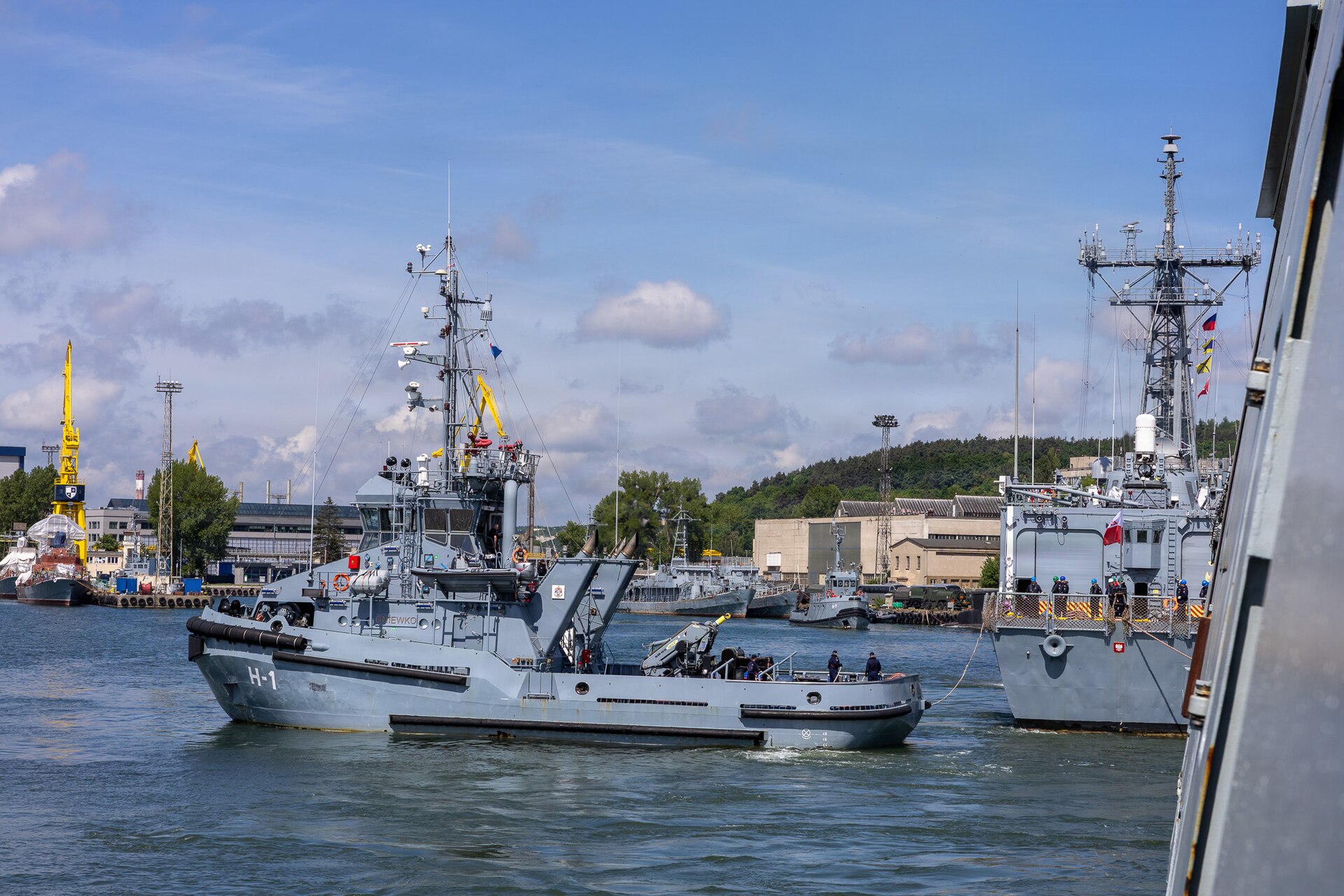
- Frigates from a common design. Sharing lessons from the two navies' frigate programmes: Britain's Type 31 and Poland's Miecznik, which are built from a common design, giving both countries a direct interest in what the other learns as the ships are built and brought into service.
- The Baltic Sea. Increased defensive maritime activity in the Baltic Sea, the enclosed waterway bordered by Russia at Kaliningrad and the Gulf of Finland and crossed by the shipping routes and undersea infrastructure on which northern Europe depends.
- Defence industry and Narew. Wider defence-industry cooperation building on Poland's procurement of the Narew air defence system from MBDA UK — an existing British-Polish industrial relationship the plan is designed to deepen rather than duplicate.
- Ammunition production. BAE Systems and Poland's state defence group PGZ will expand large-calibre ammunition production — shells being the munition whose shortage has been the alliance's most persistent industrial embarrassment since 2022.
- Exercises. Continued participation in the major exercise series Steadfast Defender, Polish Dragon and Joint Warrior, the recurring rehearsals through which NATO turns paper plans into practised ones.
- A Coalition of the Willing exercise in Poland. A major exercise in Poland next month involving thousands of personnel, intended to ensure the Multinational Force Ukraine is ready to support the military training and post-war rebuilding that Ukraine will need.
The transatlantic argument
If the MOD release was about hardware, the joint press conference that followed the signing was about alignment — and about a question that has run through every European defence announcement of the past two years: whether a stronger Europe is being built to complement the United States or to hedge against it. Kosiniak-Kamysz, as reported by Reuters, placed Poland and Britain firmly on one side of that question. Both countries, he said, favour strengthening the transatlantic alliance. "We share a similar view of the alliance with the United States. Both Poland and the United Kingdom support strengthening this alliance," he said.
He backed stronger European defence capabilities and strategic autonomy, but not at the expense of ties with Washington, and he put the point as bluntly as it has been put by any European minister this year. "There is no alternative to transatlantic cooperation. Any other solution is simply worse, it is bad. But our capabilities, British capabilities, Polish capabilities, and European capabilities must be strengthened for production, for collective defense, for cooperation," he said, according to Reuters. The sentence structure is the policy: the alliance with the United States is declared non-negotiable in the first half, so that the demand for European capability in the second half reads as contribution rather than defection — burden-sharing argued in the vocabulary Washington itself uses.
The most consequential commitment of the press conference, however, may prove to be the one aimed not at Washington but at Brussels. Kosiniak-Kamysz said Poland would seek to ensure that Britain can benefit from the EU's SAFE defence financing programme, and that Warsaw would strive to "bring the United Kingdom closer to the European Union". SAFE — the EU's defence financing instrument for joint procurement and production — is, in principle, an EU tool, and Britain has been outside the EU's structures since Brexit. A member state of Poland's weight publicly undertaking to open that door for London gives the Warsaw plan a significance beyond its own three-year term: it makes Poland an advocate for Britain's partial re-entry into European defence through the industrial and financial side of the house.
Streeting's warning on Russia
The signing was also accompanied by the starkest language either minister used on Tuesday — directed at Moscow. According to press-conference reporting of the event, Streeting warned that NATO allies must be prepared for the possibility of conflict with Russia, and accused the Kremlin of coordinating state-sponsored terrorism and testing the alliance's resolve. Signal Post News attributes that characterisation to the press-conference reporting of the signing rather than to the MOD release, which was framed in the cooler language of deterrence; but the two are consistent in direction, and the warning is best read alongside Streeting's wider autumn of readiness messaging — including, in a separate intervention we covered in our report on how Streeting warned Britain has a little over 1,000 days to be ready to fight and win, the argument that preparation is itself the deterrent.
That context matters for how the Warsaw plan should be read. It is not, on its own terms, a war plan: every element in it is defensive in stated purpose — air defence, counter-drone protection, maritime security, resilience. But it is being signed, publicised and argued for in a register that treats a possible conflict with Russia as a planning assumption rather than a rhetorical device, and its authors are saying so on the record. Readers should hold both halves of that sentence at once, because both halves are what the two governments chose to communicate on Tuesday.
Why this matters
Deterrence on the eastern flank is becoming bilateral as well as allied
NATO's eastern flank is, formally, defended by the alliance as a whole. In practice, its deterrence is increasingly built out of dense bilateral and minilateral arrangements — framework nations, forward battlegroups, and now itemised plans like this one — layered underneath the alliance umbrella. A three-year UK–Poland plan matters in that architecture because it joins the flank's largest military spender to one of the alliance's principal expeditionary powers, and because it does so in writing, with named programmes attached. Adversaries read documents of this kind as signals of staying power; allies read them as proof that the reinforcement of the east is not solely an American undertaking.
The plan is as much about factories as about forces
Count the industrial items in the nine areas above: missile manufacture and development, drone and counter-drone co-development, the Narew relationship, BAE Systems and PGZ expanding large-calibre ammunition production. The through-line of the Ukraine war's lessons — that modern high-intensity war is a competition in production rates, and that Europe's peacetime industrial base was built for a different era — runs through the whole document. Ammunition is the clearest case. Shell hunger has constrained Ukraine's army and embarrassed its suppliers for three years; a British-Polish commitment to expand large-calibre production is an attempt to make sure the constraint is smaller in the next crisis than in this one.
Poland is offering Britain a road back into European defence
The SAFE commitment is the plan's most quietly radical element. Britain's exclusion from EU defence structures has been one of the practical costs of Brexit that neither side in the referendum debate advertised; the war in Ukraine has been steadily eroding it, through ad hoc arrangements and bilateral treaties of exactly the kind signed on Tuesday. What Kosiniak-Kamysz offered in Warsaw goes a step further: not merely cooperation between Britain and individual EU states, but a Polish undertaking to work for British access to the EU's own defence financing. If it succeeds, the precedent — a non-member plugged into the Union's defence-industrial money because a frontline member state vouched for it — will outlast this plan. If it fails, Tuesday's promise will stand as a marker of how far Warsaw was willing to go, and how far Brussels was not.
Ukraine is written into the plan's calendar, not just its rhetoric
Many European defence documents mention Ukraine; this one schedules for it. The Coalition of the Willing exercise in Poland next month, with thousands of personnel, exists so that the Multinational Force Ukraine is ready to support military training and the post-war rebuilding Ukraine will need. That is contingency preparation for a Ukraine after the fighting — the training missions and reconstruction security that would follow a ceasefire — being rehearsed in advance and in public. It signals to Kyiv that the coalition planning for its future is proceeding on a timetable, and to Moscow that the Western commitment is being institutionalised rather than improvised month by month.
Background: a partnership being built in layers
The Warsaw Defence Plan is explicitly a first phase: the opening tranche of cooperation under the UK–Poland Security and Defence Partnership Treaty, the framework agreement the two governments concluded earlier this year — signed in London in May 2026 by Prime Minister Donald Tusk and Prime Minister Keir Starmer, as UNITED24 Media reported in its preview of Tuesday's signing. The treaty set the political ceiling; Tuesday's plan begins filling in the rooms, with the MOD's wording leaving room for further phases to follow within the three-year term.
The industrial relationship predates both documents. Poland's Narew programme — its short-range air defence system — is being procured from MBDA UK, making British industry a supplier to the shield of NATO's most exposed land frontier. The frigate connection is older still in design terms: Poland's Miecznik frigates and Britain's Type 31 share a common design heritage, which is why "sharing lessons" between the two programmes is a practical proposition rather than a diplomatic formula — the same hull form, adapted by two navies, generating experience each can use.
Poland's role in the war gives the plan its operational weight. Since 2022, Poland has been the principal hub through which Western military assistance reaches Ukraine, the host of the logistics effort centred on its south-eastern airfields and road and rail corridors, and a frontline state that has itself reported repeated violations of its airspace by Russian drones — the threat environment behind Warsaw's new rules of engagement for suspect objects, which we covered in our report on how Poland moved toward shoot-down authority as Swedish Gripens reinforced its air policing. A state in that position does not sign defence plans as symbolism; it signs them as procurement and insurance.
Finally, the plan lands in the middle of a wider European preparedness wave that has been building through the autumn — governments from Sweden and Finland to Poland and Britain issuing household guidance, readiness campaigns and warnings of the kind catalogued in our report on how Europe is preparing its citizens for war. The Warsaw plan is the governmental, industrial counterpart to those civilian campaigns: the same assessment of risk, expressed as missiles, shells and exercise schedules instead of leaflets and supply lists.
The plan in numbers
The document's measurable content can be stated briefly. Its term is three years. It covers five domains — sea, land, air, cyber and industry. It names nine areas of joint work, three standing exercise series (Steadfast Defender, Polish Dragon and Joint Warrior), two frigate programmes sharing a common design (Type 31 and Miecznik), two ammunition and missile industrial relationships (MBDA UK's Narew and the BAE Systems–PGZ large-calibre expansion), and one dated deliverable that will test it soonest: next month's Coalition of the Willing exercise in Poland, with thousands of personnel, preparing the Multinational Force Ukraine. Against those specifics, readers should also note what the release does not contain: no headline cost for the plan, no production targets or delivery dates for the missiles and shells it promises, and no published schedule beyond the three-year term and next month's exercise. Those absences frame the doubts set out below.
Doubts, gaps and unanswered questions
The case for scepticism is straightforward, and it is not answered by anything published on Tuesday. Defence plans of this kind announce cooperation; they do not manufacture missiles. The capabilities at the plan's centre — next-generation air defence missiles, expanded shell production, mature counter-drone systems — are all things that must still be built, on timelines that European industry has repeatedly missed since 2022, with funding that neither government itemised in the material released at the signing. The frigate lesson-sharing is real but incremental. The Baltic commitment is expressed as "increased defensive maritime activity" without published ship-days or patrol schedules. And the SAFE promise, however significant, is a Polish undertaking to advocate inside the EU, not an EU decision: Britain's access to the programme remains to be negotiated with institutions that were not party to Tuesday's signing.
There is also a view from outside the two capitals that readers should have plainly. No Russian government response to the signing was reported in the sources checked for this article — not an endorsement, not a condemnation, and not the ritual dismissal that Moscow often issues within hours of NATO announcements. Signal Post News is stating that absence rather than filling it: the Kremlin may respond in the coming days, and its character — whether it treats the plan as a provocation, a bluff, or beneath comment — will be evidence about how the plan is being read by the state it is designed to deter. Until then, any account of "Russia's reaction" to the Warsaw Defence Plan would be invention, and this article declines to invent it.
A third uncertainty is political durability. A three-year plan spans electoral cycles in both countries, and its industrial elements assume budgets that future parliaments must vote. Supporters of the plan will answer that this is precisely why such agreements are signed — to lock cooperation into treaties and contracts that outlast news cycles. Critics will answer that locked-in is a claim, not a fact, until the money is appropriated and the production lines are running. Both answers are available on the record; Tuesday's documents, on their own, settle the argument for neither side.
What happens next
The first test arrives within weeks. Next month's Coalition of the Willing exercise in Poland — thousands of personnel rehearsing the Multinational Force Ukraine's future role in military training and post-war rebuilding support — will show whether the plan's Ukraine chapter is an operating reality or an aspiration with a date attached. Its scale, its participating nations and the headquarters it practises will all be reported, and they will say more about the coalition's seriousness than any communiqué.
Second, watch the SAFE file. Poland's undertaking to bring Britain into the EU's defence financing will move, if it moves, through Brussels machinery: eligibility discussions, association arrangements, and the politics of member states that may or may not share Warsaw's enthusiasm. Any formal step — a Commission proposal, a Council mandate, a British statement accepting terms — converts Tuesday's press-conference language into a structural change in Europe's security architecture, and would rank among the most consequential post-Brexit developments in defence.
Third, watch the industrial clock: contract announcements under the Narew line, the BAE Systems–PGZ ammunition expansion moving from agreement to construction, and any milestone in the missile collaboration. And watch for the response that has not yet come. If Moscow answers the Warsaw Defence Plan in the days ahead — and if NATO's other eastern-flank states answer it by seeking plans of their own — Tuesday's signing will mark the start of a pattern rather than a single event: Europe's defence being rebuilt, flank by flank and factory by factory, in three-year increments.
Sources
Reuters, "Poland and UK support strong transatlantic alliance, Polish minister says," October 27, 2026, reuters.com (the signing of the three-year plan; the joint press conference; Kosiniak-Kamysz on strengthening the transatlantic alliance, on European capabilities and strategic autonomy, and on Poland seeking British access to the EU's SAFE programme and bringing the UK closer to the EU). UK Ministry of Defence, "UK and Poland strengthen defences on Europe's Eastern flank," press release, October 27, 2026, gov.uk (the Warsaw Defence Plan and its nine areas of work; the plan as the first phase under the UK–Poland Security and Defence Partnership Treaty; the Streeting quotes). UNITED24 Media, "Poland and Britain Deepen Ties With Strategic 3-Year Defense Agreement," October 27, 2026, as republished at europesays.com (preview of the signing; the treaty's May 2026 signature in London by Prime Ministers Tusk and Starmer). Streeting's remarks on the possibility of conflict with Russia and on alleged Kremlin-coordinated state-sponsored terrorism are attributed in the text to press-conference reporting of the signing (GBS/AC1). No Russian government response to the signing was reported in the sources checked.