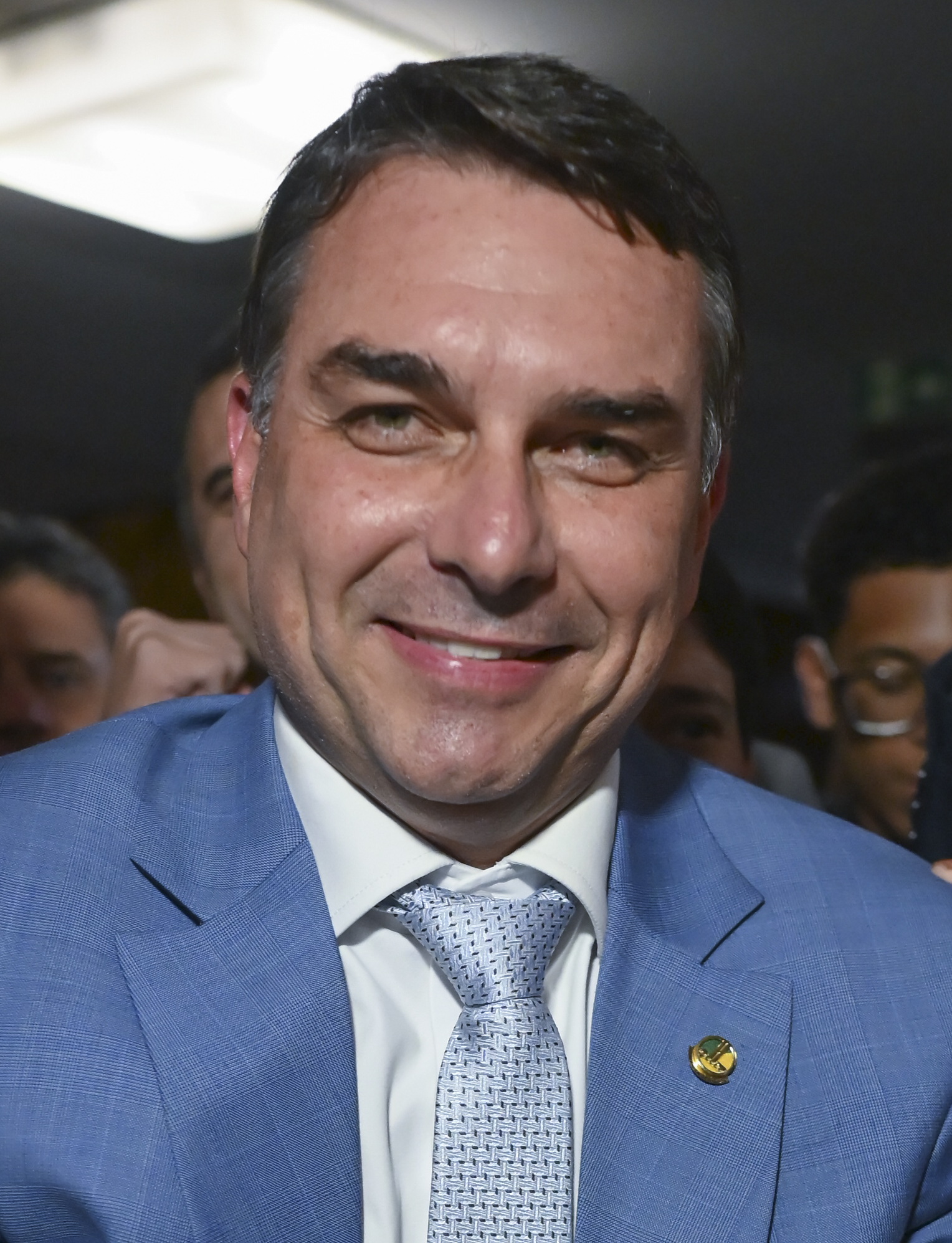
Lula wins Brazil's election for a fourth time. President Luiz Inácio Lula da Silva defeated Senator Flávio Bolsonaro in Sunday's presidential runoff after pollster Datafolha projected his victory and the electoral court's count put him beyond reach: with 99.88 percent of polling sections processed, Lula held 51.76 percent of valid votes — 64,149,501 ballots — against 48.24 percent and 59,778,349 votes for Bolsonaro, a margin of more than 4.37 million votes, larger than every vote still left to count. The win completes a comeback inside the election itself: Lula finished the first round three weeks ago in second place, and no candidate since Brazil returned to democracy in 1985 had ever lost the first round and gone on to win the runoff.
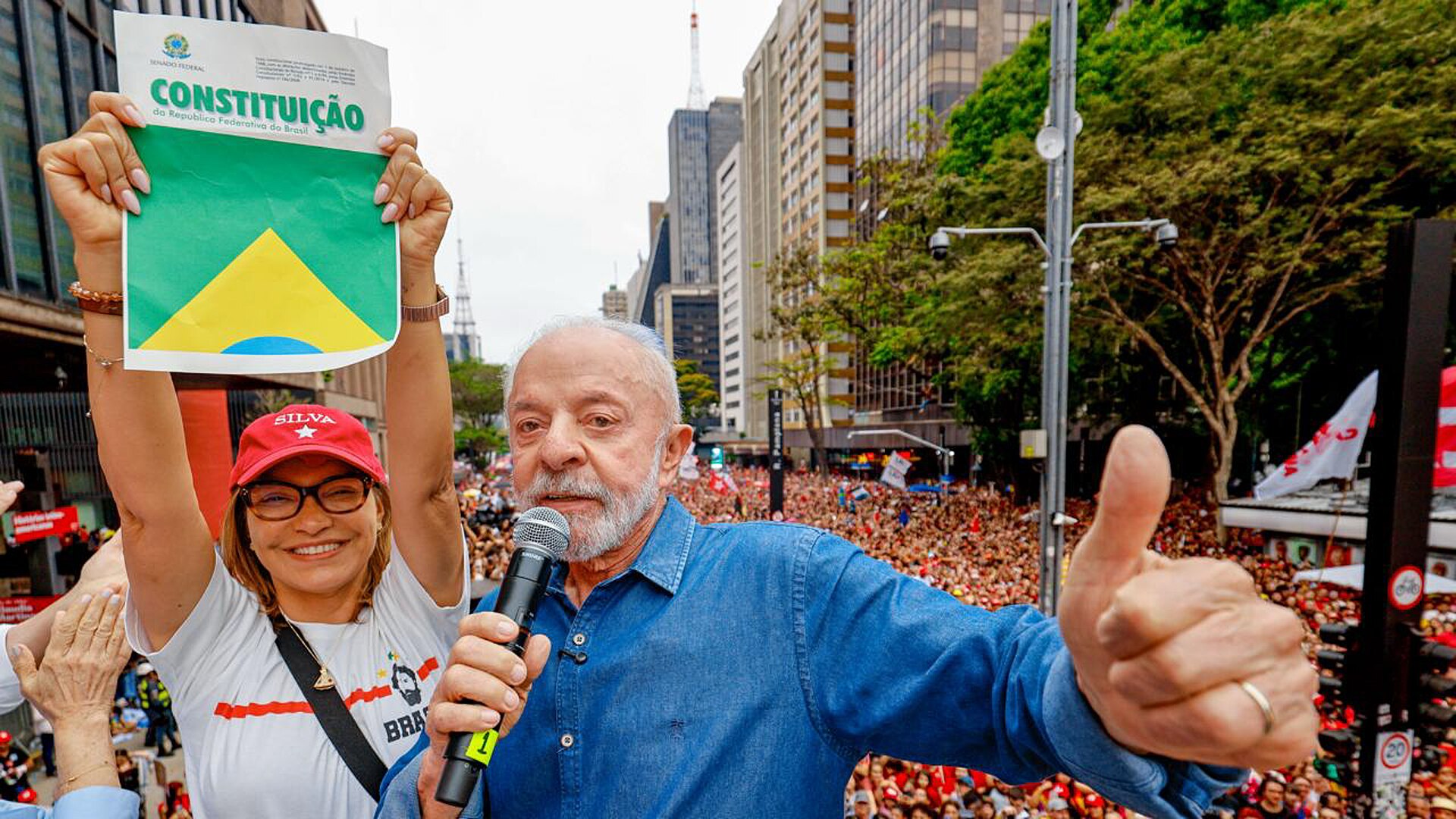
How the count turned, hour by hour
Brazilian election nights are usually the fastest in the democratic world: electronic voting machines report within minutes and winners are known the same evening. Sunday's count was neither fast nor orderly. It began under a cloud — the Supreme Federal Court's Justice Cristiano Zanin had ordered voting extended by two hours, three minutes before polls were due to close, and the Superior Electoral Court, the TSE, paused a count it had already started publishing. The fragment visible before the pause, just 0.25 percent of sections, showed Lula at 57.66 percent — a number drawn from wherever machines reported first, and worth nothing as a verdict. Signal Post News reported the election-day crisis as it unfolded — the court-ordered voting extension that put Brazil's count on hold.
When counting resumed, the lead changed hands in public. At 18.37 percent of sections, Flávio Bolsonaro led 50.35 percent to 49.65 percent, by 157,672 votes. By 47.62 percent of ballots tallied, Reuters reported, Lula had overtaken him, 50.01 percent and climbing. From there the gap only widened: at 80.02 percent of sections (8:52 p.m. in Brasília), Lula led 51.27 percent to 48.73 percent, a margin of 2,515,387 votes; at 89.31 percent, he led 51.53 percent to 48.47 percent, by roughly 3.39 million votes. At 11:48 p.m. UTC, Reuters reported that Datafolha — Brazil's most closely watched polling institute, whose projections Brazilian broadcasters treat as the call — projected Lula would win the runoff. AtlasIntel's chief executive, Andrei Roman, had already told Reuters the same thing, citing the count.
The last snapshot verified for this article, timestamped 01:28 Central European Time on October 26 by the TSE-powered results dashboard, closes the arithmetic: 99.88 percent of sections processed, Lula 51.76 percent (64,149,501 votes), Bolsonaro 48.24 percent (59,778,349), and 123,927,850 valid votes counted. The handful of sections still outstanding could not add anything close to Lula's 4,371,152-vote margin. Even a unanimous break of every remaining ballot for Bolsonaro could not change the outcome. The TSE's formal declaration and the final certified percentages follow the completed count; as of publication, no concession statement from Flávio Bolsonaro had been reported.
The man who came back — twice
Lula, 80, has now won four presidential elections: 2002, 2006, 2022 and 2026 — a record no other Brazilian has matched in the democratic era. His route to this one ran through a prison cell. Convicted in the Car Wash corruption scandal, he was barred from the 2018 race and spent 580 days in prison before his convictions were annulled, restoring his eligibility in time to defeat Flávio's father, Jair Bolsonaro, in 2022. Sunday's opponent was the next generation of the same family: Flávio Bolsonaro, 45, a senator and the eldest son of the former president, who is serving a 27-year prison sentence for plotting to overturn his 2022 defeat.
The first round, on October 4, looked like the end of the story rather than a setup for this ending. As Signal Post News reported at the time, Flávio Bolsonaro won the first round with 47.03 percent of valid votes — about 56.1 million — to Lula's 45.16 percent and roughly 53.9 million, a margin of about 2.2 million votes that defied most final polls. His Liberal Party simultaneously became the largest force in the Chamber of Deputies and gained ground in the Senate. Pre-runoff analysis noted the historical weight working against Lula: since redemocratization in 1985, every first-round winner had gone on to win the runoff. Lula spent the three intervening weeks doing what incumbents with a ground game do — mass rallies, including a vast closing gathering on Rio's Copacabana beach, and a late legislative push that shortened Brazil's work week, forgave debts for micro-entrepreneurs and promised free weekend public transport. On Sunday, the knockout-stage candidate he had promised to be — "I'm very good in the knockout stage," he said after the first round — finally showed up in the count.
Why this matters
Start with the mandate, because both camps will argue about what 51.76 percent means. It is a clear win — a margin of more than 4.3 million votes, roughly double the approximately 2.1 million votes that separated Lula from Jair Bolsonaro in the far tighter 2022 runoff — in a country of nearly 159 million registered voters. It is not a landslide, and it was won against the headwind of a first-round defeat. Lula will govern, from January 5, 2027, with a Congress in which his opponent's party is the largest single bloc in the lower house and strengthened in the Senate. Almost everything he wants to do in a fourth term — protect and expand the social programmes and household-income support he campaigned on, hold the line on his fiscal framework, deliver the shorter working week into practice — has to pass through legislators who spent October trying to end his career. Brazil has just re-elected its president and, in the same breath, kept the machinery of his opposition fully intact.
The second significance is institutional, and it is the shadow this result will carry. This election's defining procedural fact is not the winner's margin; it is that a Supreme Court justice rewrote the voting hours three minutes before closing, on a request from the winning campaign, in a race the justice's own appointing president was contesting. Justice Zanin was Lula's personal lawyer before Lula appointed him in 2023. Both campaigns, to be fair to the record, asked the courts for more time — Bolsonaro's over heavy rain in the south — and the Organization of American States' observer mission monitored the transport failures that prompted the ruling, including at least 75 public buses prevented from leaving garages in Salvador, where a state electoral judge ordered the arrest of the city's mobility secretary, Pablo Souza. The PT's chairman, Edhinho Silva, was weighing legal action over alleged interference even before the count; Bolsonaro allies such as congressman Nikolas Ferreira attacked the extension within hours. A result delivered by a 4-million-vote margin is hard to overturn in any court. But the precedent — election-day rules changed at 4:57 p.m. by a judge with a personal history with one candidate — will be litigated in Brazilian politics long after the formal challenges, if they come, are exhausted. Democracies can survive close elections; what they struggle to survive is the losing half believing the clock was rigged. The size of Lula's margin is, in that sense, the most important number of the night for Brazil itself: it is wide enough that the extension cannot plausibly have decided the outcome, and both camps' lawyers know it.
The third significance reaches beyond Brazil. Reuters framed the choice before the count plainly: a Bolsonaro victory would have extended a wave of right-wing victories by Latin American candidates friendly to President Donald Trump, while a fourth Lula mandate stands as a bulwark against Washington's influence in the region, from a government that has pushed back on United States trade and security policies. Lula had predicted during the campaign that the Trump administration would try to tilt the race; Trump, for his part, watched the runoff and declined to endorse on Sunday, the AP reported. South America's largest economy will now spend four more years as the region's principal counterweight — on trade, on the Amazon, and on how Latin America deals with Washington — rather than its newest recruit to the opposing camp. For climate policy specifically, the difference is concrete: Lula's government has tied Brazil's name to falling Amazon deforestation, a record Signal Post News has tracked through this campaign, and a Bolsonaro presidency had promised a sharply different environmental regime.
A divided country, counted precisely
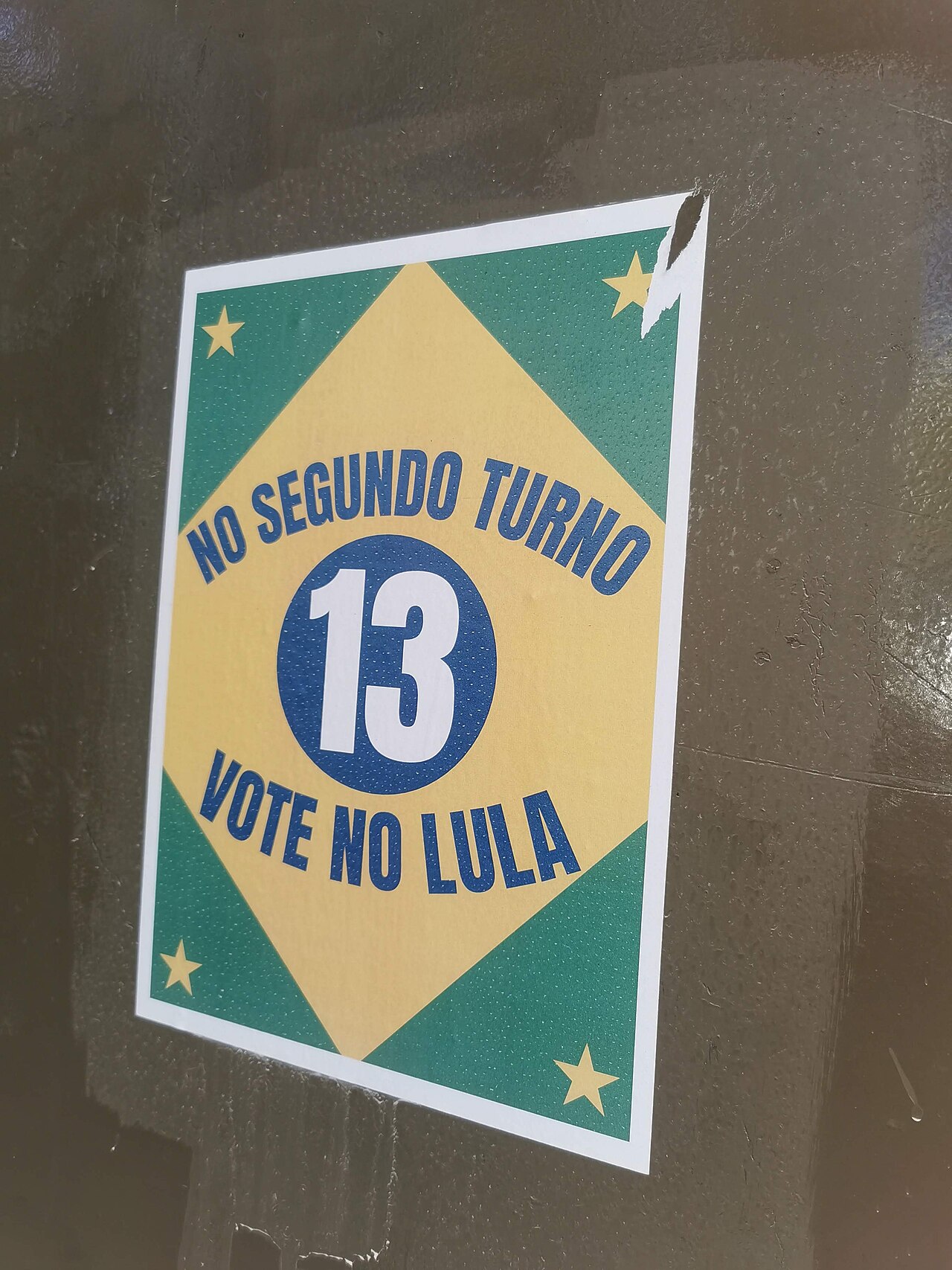
The geography of the night repeated Brazil's familiar split, visible in the count's rhythm: Bolsonaro's early lead was built as the south and centre-west reported; Lula's overtaking came as the populous northeast and southeast completed their counts. Brazilians abroad leaned both ways by country — Lula ahead among voters in Australia, New Zealand, mainland China and South Korea, Bolsonaro far ahead in Japan — a diaspora split that mirrors the domestic one. Nearly 919,000 Brazilians were registered to vote overseas; a campaign poster photographed in Barcelona on Sunday, urging a second-round vote for "Lula 13" — his ballot number — captured the reach of a contest that Brazilians carried with them around the world.
What the numbers cannot settle is the argument about what kind of victory this is. Lula's supporters will call it a resurrection completed: a man imprisoned within the decade, written off after the first round, re-elected at 80. Bolsonaro's supporters will note, correctly, that their candidate — a first-time presidential contender carrying his father's name and legal shadow — took 48 percent of a continental nation and now leads its largest congressional party, with a Senate seat won by his stepmother, former first lady Michelle Bolsonaro, in the first round. Both readings are true, and Brazil's next four years will be governed in the space between them.
What happens next
The count completes first: the TSE will publish final percentages — expected to settle close to the 51.7–48.3 split of the last verified snapshot — and issue its formal declaration. Watch, in order, for Flávio Bolsonaro's first statement: a concession would follow his father's eventual acceptance of the 2022 process through the transition, while silence or a legal challenge centred on the Zanin extension would open the dispute the PT itself was preparing from the other direction before the result was known. A transition period then runs to the inauguration on January 5, 2027, when Lula begins a term in which he will appoint at least three of the Supreme Court's eleven justices — the same court whose election-eve intervention defined this race. Markets, which rallied on Bolsonaro's first-round strength in October on expectations of spending cuts, will reprice for continuity instead: the real, Brazilian assets and the fiscal debate in Brasília are the early indicators to watch this week, alongside the first signals of how a strengthened Liberal Party intends to use its congressional position — as a governing partner on selected bills, or as a wall.
For the full story of how Sunday unfolded before the result — the extension, the paused count and the transport crisis — see Signal Post News' election-day coverage of Brazil at the polls, and for the environmental stakes of a fourth Lula term, our reporting on Amazon deforestation falling to a record low during the runoff campaign.
Sources
- Reuters via TradingView, Oct 25 2026 (23:48 UTC): "Lula to win Brazil election runoff, Datafolha projects" — Datafolha projected Lula will win the runoff, defeating Flávio Bolsonaro to secure a fourth term. https://www.tradingview.com/news/reuters.com,2026:newsml_S0N469067:0-lula-to-win-brazil-election-runoff-datafolha-projects/
- Reuters via TradingView, Oct 25 2026 (23:07 UTC): "Lula to win Brazil election runoff, AtlasIntel CEO says" — AtlasIntel chief executive Andrei Roman told Reuters Lula will be re-elected, citing the ongoing vote count. https://www.tradingview.com/news/reuters.com,2026:newsml_S0N46101Z:0-lula-to-win-brazil-election-runoff-atlasintel-ceo-says/
- Superior Electoral Court (TSE) official count via the Votendi live results dashboard, last verified 01:28 CET, Oct 26 2026: 99.88 percent of polling sections processed; Lula 64,149,501 votes (51.76 percent), Flávio Bolsonaro 59,778,349 (48.24 percent). Figures preliminary until the count completes. https://votendi.com/brazil-runoff-2026-live-results/
- Superior Electoral Court (TSE) figures via Depor live results, Oct 25 2026, updated 8:52 p.m. Brasília time: 80.02 percent of sections tallied; Lula 50,706,005 votes (51.27 percent), Flávio Bolsonaro 48,190,618 (48.73 percent); registered electorate 158,745,502. https://depor.com/en/us-live/who-won-brazils-election-2026-flavio-bolsonaro-vs-lula-da-silva-live-results-and-runoff-updates-nnda-nnrt-noticia/
- Reuters, Oct 25 2026 (via LA Post): "Brazil's Lula takes early lead in presidential runoff vote" — early count after the Supreme Court-mandated pause; Zanin ruling and its clarification; a fourth mandate as a bulwark against Washington's influence. https://www.lapost.com/content/brazil-heads-to-polls-in-runoff-between-leftist-lula-and-bolsonaro-jr
- Associated Press, Oct 25 2026: counting resumed after the last-minute extension; Zanin decision three minutes before poll close; Salvador mobility secretary Pablo Souza arrest order and at least 75 buses blocked; OAS mission monitoring; PT chairman Edhinho Silva weighing legal action; Trump watching, declined to endorse Sunday. https://aapnews.aap.com.au/news/brazil-votes-in-tight-runoff-between-lula-and-bolsonaro