Two British men from Westminster are the first people charged over the September incident at the Gloucestershire airbase that hosted America's B-1 bombers — and prosecutors say the case reaches all the way to a foreign intelligence service they believe is Iran's.
Two British men have been charged under the National Security Act 2023 over the incident at RAF Fairford, the Crown Prosecution Service confirmed on Tuesday, October 27, 2026 — the first charges brought in an investigation that began a month ago with armed officers, evacuated villagers and reports of suspicious vehicles in the lanes around one of the most sensitive airbases in Britain.
Mohmed Ahmad Abdulkarim, 24, a British national from Westminster, London, has been charged under Section 3 of the National Security Act 2023 with engaging in conduct likely to materially assist a foreign intelligence service. Counter Terrorism Policing said officers believe the foreign intelligence service in question is Iran's. Some reports date the alleged conduct to between August 31 and September 28. Counter Terrorism Policing issued a correction to an earlier release on the spelling of his name: the correct name is Mohmed Ahmad Abdulkarim.
Nouman Essghir, 24, also a British national from Westminster, London, has been charged under Section 4 of the National Security Act 2023 with entering a prohibited place for a purpose prejudicial to the safety or interests of the United Kingdom, over suspected activity on Saturday, August 22. Police said Essghir was first arrested at the scene in Gloucestershire on Sunday, September 27, and was re-arrested on October 20.
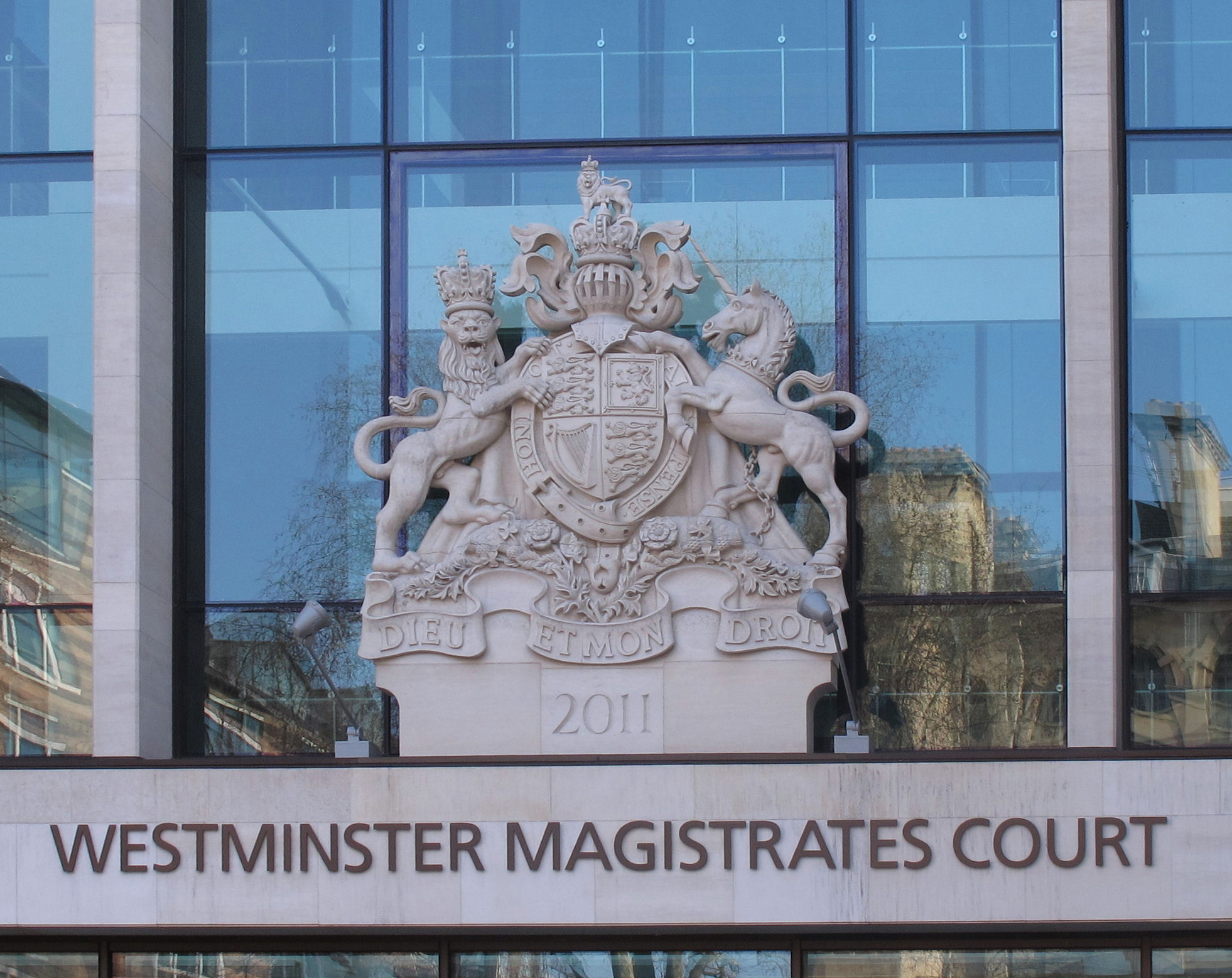
Both men were due to appear at Westminster Magistrates' Court in London on Tuesday, October 27, 2026, for a first hearing. The charges are allegations only. Nothing has been proven, the proceedings are now active, and both men have the right to a fair trial — a reminder the Crown Prosecution Service itself issued alongside the charging announcement. No defence statement from either man has been reported.
Track it live: Iran war tracker — live map and updates
The charges, name by name
The decision to prosecute was confirmed by Frank Ferguson, Chief Crown Prosecutor in the CPS Special Crime and Counter Terrorism Division, who authorised the charges after reviewing the evidence gathered by Counter Terrorism Policing. Charging under the National Security Act requires that threshold decision to be taken by prosecutors, not police, and Ferguson's confirmation puts the case formally into the courts after a month in which it existed publicly only as arrests, bail decisions and official suspicion.
Assistant Commissioner Laurence Taylor, the head of National Counter Terrorism Policing, set out the police position: "We have seen a range of incidents in recent months that we believe have been directed by the Iranian state, and as the director general of MI5 said just the other week, we are working together to intervene, identify and respond to that threat." He also appealed for the public to keep reporting suspicious activity — the route, police have repeatedly noted, by which the September 27 incident first came to light, when residents near the base reported vehicles that did not belong.
Five other men arrested in connection with the investigation remain on police bail, police said. A 25-year-old dual British-Iranian national who was re-arrested on October 20 was released without charge in relation to that arrest, but remains on police bail from an earlier arrest on October 1. Detectives have also interviewed a further man under caution. Police have not said whether further charges are expected, and the investigation remains live alongside the court proceedings.
What Sections 3 and 4 of the National Security Act actually mean
Because these charges will be reported in shorthand — "assisting a foreign intelligence service", "entering a prohibited place" — it is worth setting out, in plain terms, what prosecutors must actually prove, because the gap between the shorthand and the statute is where this case will be fought.
Section 3 covers assisting a foreign intelligence service. In broad terms, it makes it an offence to engage in conduct intended to materially assist a foreign intelligence service in carrying out activities in or related to the United Kingdom, or conduct likely to materially assist such a service where the person knows, or ought reasonably to know, that this is the case. The prosecution does not have to show that a completed act of espionage took place; the offence is built around conduct and assistance, which can include preparatory or supporting behaviour. And the identity of the foreign intelligence service is itself part of what must be proved — which is why the police statement that officers believe the service is Iran's is an allegation the prosecution will have to evidence in court, not a finding.
Section 4 covers entering a prohibited place for a purpose prejudicial to the safety or interests of the UK. Prohibited places under the Act include specified defence and national-security sites, and RAF Fairford — a British base hosting United States Air Force heavy bombers — sits squarely in that world. The offence is not simple trespass: prosecutors must prove both the entry into the prohibited place and the prejudicial purpose behind it.
Both offences sit within the 2023 Act's wider rebuilding of Britain's espionage laws, which replaced First World War-era legislation with offences designed for an era of proxy actors, encrypted tasking and deniable intermediaries. That design is precisely why the Act is now being used in a case of this kind — and precisely why defence lawyers can be expected to test, forensically, how far "likely to materially assist" and "prejudicial purpose" can stretch beyond traditional spying.
How we got here: the night of September 27
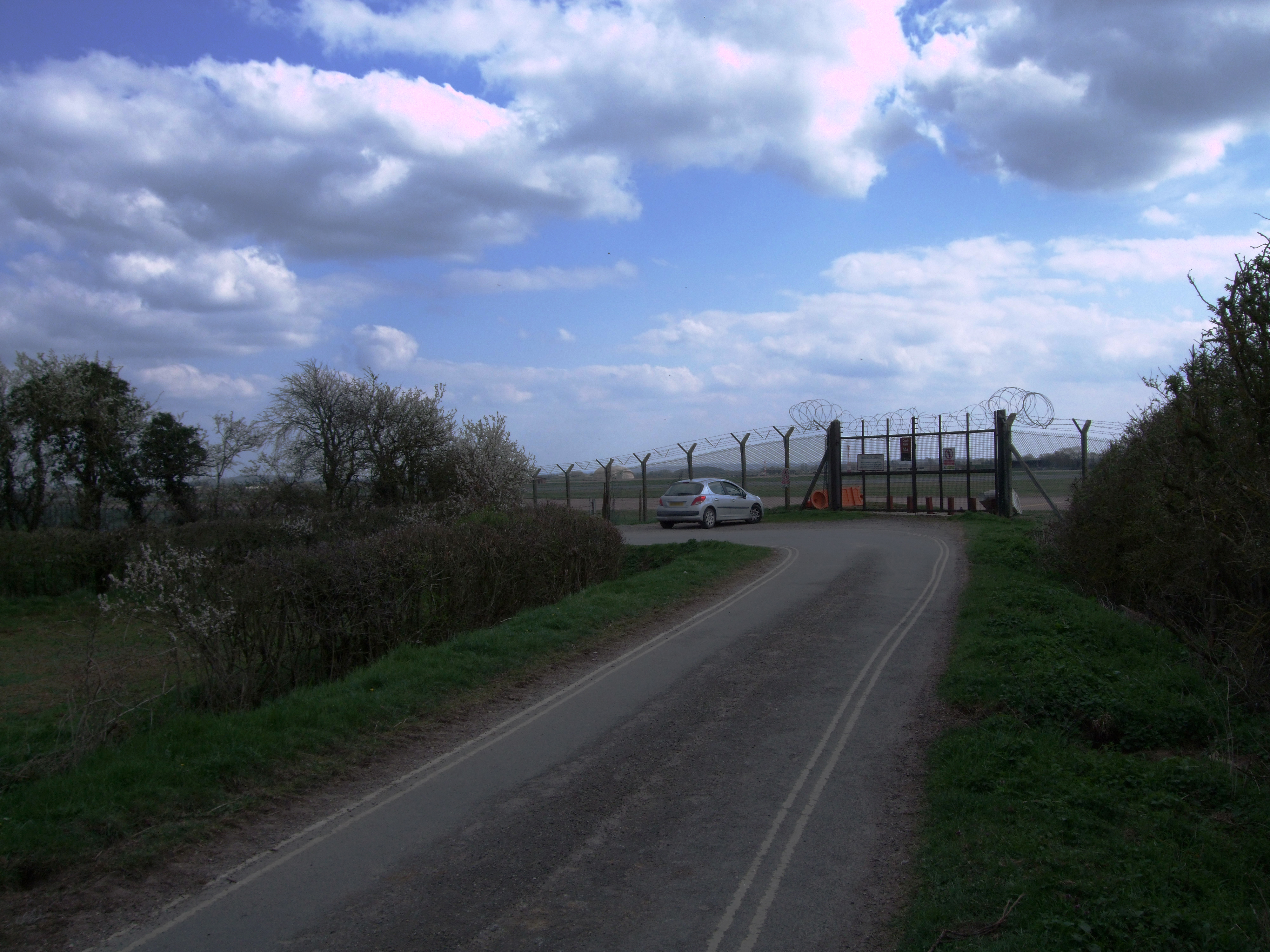
The investigation began in the early hours of Sunday, September 27, 2026, near RAF Fairford in Gloucestershire, after reports of suspicious vehicles close to the base. Five men were arrested at the scene. Residents in the neighbouring village of Whelford were evacuated from their homes while armed officers and Army bomb-disposal teams searched the vehicles and the surrounding lanes, in an operation that turned a quiet corner of the Cotswolds, for one morning, into the front line of a counter-terrorism investigation. See our original report on the Fairford arrests.
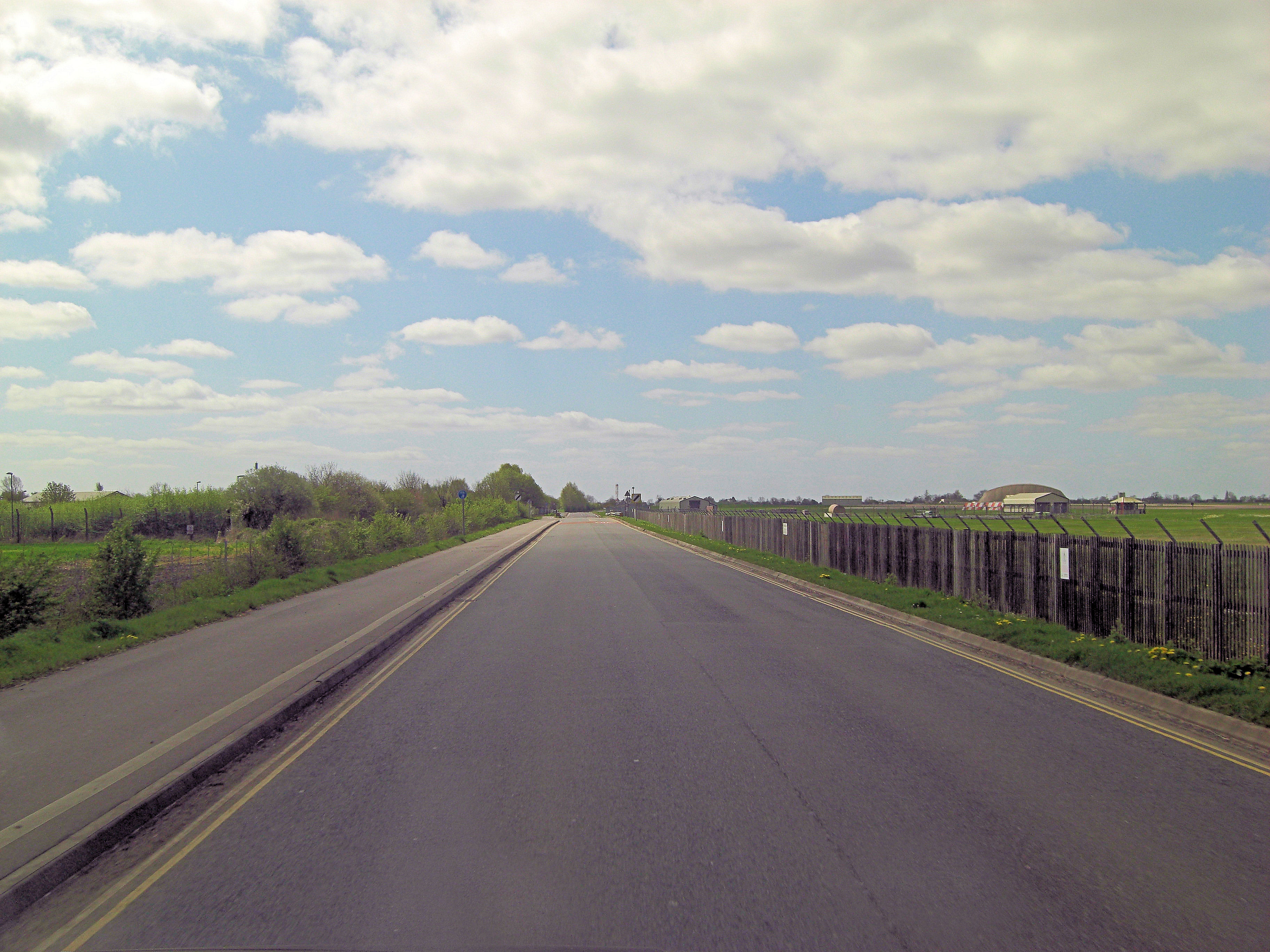
What gave the incident its strategic weight was what sat on the airfield behind the perimeter fence. RAF Fairford had been used by United States B-1 Lancer bombers to carry out strikes on Iran, making the base not merely a military site but an active node in a live war. Within days of the September arrests, the bombers were withdrawn from Fairford on security grounds. See our report on the withdrawal of the B-1 bombers from RAF Fairford. Moving a strategic bomber fleet because of a suspected ground threat is an extraordinary step, and it told its own story about how seriously both governments treated whatever had been found in those lanes.
The political attribution followed quickly. Earlier this month Prime Minister Andy Burnham said the suspected Fairford plot was "almost certainly directed by Iran's Islamic Revolutionary Guard Corps". See our report on Burnham's IRGC accusation and the Fairford sanctions response. Further arrests followed in London, including the dual national whose position is described above. See our report on the Westminster arrest in the Fairford investigation. Iran has firmly rejected the accusations throughout. Tuesday's charges are the first time any part of that official account has been put before a court.
Why this matters
The Fairford charges matter first because they convert a diplomatic accusation into a criminal case, and those two things run on entirely different rules. A prime minister can say a plot was "almost certainly" directed by the IRGC on the basis of intelligence that never has to be shown. A prosecutor saying a named man engaged in conduct likely to materially assist a foreign intelligence service must prove it, in public, beyond reasonable doubt, with evidence the defence can challenge. If the prosecution succeeds, Britain's attribution to Iran stops being an assessment and becomes a court-tested fact, with consequences for sanctions, diplomacy and the legal treatment of the IRGC that no press statement could deliver. If it fails, the failure will be public in the same measure.
Second, the case is an early test of the National Security Act 2023 doing the job it was written for. The Act was designed for exactly the pattern counter-terrorism officials describe in the Fairford investigation: not a trained foreign officer caught with a camera, but British nationals, allegedly useful to a foreign service precisely because they are unremarkable, allegedly drawn toward a target of enormous value. Section 3's breadth — conduct "likely to materially assist" — was a deliberate choice by Parliament to let the law reach preparatory and support activity. Tuesday's charges begin the process of finding out where judges and juries draw that line in practice.
Third, the target explains the stakes. Fairford's B-1s were flying real missions against Iran. A ground incident at the base therefore sits at the junction of crime and war: too military to be ordinary offending, too deniable and proxy-shaped to be an act of open warfare. That ambiguity is the operating environment British security officials say they now inhabit permanently — Taylor's reference to "a range of incidents in recent months" that police believe were directed by the Iranian state, and the MI5 director general's recent public warning to the same effect. Fairford is the case where that general warning acquired names, dates and a courtroom.
Both sides, stated plainly
The police and prosecution position is set out above: two men charged on evidence reviewed by the CPS, a foreign intelligence service police believe to be Iran's, five further men on bail, and an investigation that remains open. The government position, stated by Burnham earlier this month, goes further politically — that the suspected plot was almost certainly directed by the IRGC — while stopping short of the proof a court requires.
Iran's position is a firm rejection. Tehran has denied involvement in the Fairford incident and rejected the British accusations, and Iranian officials have dismissed the claims linking the IRGC to the base as unfounded. Iran has not, in the reporting available on Tuesday, commented specifically on the two charges themselves.
The defendants' position must be recorded with equal precision: no defence statement from Abdulkarim or Essghir has been reported, no pleas have been entered at the time of the charging announcement, and under English law both men are presumed innocent unless and until a court finds otherwise. The CPS accompanied its announcement with the standard but important reminder that criminal proceedings are active and that both men have the right to a fair trial — a reminder that applies to commentary on this case as much as to this report.
What the numbers actually mean
Strip the case back to its arithmetic and its shape is unusual. Two men charged, out of a wider group: five other arrested men remain on police bail, one dual national has been released without charge on his most recent arrest while remaining on bail from an earlier one, and one further man has been interviewed under caution. That pattern — a small charged core inside a larger arrested circle — usually means one of two things, and the public evidence does not yet distinguish between them: either investigators believe they have identified the principal actors and the rest of the circle was peripheral, or the evidence against the others has not yet reached the charging threshold and may never do so. Bail in a National Security Act investigation is not an ending; it is a holding position that can resolve into charges, into no further action, or into months of continuing inquiry.
The dates carry information too. The Section 4 allegation against Essghir concerns suspected activity on August 22 — more than a month before the September 27 arrests — which, if prosecutors' account is right, would place the alleged conduct well before the night that brought police to Whelford, and would recast September 27 as a late chapter rather than the beginning. The reported August 31 to September 28 window for the alleged Section 3 conduct spans almost the whole of September, ending the day after the arrests. Timelines of that shape are consistent with an investigation built from surveillance and retrospective evidence-gathering rather than a single interrupted act — though, again, consistency is not proof, and the provenance of each date will be tested in court.
What happens next
The immediate next step is the first hearing itself at Westminster Magistrates' Court — the court through which terrorism and national-security cases of this kind routinely pass — where the charges will be put, the defendants' identities confirmed, and the question of bail or custody addressed. National Security Act offences of this seriousness are tried in the Crown Court, so Tuesday's appearance is the opening of a process, not its substance: expect the case to be sent upward, a timetable set for the service of evidence, and plea and trial preparation hearings to follow over the coming months.
Three things are worth watching. The first is disclosure: the extent to which the prosecution case rests on intelligence material, and how much of it can be put into open evidence, has decided cases of this type before. The second is the bail group: any move to charge, re-arrest or release without further action among the five men still on bail will signal how wide investigators believe the network was. The third is the diplomatic track, which will not wait for the courts: Britain has already attributed direction to the IRGC at prime-ministerial level, Iran has already rejected that attribution, and a trial that names a foreign intelligence service in open court will land in the middle of a confrontation that is still moving.
For now, the position is narrow and should be stated narrowly. Two men are charged. The allegations against them are serious, specific and unproven. And the base at the centre of the case — emptied of its American bombers within days of the first arrests — stands as a reminder of why a courtroom in Marylebone Road is now, in a real sense, one of the places where the confrontation between Britain and Iran will be decided.
Related coverage
Sources
Reuters, October 27, 2026. CNN, October 27, 2026. Crown Prosecution Service, official release, October 27, 2026 — cps.gov.uk. Counter Terrorism Policing, official release, October 27, 2026 — counterterrorism.police.uk. The Times, October 27, 2026.