Tigray Ethiopia war 2026

ADDIS ABABA — The Tigray Ethiopia war 2026 moved from an escalating political and military crisis into declared open conflict on Wednesday, September 23. Tigray’s regional government said its forces had entered what it called a defensive war against Ethiopia’s federal army, hours after Tigrayan forces seized the main airport at Mekelle and took control of the airport at Shire. Axum airport was also reported seized, while Ethiopian Airlines suspended flights to all three cities.
The most important confirmed facts are narrower than some of the claims already circulating. Reuters reported that regional forces seized three airports and clashed with federal troops in multiple locations. Ethiopian Airlines publicly halted service to Mekelle, Shire and Axum “due to the current situation in Tigray region.” Local sources told Reuters that Tigrayan forces took Mekelle’s Alula Aba Nega Airport from federal police overnight. The federal government had not publicly responded to the regional government’s declaration at the reporting cutoff.
Other battlefield claims remain contested or unverified. Two humanitarian workers told AFP that fighting began late Tuesday in Abala and Erebti in neighbouring Afar. A foreign security source told AFP that Tigrayan forces controlled Abala. A former senior TPLF official claimed that Tigrayan forces had taken Berhale, Erebti, Abala, Megale, Dalul and Konoba, but AFP said it could not independently confirm that wider list. A former TPLF leader now aligned with the federal government alleged an all-out offensive in Afar and Amhara; AFP said it could not verify fighting in Amhara.
That distinction matters. The airport takeovers and airline suspension are supported by multiple reports and an operational decision by the carrier. Claims about who initiated every clash, which towns changed hands and whether one side is retreating depend largely on parties to the conflict or unnamed local sources. Signal Post News has not independently verified battlefield control beyond the reporting cited below.
What Tigray declared — and what has not been proved
The Tigray TPLF defensive war declaration came in a statement accusing federal forces of “intensive bombardments” on Tuesday using aircraft, drones and artillery. AFP said those attack claims could not be independently verified. The federal government’s lack of an immediate public response means there is not yet an official federal account against which to compare the regional statement.
“The Tigray army has been instructed to counter the attack and genocidal invasion launched against us, and has entered into a defensive battle”
Tigray regional government statement, as reported by AFP
The quote establishes how Tigray’s leadership is presenting its military action; it does not independently establish that the federal government launched the alleged bombardment or that the legal threshold for genocide has been met. “Defensive war” is the regional government’s characterization. Reuters described the airport seizures and multi-front clashes as signalling a major offensive by Tigrayan forces after months of rising tension.
A careful account can hold both points at once. Tigray says it acted in response to attack. Independent reporting confirms that its forces seized key airports and fought federal troops. The chronology and responsibility for the first shots remain disputed. Until monitors, satellite imagery, verified footage or detailed statements from both sides establish more, claims about initiation should remain attributed.
Why the airport seizures change the conflict
The phrase Mekelle airport seized TPLF is not merely a transport update. Airports are gateways for civilians, humanitarian staff, government officials and potentially military logistics. Taking them gives regional forces physical control over critical infrastructure while depriving federal police of an important presence inside Tigray. It also immediately narrows civilian mobility: Ethiopian Airlines’ suspension cuts the region’s scheduled air links.
That does not mean the airports are necessarily usable for military operations or that Tigray controls the airspace. Ethiopia’s federal military retains aircraft and an expanding drone capability. A runway held on the ground can still be monitored, threatened or disabled from the air. The strategic value is therefore real but conditional: control improves the Tigrayan side’s leverage and local movement while also creating fixed sites that may require protection.
The reported seizure of three airports at once also suggests planning rather than an isolated confrontation. Reuters called the moves a major offensive. Yet the available reporting does not establish the size of the forces involved, the condition of the runways, whether federal personnel surrendered or withdrew, or whether control remained uncontested throughout Wednesday. Those are facts to watch rather than assumptions to fill.
How the Pretoria Agreement collapsed
The Pretoria Agreement collapse in Ethiopia is not the result of a single Wednesday operation. The November 2, 2022 accord ended two years of war between federal forces and the TPLF and created an interim administration for Tigray. It reduced large-scale fighting, but implementation remained incomplete and the two sides repeatedly accused each other of violations.
The political architecture deteriorated as the TPLF split. Reuters reported that a hardline faction reasserted control over the region and removed the interim administration in May 2026. The federal government viewed that step as a repudiation of the postwar arrangement. The TPLF, meanwhile, argued that Addis Ababa had not fulfilled core commitments. With the agreed transition displaced by rival claims to authority, military incidents increasingly lacked a trusted political mechanism to contain them.
Recent drone strikes and troop movements pushed the crisis closer to war. AFP reported that the federal government had launched drone strikes in Tigray and massed troops along the regional border, while the government had not commented on the reported strikes. Ethiopia’s military said last week that nearly 300 Tigrayan fighters had surrendered; that figure is an official federal claim and has not been independently verified in the sources reviewed.
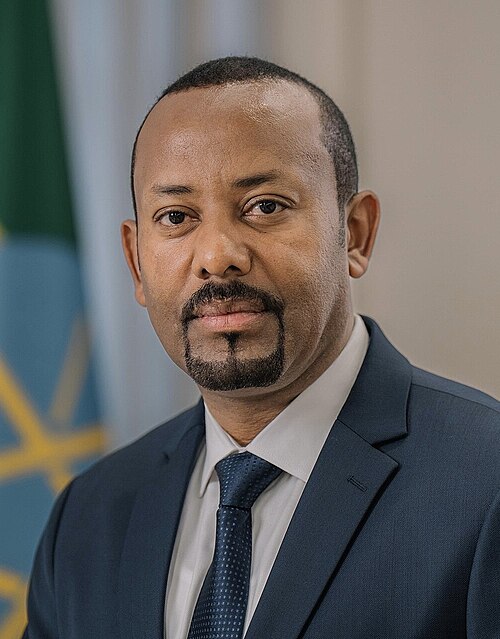
The TPLF then announced on Sunday that it had joined an alliance with six other armed groups from across Ethiopia aimed at removing Abiy’s government. Reuters said the coalition included former enemies from the last war. It remains unclear how many alliance members participated in Wednesday’s fighting. References to a TPLF alliance with Fano, Amhara and Afar actors require care: armed groups and regional populations are not interchangeable, and claims of participation need group-by-group evidence.
The human stakes: a region that never recovered
The 2020–2022 war killed hundreds of thousands. AFP cited an African Union estimate of about 600,000 deaths, while Reuters used the broader formulation “hundreds of thousands.” The difference is not a contradiction so much as a warning about wartime counting: access restrictions, unrecorded deaths and disputed methodologies make precision difficult. The most defensible conclusion is that the previous war was among the deadliest conflicts of the century.
AFP reported that about one million people remain displaced and that many parts of the peace agreement were never implemented. Renewed fighting adds immediate risks to people already living with interrupted livelihoods, damaged services and insecure access to food or health care. One humanitarian worker in Afar told AFP that aid teams were sending a truck of food for newly displaced people and expected the fighting to expand.
The airports intensify that vulnerability. Even if the facilities themselves are not attacked, suspended commercial flights constrain the movement of aid staff, medical cases and civilians. Road access can be slow or dangerous as front lines shift. The first civilian harm may therefore appear not only in casualty reports but also in delayed treatment, disrupted deliveries and new displacement.
None of those consequences proves either side’s claims about the other. Humanitarian need is not evidence of battlefield responsibility. It is a predictable result of renewed fighting in a region with little reserve capacity after the earlier war.
The military balance: drones versus territorial networks
The Ethiopia federal army Tigray fighting begins with asymmetrical advantages. The federal government controls a national military, has expanded domestic drone production and can project air power. AFP assessed that Addis Ababa holds a significant military advantage because of that drone capacity. Tigrayan forces, however, retain experienced commanders, local networks and familiarity with difficult northern terrain.
The opening airport seizures demonstrate the value of speed and local concentration. A force that can overrun dispersed police positions and contest routes may gain leverage before the federal military concentrates. But taking infrastructure is different from holding it against air surveillance and sustained counterattack. The outcome will depend on logistics, air defense, command cohesion and whether other armed groups open pressure elsewhere.
This is also why claims of retreat or rapid territorial change should be treated cautiously. Early-war maps often convert reports from one road or town into broad judgments about momentum. Signal Post News will describe control as confirmed only when multiple credible sources or public evidence support it.
The drone dimension resembles a wider trend examined in our Ukraine air-defense analysis: inexpensive or locally produced unmanned systems can compress reaction time and make fixed infrastructure harder to protect. Ethiopia is not Ukraine, and the force structures differ, but the operational lesson is similar—air power can turn airports, roads and supply depots into liabilities as well as prizes.
Eritrea, Assab and the risk of a wider Horn of Africa war
The most dangerous uncertainty lies beyond Tigray. Eritrean forces fought alongside Ethiopia’s federal army in the previous war, but Eritrea was not a party to the Pretoria agreement. Relations between Addis Ababa and Asmara have since deteriorated. Ethiopia has accused Eritrea of financially backing members of the new anti-government alliance; Eritrea denies the allegation.
Red Sea access compounds the tension. Landlocked Ethiopia has argued that access to the sea, particularly through Eritrea’s port of Assab, is strategically important. Eritrea has said it fears Ethiopia could try to take Assab by force. There is no verified evidence in the reporting reviewed that Wednesday’s fighting is an Ethiopian operation against Eritrea or that Asmara has entered the conflict. The risk comes from overlapping rivalries, not proof of a coordinated regional war.
An Eritrea Ethiopia war risk over Assab would place the Tigray front beside one of the world’s busiest maritime corridors. Sudan’s civil war, instability in Somalia, Nile disputes involving Egypt and Sudan, and Gulf-state competition already crowd the region. Reuters reported diplomats’ warnings that a renewed Tigray war would not remain as isolated as the 2020 conflict.
That concern connects with developments across the Red Sea covered in our analysis of the Saudi–Houthi and Iran-linked front. The conflicts are separate and should not be merged into one narrative, but they share transport corridors, outside powers and the risk that local escalation draws in states with wider strategic interests.
Who gains, who loses
Tigray’s leadership gains immediate leverage from holding key airports and demonstrating that federal positions inside the region are vulnerable. It can present the operation to supporters as proof that it can resist Addis Ababa. That gain is fragile: fixed infrastructure must be defended, and any civilian disruption or coercive recruitment would deepen political costs.
Abiy’s government loses the central promise of Pretoria—that national authority and regional self-government could be managed without renewed large-scale war. It still retains superior state resources and air capabilities. A forceful response may reassert control, but it could also reproduce the destructive pattern that the 2022 accord was meant to end.
Other armed groups may gain bargaining power if the federal military is stretched across several regions. That does not mean the new alliance is cohesive or capable of coordinated national action. Reuters explicitly said it was unclear how many alliance members took part in Wednesday’s clashes.
Civilians are the clearest losers. Commercial flights are suspended, new displacement has been reported and humanitarian access may narrow. People in Afar, Amhara and Tigray could face insecurity even where control is not yet independently verified. Any renewed mobilization would also pull scarce labour and public resources back into war.
Regional governments lose room to compartmentalize crises. Eritrea, Sudan, Egypt, Somalia and Gulf states face a more interconnected security environment. A conflict centered on Tigray can affect border policy, refugee flows, Red Sea strategy and alliances far beyond the immediate battlefield.
What the numbers mean
Three airports: Mekelle and Shire were reported seized, with Axum also reported under Tigrayan control. The airline halted service to all three. This is operationally significant, but it does not establish full control of surrounding airspace or the cities themselves.
Six allied groups: the TPLF says it joined six other armed organizations. The number indicates broad opposition networks, not necessarily unified command. The actual participation of those groups in the new fighting remains unclear.
About 600,000 deaths: the African Union estimate cited by AFP conveys the scale of the 2020–2022 disaster. It should not be treated as a final audited total, but it makes clear why renewed war is not a routine flare-up.
About one million still displaced: this estimate shows how little humanitarian resilience exists. A second major campaign would begin before the social costs of the first had been repaired.
Nearly 300 alleged surrenders: Ethiopia’s military made this claim last week. It could indicate pressure on Tigrayan units, but without independent verification it should not be used to infer morale or force strength.
What happens next: four signals to watch
1. Whether Addis Ababa defines its objective
A federal statement could clarify whether the government plans to retake the airports, contain fighting at Tigray’s borders or remove the regional leadership. Silence leaves room for competing narratives and increases the risk that local commanders escalate without a visible political exit.
2. Whether air power targets the seized airports
Drone or aircraft strikes on runways, command sites or nearby roads would signal a campaign to isolate Tigray. They would also increase danger to civilians and could make restoration of humanitarian and commercial access much harder.
3. Whether the alliance becomes operational
Coordinated action by armed groups in other parts of Ethiopia would transform a renewed Tigray war into a broader challenge to the federal government. For now, participation outside the Tigrayan forces is unclear and several claims of fighting beyond Afar remain unverified.
4. Whether Eritrea moves
Confirmed Eritrean deployments, cross-border fire or direct support to a belligerent would sharply raise the stakes. At publication, accusations about Eritrean financing and alliances were disputed, and there was no verified report in the reviewed sources that Eritrea had entered Wednesday’s fighting.
The bottom line
The Tigray Ethiopia war 2026 has crossed a line. A regional government has declared war, its forces have taken key airports, the national airline has halted flights and fighting has been reported beyond Tigray’s boundary. Those facts are sufficient to say that the Pretoria peace framework has failed as a mechanism for preventing renewed armed conflict.
They are not sufficient to settle who started every clash, which side controls every claimed town or whether a nationwide anti-government alliance is operating as a unified force. AFP, Reuters and CNN reporting includes claims by the Tigray government, federal-aligned figures, local sources and former TPLF officials that Signal Post News could not independently verify. The federal government’s account was still missing at the reporting cutoff.
The immediate test is whether the parties treat the airport seizures as leverage for emergency mediation or as the first move in another full campaign. The last war’s death toll, unresolved displacement and the region’s wider rivalries make delay dangerous. As with the ceasefire disputes tracked in our Ukraine diplomacy coverage, declarations matter only when they produce verifiable limits on force. In Tigray, no such limit is yet visible.
Sources
- Reuters: Tigray regional government announces it has entered a defensive war
- Reuters analysis: why new war in Tigray threatens a wider conflict
- CNN: fighting erupts again between Tigrayan and Ethiopian forces
- AFP via Daily Express: Tigrayan forces seize airports and clash with federal troops
- Reuters via Sowetan: Ethiopian Airlines halts Tigray flights after Mekelle airport seizure
Reporting basis: Fixed September 23, 2026 snapshot with a 4:35 p.m. PDT reporting cutoff. Airport seizures and flight suspensions are supported by Reuters, AFP and local-source reporting. Claims about bombardment, responsibility for starting the fighting, control of towns in Afar, an offensive in Amhara, troop surrenders and outside support are attributed to the parties or sources making them and were not independently verified by Signal Post News. Analysis is our own.