Egypt bus crash kills 13: a passenger bus and a heavy truck collided on the Cairo–Assiut Western Desert Road near Giza on Tuesday, in the latest mass-casualty crash on the desert highways that carry Egypt between its capital and the south.
World / Africa — state media put the toll at 13 dead and 34 injured; the Health Ministry’s first count was 12 dead and 30 injured, the early accounts of how it happened conflict, and the crash lands in a year when Egypt’s road deaths rose again
What happened on the Western Desert Road
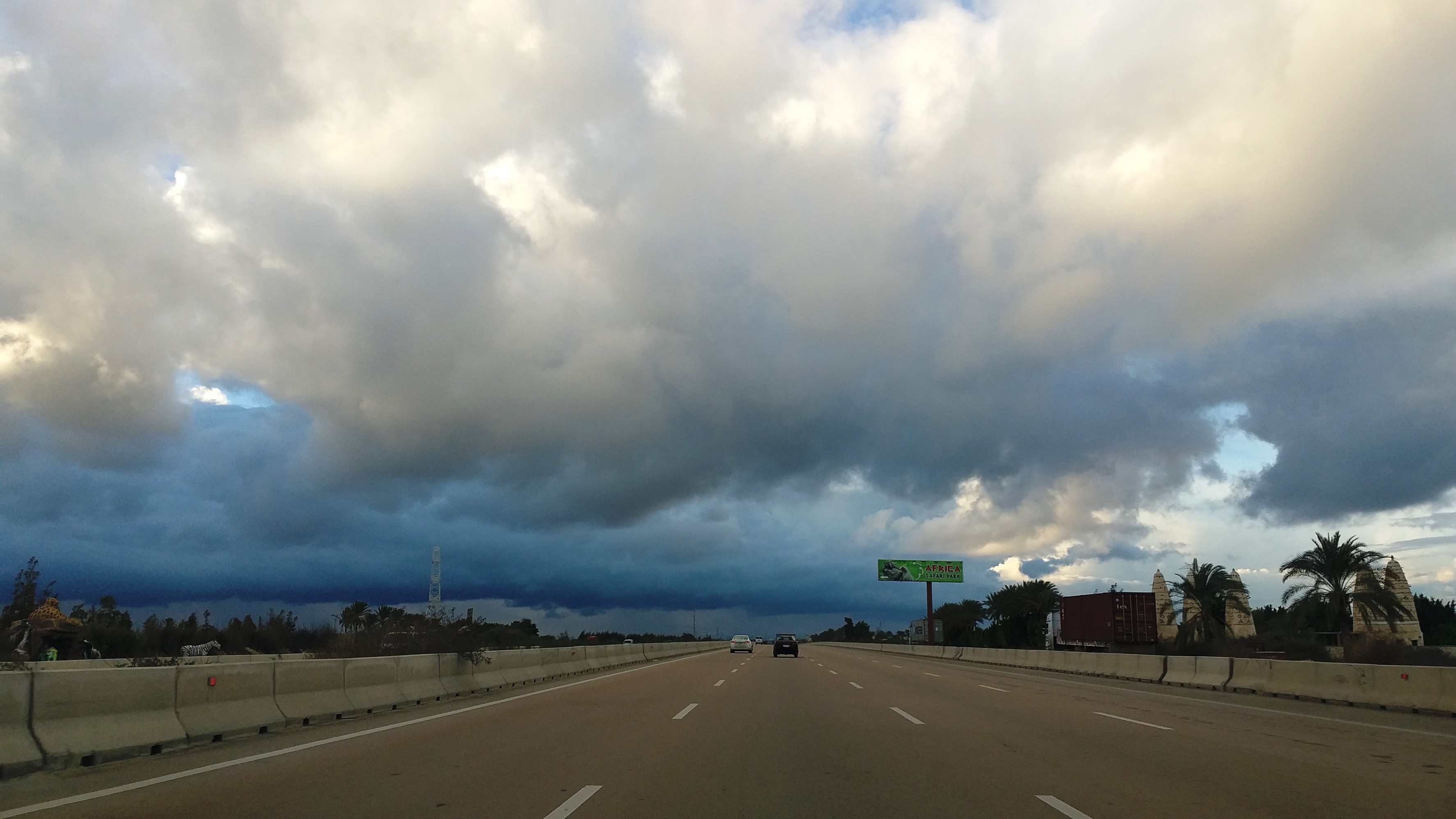
The crash occurred at kilometre 55 near the Dahshur gate, before the entrance to the regional road leading toward Giza governorate, according to the Health Ministry’s initial report, carried by Gulf News. Dahshur — better known abroad for its ancient pyramids — sits southwest of Cairo, where the Western Desert Road runs south from the capital toward Beni Suef, Minya and Assiut, carrying the long-distance buses and heavy trucks that link Cairo to Upper Egypt.
The response was large. The Egyptian Ambulance Authority initially sent 28 ambulances, ministry spokesman Dr Hossam Abdel Ghaffar said, with more vehicles following and ambulance teams joining from Giza, Fayoum and Beni Suef governorates. The injured were taken to a hospital in Giza, and Health Minister Dr Khaled Abdel Ghaffar directed nearby hospitals to raise their readiness and make sure medical resources were in place. The ministry cautioned that its toll was preliminary and that casualty assessment was still under way — which is why the counts moved: 12 dead and 30 injured in the ministry’s first statement, reported by Xinhua; 13 dead and 34 injured in the updated state-media figure reported by AFP; and 13 dead with as many as 37 injured in later local-media reporting carried by The Sun, which said five of the dead had not yet been identified. The verified floor is this: at least twelve people died, the state’s own updated count is thirteen, and dozens were hurt.
How the two vehicles came together is not settled, and the early accounts point in different directions. AFP, citing state media, reported that a large truck crashed into a tour bus. Local reporting carried by Gulf News and The Sun described the opposite sequence — a bus travelling from Upper Egypt striking a truck with such force that the bus split in half — and raised two possible causes: preliminary traffic investigations suggesting the bus driver may have fallen asleep at the wheel, and a security source cited by the Egyptian news site Masrawy who said the bus was speeding and hit the truck’s rear while overtaking. Other accounts said the truck was stationary. None of this has been established: authorities have opened an investigation, and no official cause has been announced. What is not in dispute is the violence of the impact — a bus with its front torn away, seats thrown across the road, and wreckage that had to be lifted clear by crane while the highway was cleared.
Why this matters
Thirteen deaths on a Tuesday would be a national shock in many countries. In Egypt, it is a recurring headline, and that is precisely the story. Road crashes killed 5,829 people and injured 84,553 in Egypt in 2025, according to the Central Agency for Public Mobilization and Statistics (CAPMAS) — deaths up 10.8 percent and injuries up 10.7 percent in a single year, reversing the improvement of 2024, when deaths had fallen 10.3 percent to 5,260. Across 2019 to 2025, CAPMAS’s annual figures add up to 44,940 people killed and 476,126 injured on Egyptian roads: a medium-sized town dead, a city hurt, in seven years — during a decade in which the state spent heavily on new roads, bridges and highway upgrades.
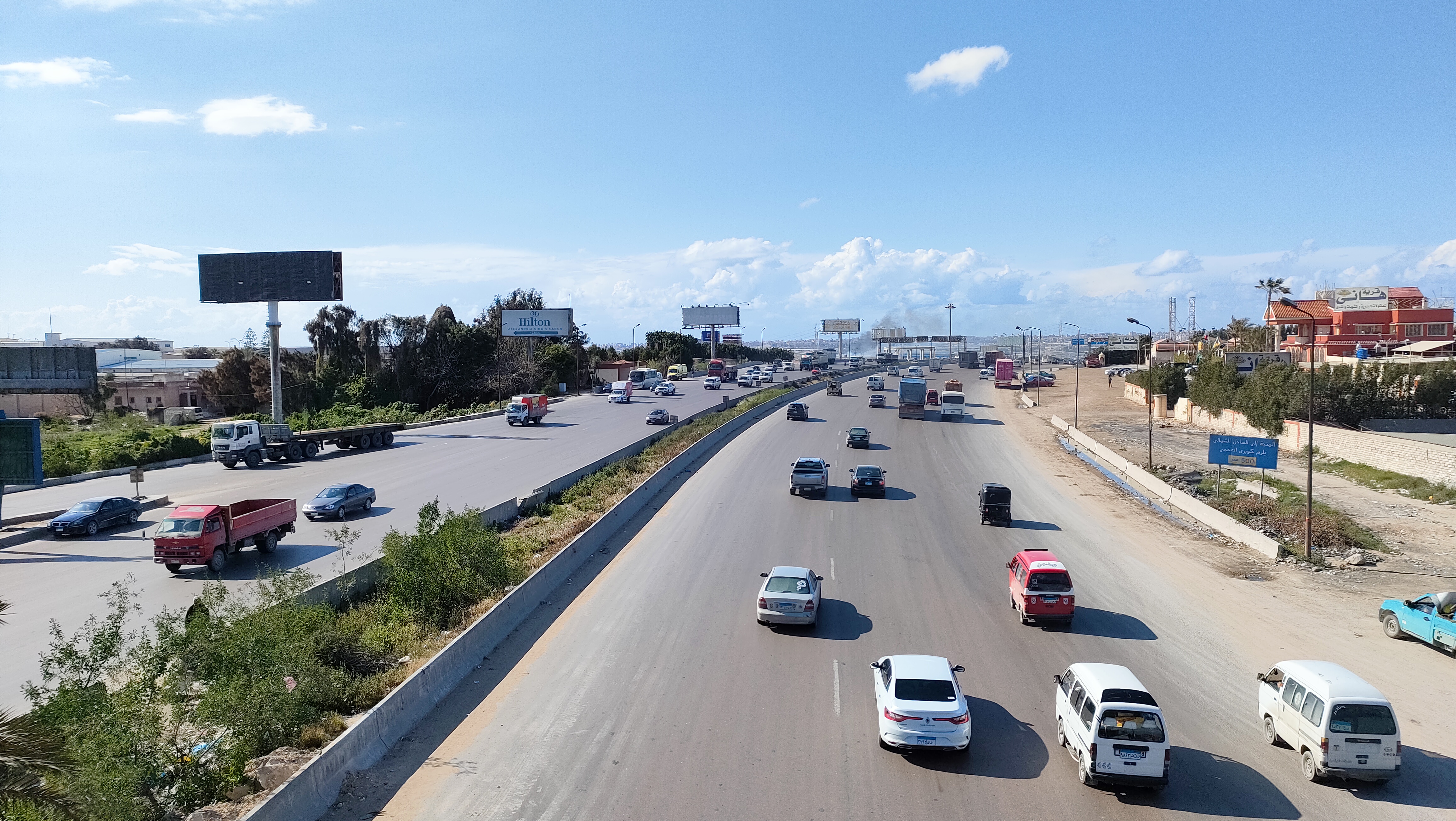
That paradox — better asphalt, rising deaths — is the analytical heart of this crash. Egypt has built thousands of kilometres of modern divided highway, and the Western Desert Road is part of that newer network: wide, straight and fast. But speed is a multiplier. On a modern desert highway, traffic that once crawled now moves at full motorway pace, and the mix has not changed — long-distance buses driven on tight schedules, heavy trucks, minibuses and private cars sharing the same lanes. When something goes wrong at that speed — fatigue, a moment of sleep, an overtaking misjudgement, a stationary truck — the energy involved is unforgiving, and a bus full of passengers becomes the worst possible vehicle to be in. Investigators have not said which of those failures, if any, caused Tuesday’s crash. But the pattern of Egypt’s recent mass-casualty wrecks — officials repeatedly cite speeding, reckless driving, poor vehicle maintenance and weak enforcement — suggests the questions will be familiar ones. Last month, a bus crash in Sinai killed 22 people, including 10 Jordanian tourists. In August, two pickup trucks carrying agricultural day labourers collided in northern Egypt and killed at least 18 people, many of them children.
There is also an accountability gap hiding in the numbers themselves. The three tolls for this one crash — 12, 13, and injury counts of 30, 34 and 37 — are not evidence of confusion so much as of a system that counts the dead in stages, through ministries and state newspapers, while families wait. And the national statistics carry their own caveats: CAPMAS’s 2025 bulletin notes injury data from two governorates had not even been received. Egypt’s true road toll is, by the statisticians’ own admission, an undercount.
The state’s answer so far: tougher penalties
Cairo is not ignoring the problem; it is legislating against it. Egypt’s cabinet has approved amendments to the traffic law that double penalties for repeat offences, impose mandatory imprisonment for third-time offenders, and raise fines — reaching EGP 30,000 in some cases — for offences including driving without a valid licence, reckless driving by fast-transport vehicles and falsifying official data, according to the State Information Service. Officials say the changes are part of a broader effort to cut fatalities and enforce compliance across the road network, and they attribute the majority of serious accidents to human factors: speeding, ignoring traffic rules, unlicensed driving and poor vehicle condition, particularly among fast-transport and heavy vehicles.
The critics’ counter-argument is about where the leverage really sits. Penalties deter only where enforcement is consistent, and the same official analyses that celebrate Egypt’s new highways note how much driving behaviour on them goes unpoliced — long, empty desert stretches are exactly where speed cameras, rest enforcement for professional drivers and roadside vehicle checks are hardest to sustain. A sleeping-at-the-wheel hypothesis, if the investigation confirms it, would point at scheduling and rest rules for long-distance bus drivers — an operator-compliance problem, not just a driver-error problem. A speeding-and-overtaking finding would point at enforcement. A stationary-truck finding would point at breakdown protocols and shoulder safety on high-speed roads. Each cause implies a different fix, which is why the investigation matters more than the first day’s speculation — and why this article treats all three early accounts as unproven.
What happens next
Three things will decide whether Tuesday’s crash becomes a turning point or another entry in the ledger. First, the investigation: prosecutors and traffic investigators will establish the sequence — which vehicle struck which, at what speed, and whether fatigue, speed or a stopped truck was involved — and whether the bus operator’s scheduling and the vehicle’s condition meet the rules. Second, the final toll: the Health Ministry has promised updates as assessments finish, and several of the injured were described as seriously hurt, so the count of thirteen may not be the last word. Third, the policy follow-through: whether the tougher traffic penalties now moving through the system are matched with visible enforcement on the desert highways themselves — the places where Egypt’s newest roads and oldest driving habits meet at the highest speeds.
For the families of the thirteen, none of that arithmetic matters yet. A bus left Upper Egypt on an ordinary Tuesday, on one of the most ordinary journeys in Egyptian life — the ride to Cairo — and did not arrive. Egypt’s other big story this week is diplomatic, as parliament weighs the president’s request to back Saudi Arabia; the region’s turmoil reaches Egypt’s roads in other ways too, as the fallout from Sudan’s war shows. But the deadliest threat most Egyptians face is not a war or a summit. It is the road home — and on Tuesday, near a town famous for pyramids built to cheat death, it claimed thirteen more.
Sources
Agence France-Presse (via News Central and The Frontier Post, October 20, 2026): Al-Ahram state-media toll of 13 killed and 34 injured; AFP correspondent’s scene reporting. Xinhua (via Qazinform, October 20, 2026): Egypt Ministry of Health and Population initial statement — 12 killed, 30 injured, 28 ambulances, figures preliminary. Gulf News reporting (via TOB News, October 21, 2026, and The Sun, October 20, 2026): kilometre-55/Dahshur location detail, ministry spokesman’s statements, Amwag Travel identification, fell-asleep and speeding accounts attributed to preliminary investigations and a Masrawy-cited security source — all unconfirmed. Egypt State Information Service: cabinet-approved traffic-law amendments and CAPMAS figures for 2024 (5,260 deaths, 76,362 injuries). CAPMAS 2025 bulletin as analysed by Zawia3 (5,829 deaths, 84,553 injuries in 2025; 44,940 deaths and 476,126 injuries across 2019–2025). This article’s toll follows the state-media/AFP figure of 13 killed; where early reports conflict, the conflict is stated in the text.