The Tesla SpaceX merger stopped being a rumor on Tuesday. Elon Musk used SpaceX’s third-quarter earnings call to confirm that both companies have formed special committees of independent directors to study combining Tesla and SpaceX — the first formal, board-level step toward what would be the largest corporate merger ever attempted.
Technology / Business — the boards of Musk’s car company and his rocket company are now formally studying a combination he supports but cannot negotiate himself
Track it live: live markets tracker
What Musk actually announced
The disclosure came in answer to a question from Deutsche Bank analyst Edison Yu during the earnings call. Musk confirmed that both boards have formed special committees made up of independent directors, that the committees were set up at shareholders’ request, and that they “have not reached agreement on the terms of any transaction.” He endorsed the idea in the same breath that he warned against assuming it: “Some people out there assume that a SpaceX and Tesla merger is a certainty, and I think that would be overstating it. Do I think it would be a good idea? Yes. But at the end of the day the shareholders have to be supportive of this.”
That distinction matters. Until Tuesday, a Tesla SpaceX merger existed only as analyst speculation, prediction-market pricing and Musk’s own hints — he had twice this year declined to rule a combination out. A review of Tesla’s SEC filings through October 16, published last week, found no reference to a merger, a transaction agreement or a deal timetable in the company’s quarterly reports. What the filings did show was a growing financial embrace: Tesla disclosed in its second-quarter 10-Q that it holds a $2 billion investment in SpaceX common stock — a minority position of less than 1 percent, with no control over SpaceX — alongside ordinary-course sales of Megapack energy-storage systems between the two companies. The committees are the first governance step beyond that embrace.
Why this matters
A combined Tesla–SpaceX would be a company unlike anything public markets have held: the world’s most valuable carmaker, its largest rocket and satellite operator, a global broadband network, a humanoid-robotics program and one of the biggest artificial-intelligence compute fleets on Earth, under one ticker and one chief executive. At the October 16 close, the two companies together were worth roughly $3.38 trillion, with SpaceX valued at about 1.41 times Tesla; Barclays has put a potential combined value near $3.6 trillion. Either figure would make a merger the largest in corporate history by a wide margin.
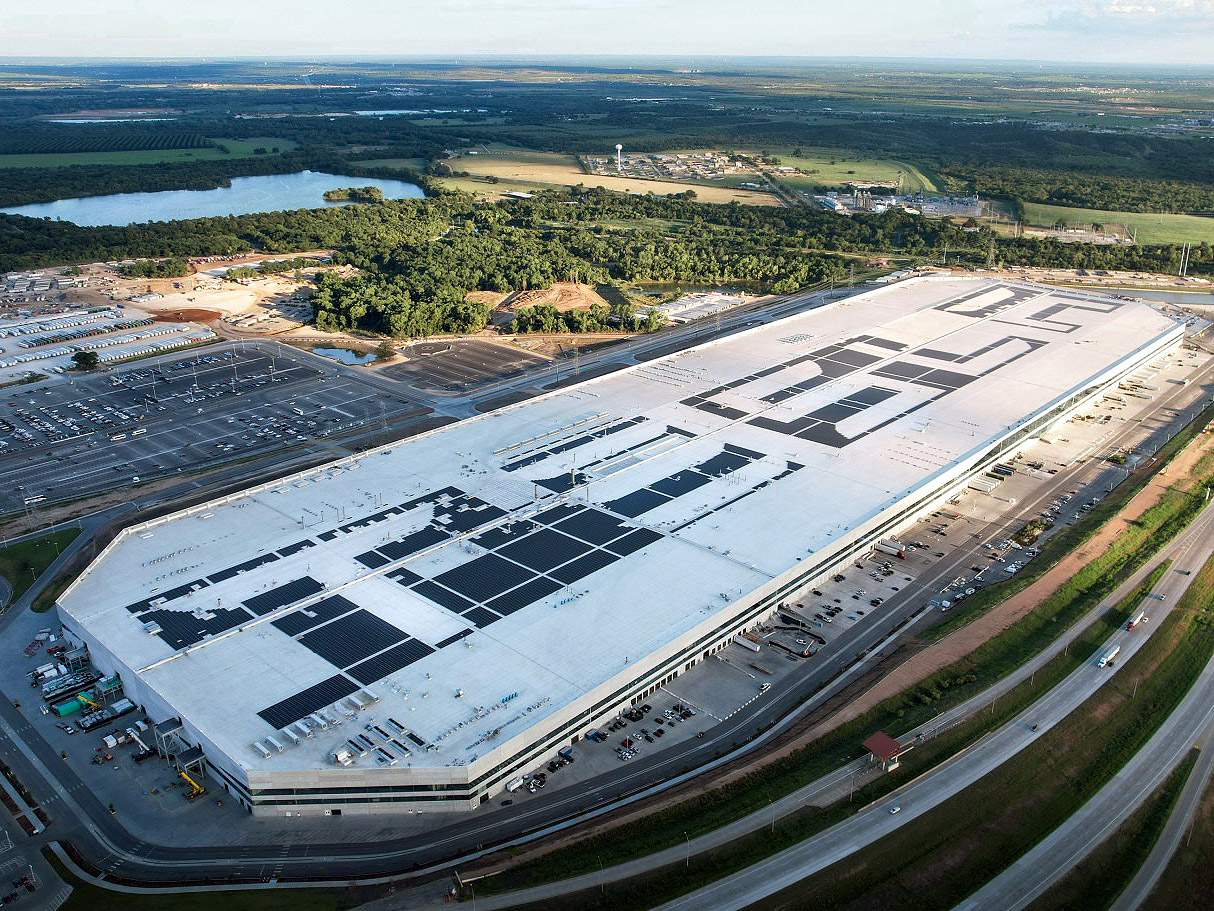
Musk’s stated case is industrial, not financial. He pointed to shared work in “superintelligence software, chip design, the Terafab, obviously robotics,” and to getting mass to orbit for the satellite network, adding: “I do think there’s a lot of merit to combining the companies as we are pretty much in the superintelligence singularity.” Terafab is the two companies’ joint chip-manufacturing project in Austin; SpaceX is also developing Starmind, an orbital AI data-center project, while Tesla builds the Optimus robot and its own AI training clusters. The overlap is already operational: SpaceX folded xAI into itself in February, and the resulting AI segment was SpaceX’s largest in the third quarter. The merger question is whether a shared owner is no longer enough — whether the two balance sheets should become one.
The numbers behind the dance
The ownership arithmetic explains both the appeal and the controversy. Musk owns approximately 20 percent of Tesla and about 48 percent of SpaceX, where supervoting shares give him roughly 82 percent of the voting power. Barclays analyst Dan Levy has modeled an all-stock acquisition of Tesla by SpaceX that would leave Musk with about 37 percent of the combined company’s equity and roughly 56 percent of its voting power — far more control than he holds at Tesla today, where he has repeatedly said he wants about 25 percent voting control to pursue his AI and robotics ambitions. Supporters call that alignment; governance critics call it the point of the deal. Both readings will be argued, loudly, if the committees produce terms.
Markets are pricing a real but incomplete chance. Prediction-market traders put the odds of a combination at 18.5 percent by the end of 2026 and 64 percent by the end of 2027, in pricing updated October 19 — sentiment, not evidence, but a measure of how quickly Tuesday’s disclosure could reprice both stocks. Tesla investors have chased Musk’s empire-building before, most recently in the frenzy around the flying Roadster unveil, and SpaceX’s own borrowing and chip deals — including its $40 billion Nvidia chip financing — show how much capital the combined group already moves.
The hurdle Musk named himself
The hardest step is not the committees; it is the vote. Musk noted that Tesla would need approval from 50 percent of all outstanding shares — not merely a majority of votes cast — and called that “quite a high hurdle to achieve.” He knows the math from experience: Tesla’s 2025 attempt to declassify its board won support from only 39.4 percent of outstanding shares and failed, even though most votes cast were in favor. Musk’s own Tesla stake sits near 20 percent after he exercised his 2018 options in June, so a merger would need broad backing from institutional holders and from a retail base that often does not vote at all. On the SpaceX side, by contrast, Musk controls more than 50 percent of the voting power after the IPO, making approval there the far easier lift — which is precisely why governance critics say the structure of any deal, and who is seen to benefit from it, will decide the Tesla vote.
Who is in the rooms Musk cannot enter
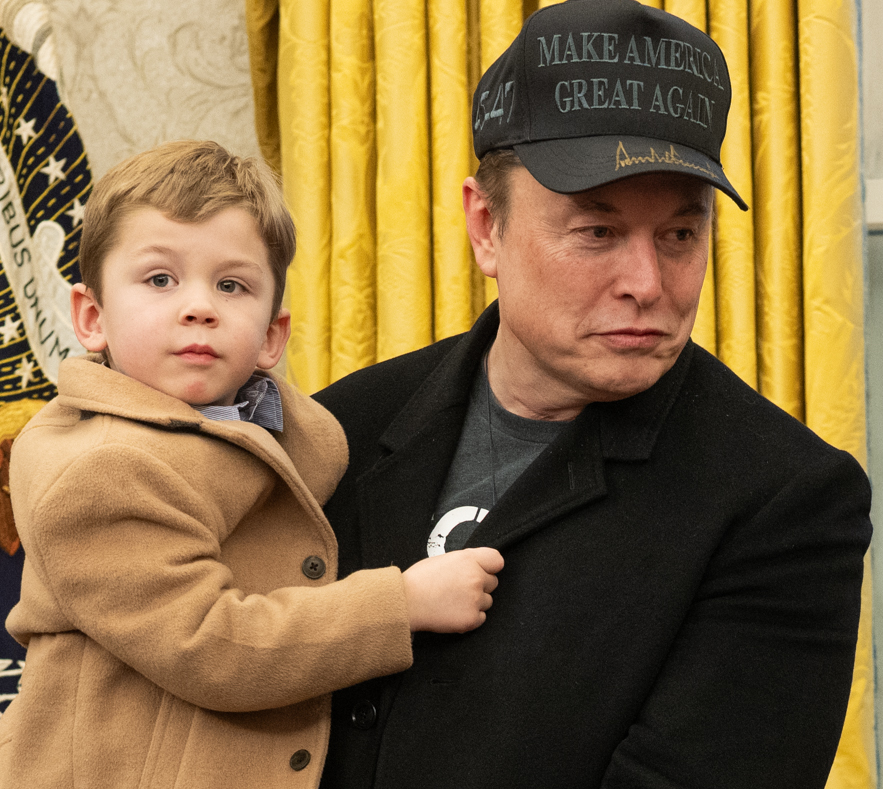
Musk did not name the committee members, saying only that they are independent directors. Tesla lists seven independent board members under Nasdaq standards in its October 19 proxy filing: chair Robyn Denholm, Ira Ehrenpreis, former Tesla CTO JB Straubel, Joe Gebbia, Jack Hartung, James Murdoch and Kathleen Wilson-Thompson. Neither Elon Musk nor his brother Kimbal is independent. SpaceX lists six independent directors: Ehrenpreis — who sits on both boards and chairs SpaceX’s compensation and nominating committee — Randy Glein, Donald Harrison, Steve Jurvetson, Luke Nosek and Roelef Boutha. The overlaps are part of the story: Antonio García, a SpaceX director whose Valor Equity Partners holds a 3.4 percent stake in SpaceX, previously sat on Tesla’s board, and his firm has financed SpaceX AI-hardware purchases through leaseback arrangements. The committees exist precisely because connections like these mean an ordinary board vote would not be trusted by shareholders or regulators.
Who benefits, who loses, what critics say
For SpaceX shareholders, a merger offers liquidity logic and a ready-made public vehicle an order of magnitude larger than SpaceX’s own young listing. For Tesla shareholders, the pitch is exposure to the fastest-growing parts of Musk’s empire — Starlink, Starship and the AI segment — without buying a second stock. The risks run the other way: Tesla holders would be exchanging a straightforward car-and-energy company for a conglomerate whose value rests heavily on private-market-style assets, inside a structure where supervoting control is entrenched. Musk has been here before: the 2016 SolarCity acquisition put his cousin-run solar installer inside Tesla amid conflict-of-interest criticism that followed the company for years. Analysts who back the idea, like Barclays’ Levy, argue the operational overlap has become too large to ignore; skeptics answer that overlap can be contracted between companies — as the Megapack sales and the $2 billion stake already show — without merging the shareholders’ fates.
What happens next
Three things to watch. First, the committees themselves: any agreed terms would arrive as a formal merger proposal with an exchange ratio, and either board can quietly let the review die — Musk has pre-written that exit by stressing that no terms exist. Second, the calendar: Barclays has noted Tesla must hold its annual shareholder meeting by December 6, giving Musk a possible near-term venue to seek approval, while a later proposal could require a separate process stretching six to twelve months. Third, the filings: the first hard evidence of momentum will be paper — an 8-K, a proxy statement, or committee disclosures in either company’s SEC file. Until one of those lands, Tuesday’s announcement is what Musk said it is: two rooms of independent directors, talking about the biggest merger ever proposed, while the man who wants it waits outside — by his own description, watching a kabuki dance he is not allowed to join.
Sources
- TechCrunch, Oct. 20, 2026 (special committees of independent directors; “kabuki dance” quote; independent-director lists from Tesla’s Oct. 19 proxy filing and SpaceX’s investor site; SpaceX-side voting control; Starmind and Terafab rationale).
- Tesla News Wire, Oct. 20, 2026 (earnings-call disclosure answering Deutsche Bank analyst Edison Yu; “not a certainty” and merger-rationale quotes; Benzinga call transcript).
- Teslarati, Oct. 20, 2026 (50 percent of all outstanding shares requirement; 2025 declassification vote at 39.4 percent; Musk’s ~20 percent Tesla stake after exercising 2018 options in June).
- The Wealth Advisor, reporting Barclays analysis, Oct. 16, 2026 (~$3.6 trillion combined estimate; Musk ~20 percent Tesla / ~48 percent SpaceX / ~82 percent SpaceX voting; ~37 percent equity and ~56 percent voting after an all-stock deal; December 6 annual-meeting deadline).
- Karmactive, SEC-filing review, Oct. 2026 (Tesla’s $2 billion SpaceX common-stock position in the Q2 10-Q; Megapack sales; no merger reference in Tesla filings through Oct. 16).
- Pure Power Picks merger tracker, updated Oct. 19, 2026 (~$3.38 trillion combined value at the Oct. 16 close; SpaceX ~1.41× Tesla; prediction-market odds of 18.5 percent by end-2026 and 64 percent by end-2027).