Nine Years Later: The Tesla Roadster Finally Arrives — and It Leaves the Ground
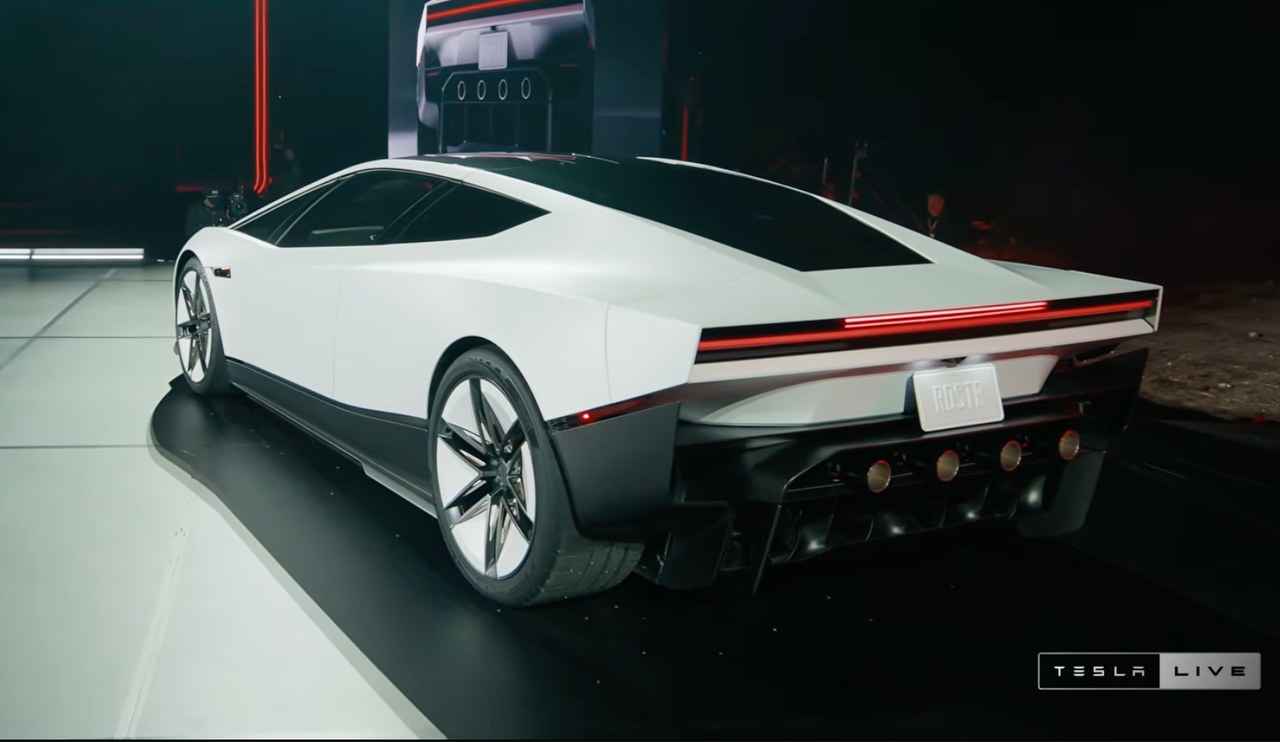
McGREGOR, Texas, October 15, 2026 — Tesla chose the venue as a statement. The reveal — livestreamed from 7:55 p.m. Central, after an October 1 date was postponed over weather — was staged outdoors at the SpaceX facility where rocket engines are test-fired, because this Roadster is as much a SpaceX product as a Tesla one. The car that rolled out is unrecognisable next to the svelte prototype of 2017: hard-edged and angular in the Cybertruck idiom, with steer-by-wire controls and an active rear wing. Musk, who had billed the evening in advance as a candidate for the greatest product demonstration of all time, called the car “the best of the last of the human-driven cars” and insisted that “this will be the actual car that’s on the roads.” He also acknowledged, with unusual candour for a car launch, that safety had not been the top design priority.
What Tesla actually demonstrated
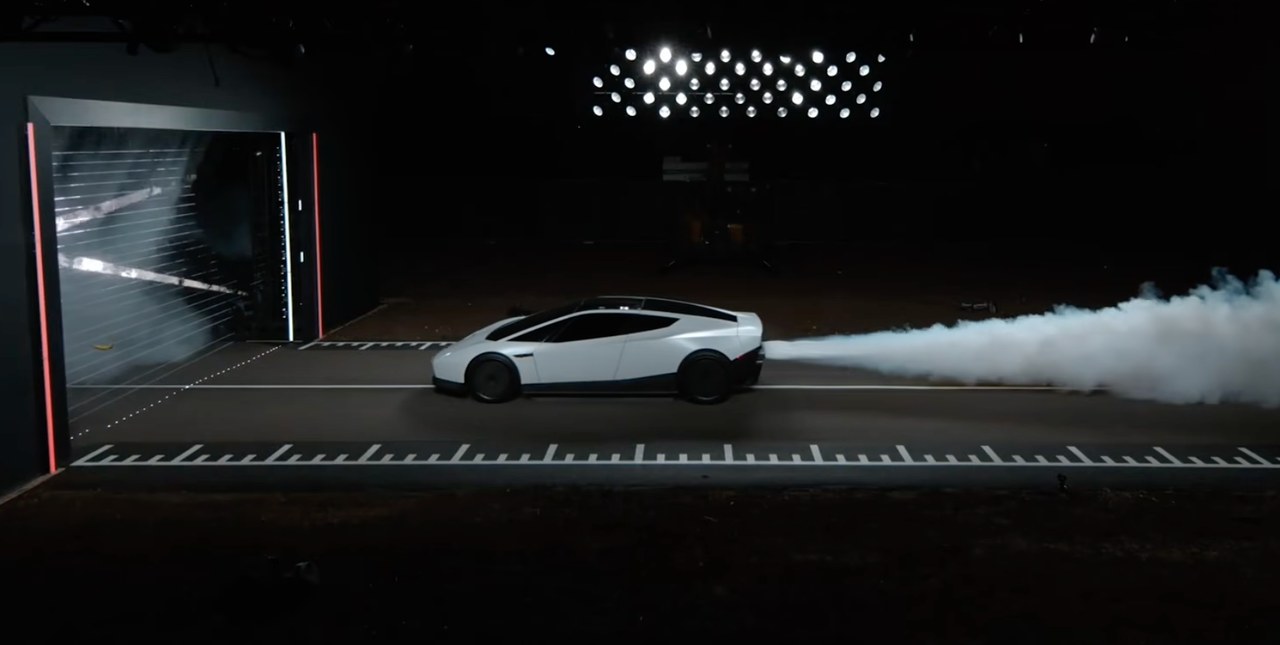
Two distinct systems did the evening’s work, and separating them matters. The first is a fan “suction” system beneath the car, described by Tesla engineering vice president Lars Moravy, which pulls the car down onto the road for grip and downforce — a ground-effect technique motor racing banned decades ago precisely because it works. The second is pure SpaceX: cold-gas thrusters fed by roughly 600 litres of compressed air stored in carbon-fibre pressure vessels, with ten nozzles on the fullest specification. It was the thrusters that fired the car over the parked Teslas and through its mid-air spin and barrel roll. The acceleration run was clocked at about one second to 60 mph on stage — one stage read suggested 0.81 seconds — though the timing method was not explained, and the figure should be read as Tesla’s demonstration number, not an independently verified measurement.
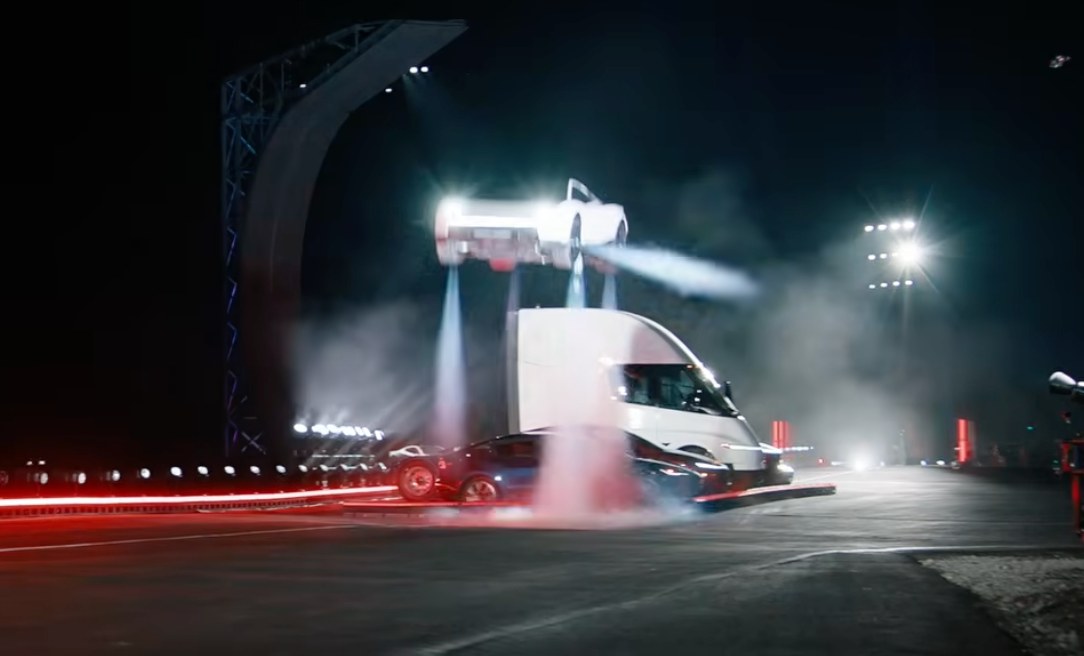
The hardware is the point. Thruster packages have been a Musk talking point since 2018, when he first floated a “SpaceX option package” for the Roadster; for most of the intervening years the idea was filed by much of the industry as showmanship. On Thursday the hardware existed, fired on cue, and was integrated into a car that also drove, steered and stopped. That integration — rocket plumbing inside a road-car silhouette, built by the same corporate family whose satellite hardware has spent this week in the headlines after Reuters traced an order limiting Ukraine’s Starshield service to inside the White House — is the substantive news under the spectacle.
Three Roadsters: Performance, Thrust and Rocket
Tesla is selling the spectacle in tiers. The Performance trim seats two, is described as “road ready,” and combines active aerodynamics with the multi-mode suction system. The Thrust trim, also a two-seater, pairs the suction system with rear-mounted cold-gas thrusters and is the version credited with the sub-one-second 0–60 claim. The Rocket is a single-seater with ten thrusters, described as “air ready,” and is available by invitation only. All three carry the same headline claims: a 300-mile range and a top speed above 230 mph. Reservations opened on Tesla’s website during the event — $50,000 for the Performance, $250,000 for the Thrust, invitation only for the Rocket. No final purchase price was announced for any version; the 2017 car was pitched from $200,000, and whether that anchor survives to 2028 is one of the evening’s unanswered questions.
The nine-year wait
To understand the roar that greeted a flying car in Texas, it helps to remember how long the room had been waiting. The second-generation Roadster was first revealed in November 2017, rolled out of the back of a Tesla Semi as a surprise finale, with production promised for 2020. The date then slipped the way Tesla dates do: 2021, 2022, 2023, 2024, 2025, and finally 2027 or 2028. Through all of it, Tesla held its customers’ money — $50,000 deposits on the standard car and $250,000 for the Founders Series, capped at 1,000 cars, paid by people who have now waited the better part of a decade for a vehicle. Even the reveal itself became a miniature of the whole saga, slipping from late 2025 through April 1, 2026 and a run of later dates before the weather pushed it from October 1 to Thursday night. Against that record, “production begins in 2028” is both the evening’s headline commitment and its most heavily discounted one: prediction markets had put the chance of the car actually being released by the end of 2027 at roughly one in three even before Musk took the stage.
What was shown — and what was not
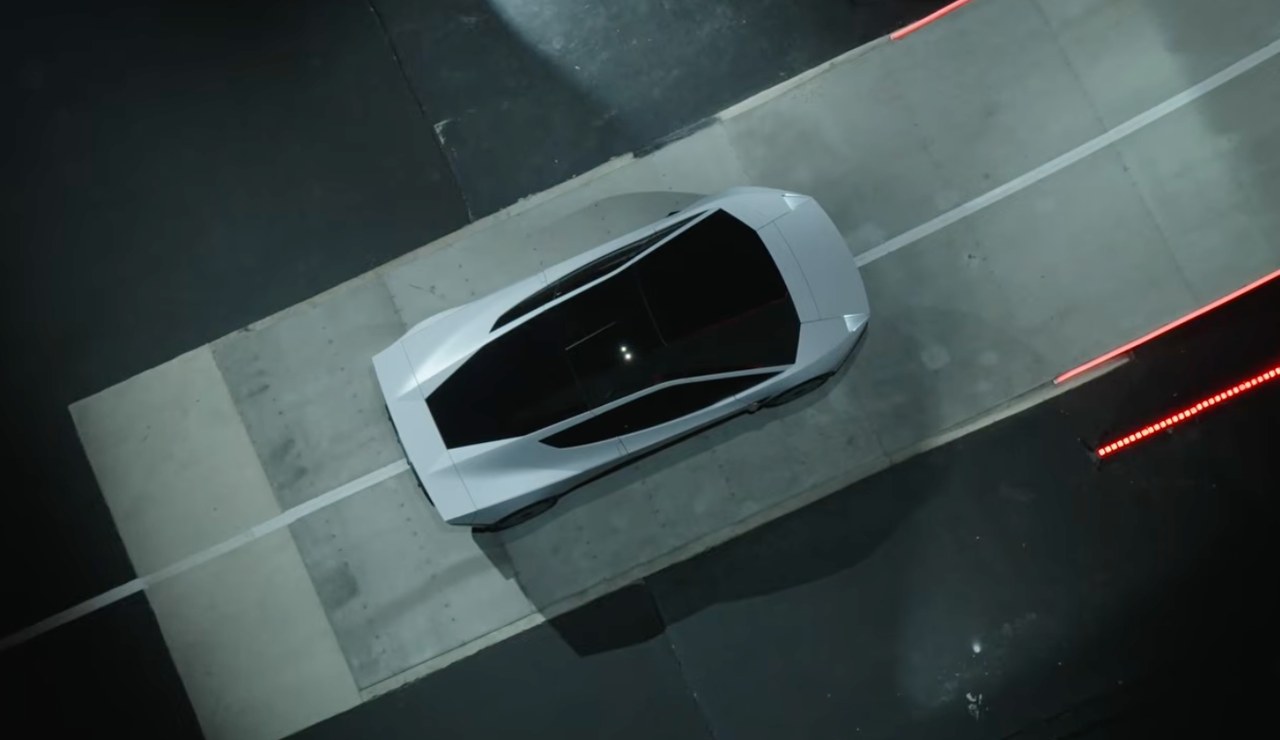
The honest ledger of the evening has two columns. In one: a real car, with a finished-looking body, performed extraordinary manoeuvres in public, on a livestream, without a cutaway. The suction system has a genuine performance rationale; the thrusters demonstrably fired, lifted and rotated the car; and the company took reservations at real prices. Tesla’s supporters can fairly say that the central technological claim — a car that can leave the ground under its own stored-gas power — is no longer hypothetical.
The other column is longer. The street-legal production car has still not been shown: Thursday’s machine was a demonstration prototype on a closed course, and no regulator has certified a thruster-equipped car for public roads anywhere. Whether a mid-air barrel roll, or even a thruster-assisted launch, could ever be legal outside a test site is unanswered — road law, airspace rules and insurance all stand between the demo and the driveway, and Tesla addressed none of them. The range and top-speed figures are claims, not measurements. The 2028 production date arrives freighted with nine years of contrary evidence. And Musk’s own aside — that safety was not the top design priority — will be quoted back at the company by every regulator and plaintiff’s lawyer who engages with the Rocket trim. The fairest summary is that Tesla proved the physics on Thursday and deferred everything else: legality, manufacturability, price and date.
A driver’s car in a robotaxi company
The strangest thing about the Roadster’s return is where Tesla’s business has gone in its absence. The company Musk now runs is pivoting away from cars for humans to drive: it has launched the Cybercab, a two-seater robotaxi with no steering wheel or pedals, is building its future around autonomy and the Optimus humanoid robot, and has been raising and arranging enormous sums to fund that artificial-intelligence buildout — including a $30 billion credit line tied to its AI spending and, at SpaceX, $40 billion of debt financing for Nvidia chips. Musk himself has conceded the Roadster is financially immaterial to Tesla — a halo, not a business. Read in that light, his framing on Thursday was precise: “the best of the last of the human-driven cars” is not a product pitch so much as an epitaph and a trophy — a final, maximal driver’s car from a company that intends to sell as few of them as possible, built partly by a rocket firm, and priced like a collectible from the day it opens its order book.
What happens next
The reservations page is the first test: how many $50,000 and $250,000 deposits a flying prototype can gather will say something real about demand for a car whose delivery date its own maker’s history invites buyers to doubt. The second test is regulatory — whether Tesla even seeks certification for the thruster systems, or quietly confines them to the invitation-only Rocket as track theatre while the Performance ships as a merely very fast electric sports car. The third is the calendar. Every Roadster promise since 2017 has eventually met a delay; the 2028 production start is now the claim against which Musk’s credibility on this car will be measured. Deposit holders from 2017, who have waited nine years and watched their car learn to fly before it learned to ship, will believe the date when a customer car — wheels on public tarmac, plates on the back — finally rolls out. On Thursday night in McGregor, Tesla gave them the most spectacular reason yet to keep waiting, and no new reason at all to stop wondering.
Sources: TechCrunch; The Wall Street Journal; The Times; Autoblog; Associated Press; Tesla event livestream, October 15, 2026.