Sport · Tennis
The Svitolina WTA Finals final is a study in contrasts: a 31-year-old former champion back in the season’s last match for the first time since 2019, against a 19-year-old debutant who has not dropped a set all week and beat her 6-4 6-0 when they met in the group stage.
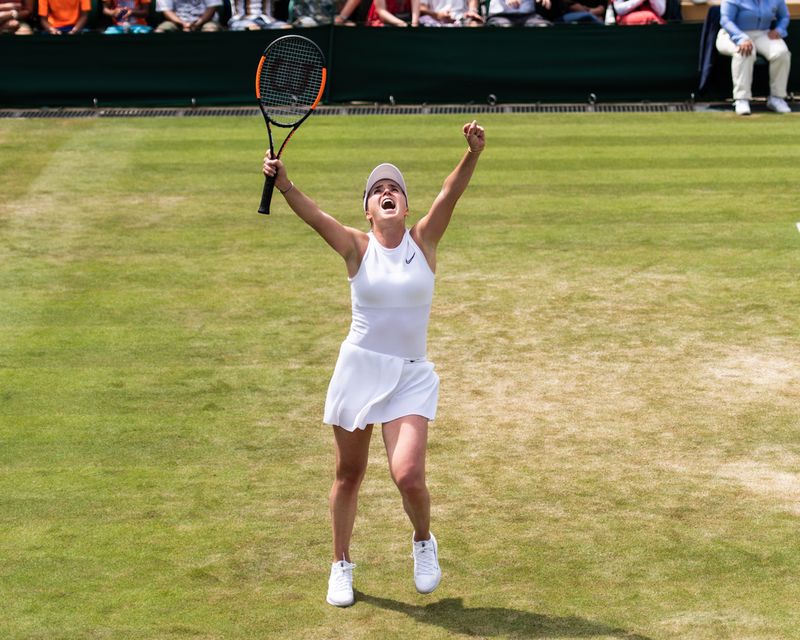
INDIAN WELLS, November 15, 2026 — The Svitolina WTA Finals final the Ukrainian has been building toward all season is set, and it comes with the hardest possible opponent. Elina Svitolina, the world No. 6 and sixth seed, dismantled Wimbledon champion Linda Noskova 6-2 6-1 in just 64 minutes in Saturday’s semifinal at the Indian Wells Tennis Garden, and Mirra Andreeva, the third seed and French Open champion, beat home favourite Jessica Pegula 6-3 6-4 in the second semifinal, BBC Sport reported. Sunday’s final is a rematch of their group-stage meeting, which Andreeva won 6-4 6-0 — the result that frames everything about the title match: Svitolina arrives as the tour’s form player against the top 10, Andreeva as the player who has already solved her once this week.
The two semifinals could hardly have told their stories more efficiently. Svitolina’s was a rout from the first return game, the eighth seed Noskova given no rally she could settle into and no scoreboard pressure she could apply in return; 6-2 6-1 in 64 minutes is not a semifinal score, it is a statement filed early. Andreeva’s was a different kind of control: broken in both sets by Pegula, the fifth seed and the crowd’s player, she recovered the break in both, closing 6-3 6-4 without facing the third set her opponent’s fightback kept threatening to force. One finalist has been untouchable for a day; the other has been untouchable for a week.
Svitolina’s road: the streak snapped, the top 10 regained
Svitolina’s run to a third WTA Finals final — she won the title in 2018 and last reached the final in 2019 — is built on the most persuasive stat of the women’s season: 11 wins over top-10 opponents this year, the most on the WTA Tour, according to BBC Sport. The semifinal berth itself was earned the hard way, by snapping a six-match losing streak against Aryna Sabalenka on Friday, a win that carried a weight no group-stage match usually holds. That she did it after losing her opening group match heavily to Andreeva — 6-4 6-0, the scoreline that now hangs over the final — describes the shape of her week: beaten once, badly, and then better every day since.
The ranking context completes the comeback arc. Svitolina is back in the top 10 for the first time since October 2021 — a four-year absence that spanned injury, motherhood and a return conducted, throughout, under the shadow of the war in her home country. A second WTA Finals title, seven years after her first, would not merely crown a season; it would complete one of the most durable second acts in the modern women’s game, by a player whose consistency against the very best — those 11 top-10 wins — has been the season’s quiet through-line.
Andreeva’s run: no set dropped, and the record book rewritten
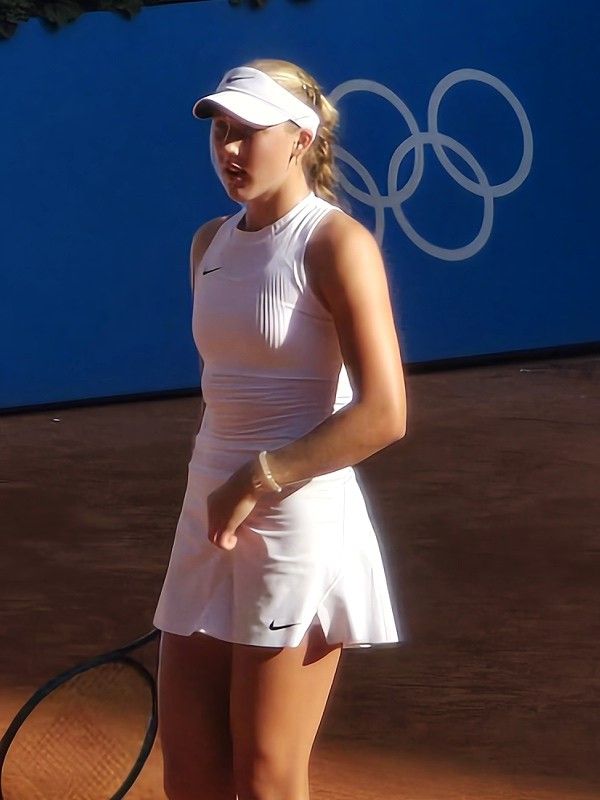
Andreeva’s numbers are the kind that get a tournament renamed in retrospect. The 19-year-old French Open champion, playing the WTA Finals for the first time, has won eight sets and lost none; no set has been closer than 6-4, and her 18 games lost across the tournament are the fewest by a finalist since the round-robin format began in 2003, according to BBC Sport. At 19 she is the youngest WTA Finals finalist since Maria Sharapova, who was 17 when she won the event in 2004 — a 22-year gap that measures how completely the season-ending championship has belonged to established players in between. The win over Pegula also settles her year-end ranking: whatever happens on Sunday, Andreeva finishes the season as world No. 2.
The Pegula semifinal showed the part of her game the scorelines hide. Twice she went a break down to a top-five opponent playing in front of a home crowd; twice she took the break back without the match ever visibly tilting. Debutants are supposed to feel the occasion somewhere. Through four matches at Indian Wells, the occasion has yet to find her — and the one player who might make her feel it is the player she beat 6-4 6-0 on Monday, returning on Sunday with four days of adjustments and nothing left to protect.
Why this matters
Analysis. Season-ending finals are usually coronations; this one is an argument. On one side stands the proposition that experience, adjustment and a season’s worth of top-10 wins — Svitolina’s 11, the tour’s best — are what the last match of the year rewards. On the other stands the proposition that the game has simply moved: that a 19-year-old who has lost 18 games in four matches, who finishes the year at No. 2 whatever happens next, represents a changing of the guard that a single final can confirm but no longer prevent. The group-stage result cuts both ways, and both camps know it. Andreeva’s 6-4 6-0 is evidence she has the matchup; it is also the reason Svitolina has had the most specific preparation any finalist could ask for — four days, one opponent, one tape.
There is a wider resonance that the tennis alone does not contain. Svitolina has carried Ukrainian sport’s standard through a war, in a season when every deep run by a Ukrainian athlete is read at home as something more than sport; a WTA Finals title, in the biggest arena the women’s tour closes its year in, would be her largest statement since the 2018 title that announced her first peak. Andreeva, for her part, is authoring the opening chapter of what the record book already treats as a historic career: youngest finalist in 22 years is a record about the past, but the fewest games lost by a finalist in the round-robin era is a record about the present tense. Sunday decides which story the trophy illustrates. It cannot make either of them untrue.
What happens next
The final is played on Sunday at the Indian Wells Tennis Garden, closing the WTA season. For Svitolina, a win would deliver a second Finals title and confirm her top-10 restoration with the largest trophy available to it; for Andreeva, a win would complete a debut tournament without a dropped set — a feat the format’s history says should not be possible — and send her into the off-season as world No. 2 and the player the 2027 season will be measured against. The year-end rankings are settled below them: Andreeva at No. 2 regardless of the result. What remains unsettled, for one more day, is the only thing either of them came for.
Related coverage: Sabalenka Wuhan Open Loss: Ann Li Beats the Top Seed in Three Sets as Pegula Falls Too · Novak Djokovic Wins Seventh China Open Title at 39 — One Trophy From Federer's 103
Sources
BBC Sport — reporting of November 15, 2026: Elina Svitolina (world No. 6, seed 6) beat Linda Noskova (seed 8) 6-2 6-1 in 64 minutes in the WTA Finals semifinal at Indian Wells; Svitolina’s 11 wins over top-10 opponents this year are the most on the WTA Tour; her return to the top 10 for the first time since October 2021; her third WTA Finals final (champion 2018, finalist 2019) and her semifinal reached by snapping a six-match losing streak to Aryna Sabalenka; Mirra Andreeva (seed 3) beat Jessica Pegula (seed 5) 6-3 6-4 after trailing by a break in both sets; Andreeva, 19, is the youngest WTA Finals finalist since Maria Sharapova (17, 2004), has not dropped a set in the tournament (18 games lost, fewest by a finalist since the round-robin format began in 2003) and finishes the year as world No. 2. The FactWire — reporting of November 15, 2026, corroborating both semifinal scores and Andreeva’s unbeaten straight-sets run. WTA — tournament reporting, including Andreeva’s 6-4 6-0 group-stage win over Svitolina. Photographs: Peter Menzel (CC BY-SA 2.0), Like tears in rain (CC BY-SA 4.0) and a CC BY-SA 4.0 contributor, all via Wikimedia Commons — file photos.