War / World — Sudan drone strike Nyala: a drone hit a market in the city’s north on Monday evening, killing 21 people and wounding at least 40, a medic at Nyala Hospital told AFP — the second deadly strike on a market in the South Darfur capital in ten days. No group had claimed responsibility as of Tuesday, and the same drone war was simultaneously knocking out power stations hundreds of kilometres away.
Track it live: Africa wars tracker
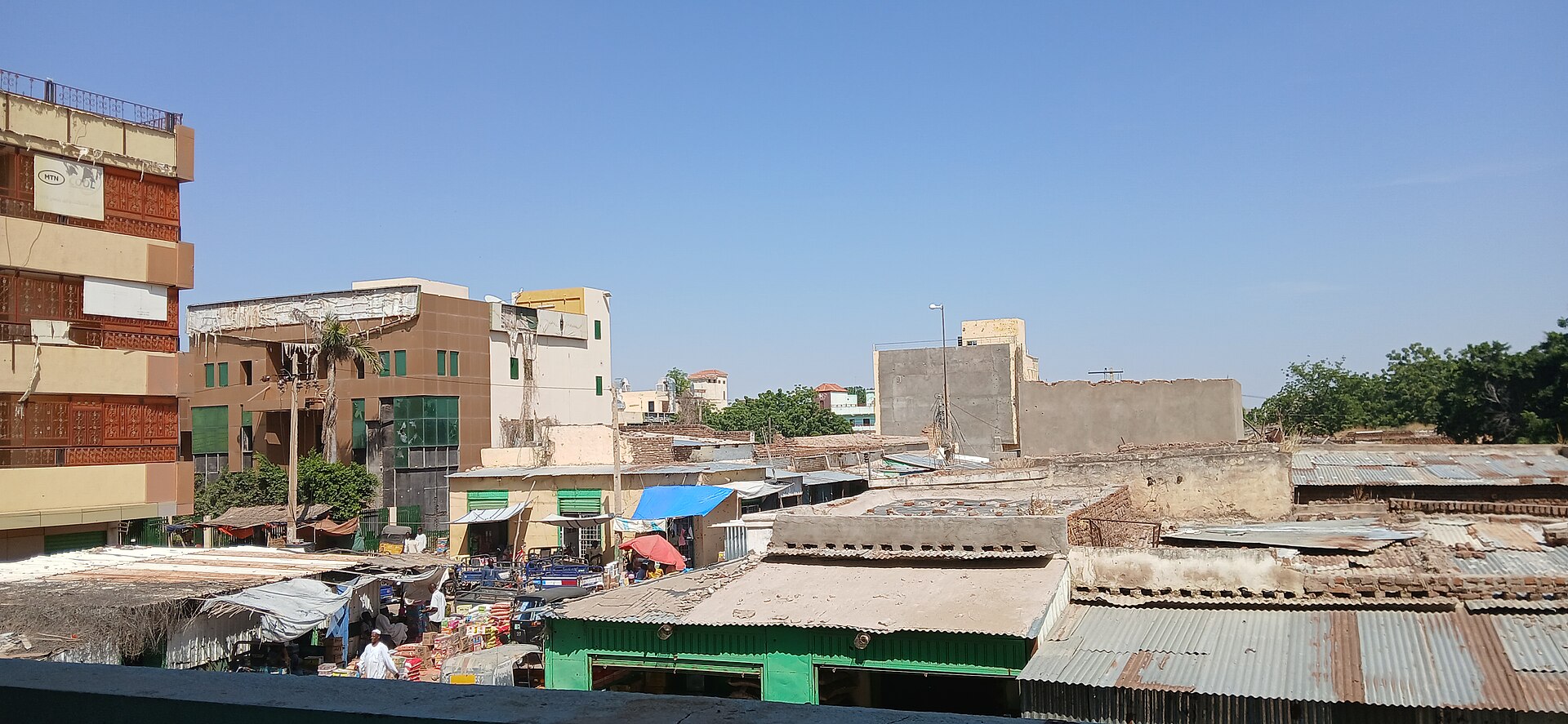
A Sudan drone strike Nyala residents described to AFP killed 21 people and wounded at least 40 others when a drone hit a market in the northern part of the South Darfur capital at about 8 p.m. on Monday, October 26 — the second time in ten days that a market in the city has been struck from the air, and the latest blow in an October drone campaign that a United Nations tally says has killed more than 300 people across Sudan in three weeks. The Nyala market drone strike was reported on Tuesday by a medic at Nyala Hospital and by witnesses who spoke to the agency. As of Tuesday, no group had publicly claimed responsibility for it.
What happened at the market
The strike hit at about 8 p.m. local time (1800 GMT) on Monday, in the northern part of Nyala, according to the accounts AFP gathered from the city on Tuesday. Nyala is the capital of South Darfur state and the de facto capital of the rival administration declared by the paramilitary Rapid Support Forces (RSF), which has been at war with Sudan’s army since April 2023. The wounded were taken to Nyala Hospital, where a medic gave AFP the toll that anchors every account of the night: “Twenty-one people were killed in last night’s bombing, and more than 40 others injured.”
Darfur market strike casualties: what the hospital could — and could not — say
Two limits on that toll matter, and AFP’s sources stated both plainly. The medic could not say how many of the casualties were fighters. And a resident told the agency the market was frequented by young men, including RSF fighters. Together they describe the evidential position precisely: 21 dead and at least 40 wounded are established by a named institution’s medical staff; the division of the dead between fighters and civilians is not established at all. Any account presenting Monday’s dead as all civilians, or all combatants, goes beyond what the reporting from Nyala supports.
The question of who sent the drone is, on the public record, equally open. No group had publicly claimed responsibility for the strike as of Tuesday, and Signal Post News does not attribute it to the Sudanese army as fact. The context must be labelled as context: the Sudanese military regularly carries out air and drone strikes on Nyala, where the RSF has declared an administration rivalling the internationally recognised, army-backed government based in Khartoum. A pattern of past strikes is evidence about a pattern. It is not proof of authorship of this one.
The same drone war, aimed at the power grid
While Nyala counted its dead, the drone war traded blows at the other end of the country. On Tuesday, RSF drones targeted the Al-Markhiyat transformer station, disrupting power across large parts of Khartoum and Al-Jazira states, a source at the national electricity company told AFP. The day before, on Monday, a coordinated RSF drone attack on six power stations left millions of people without power in Al-Jazira, White Nile, Sennar and Gedaref states. The United Nations has warned that attacks on power stations threaten health and other essential services for millions of people.
Sudan power station drone attacks: one campaign, two directions
Read together, the two days describe a single escalatory logic in both directions. In the west, drones strike the RSF’s capital and its markets. In the centre and east, drones strike the grid serving the army-held heartland. Signal Post News covered Monday’s six-station blackout as the state operator reported it in Sudan Drone Strikes on Power Stations Cut Power Across Southeast, where the operator accused the RSF and warned the damage threatened the whole national grid’s stability. Tuesday’s Al-Markhiyat strike, on the electricity company source’s account, extended that campaign to the capital’s own supply. Neither side’s infrastructure is now out of the other’s reach, and neither side’s civilians are out from under it.
Why this matters
The strategic fact underneath Monday’s toll is range. For most of this war, the front lines were where the dying happened: Darfur’s besieged cities, Kordofan’s contested roads, Khartoum’s ruined neighbourhoods. Drones have dissolved that geography. A comparatively cheap weapon that risks no pilot and can be launched from deep inside friendly territory lets each side strike the other’s rear areas at will — the RSF administration’s capital in the far west, the army government’s power grid in the centre and east. The Sudan drone war Darfur is experiencing and the blackouts in Gezira are not two stories. They are one capability, pointed in two directions.
That capability is changing what counts as a battlefield. Markets and power stations share the properties that make them targets and make strikes on them so costly: they are fixed, known, crowded or indispensable, and impossible to move or disperse. A market is where a city eats; a transformer station is where its hospitals, water pumps and refrigerators draw power. Striking either imposes costs on an entire population rather than on an opposing force, and the UN’s warning on power stations — that such attacks threaten health and services for millions — applies in slower motion to markets too: every strike on a place of trade teaches a city to fear gathering to buy food.
The third consequence is an accountability gap that Monday’s strike illustrates perfectly. No claim of responsibility. No identified aircraft, unit or commander. A hospital toll that cannot separate fighters from civilians, in a market a resident says both used. Drone warfare conducted this way is deniable by design, and deniability is part of the weapon’s value to whoever uses it. The result is a war whose deadliest incidents arrive with no author willing to sign them. Readers should hold Monday’s facts at exactly the strength the reporting gives them: the deaths are documented by medical staff; the authorship is not documented by anyone.
Background: a divided country, a capital in Darfur
Sudan war April 2023 SAF RSF: how the front line moved into the sky
Sudan’s army — the Sudanese Armed Forces (SAF) — and the RSF have been at war since April 2023, when a dispute over integrating the paramilitary force into the regular military, inside a planned transition to civilian rule, collapsed into open fighting in Khartoum. The war has since partitioned the country in practice. The army holds much of the north, east and centre, including the capital region, and its government is the internationally recognised one. The RSF holds most of Darfur and parts of Kordofan, and from Nyala it has declared an administration rivalling Khartoum’s. That RSF Nyala administration makes the city more than a regional capital: it is the seat of a competing claim to govern Sudan, which is why it draws strikes — and why strikes on it carry a civilian price, in a capital full of people buying food at 8 p.m.
The October pattern: Nyala’s second market in ten days
Monday’s strike was not Nyala’s first this month. On October 16, a drone strike on a livestock market in Nyala killed 30 people and wounded 47, according to medical sources — an attack Signal Post News covered in Nyala Drone Strike Kills 30 at Livestock Market as Army and RSF Trade Blame. That strike drew the war’s now-standard pair of competing claims: the army said it had targeted RSF command-and-control centres, while the RSF accused the military of killing civilians. Monday’s strike drew neither claim by Tuesday — only silence, and a hospital’s arithmetic. Set against the wider month, the pattern is stark. A UN tally cited by AFP counts drone strikes killing over 300 people in the first three weeks of October alone; the UN Human Rights Office documented at least 306 drone-strike deaths in that period, the figure at the centre of Sudan Drone Strikes Killed at Least 306 People in Three Weeks, UN Says. Two Nyala markets account for 51 of the month’s dead by themselves, on the medical counts reported from the city.
Who benefits, who loses
On the narrowest military reading, striking Nyala pressures the RSF where it governs: it shows the rival administration cannot keep its own capital safe, and it imposes costs on a city whose markets, on the resident’s account, serve RSF fighters as well as everyone else. Striking the grid pressures the army’s government where it governs, and Tuesday’s Al-Markhiyat strike showed the capital itself is not exempt. Those are the benefits as each side’s planners would presumably state them — real, in the limited sense that both campaigns continue because both sides judge them worthwhile.
The losses are easier to count, and land on people with no seat at that calculation. Twenty-one dead and more than 40 wounded in one market on one evening, with the fighter-civilian split unknown and, on current reporting, unknowable. Millions without power across four states on Monday and two more disrupted on Tuesday, in a country where electricity runs hospital theatres, water pumps and the cold chain for medicine. And a population learning that the spaces civilian life runs on are now inside the target set of both armies. Whatever either side gains from the drone war, it is purchased against that ledger.
A famine warning, disputed in Khartoum
Sudan famine warning 30 countries issued — and rejected
The strikes landed in a country whose humanitarian condition was, the same day, the subject of an open international dispute. On Monday, 30 countries including the United States, France and the United Kingdom warned Sudan faces an alarming deterioration in food security, driven by the war itself, a weakening currency, fuel prices and El Niño drought. Sudan’s foreign ministry rejected the warnings, insisting the food-security situation is “reassuring” and accusing countries and organisations of politically exploiting the humanitarian situation. Both positions are stated here as their holders gave them. Underneath the dispute sits the scale neither side’s statement changes: aid workers estimate the war has killed more than 200,000 people and triggered the world’s largest hunger and displacement crises — figures presented as the estimates they are, in a war whose true toll no authority has been able to count.
The dispute matters to Monday’s story because of what it does to the response. A government that calls its food situation reassuring is positioned to resist the access and aid operations a famine warning is meant to unlock; thirty governments issuing the warning together signal their assessment will not wait for Khartoum’s agreement. In Nyala, the argument is academic: the city’s markets are where food security is decided daily, and one of them was bombed at dinner time.
What happens next
Three developments will show what Monday’s strike becomes. The first is attribution: whether any party claims the Nyala strike, or evidence emerges that identifies its author. October’s precedent is not encouraging; the month’s strikes have more often produced competing claims or silence than findings. The second is the grid: whether the Al-Markhiyat damage and Monday’s six-station losses are repaired faster than the campaign can repeat them decides whether Sudan’s east enters winter with a functioning power system. The third is the toll itself. The UN’s count of October’s drone dead passed 300 in three weeks. Whether Monday’s 21 are the month’s last market dead is a question the last ten days — two markets, one city, 51 killed — answer grimly, unless something in the campaign changes.
Related coverage: Nyala Drone Strike Kills 30 at Livestock Market as Army and RSF Trade Blame · Sudan Drone Strikes on Power Stations Cut Power Across Southeast · Sudan Drone Strikes Killed at Least 306 People in Three Weeks, UN Says
Sources
- AFP reporting published via Al Jazeera and syndication partners, Oct 27, 2026 — a medic at Nyala Hospital and residents and witnesses said a drone struck a market in northern Nyala at about 8 p.m. on Monday, killing 21 people and wounding more than 40; the medic said he could not say how many casualties were fighters, and a resident said the market was frequented by young men including RSF fighters; no group had claimed responsibility as of Tuesday: barbadosgazette.com.
- AFP, fuller report, Oct 27, 2026 — a national electricity company source said RSF drones targeted the Al-Markhiyat transformer station on Tuesday, disrupting power across large parts of Khartoum and Al-Jazira states, after a coordinated Monday attack on six power stations left millions without power in Al-Jazira, White Nile, Sennar and Gedaref; the report also carried the October 16 Nyala livestock-market toll (30 killed, 47 wounded, per medical sources; the army said it targeted RSF command-and-control centres, the RSF accused the military of killing civilians), the 30-country food-security warning and Sudan’s foreign ministry rejection, and the UN tally of more than 300 drone-strike deaths in the first three weeks of October: fact.net.in.