Nyala drone strike: at least 30 people were killed when a drone hit a livestock market in Nyala, South Darfur, on Friday, October 16, 2026 — and who sent the drone is disputed, with the RSF blaming the Sudanese army, the Sudan Founding Alliance (Tasis) blaming a drone from an Egyptian military base, and the army saying only that its air force struck RSF command centres and positions in the city that day.
South Darfur / Thirty dead at a morning cattle market — and three stories about who sent the drone
Nyala drone strike
At least 30 people were killed on Friday morning when a drone strike hit a busy livestock market in Nyala, the capital of South Darfur and the seat of the Rapid Support Forces' self-declared parallel administration, according to the RSF, local hospital sources and multiple news agencies. The RSF said the 30 dead were civilians, including 17 women and five children, Al Jazeera reported. Estimates of the wounded range from 43 to about 50, depending on the source. Who launched the drone is disputed: the RSF accused the Sudanese army of striking the market with Turkish-made drones, a rival Sudanese alliance blamed a drone flown from an Egyptian military base, and the army itself said only that its air force had carried out targeted strikes on RSF command centres in Nyala, killing dozens of RSF fighters. The army has not confirmed or denied the market claim.
Track it live: Live wars tracker · Africa conflicts map
Why this matters
A livestock market on a Friday morning is about as civilian a target as exists in Darfur. Herders, traders, women buying and selling, children moving between the animals — a cattle market is where the region's rural economy physically gathers in one place, at a predictable time, in the open. That is what makes the Nyala cattle market strike significant beyond its death toll, grim as that toll is. If the strike was aimed at the market, it was an attack on the economic heart of the RSF's capital. If it was aimed elsewhere and hit the market, it demonstrates — again — what happens when explosive drones are used over crowded cities in a war with no functioning mechanism for investigating where the munitions land. Either version is an indictment, but they are different indictments, and right now the evidence publicly available does not settle which one applies.
The timing matters too. On the same day as the strike, the United Nations called for an immediate halt to drone attacks in Sudan, warning that drones have become the leading cause of civilian casualties in the country this year. That warning was not abstract. This strike landed on the very day it was issued, in a city that is supposed to be the showcase capital of one side's claim to govern Sudan. A parallel administration that cannot keep a morning market safe from the sky is making an argument against itself — and an army accused of killing the shoppers is making one against its own claim to be the country's legitimate protector. Both claims to legitimacy run through Nyala now, and both were damaged on Friday, whatever the drone's flight path turns out to have been.
What we know — and what we don't
Start with what is corroborated. A drone strike hit a livestock market in Nyala on Friday, October 16. At least 30 people were killed: that figure appears in the AFP wire report, in Al Jazeera's reporting of the RSF's account, and in Associated Press reporting via TT citing local hospital sources in Nyala, which put the toll at at least 30 killed and around 50 injured. The Sudanese human rights group Emergency Lawyers said in a post on X that a market in Nyala was hit on Friday by a drone it described as affiliated with the Sudanese army. The Sudanese army, for its part, issued a statement on Friday saying its air force had carried out targeted strikes on RSF command centres and positions in Nyala, killing dozens of RSF fighters and destroying command centres. Those are the load-bearing facts. Almost everything about responsibility, by contrast, is contested.
The injury count is a good example of why attribution of every number matters in this war. The Sudan Founding Alliance, known as Tasis, said 30 people were killed and 43 wounded. The AFP wire report put the wounded at 47. AP's hospital sources said around 50. Those figures are close enough to describe the same catastrophe and different enough to show that no independent count has been verified on the ground. Nyala is controlled by the RSF, outside investigators cannot freely work there, and each figure arrives through an institution with its own position in the war. The honest way to report the wounded is as a range — roughly 43 to 50 — attributed to the sources that produced each end of it.
Sudan army RSF Nyala strikes: three attributions, no confirmation
The RSF's account is the most specific. According to AP's reporting, the RSF accused the Sudanese army of attacking the market with Turkish-made drones. That claim fits a documented pattern — the army has repeatedly used drones against RSF-held territory in Darfur — but a pattern is not proof of a specific strike, and the RSF is a belligerent reporting on its enemy. The army's own statement neither confirms nor denies it. Khartoum said its air force struck RSF command centres and positions in Nyala and killed dozens of fighters; it did not mention a market. That leaves three possibilities the statement does not distinguish between: the army struck military targets and the market was hit separately or by error; the army struck the market and describes the dead differently; or the market strike was not the army's at all. Al Jazeera noted the mirror-image gap on the other side as well — the RSF has not confirmed or denied whether separate army attacks killed some of its fighters, as the army claims.
The third attribution points outside Sudan altogether. The Sudan Founding Alliance (Tasis) condemned what it called the strike on the Nyala livestock market and blamed a drone launched from an Egyptian military base east of Al-Uwaynat. That is a materially different claim from the RSF's — a different launch point, a different operator, a different chain of responsibility. Egypt is the Sudanese army's most important regional backer, so the two claims are not necessarily incompatible in the accusers' telling, but they cannot both be simply asserted as fact, and neither has been independently verified. Emergency Lawyers, the rights group, used notably more careful language: a drone "affiliated" with the Sudanese army. In a war where drones are supplied, financed and sometimes operated across borders, that single word — affiliated — may be the most precise attribution anyone has yet offered, precisely because it admits what is not known about the hand on the controls.
Emergency Lawyers Nyala market report and the wider fighting
The market strike did not happen in isolation. Al Jazeera's correspondent Almigdad Alruhaid, reporting from Khartoum on Saturday, said fighting had intensified, and a Sudanese government source told the network that the RSF had carried out drone attacks on mining sites in South Kordofan, with exchanges between the two sides intensifying over the past 24 hours. Read together, Friday looks less like a single incident than like a step up in a drone war that is expanding in both directions: the army striking into the RSF's Darfur stronghold, the RSF — on the government's account — striking at economic targets in Kordofan. Mining sites and livestock markets are, in this war's economy, the same category of target. Gold funds one side's war; cattle fund the other's countryside. The infrastructure of survival and the infrastructure of war finance are the same infrastructure, which is why it keeps being hit, and why the people standing in it keep dying.
Background: a capital for a parallel state
Nyala is not just another Darfur city caught in crossfire. It is the capital of South Darfur and the seat of the parallel administration the RSF has declared as it competes with the army-led government for the claim to rule Sudan. That status is exactly why the army has reason to strike there and why the RSF has reason to publicise every civilian death there. The war began in April 2023 as a power struggle between the Sudanese Armed Forces, led by General Abdel Fattah al-Burhan, and the RSF, and it has since consumed much of the country. Burhan this month vowed to seize "every inch" of RSF-held territory — a promise that, translated into operational terms, means more strikes on places like Nyala, not fewer. The UN calls Sudan the world's worst humanitarian crisis. Even the war's death toll is a measure of the chaos: Al Jazeera puts the dead in the tens of thousands, while AP reporting has put the civil war's toll at more than 200,000 lives since the spring of 2023. Those figures are not a contradiction to be averaged; they are counts and estimates produced by different methods in a country where much of the dying happens beyond anyone's ability to record it.
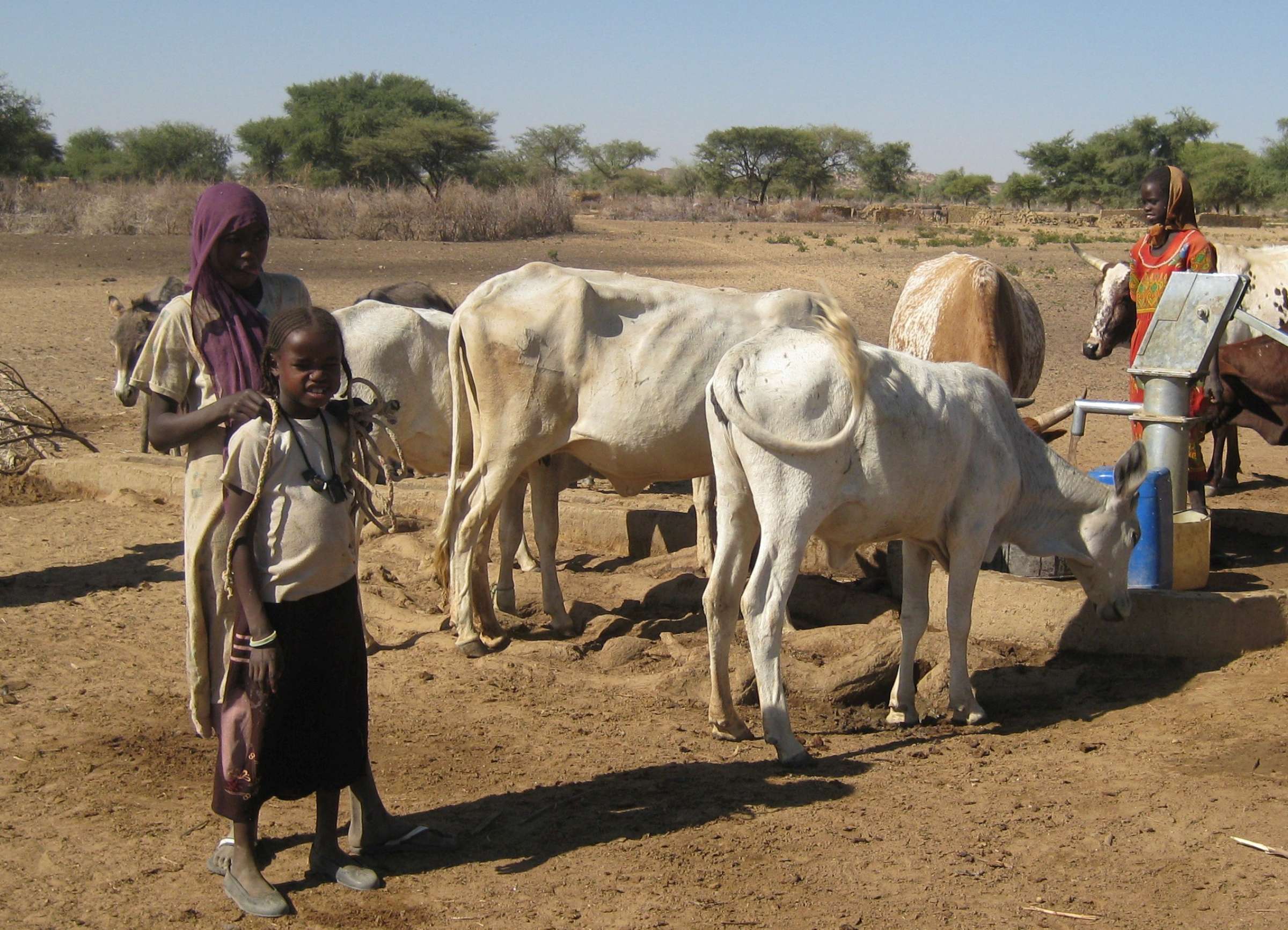
That economic point deserves emphasis, because coverage of Darfur often treats a "livestock market attack" as a location detail. In South Darfur, cattle are a bank account, a dowry, a food supply and a trade good at once. A busy market morning concentrates a region's wealth and a region's people in the same few acres. A strike there destroys animals and traders together, and the damage radiates outward for months through herds that will not be sold, debts that cannot be settled and families who lost both an earner and the assets the earner was standing next to. Whoever sent the drone, the choice of a market morning — by design or by indifference — maximised that radiating harm.
Sudan drone attacks civilians: the weapon that defines this phase of the war
The UN's October 16 call for an immediate halt to drone attacks, and its warning that drones have become the leading cause of civilian casualties in Sudan this year, frames Nyala correctly: not as an aberration but as the current normal. Drones have changed the economics of this war. They let the army reach deep into RSF-held Darfur without risking scarce aircraft and pilots, and they let the RSF strike far beyond its ground positions — at power stations, at mining sites, at cities it does not hold. They are cheaper than the targets they destroy and easier to deny than a manned bombing run. Each side accuses the other of flying them into crowds, each side is credibly reported to fly them constantly, and the verification gap — no inspectors, no wreckage analysis published, no independent investigators on site — means accountability almost never catches up with the accusation cycle. Nyala's market is now part of that cycle: three attributions within a day, none proven, all politically useful to whoever issued them.
Who gains, who loses
If the army conducted the strike — its own statement confirms it was bombing Nyala that day — it gains pressure on the RSF's capital and a claimed kill of dozens of fighters, and loses the moral and diplomatic standing that a market full of dead women and children costs any government claiming to protect its people. If the drone came from elsewhere, as Tasis alleges, the regionalisation of the war deepens and Egypt faces an accusation it has not publicly answered in these reports. The RSF gains a documented atrocity story against its enemies and loses the aura of control around its showcase capital. The consistent losers, as in the miners' strike in northern Sudan earlier this month and in strike after strike before it, are the civilians whose deaths become evidence in other people's arguments — and the possibility of a verified record, which dies a little more each time an unverifiable claim is repeated as settled fact.
What happens next: three scenarios
1. The drone exchange escalates. The government source's account of RSF drone attacks on South Kordofan mining sites, and the army's strikes on Nyala, suggest a tit-for-tat rhythm is already running. If both sides treat economic targets as fair game, expect more strikes on markets, mines and infrastructure in the coming weeks — and more Fridays like this one. Burhan's "every inch" vow points the same way.
2. Evidence narrows the attribution. Munition fragments, satellite imagery or a credible independent investigation could distinguish between the army claim, the RSF claim and the Tasis claim. It has happened rarely in this war, but Nyala's profile — a capital city, a UN warning issued the same day — gives this incident a better-than-usual chance of attracting outside scrutiny. Watch for UN or African Union statements that go beyond general condemnation.
3. The claim fades into the fog. The base case, on this war's record: no verification, no admission, no investigation, and the market strike joins the ledger of disputed mass-casualty events. The practical lesson markets across Darfur will draw is that gathering to trade is a risk to be managed — thinner markets, higher prices, deeper hunger in a country already facing the world's worst humanitarian crisis. That quiet outcome is its own kind of escalation.
What would change the picture is not another statement but a verifiable fact: wreckage, imagery, or an investigator allowed into Nyala. Until one of those appears, the accurate sentence remains the uncomfortable one — at least 30 people were killed at a livestock market on Friday morning, the Sudanese army was striking the city that day by its own account, and who sent the drone that hit the market is, on the public evidence, disputed.
Related coverage
Sources
- Al Jazeera — Sudan's army claims dozens of RSF fighters killed in Nyala attack (October 17, 2026; Staff and AFP)
- Associated Press via TT / Sweden Herald — At least 30 killed in drone strike on food market in Sudan's Nyala (October 16, 2026)
- Sudan Horizon — Sudanese army statement on strikes in Nyala (October 16, 2026)
- Alsudania News — Nyala livestock market: 30 killed, 43 injured as Tasis alliance accuses Egyptian drone strike (October 2026)