War · Africa · Sudan
Sudan’s army says its air defences brought down a long-range strategic drone over Blue Nile’s Dandro area on Friday after it crossed the border from Ethiopia — an interception Khartoum announced the same day the death toll from a drone strike on displaced families fleeing toward Ed Damazin rose from nine to 16, with several people still missing.
Track it live: Africa wars tracker
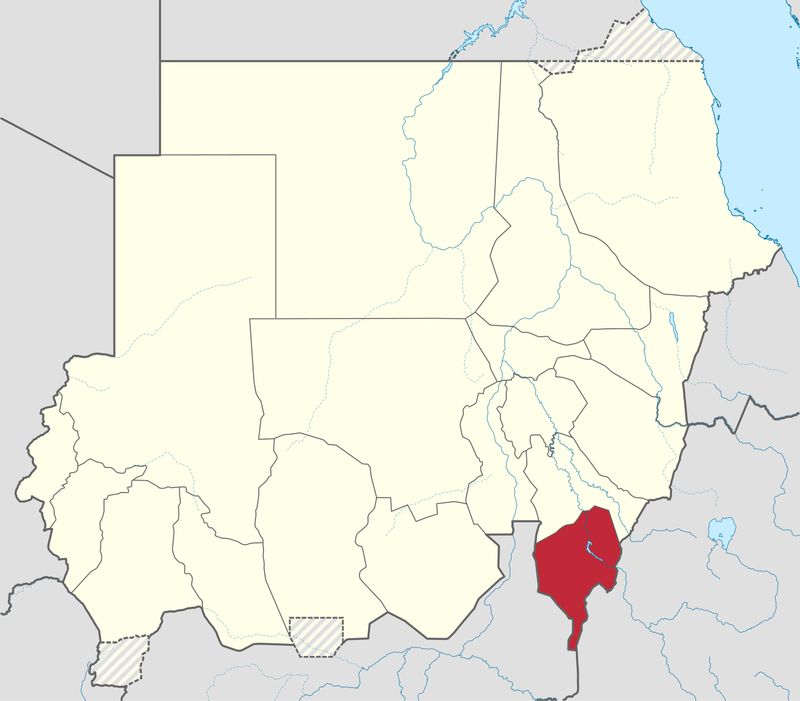
ED DAMAZIN, Sudan, November 14, 2026 — Sudan’s army said on Friday that its air defences shot down a long-range strategic drone over the Dandro area of Blue Nile state after it crossed the border from Ethiopia — an interception announced the same day local officials confirmed that the Sudan drone strike Blue Nile death toll, from an attack on displaced families travelling toward this state capital, had risen to 16. The two announcements, one military and one civilian, landed within hours of each other and together describe a front that has changed character: a ground war for towns and bases in Sudan’s southeast is now also a drone war fought across an international border and over the roads civilians use to escape it. Neither claim at the centre of Friday’s news has been independently verified. The shootdown is the army’s account, with no confirmed operator for the drone; the strike on the displaced families is attributed to the Rapid Support Forces by local officials, and the RSF had not commented in the reporting.
The Dandro interception: what the army said — and what it did not
The army’s announcement was brief. In a statement published on social media on Friday, November 13, the military said its air defences had brought down an “enemy strategic drone” in the Dandro area — also spelled Dandaro — of Blue Nile state, in Sudan’s southeast, and alleged that the aircraft had crossed into Sudanese airspace from Ethiopia. Sudan Tribune, whose reporting was cited in Addis Standard’s daily brief on Saturday, reported that the military identified the drone as hostile but gave no further details about its origin or its intended target. Europa Press reporting carried by Democrata, and QNC News, carried the same core account on Friday: a long-range drone, described as hostile, downed over Blue Nile after crossing from Ethiopia.
What the army did not publish matters as much as what it did. No wreckage photographs, no drone type, no named operator and no stated target accompanied the announcement in the reporting. A “strategic” drone in this war generally means a long-range, one-way attack or reconnaissance aircraft rather than a small battlefield quadcopter — the kind of system that implies an organised launch site and a supply chain behind it — but the army’s statement, as reported, did not establish who launched this one, from where exactly, or what it was sent to do. Khartoum’s allegation that it crossed from Ethiopia is therefore exactly that: an allegation, made by one belligerent about a second country that is not formally a party to the war, at a moment when the two governments are already locked in a formal dispute over precisely this question. Ethiopia had not publicly confirmed the loss of any aircraft in the reporting, and no independent observer has verified the interception.
Bani Shako: the toll rises from nine to 16 on the road to Ed Damazin
The second announcement came from Kurmuk locality, in the south of the state. Abdel-Ati Mohamed Al-Faki, the locality’s commissioner, said the death toll from a drone strike on displaced civilians in Bani Shako town had risen to 16, with six displaced people injured and several others still missing. Al-Faki visited the wounded in hospital as the updated toll was announced, according to QNC News. The strike hit a group of displaced people travelling from Bani Shako, in the Al-Keili administrative unit of Kurmuk county, toward the state capital, Ed Damazin, in search of safety — families already displaced once by the fighting, moving along the corridor that leads north to the capital.
The toll has climbed in steps. Al-Faki initially reported nine people killed, in reporting carried by Xinhua on Tuesday, November 10. By Friday the confirmed toll had risen to 16, as more of the missing were accounted for and the search continued. The wounded were transported to Ed Damazin for treatment; survivors said other injured people remained stranded southeast of the capital, in areas where the fighting has cut families off from help, and the search for the still-missing continues. Local officials blame the paramilitary Rapid Support Forces for the strike. That attribution is the officials’ claim: the RSF had not commented on the Bani Shako strike in the reporting, neither confirming nor denying it, and no independent investigation has published findings. The casualty figures themselves come from the Kurmuk commissioner, and they should be read as his office’s count — the most authoritative available, but not one corroborated by an outside body.
A front built on drones: Sali, Kurmuk and the March offensive
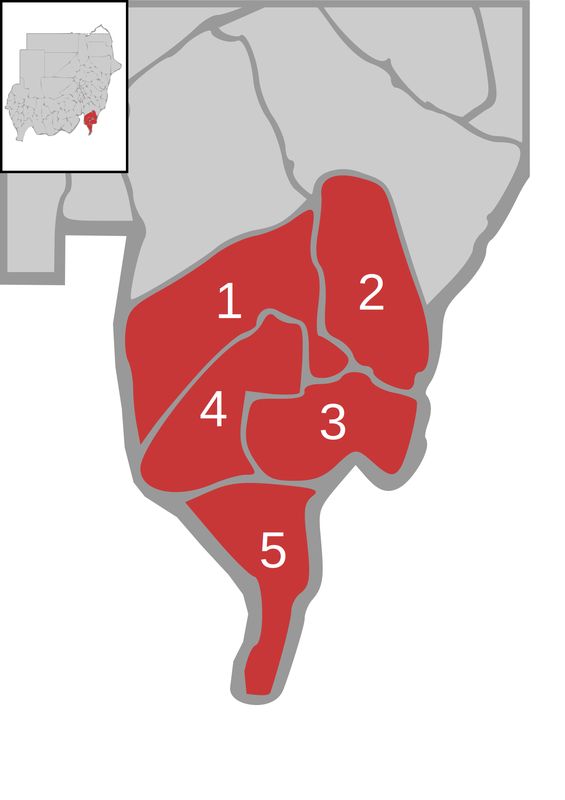
Blue Nile has become one of the main fronts of the war between the Sudanese Armed Forces and the RSF. In 2026 the RSF and its ally, the Sudan People’s Liberation Movement–North faction led by Abdelaziz al-Hilu — partners in the Tasis alliance — launched an offensive from the direction of the Ethiopian border, capturing Kurmuk town on March 23. Fighting continues around the Sali military base, which the army says it has been defending against RSF–SPLM-N attacks since Monday. The alliance, for its part, has said it captured Sali, Al-Keili and Bakori, and then Maqja in Bau locality — claims that sit directly against the army’s account of Sali and that, like Friday’s shootdown claim, have not been independently verified. On contested ground, both sides’ maps of the front differ, and the difference is itself part of the war.
Drones run through every layer of this front. They are how a force without air superiority watches and strikes a state capital’s approaches; they are how an army defends a besieged base’s perimeter; and, on the evidence of Bani Shako and of earlier strikes documented below, they are repeatedly the weapon that reaches civilians on the move. The International Organization for Migration counted 119,782 people displaced from locations across Blue Nile between January 11 and October 15, 2026 — about 45 percent of them children. Each new offensive pushes more of them onto the same small set of roads, above all the road north to Ed Damazin, and it is on those roads, this week, that the war found them.
Why this matters
Analysis. Friday’s two announcements would each be serious alone. Together they mark a war crossing two thresholds at once — one geographic, one moral — and the evidence available supports some conclusions firmly, others not at all. Sorting one from the other is the point.
A civil war acquires a cross-border drone dimension
The Dandro interception, if the army’s account is accurate, means Sudan’s civil war is now being fought, in part, from the far side of an international border — and Sudan’s government has been building exactly that case in public for two weeks. In a report released on November 1, Khartoum alleged roughly 70 drone attacks involving 187 one-way attack drones launched from Ethiopian territory between February 15 and October 27, with about 484 civilian casualties. Those are Khartoum’s figures, presented in its own report; they have not been independently verified. Around November 1–2, Sudan filed formal complaints with the UN Security Council and the African Union Peace and Security Council. Ethiopia denies providing launch sites or supporting the RSF, and counter-accuses Sudan of backing Tigrayan rebels — an accusation Khartoum denies in turn. One external assessment cuts across the denials without settling them: a Yale Humanitarian Research Lab assessment in April found activity at an Ethiopian army base near Asosa consistent with military assistance to the RSF. That is the lab’s assessment, as its authors framed it — evidence of activity consistent with assistance, not proof of who launched any particular drone, including Friday’s.
The evidentiary gap is the story
Between Khartoum’s UN file and Addis Ababa’s denials sits a gap that no institution has yet filled. Drone warfare is unusually well suited to deniability: a one-way attack drone leaves fragments, but fragments identify a weapons type more readily than a launch site, and a launch site more readily than a chain of command. Sudan’s complaint asks the Security Council and the AU to treat a pattern — 187 drones, on its count — as attribution. Ethiopia’s position asks the same bodies to treat the absence of independently verified attribution as exoneration. Both arguments are live, and Friday’s interception claim strengthens neither by itself, because the army published no evidence with it. Critics of Khartoum note that the government has an interest in internationalising the war and casting the RSF as a foreign proxy; critics of Addis Ababa note that a categorical denial sits awkwardly beside the Yale lab’s Asosa findings. Both criticisms can be true at once, and the civilians of Blue Nile live underneath the argument either way.
119,782 displaced in a state of about 1.1 million
The IOM figure deserves arithmetic. Blue Nile’s population is roughly 1.1 million people. The 119,782 counted displaced between mid-January and mid-October therefore amount to about one in every nine residents driven from their homes in ten months — and the count predates the latest fighting around Sali and the Bani Shako strike. Nearly half are children. Displacement on that scale is not a side effect of this front; it is the front’s main product, and it concentrates people in exactly the places drones keep reaching: displacement sites, gathering points and the roads between them.
Striking the evacuation route is becoming a pattern
Bani Shako is not the first time this has happened in Blue Nile this year. On October 10, the UN’s resident and humanitarian coordinator in Sudan, Denise Brown, said preliminary information showed at least 31 civilians, mostly women and children, had been killed in a drone strike next to a displacement site in Wad al-Mahi, an army-controlled area of the state — a strike we covered in our earlier reporting on the Blue Nile drone strike that killed women and children in October. Wad al-Mahi was a strike beside a site where displaced people shelter; Bani Shako was a strike on displaced people in motion, travelling toward the capital for safety. Read together, the two incidents describe a war in which displacement itself has become exposure: the places civilians gather when they flee, and the roads they flee along, are inside the battlefield. Whoever fired in each case — attribution in both rests on official or local claims rather than independent findings — the operational fact is the same, and it is the fact that humanitarian agencies planning convoys and families planning escapes must now plan around.
Who gains, who loses
Militarily, the drone dimension favours the side that can strike without holding ground: the RSF–SPLM-N alliance can pressure Ed Damazin’s approaches and contest the army’s narrative of control without taking the capital, while the army’s counter is air defence and diplomacy — each publicised interception, like Dandro, doubling as evidence in the UN file. Diplomatically, escalation cuts both ways: Khartoum gains an international case against Ethiopia but risks a second hostile frontier; Addis Ababa, already managing its own internal conflicts, gains nothing from a shooting dispute with Sudan and has chosen denial over engagement with the specifics. The unambiguous losers are Blue Nile’s civilians, for whom the war now arrives from the sky on the road to safety, and the humanitarian operation, whose access shrinks as the front’s weapons outrange its negotiators.
Context: a war since April 2023, and an older Blue Nile conflict
Sudan’s war began in April 2023, when the power struggle between the Sudanese Armed Forces, led by General Abdel Fattah al-Burhan, and the RSF, led by General Mohamed Hamdan Dagalo, known as Hemedti, exploded into open fighting in Khartoum and rapidly consumed Darfur, Kordofan and the capital region. Blue Nile came later to the centre of the war, but the state carries an older conflict of its own: from 2011, after South Sudan’s independence, Blue Nile and South Kordofan were the scene of a long insurgency by the SPLM-N against Khartoum, a war that burned for nearly a decade before a ceasefire and the 2020 peace process froze, without fully resolving, the questions of land, power and marginalisation that drove it. The al-Hilu faction held out from that settlement. Its alliance with the RSF in the current war has now brought the fighting back to the same hills and border districts, with a new weapon overhead.
The diplomatic rupture with Ethiopia is newer and faster-moving. Sudan’s November 1 report and its complaints to the Security Council and the AU Peace and Security Council were followed within days by a consulate tit-for-tat: Ethiopia closed Sudan’s consulate in Asosa and Sudan closed Ethiopia’s consulate in Gedaref on November 4–5, a rupture we covered as Sudan and Ethiopia closed each other’s consulates amid the drone dispute. The Asosa closure is not a random pin on the map: Asosa is the Ethiopian border town near the base the Yale lab assessed, and it faces Blue Nile directly. The geography of the diplomatic crisis and the geography of the drone war are the same geography. Our coverage of the wider drone campaign against civilians includes the Omdurman car strike that killed five civilians earlier this month, which follows the same evidentiary pattern as Bani Shako: a documented toll, an official attribution, and no independent verification yet.
What happens next
Three tracks will decide whether Friday becomes a turning point or another entry in the ledger. The first is institutional: the Security Council and the AU Peace and Security Council now hold Sudan’s complaint, with its 187-drone ledger, against Ethiopia’s denials. Whether either body commissions independent verification — the one step that could convert claim and counter-claim into findings — is the key question, and neither has committed to it in the reporting. The second is bilateral: each publicised cross-border interception raises the risk of direct Sudan–Ethiopia friction, from airspace incidents to retaliation along a long and porous border, even though neither government appears to want an interstate war. The third is local and immediate: the fight for Sali, where the army says it is holding and the alliance says it has already won, will set the military facts that the diplomacy then argues over, and humanitarian access to Kurmuk — where the missing from Bani Shako are still being searched for, and where survivors say injured people remain stranded southeast of Ed Damazin — will decide whether the next toll revision moves.
What to watch:
- Any Ethiopian response to the Dandro interception claim, and any evidence — wreckage, imagery, a drone type — the Sudanese army publishes to support it.
- Movement at the UN Security Council and the AU Peace and Security Council on Sudan’s complaint, above all any mandate for independent verification of the alleged launches from Ethiopian territory.
- The Sali base fight: whether the army’s account of a defence held since Monday, or the alliance’s claim of capture, is borne out by subsequent reporting.
- The Bani Shako toll: further revisions from Commissioner Al-Faki’s office, word on the still-missing, and any RSF response to the local officials’ attribution.
- Humanitarian access to Kurmuk and the roads southeast of Ed Damazin, where survivors say injured people remain cut off from help.
Do you think the Security Council should order an independent investigation of the cross-border drone claims — or will attribution in this war remain a matter of each side’s word? Follow Signal Post News for continuing coverage of the Blue Nile front, the Sudan–Ethiopia drone dispute and the diplomacy now gathering around both.
Sources
- Addis Standard, “Daily Brief” (November 14, 2026) — the army’s Dandro interception announcement, citing Sudan Tribune’s reporting that the military identified the drone as hostile but gave no further details on its origin or intended target.
- QNC News, “Toll from drone strike on displaced civilians in Blue Nile rises to 16 as search continues” (November 14, 2026) — Commissioner Abdel-Ati Mohamed Al-Faki’s updated toll of 16 dead, six injured and several missing, his hospital visit, and the continuing search.
- QNC News, “Sudan army downs drone that crossed from Ethiopia over Blue Nile state” (November 13, 2026) — the air-defence interception over the Dandro area as announced by the army.
- Democrata, carrying Europa Press reporting, “The Sudanese army brings down an Ethiopian drone amid the height of the fighting in the south of the country” (November 13, 2026) — the shootdown announcement and the southern-front context.
- Xinhua reporting (November 10, 2026), as carried by regional outlets — Commissioner Al-Faki’s initial report of nine killed in the Bani Shako strike.
- Displacement figures: International Organization for Migration count of 119,782 people displaced across Blue Nile between January 11 and October 15, 2026, about 45 percent of them children, as reported in the coverage above. Sudan’s November 1 government report figures (about 70 attacks, 187 drones, roughly 484 civilian casualties) are Khartoum’s and are not independently verified; the Yale Humanitarian Research Lab’s April assessment of the base near Asosa is reported as that lab’s assessment. No photograph of Friday’s interception or of the Bani Shako strike has been published; the maps illustrating this article are Wikimedia Commons files.