War · Africa · Diplomacy
Ethiopia closed the Sudanese consulate in Assosa and ordered its six diplomats to leave within 48 hours, a senior Ethiopian official told Reuters, without giving a reason. Sudan then closed the Ethiopian consulate in Gedaref and expelled the diplomats working there. Behind the tit-for-tat sit two accusations — that Ethiopia backs the RSF, and that Sudan backs Tigrayan rebels — and both governments deny the charge against them.
Track it live: Africa wars tracker
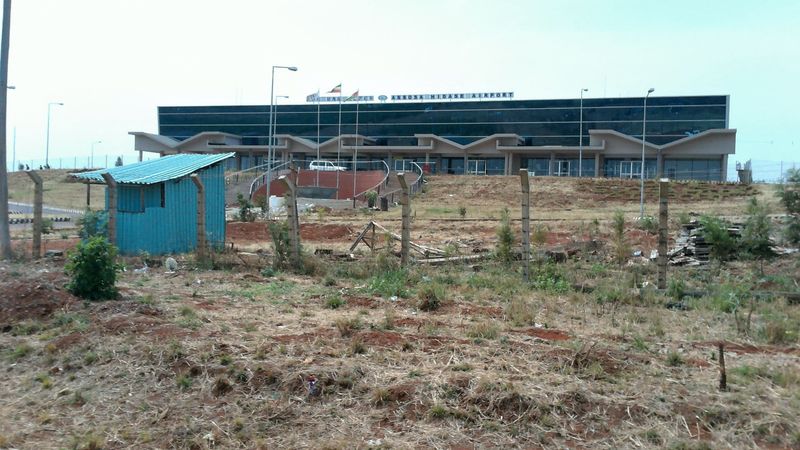
ASSOSA, Ethiopia, November 5, 2026 — The Sudan Ethiopia diplomatic expulsions unfolded in a single day. Ethiopia and Sudan closed each other’s consulates near their shared border on Wednesday, officials from the two countries told Reuters, in a reciprocal shutdown that marks a further deterioration in relations between two neighbours whose wars are increasingly accused of bleeding into each other’s territory. Ethiopia moved first: it closed the Sudanese consulate in Assosa, the capital of its western Benishangul-Gumuz region, and ordered the six diplomats posted there to leave the country within 48 hours, a senior Ethiopian official told Reuters. Sudan’s government then closed the Ethiopian consulate in Gedaref, in eastern Sudan, and expelled the diplomats working there, two Sudanese officials told Reuters. An official separately told AFP that the Gedaref staff were informed they were persona non grata and given 48 hours to leave the country.
What the two governments agree on ends there. Sudan accuses Ethiopia of supporting the paramilitary Rapid Support Forces (RSF), which has been fighting Sudan’s regular army in a civil war since April 2023. Ethiopia accuses Sudan of backing rebels in its northern Tigray region. Both allegations are contested claims, attributed throughout this article to the governments that make them: Addis Ababa denies supporting the RSF, Khartoum denies backing Tigrayan rebels, and neither side has publicly produced evidence that settles its charge. The closures and expulsions themselves, by contrast, are confirmed on the record by officials of both countries speaking to Reuters and AFP, and corroborated by Al Jazeera’s reporting of the same official accounts. Signal Post News keeps those two categories — the confirmed diplomatic acts and the disputed war accusations — separate throughout, because on this border the difference between them is the story.
Assosa: six diplomats, 48 hours, and no reason given
The first move was Ethiopia’s. According to the senior Ethiopian official who spoke to Reuters, Ethiopia closed the Sudanese consulate in Assosa and ordered the six diplomats stationed there to leave within 48 hours. The official provided no reason for the decision, and no public explanation has been offered by the Ethiopian government in the reporting available at publication time: not a statement from the foreign ministry, not a named grievance attached to the closure itself. The spokesperson for the Ethiopian prime minister’s office did not respond to a Reuters request for comment. That silence matters, and this article does not fill it with speculation: whatever prompted the Assosa closure — the drone dispute set out below, the Tigray accusation, something else entirely — Ethiopia has not said, on the record, and any account that claims to know is guessing.
Assosa is not a ceremonial posting. It is the capital of Benishangul-Gumuz, the Ethiopian region that runs along the Sudanese states of Blue Nile and Gedaref, and its consulate was Sudan’s working presence in a borderland where the two countries’ security problems are physically entangled: armed groups, smuggling routes, refugee movements and, in Khartoum’s account, the rear areas of the RSF’s drone campaign. A consulate in such a town is less a flag than a set of eyes, a phone line and a desk where cross-border problems are supposed to be managed before they become crises. Closing it removes exactly that machinery at the moment it is most needed — which is, of course, one way to read the decision: not housekeeping, but signal.
Gedaref: Sudan answers in kind — and the Gedaref consulate closed within hours
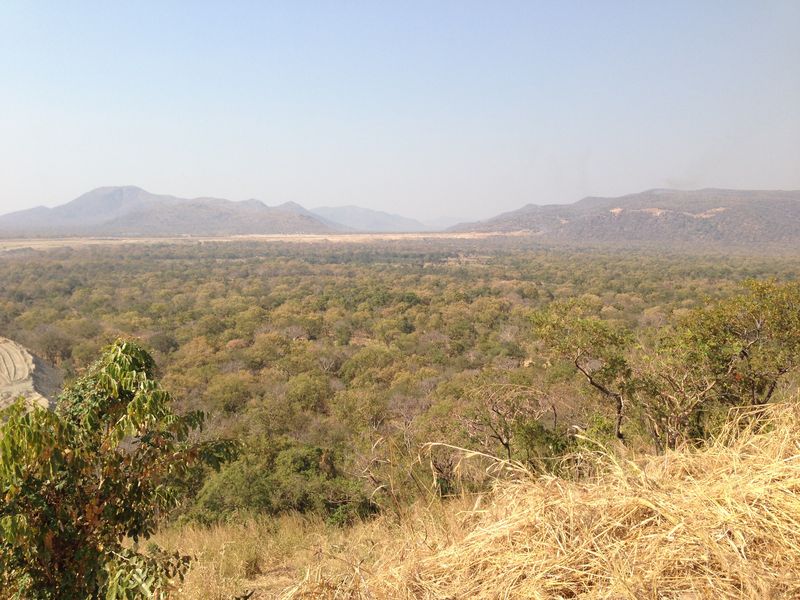
Sudan’s reply came the same day and mirrored Ethiopia’s move almost exactly. Two Sudanese officials told Reuters that Sudan’s government closed the Ethiopian consulate in Gedaref — also spelled Gadarif — in eastern Sudan and expelled the diplomats working there. AFP was told the same thing in the formal language of diplomatic rupture: the consulate’s staff were informed that they were persona non grata and given 48 hours to leave the country. The symmetry is the point. Tit-for-tat expulsions are a calibrated language in diplomacy: match the other side’s measure, post for post and deadline for deadline, and you communicate resolve without yet escalating to the next rung, which would be the embassies in Khartoum and Addis Ababa.
One fact about the Gedaref expulsion is not established, and readers should hold it as unknown: the number of Ethiopian diplomats ordered out. Reuters’ Sudanese officials and AFP’s source confirmed the expulsion and the 48-hour deadline, but neither account put a figure on the Gedaref staff, and Signal Post News will not invent one. The confirmed arithmetic of Wednesday is therefore asymmetric in the record even if it was symmetric in fact: six named Sudanese diplomats out of Assosa, an uncounted Ethiopian staff out of Gedaref, two consulates dark, and two 48-hour clocks running at once.
Gedaref, like Assosa, is a working border city rather than a diplomatic ornament. It is the centre of one of Sudan’s richest agricultural regions — the rain-fed farms of Gedaref state produce much of the country’s sesame and sorghum — and its trade, labour and family ties run east into Ethiopia as naturally as they run west into Sudan. Since 2020 it has also been a first refuge for Ethiopians fleeing war: the camps of Gedaref state, among them Um Rakuba, received tens of thousands of people escaping the Tigray war. An Ethiopian consulate in Gedaref existed to serve exactly that entanglement — traders, farmers, workers and refugees whose lives cross the border daily. Its closure lands on them first, as the sections below set out.
Two accusations, neither proven: Sudan accuses Ethiopia of RSF support; Ethiopia points at Tigray
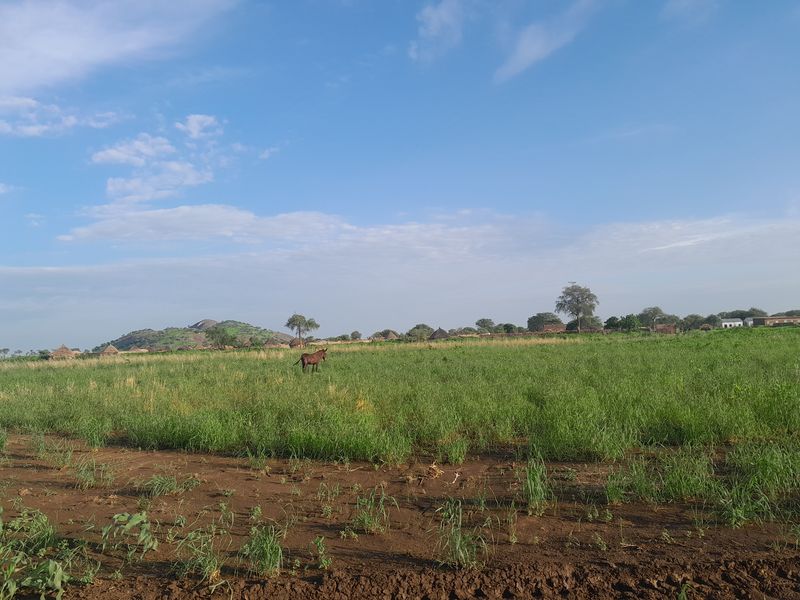
The closures did not arrive from a clear sky, and each government has published its theory of the other. Sudan’s accusation is that Ethiopia supports the Rapid Support Forces — the paramilitary force, once the Sudanese state’s own creation, that has fought the Sudanese Armed Forces since April 2023 in a war that has killed tens of thousands of people and displaced more than 14 million, according to the United Nations. In its sharpest form, Khartoum’s claim is that RSF drone attacks on Sudanese infrastructure have been launched from, or enabled through, Ethiopian territory. Ethiopia denies supporting the RSF. No independent public verification of the support claim has been published, and Signal Post News reports it strictly as Sudan’s allegation.
Ethiopia’s counter-accusation runs the other way: that Sudan backs rebels in Tigray, the northern Ethiopian region whose 2020–2022 war against the federal government killed hundreds of thousands of people and whose fragile post-war settlement has been fraying. Sudan denies the charge. The accusation is not new this week — in September, as we reported, Sudan’s army rejected an Ethiopian general’s claim that it backs armed opposition groups — and Addis Ababa has more recently accused Sudan, alongside Egypt and Eritrea, of supporting Tigrayan rebels, charges all three have denied. Here, too, the honest summary is the narrow one: two governments, each fighting or recovering from a war, each formally accusing the other of feeding its enemies, each denying the accusation against itself, and no neutral arbiter in possession of the facts.
The drone complaint that lit the fuse: Sudan takes Ethiopia to the UN and the AU
The immediate runway to Wednesday’s closures was laid on Sunday, November 1, when Sudan announced it had lodged complaints against Ethiopia with both the UN Security Council and the African Union’s Peace and Security Council. The complaints, as Khartoum describes them, concern Ethiopia’s alleged support for cross-border RSF drone attacks on Sudanese power and fuel infrastructure — attacks Sudan says were launched from Ethiopian territory using drones supplied by the United Arab Emirates. Every element of that sentence is an allegation: Ethiopia denies backing the RSF, the UAE has not accepted the supply claim, and no UN or AU body has published findings endorsing Khartoum’s account. What is factual is the complaint itself, its destination, and its timing — three days before the consulates closed.
The backdrop is a drone campaign against Sudan’s electricity grid that has sharply intensified. Al Jazeera reported on November 2 that RSF strikes had hit 18 electricity substations in the space of a week, a tempo of attack on power infrastructure that deepens blackouts for civilians far from any front line; on Sunday, strikes on substations in the northern towns of al-Dabba and Abu Hamad knocked out power, with Sudan’s government blaming the RSF. The RSF’s long campaign against the grid — including the strikes on power stations across Sudan’s southeast that we covered in our reporting on the blackouts — is the military pressure underneath the diplomatic rupture: Khartoum’s argument is that a campaign of this reach needs a rear base, and it names Ethiopia as that base. Addis Ababa’s answer, on the record, is denial. The complaint process will now test whether either capital can move the argument from assertion to evidence in front of the Security Council and the AU.
Why this matters
Consulates are the border’s plumbing — and both sides just ripped theirs out
Embassies conduct relations between capitals; consulates in border towns conduct relations between neighbours. The Assosa and Gedaref posts handled the unglamorous traffic of a live frontier: traders’ paperwork, detained nationals, cross-border farming and grazing disputes, refugee documentation, and the quiet official contact that lets two security establishments tell each other what they are and are not doing. Removing both posts in a single day does not merely express displeasure. It degrades the exact channel through which a border incident — a drone wreck found on the wrong side of the line, an armed column moving at night — is clarified before it is avenged. The next misunderstanding on this border will now be handled, if it is handled at all, between two capitals already speaking to each other in the language of formal complaints.
The Sudan Ethiopia drone attacks complaint at the UN turns a bilateral row into a regional file
By filing at the Security Council and the AU Peace and Security Council on November 1, Sudan internationalised the dispute before the first consulate closed. That changes the incentives on both sides. For Khartoum, the filings create a formal record and oblige Addis Ababa to answer in multilateral rooms rather than only in bilateral silence. For Ethiopia, the complaints raise the reputational cost of the very support Sudan alleges — and, in Addis Ababa’s own framing, they are themselves an escalation that the Assosa closure answered. Either way, the Ethiopia Sudan Tigray rebels accusation and the RSF support allegation are no longer bilateral talking points; they are agenda items, with secretariats, rapporteurs and member states attached. Disputes that reach that stage rarely return to quiet bilateral management quickly.
Two wars, one frontier: the spillover risk is structural, not rhetorical
The deepest reason Wednesday matters is geography. Sudan’s civil war is being fought, in its eastern theatre, within reach of the Ethiopian border; Ethiopia’s unfinished Tigray settlement sits within reach of the Sudanese one. Each state therefore has both the opportunity and the motive the other fears: a neighbour’s enemy is a potential proxy, and a neighbour’s territory is a potential sanctuary, supply route or launchpad. That structure does not prove either government’s accusation — and this article asserts neither — but it explains why the accusations are believed by the publics and security establishments that voice them, and why a consulate closure on this particular frontier carries more weight than the same gesture between two states at peace. The Sudan civil war’s regional spillover has been predicted since 2023; Wednesday is what its diplomatic form looks like.
Background: a border with a long memory
Sudan and Ethiopia share roughly 1,600 kilometres of frontier, and its modern history is a palimpsest of cooperation and suspicion. The al-Fashaga triangle — fertile Sudanese-claimed farmland long cultivated by Ethiopian farmers — has been disputed for decades and flared into armed clashes in 2020, when Sudanese forces moved to reassert control as Ethiopia’s army was drawn into the Tigray war. The Grand Ethiopian Renaissance Dam, Ethiopia’s giant Blue Nile project, has separately strained Addis Ababa’s relations with Khartoum and Cairo for more than a decade. And the two states have repeatedly sheltered each other’s displaced: Ethiopians fled into Gedaref and Kassala during the Tigray war, while Sudanese fleeing the current civil war have crossed into Ethiopia in the other direction — each flow creating both humanitarian obligations and security anxieties in the receiving state.
Over that history sits the present catastrophe. Sudan’s war began in April 2023 as a power struggle between the army and the RSF and became, by the UN’s assessment, one of the world’s worst humanitarian crises: tens of thousands killed, cities besieged and emptied, famine conditions confirmed in parts of Darfur and Kordofan, and more than 14 million people displaced inside and beyond Sudan’s borders. Ethiopia, meanwhile, is managing the unfinished aftermath of its own civil war in Tigray — a peace agreement whose implementation has stalled, armed actors who never fully demobilised, and a region whose politics Addis Ababa watches with open suspicion of outside hands. It is onto that pair of open wounds that Wednesday’s expulsions landed. Readers following the wider regional diplomacy can trace the Tigray file’s regionalisation in our account of the emergency summit Egypt hosted as the Tigray war threatened a wider conflict.
Who loses first: traders, farmers, refugees — and the AU’s mediators
The costs of Wednesday’s moves arrive in a predictable order, and diplomats are not at the front of the queue. First are the border communities themselves: the sesame and sorghum traders of Gedaref whose goods move into Ethiopian markets, the Ethiopian merchants and seasonal labourers who cross for the harvest, the families split between Assosa and Sudan’s Blue Nile state. For them a closed consulate means documents that cannot be issued, detentions that cannot be queried, and a frontier that feels more militarised by the week — with the ever-present risk that a diplomatic freeze becomes a physical one at the crossings their livelihoods depend on.
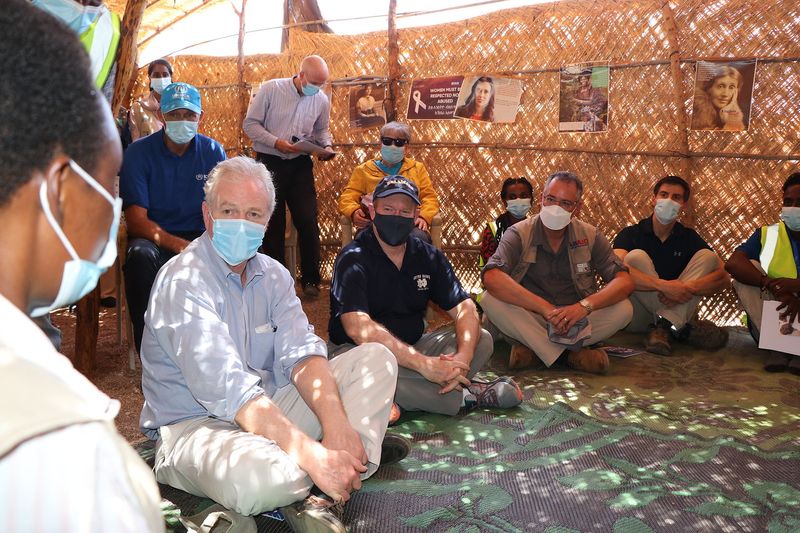
Second are the refugees, in both directions. Gedaref state hosts Ethiopians who fled Tigray; Ethiopia hosts Sudanese who fled the RSF war. Both populations depend on the two states cooperating — on registration, on aid access, on the basic consular and governmental machinery that a rupture corrodes. Neither camp population has any voice in the accusations being traded over their heads, and both are hostage to whether Wednesday remains a diplomatic episode or becomes a security policy. Third are the mediators: the African Union, whose Peace and Security Council now holds Sudan’s complaint while its diplomats would ordinarily be the ones shuttling between the two capitals, starts that work with the two governments having just expelled each other’s border staff. Who benefits is harder to name, beyond the armed actors on both sides of both wars, for whom a neighbour’s distraction and a neighbour’s disgrace are always useful.
The numbers in context
Six diplomats: the Sudanese staff ordered out of Assosa — the only expulsion figure any official has put on the record. Forty-eight hours: the deadline both governments set, in mirror image, for the other’s staff to leave. Two consulates: Assosa and Gedaref, closed within a single news cycle, leaving the border’s two working posts dark at once. Eighteen substations: the RSF drone strikes on Sudan’s electricity infrastructure reported by Al Jazeera in the single week before the closures — the military tempo that Khartoum cites as the context for its UN and AU complaints. Three days: the gap between Sudan’s November 1 filings in New York and Addis Ababa and Wednesday’s closures. And roughly 14 million: the people the UN counts as displaced by Sudan’s war, the human weight underneath every argument the two governments are having. Set against those figures, six diplomats is a small number — which is precisely why both capitals chose it. Expulsions at this scale are a message, priced to be unmistakable and still reversible.
What happens next
The formal track now runs through the two bodies Sudan petitioned on November 1. At the UN Security Council, Khartoum’s complaint obliges no automatic action, but it puts Ethiopia’s alleged RSF links onto the Council’s record and gives Sudan’s allies a text to rally around; expect closed consultations before any public session, and expect Ethiopia to use them to table its Tigray accusation in return. At the African Union’s Peace and Security Council — which sits in Addis Ababa, a fact that cuts both ways — the complaint enters a body built for exactly this kind of neighbour dispute, and the AU’s likely first move is the standard one: a call for restraint, an offer of good offices, and quiet pressure on both capitals to reopen a channel. Whether either government wants that channel is the open question Wednesday posed.
The escalation ladder above Wednesday’s rung is short and visible. The next steps in the diplomatic repertoire are the recall of ambassadors, the closure of the remaining consular or cultural presences, and ultimately the embassies themselves — the move Ethiopia and Eritrea’s rupture showed this region in October, when Addis Ababa expelled Eritrean diplomats and closed its embassy in Asmara, as Al Jazeera’s account of this week’s events noted. Beyond diplomacy sits the scenario both governments publicly disavow: direct friction along a border where Sudanese forces, Ethiopian forces and at least two insurgencies all operate. Sudan’s own public position, stated by an adviser to its Transitional Sovereign Council and carried by Al Jazeera, is that Khartoum is “making every possible effort to avoid an open war with Ethiopia” while reserving its right to defend its territory. Ethiopia’s public position is denial of the RSF charge. Between those two statements there is still room for the dispute to be managed — but since Wednesday, it must be managed without the two offices whose entire purpose was managing it.
What to watch, concretely: whether Ethiopia ever states a reason for the Assosa closure, which would tell observers which grievance the expulsion was priced against; whether the Gedaref staff’s departure is matched by any Sudanese accounting of their number, completing the public record; whether the Security Council or the AU Peace and Security Council schedules the Sudanese complaint, and in what form; and whether the 48-hour deadlines pass quietly, with staff withdrawn and doors locked, or become the occasion for a further exchange. The consulates can be reopened with a signature each. The accusations underneath them — drones over the power grid, rebels across the Tigray line — will take evidence, not signatures, to settle, and neither government has yet shown the other, or the public, its proof.
Related coverage: Sudan’s army rejects Ethiopian general’s claim it backs armed opposition, Sudan drone strikes on power stations cut power across the southeast and Egypt hosts emergency summit as Tigray war threatens wider regional conflict.
Sources
Reuters, November 4, 2026, “Ethiopia and Sudan close each other’s consulates after allegations of meddling in civil war” (wire report as carried by SRN News) — Ethiopia’s closure of the Sudanese consulate in Assosa and the order for its six diplomats to leave within 48 hours, from a senior Ethiopian official who provided no reason; Sudan’s closure of the Ethiopian consulate in Gedaref and the expulsion of its diplomats, from two Sudanese officials; both governments’ accusations — Sudan’s charge of Ethiopian support for the RSF and Ethiopia’s charge of Sudanese backing for Tigray rebels; Sudan’s November 1 complaints to the UN Security Council and the AU Peace and Security Council; and the Ethiopian prime minister’s office spokesperson not responding to a request for comment.
Al Jazeera, November 4, 2026, “Sudan, Ethiopia shut each other’s consulates in tit-for-tat move” — corroboration of the Reuters and AFP official accounts, both sides’ denials of the support allegations, the UN figure of more than 14 million people displaced by Sudan’s war since 2023, the Sudanese Sovereign Council adviser’s statement that Khartoum is making every effort to avoid open war with Ethiopia, the Sunday drone strikes on substations at al-Dabba and Abu Hamad, and the context of Ethiopia’s October expulsion of Eritrean diplomats. Al Jazeera, November 2, 2026: RSF strikes hitting 18 electricity substations in the past week.
Agence France-Presse (AFP), November 4, 2026 — the account, from an official speaking to AFP, that the staff of the Ethiopian consulate in Gedaref were informed they were persona non grata and given 48 hours to leave the country. Photos: Wikimedia Commons, as credited in the captions; all are file photographs of Assosa, Gedaref state and the Um Rakuba camp, and no photograph of Wednesday’s closures has been published.