Starlink disruptions Ukraine military units have been reporting all week stopped being a diplomatic story on Friday and became a battlefield one: Reuters reporters reached an artillery position in the Donbas where the crew said the slowdown arrived within hours, and President Volodymyr Zelenskyy told European leaders in Brussels the same day that service is improving but has not been fully restored.
The Link Slowed at the Front. Brussels Heard About It the Same Day.
Track it live: Ukraine war map — follow the front lines on the live map, and see all active conflicts on the live war tracker.
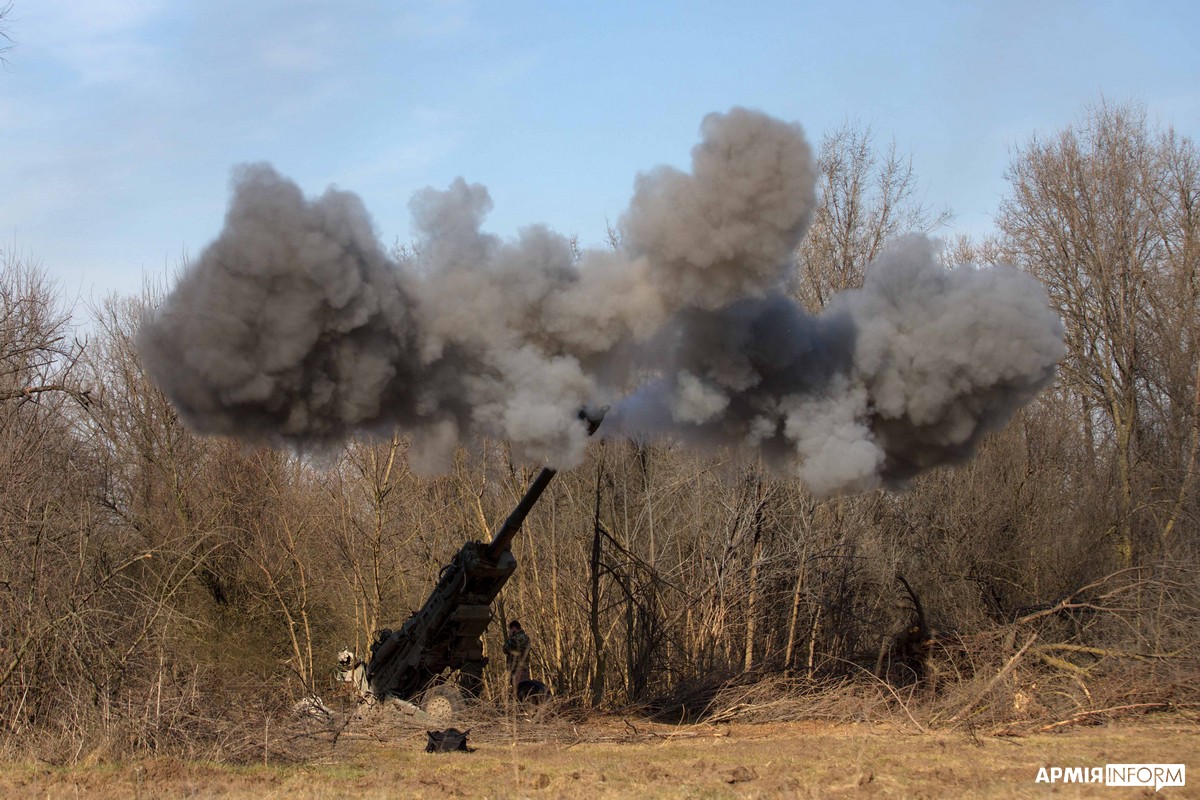
DONBAS, Ukraine — The position is a timber-framed bunker dug deep into the ground, lit by head torches, where a Ukrainian artillery crew loads a howitzer by hand and covers its ears each time the gun fires. Reuters, which visited the unit of the Special Rifle Police Battalion this week, reported that the crew noticed the change almost as soon as it was announced in Washington: communication with headquarters was interrupted, and the internet speed at their position dropped sharply.
A 28-year-old soldier identified by his callsign, Ukrlan — the only name he gave, in keeping with Ukrainian military practice — told the agency the effect was immediate. His account matters because of what the link carries at a position like his. The Starlink network, and its military-grade sibling Starshield, move the targeting data, drone feeds and strike warnings that modern artillery depends on. Slower speeds, the soldier said, impaired the unit's ability to detect and intercept incoming missiles and drones — in a sector where drones are a constant presence and seconds of warning are the difference between a crew that takes cover and one that does not.
Reuters could not independently measure the speeds at the position, and the soldier's account is one unit's experience rather than a network-wide audit. But on Friday it stopped being a single account. In Brussels, the president of Ukraine described the same problem, in the same terms, to the leaders of the European Union.
What Zelenskyy told Brussels
Zelenskyy attended Friday's European summit as a specially invited guest, arriving in the middle of the most public rupture with Washington of his presidency — a week in which President Donald Trump called Ukraine's resumed strikes on Russian refineries a disgrace, and Zelenskyy answered by thanking Europe's leaders, pointedly, as the real ones. His Starlink remarks, reported by the Associated Press from his Brussels news conference, were specific. Service had improved, he said, but had not returned to what it was. Asked whether the previous speeds were back, he answered no — but that they were coming back.
He also put numbers on the restriction's military meaning. The limits applied to Starshield, he said, had slowed Ukraine's interceptors to about 70 kilometres per hour (43 mph) — against Russian jet-powered drones travelling at more than 400 kilometres per hour (250 mph). An interceptor that cannot close at speed is not an interceptor; it is a spectator. Zelenskyy called the sudden restrictions a dangerous and unpleasant surprise, and said the degraded service put civilian lives at risk, because the same network that guides interceptors also carries early warning of incoming attacks on cities.
Two further asks framed the visit. Zelenskyy sought another €70 billion from the EU next year to fund Ukraine's defence, according to reporting of the summit, and he used bilateral meetings on the summit's sidelines — including two face-to-face sessions with French President Emmanuel Macron — to look for ways to reduce Ukraine's dependence on a single American-controlled network. In a post on X after the first Macron meeting, he said the two had discussed ways to counter the disruptions, and that new packages to strengthen Ukraine's combat aviation would arrive this month. Sweden's prime minister, Ulf Kristersson, said after a separate meeting that the two had discussed in detail the transfer of Gripen fighter jets and pilot training — a reminder that the Brussels trip was about the whole architecture of Ukraine's air defence, not one satellite link alone.

How the link got limited
The sequence matters, and this site has reported each step. On October 14, Kyiv said SpaceX had imposed a Starlink speed limit in Ukraine that was disrupting drone missions. On October 15, reporting based on U.S. and Western officials said the order to limit Starshield for Ukraine came from inside the White House — though the officials did not identify who issued it, and a U.S. official told the Washington Examiner that no such request was ever made by the President himself. The White House has not publicly specified who ordered the limits or why.
The timing is not in dispute. The limits arrived as Trump pressed Kyiv to stop striking Russian oil refineries — strikes he blames for elevated global energy prices — and days after Washington announced a deal to buy Russian diesel that Zelenskyy has publicly condemned. Ukraine resumed the refinery strikes on Thursday, saying Russia had never observed the energy truce Trump announced; Russia's overnight strikes on Friday hit energy facilities across nine regions, as today's Ukraine War Day 1696 briefing reports. Whether the satellite limits were leverage, logistics or coincidence is a claim each side's supporters make with confidence and neither side has documented in public. What is documented is the order, the slowdown, and the front-line effect.
Why this matters
Start with the dependency itself. Ukraine did not choose to build its battlefield nervous system on a foreign commercial network out of carelessness; it did so because, from 2022 onward, Starlink was the only system that could be deployed at scale, quickly, under fire. The arrangement worked — until the week it became a policy instrument. A capability that can be throttled by a decision in another capital is not, in the strict sense, a capability a military owns. It is a capability it rents, and Friday's reporting is the sound of the renter reading the lease.
That is why the most consequential part of Zelenskyy's Brussels day was not the complaint but the shopping list. Ukraine, he said, is working with several countries — France named explicitly — to secure additional capabilities, while stressing it is not talking about a full substitution of Starlink. Europe's own answer is real but slow: the European Commission conceded this week that member states' pooled government satellite capacity, Govsatcom, could help Ukraine stay connected, that commercial services could be folded in early next year, and that the EU's own IRIS² constellation will not be fully operational until 2029. Between a network that exists today and can be limited by Washington, and a European alternative that exists fully in 2029, lies the whole dilemma — measured, this winter, in interception speeds.
There is also a second dependency compounding the first. The satellite fight is unfolding while Ukraine is, by its own president's account in Brussels, desperately short of Patriot interceptors — small numbers have arrived in recent months, bought by European countries or donated from others' stocks, as this site's report on Ukraine running out of Patriot interceptors detailed. Air defence is a chain: satellites and intelligence find and track the threat, interceptors kill it. This week, both links of that chain were squeezed at once, one by shortage and one by policy. Russia's winter campaign against Ukraine's power grid does not wait for either to be resolved.
The other accounts
The United States' stated position is that it wants the war ended and is working toward that end; the administration frames its pressure on Kyiv — on refinery strikes, on terms — as the price of a settlement, and Trump has said publicly that he finds Zelenskyy harder to deal with than Putin while also saying both men want the war finished. On the satellite limits specifically, the public record is thin: officials briefed reporters that the order came from inside the White House, a U.S. official denied the President personally made the request, and the White House has not answered who did. Britain's defence secretary has said his American counterpart assured him the system had been restored — an assurance Zelenskyy's Friday remarks only partly confirm, since he described a service improving but not restored.
Russia's position enters this story indirectly but not trivially: Moscow says Ukraine's refinery strikes justify escalation, and its forces spent Friday doing what the degraded network is meant to help Ukraine answer — striking energy infrastructure across nine regions. Critics of Washington's approach argue that throttling an ally's defences mid-winter-campaign aids Russia whatever the intention. Critics of Kyiv argue that a government dependent on American systems cannot publicly defy American requests and expect the systems untouched. Both arguments can be held honestly; the facts underneath them — the order, the slowdown, the partial restoration — are the parts that are verifiable, and they are the parts this report stands on.
What happens next
Three clocks are now running. The first is technical: Zelenskyy says full speeds are returning, and the test is measurable — if interceptor performance and front-line units' connectivity recover within days, Friday will read as the peak of a pressure episode rather than a new condition of the war. The second is European: watch whether the Govsatcom talks Ukraine has opened produce a signed arrangement, and whether France's promised aviation packages this month include the connectivity and interception help Kyiv actually asked for, or only the aircraft. The third is political, and it runs through Washington: whether the limits' author is ever identified, and whether the diesel deal and the refinery dispute — the argument underneath the argument — move toward settlement or toward the November midterms, where energy prices are doing their own arguing.
At the bunker in the Donbas, none of those clocks is visible. There is only a gun, a crew working by head torch, and a link that got slower the week the war's diplomacy got louder. Ukrlan's verdict, given to Reuters, was bleak and brief in substance: the promised quick end to the war has not appeared, and things are getting worse by the week. Whether Friday marks the start of the link coming back — or the start of Ukraine building a war that no longer depends on it — is the question Brussels took home.
Sources: Reuters — Starlink disruptions felt on Ukraine's front lines (Oct 16, 2026); Associated Press via LA Post — Russia strikes nine regions as Zelenskyy–Trump strain grows (Oct 16, 2026); Rapporteur — Ukraine seeks EU help to counter Starlink disruptions (Oct 16, 2026). Figures attributed to officials and agencies are reported as stated by them; the front-line account is one unit's experience as reported by Reuters and was not independently audited.