Day 1696 / Drones kill three, a region goes dark — and Brussels hears 'no signals' of peace
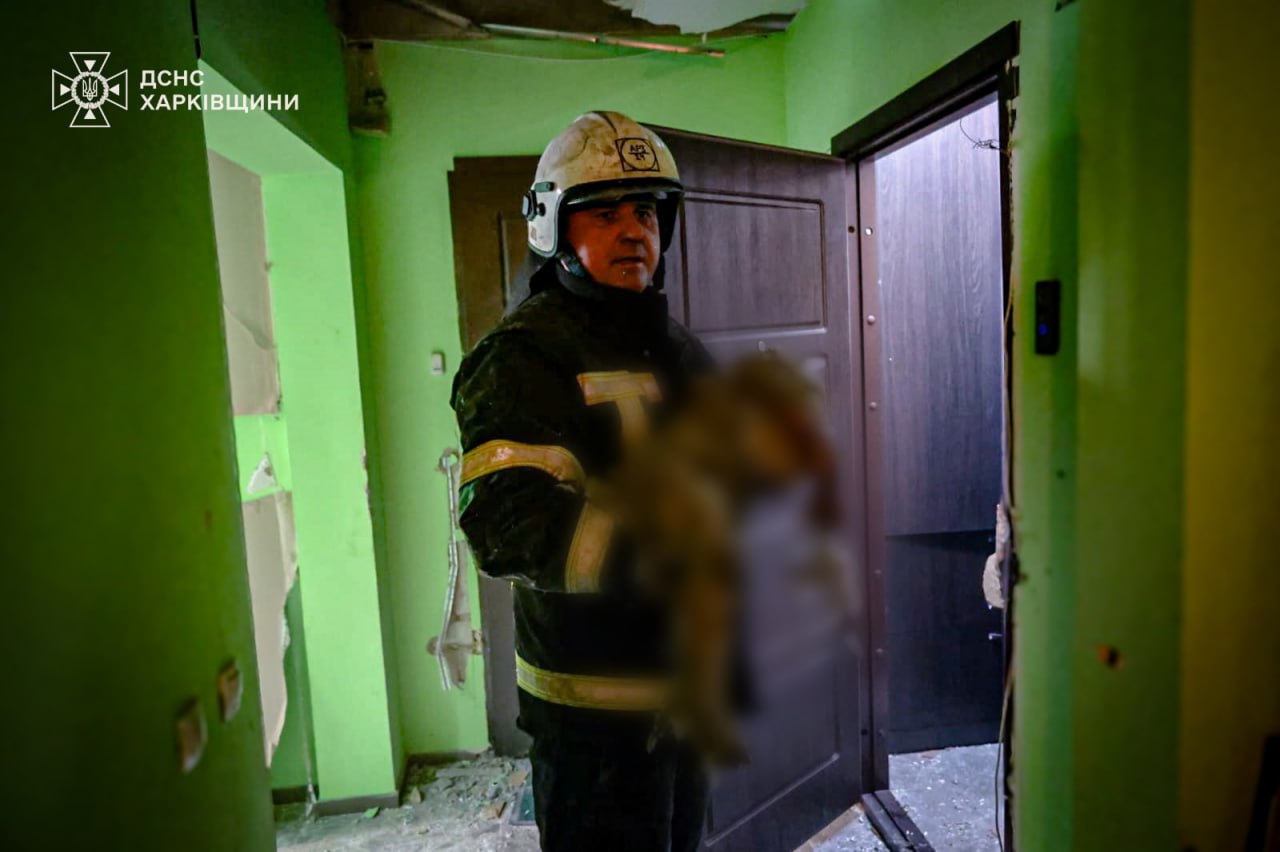
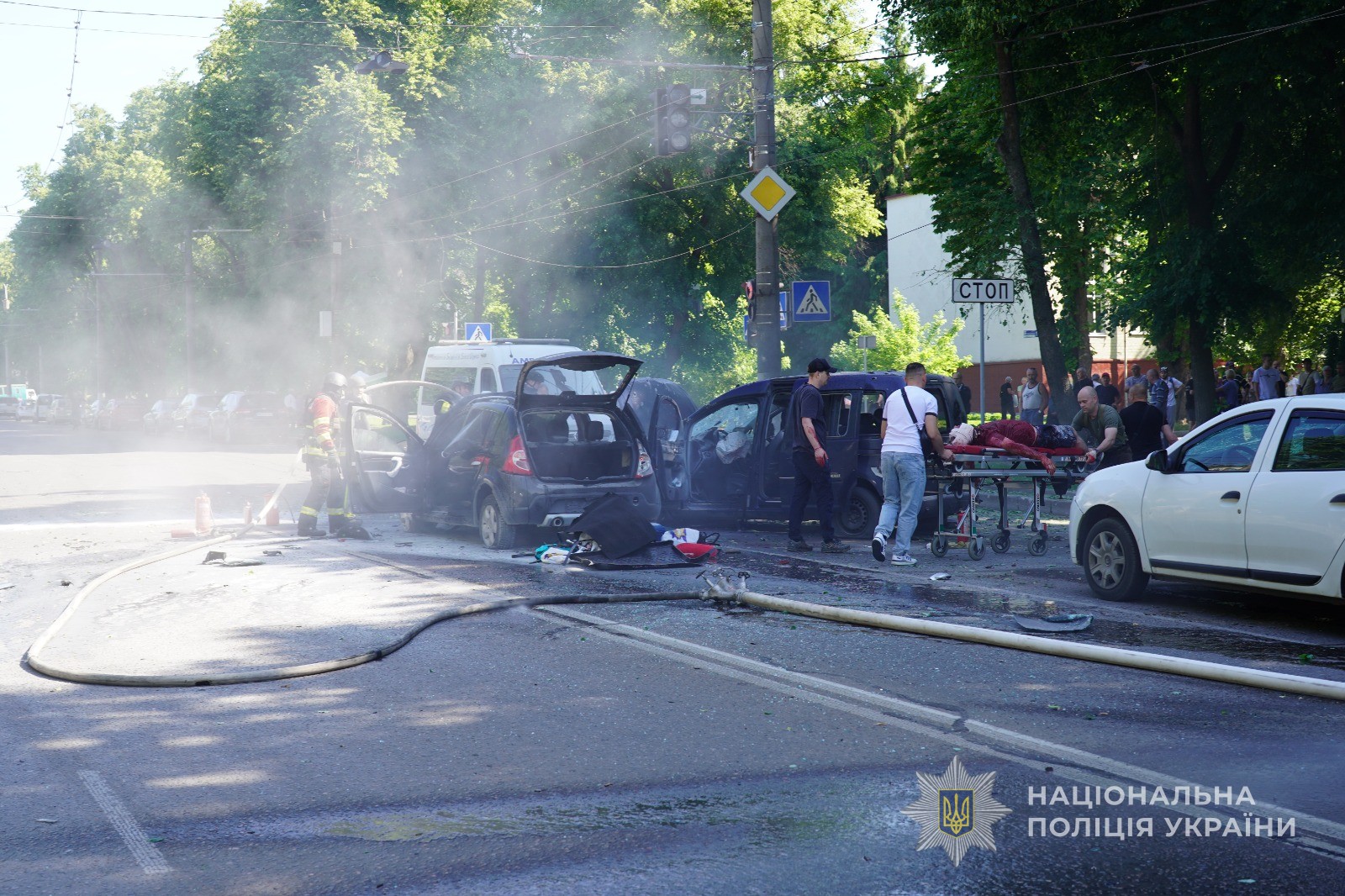
The pattern of the night was breadth rather than a single mass strike. Attacks landed in the northeast, in the centre-north and deep in Ukraine's northwest — hundreds of kilometres apart — between the small hours and dawn on Friday. By the time the all-clear sounded, three people were confirmed dead, at least 27 were wounded, two shopping centres had been hit, and an entire region in the northwest was counting how long its lights would stay off. Reuters reported the casualty toll and the power failure on Friday morning, drawing on regional governors and Ukraine's president.
Track it live: Live Ukraine war map
Kharkiv: two killed, 12 wounded across three districts
In Kharkiv, Ukraine's second city, drones killed two people and wounded 12 more across three districts, Governor Oleh Syniehubov said. Kharkiv sits about 30 kilometres from the Russian border, close enough that warning times are measured in minutes, and it has absorbed more than three and a half years of missiles, glide bombs and drones. That geography explains the tempo of its suffering: weapons launched from inside Russia can arrive before sirens finish, which is why district-by-district casualty reports from Kharkiv have become a grim routine of this war rather than an exception. Friday's toll — two dead, a dozen wounded, spread across three separate districts — suggests multiple impact points rather than one large explosion, the signature of a drone raid designed to scatter damage across a city that cannot be defended everywhere at once.
Volyn: a food plant, one death, and 370,000 people without power
The night's most consequential strike, measured in people affected rather than lives lost, landed in Volyn region in Ukraine's far northwest, near the Polish border — about as far from the front line as Ukrainian territory gets. A drone hit a food-processing facility, killing one person and wounding eight, and the attack knocked out power to roughly 370,000 people. By later in the morning, crews had reconnected about 100,000 of them — rapid work, but arithmetic that still left around 270,000 people waiting. In Lutsk, the regional capital, the mayor warned the blackout could last 24 hours or longer.
Put those numbers in context. A food-processing plant is not a power station, yet its destruction still darkened a region: modern grids are webs, and damage at one industrial node — a substation feed, a distribution line, the plant's own connection — can cascade far beyond the blast site. A 24-hour-plus outage in mid-October is a different event from a 24-hour outage in August. Temperatures in northwestern Ukraine are already falling toward freezing at night; heating, water pumping and refrigeration all depend on the same current. The strike also carried a message about range. Volyn has been attacked before, but every successful hit this deep into western Ukraine demonstrates that distance from the front no longer buys safety — and forces Kyiv to spread its scarce air defences across the whole map, thinning them everywhere.
Sumy and Rivne: shopping centres in the target set
Friday's reports also placed shopping centres among the targets. Centres were hit in Sumy, the northeastern city that lives under near-constant cross-border fire, and in Rivne, in the northwest, where Governor Oleksandr Koval said seven people were wounded. Retail sites are soft, crowded and economically central: a struck shopping centre closes businesses, cuts jobs and removes one of the remaining pieces of normal civilian routine in a frontline-adjacent city, even when — as appears to have been the case in the early hours — the buildings were largely empty and casualties stayed comparatively low. Ukrainian officials present such strikes as evidence that Russia's target list is civilian life itself. Moscow routinely says it strikes only military and military-linked targets. The physical record of this war — schools, hospitals, markets, theatres, apartment blocks — is the context in which readers should weigh that claim, and Friday added two more commercial buildings to it.
The front by the numbers: 304 engagements, 7,059 kamikaze drones
Along the front itself, the Ukrainian General Staff's account of the past day, relayed by the EMPR military portal, describes an intensity that can be hard to absorb in raw form: 304 combat engagements in a single day; 83 Russian air strikes dropping 271 guided bombs; 7,059 kamikaze drones used; and 2,551 shelling attacks. Two comparisons give those figures shape. First, the drone count: a one-way attack drone is cheap, numerous and expendable, and a daily figure above 7,000 — counting the small first-person-view weapons used against positions and vehicles as well as longer-range types — shows a battlefield saturated with them; there is effectively no quiet sector left. Second, the guided bombs: 271 in one day is the weight of Russia's advantage in the air, weapons released from aircraft that stay outside the reach of most Ukrainian defences and that can level a strongpoint in one hit. Russia's Defence Ministry, for its part, said its air defences intercepted 644 Ukrainian drones overnight — a figure Kyiv does not confirm and which, like all such wartime claims from either capital, cannot be independently verified. Even discounted heavily, a claim of that size points to the scale of Ukraine's own deep-strike effort, which on October 15 hit the Rosneft refinery at Ryazan, as yesterday's briefing reported.
Diplomacy: a 'disgrace,' 'real leaders,' and no signals
The diplomatic argument running over the battlefield is now openly about oil. President Donald Trump told Newsmax that Ukraine's resumed strikes on Russian refineries are, in his word, a "disgrace" because they push world oil prices higher — a direct public rebuke of the campaign Kyiv restarted this week and defended in our report on the refinery decision. Zelenskyy, speaking in Brussels on Friday, thanked what he called "real leaders" for standing with Ukraine — a phrase European audiences will read as a contrast — and delivered the day's bleakest assessment: there are no signals, he said, that Russia is ready to end the war, and Ukraine must therefore prepare for the winter ahead. The Kremlin answered through spokesman Dmitry Peskov, who said Zelenskyy does not want to move toward a peaceful resolution. Each side is now publicly assigning the other sole responsibility for the war's continuation, which is what governments do when no negotiation channel is producing anything they wish to describe.

Why this matters
Day 1696 matters because it shows the war's centre of gravity shifting, again, from territory to systems. Russia is not, this week, primarily trying to take ground at any cost; it is trying to make Ukrainian daily life unworkable before winter — power in Volyn, heat in Kyiv after this week's strikes on the capital's plants, commerce in Sumy and Rivne. Ukraine, symmetrically, is trying to make Russia's war economy unworkable — refineries, fuel, revenue — and is now being publicly criticised in Washington for the price effects of doing so. That is the strategic argument underneath Trump's "disgrace" remark and Zelenskyy's Brussels answer: Kyiv's most effective long-range weapon is an economic one, its costs are felt at petrol pumps worldwide, and its benefits arrive slowly, in Russian budget lines. Zelenskyy's winter warning is the other half of the same equation. Ukraine enters this heating season with a grid already repaired and re-broken in cycles, air-defence interceptors rationed, and a population being told, by its own president, to prepare. The side that manages its system better through January may matter more than any single kilometre of front.
What happens next
Four things will set Day 1697. First, Volyn's grid: whether Lutsk's blackout is measured in the promised 24 hours or stretches further will say much about Ukraine's repair capacity this far west. Second, the refinery argument: whether Trump's public pressure changes Kyiv's tempo after Ryazan, or whether — as Brussels suggested yesterday — European backing stiffens it. Third, the winter campaign's scale: another night of several hundred drones and dozens of guided bombs would confirm that Friday was a template, not a spike. Fourth, Brussels follow-through: whether the leaders Zelenskyy thanked on Friday convert words into air-defence deliveries and energy support before the cold deepens. Yesterday's briefing, Day 1695, traced the end of the refinery pause; this briefing returns tomorrow for Day 1697.
Sources: Reuters, Oct. 16, 2026 (drone casualties in Kharkiv and Volyn; power cuts; Sumy and Rivne strikes); EMPR, Oct. 16, 2026 (Ukrainian General Staff daily update: 304 engagements, 83 air strikes, 271 guided bombs, 7,059 kamikaze drones, 2,551 shellings; Russian Defence Ministry claim of 644 drones intercepted); Reuters, Oct. 16, 2026 (Trump Newsmax remarks; Zelenskyy in Brussels; Peskov response). Related on Signal Post News: Ukraine War, Day 1695 briefing · Zelenskyy resumes refinery strikes.