Spain snap election 2026
After parliament killed his rent-cap decrees, Pedro Sánchez dissolved the Cortes and bet his government on November 29 — turning a Madrid eviction into the defining fight of Spanish democracy.

The Spain snap election 2026 is now official. On Monday, October 5, Prime Minister Pedro Sánchez announced the dissolution of parliament and called a general election for November 29 — eight months ahead of schedule — just three days after the Congress of Deputies rejected two emergency housing decrees that were his government's answer to the cost-of-living crisis now dominating Spanish life. The next day, his cabinet approved the same decrees again anyway, daring a 69-member caretaker body to validate them. Spain is about to hold its first national election fought above all on housing — and the outcome could put the far right in national government for the first time since the death of Francisco Franco.
What actually happened this week
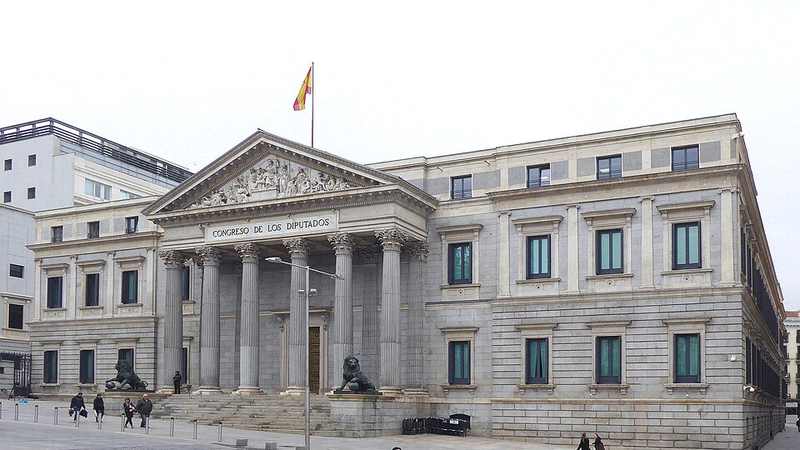
The sequence moved fast. On September 29, Sánchez's cabinet approved two emergency decree-laws: RDL 26/2026, which banned evictions of vulnerable households, extended rental contracts expiring this year, and curbed bulk property purchases by investment funds while offering tax sweeteners to landlords; and RDL 27/2026, which went further — automatic, repeated renewal of rental contracts at the tenant's option. Both decrees lived for barely days. On Friday, October 2, the Congress of Deputies threw them out. The first fell 178 to 172, opposed by the conservative People's Party (PP), the far-right Vox, the Catalan separatists of Junts, and the Navarrese UPN. The second fell 184 to 166, with the Basque PNV and the Canarian Coalición Canaria joining the no camp — the PNV complaining that ministers from the junior coalition partner Sumar had never negotiated the text with them. Three days later, Sánchez walked into the Palacio de la Moncloa and ended it. In a televised address he announced the dissolution of the Cortes Generales and a snap election for Sunday, November 29 — his term had been due to run until July 2027. "We need to renew people's support," he said, calling on voters to deliver "a much broader progressive majority." He also conceded ground, admitting that part of his "social majority" is dissatisfied today and that his government had made "mistakes." Then came the twist: on Tuesday, October 6, the cabinet approved the two decrees a second time, with what Culture Minister Ernest Urtasun promised would be protections "on a par with, or even exceed" the rejected versions. Because parliament is dissolved, the decrees now go to the Diputación Permanente — the 69-member standing committee that remains in place — which, according to state broadcaster TVE, holds a slim majority in favor. The measures take effect temporarily once published in the official gazette.
Why this matters
This is not just another European government falling to the cost of living — it is the first time a major EU country has called an election explicitly and entirely on housing. Rents and evictions have displaced every other issue in Spanish politics: the abstract economy, Catalonia, corruption. When an 87-year-old woman's eviction can trigger a national election within two weeks, the political order has shifted underneath everyone's feet. Second, the maneuver itself is remarkable. Prime ministers usually call snap elections from strength or after losing a confidence vote. Sánchez is doing something rarer: converting a legislative defeat on his own flagship policy into a campaign weapon. He is betting that the anger in the streets is larger than the arithmetic in the chamber — that the millions of Spaniards worried about rent will outvote the 178 deputies who killed his decrees. Third, the caretaker gambit raises a genuine democratic question. A 69-member rump body, not the 350-seat Congress the voters elected, will now decide whether emergency rent caps and eviction bans become law — at least temporarily. It is legal under Spain's constitutional machinery. But it means one of the most interventionist housing packages in Spanish history could take effect without ever winning a vote in a full parliament. The opposition will call that rule by decree; the government will call it protecting the vulnerable. Both descriptions are technically true. Fourth, Europe is watching because Spain is the test case for rent-cap politics. Berlin tried a sweeping rent cap — the Mietendeckel — in 2020; Germany's constitutional court struck it down in 2021. France is convulsed by its own cost-of-living and protest wave. If Sánchez wins on an explicit rent-cap platform, every housing minister in Europe will study the playbook. If he loses, the lesson will be the opposite: that voters punish intervention. And fifth, the stakes could hardly be higher. A SocioMétrica poll cited this week puts the PP at 33.9%, the Socialists at 25.7%, and Vox at 18%. If those numbers hold, a PP government sustained by Vox would bring the far right into Spain's national government for the first time since Franco's death half a century ago. Sánchez is not just betting his decrees — he is betting against that outcome.
How we got here: from one eviction to a tent city in Puerta del Sol
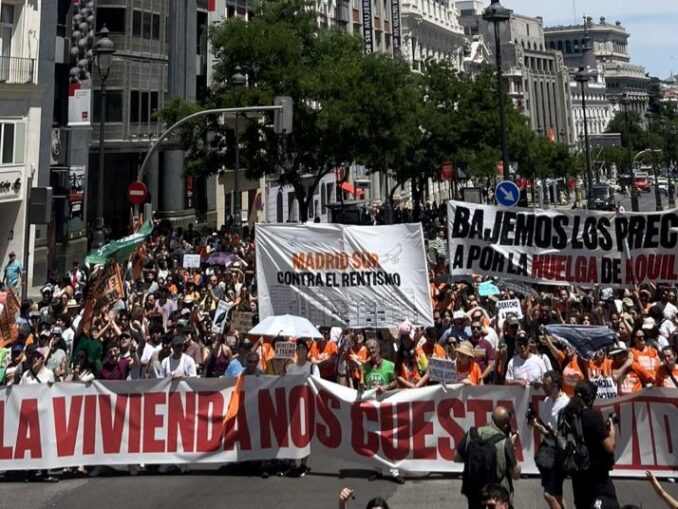
The fuse was lit on September 23, while Sánchez was in New York for the UN General Assembly. In Madrid, an 87-year-old retiree — known publicly by her nickname, Maricarmen — was evicted from her apartment after the building was purchased by an investment fund. The story detonated across Spain at a moment when access to housing had already become, by most polling, the public's chief concern. Within days, a protest encampment went up in Madrid's Puerta del Sol, and demonstrations multiplied across the country. Unions and tenant organizations began calling for a general strike — calls Sánchez publicly said his government would respect. "We will not allow any more evictions like the one Maricarmen suffered," he told reporters. The Sánchez government answered first with the two emergency decrees on September 29. When parliament killed them on October 2, the political crisis became a governmental crisis: a minority government that cannot pass its signature legislation, facing streets full of protesters demanding action, with an election already looming in 2027. Sánchez's answer was to bring the election forward and make housing the ballot question.
The two decrees at the center of it all
Strip away the politics and the measures are genuinely ambitious — arguably the most interventionist housing package any Spanish government has attempted. The first decree, RDL 26/2026, combined an eviction ban for vulnerable households with extensions for rental contracts expiring this year, curbs on bulk purchases of homes by investment funds, and tax incentives for landlords who cut rents. The second, RDL 27/2026, was the more radical: automatic, repeated renewal of standard rental contracts at the tenant's option, for terms of five to seven years. The re-approved package announced October 6 runs to 21 urgent measures, according to Spanish press reports: rent caps, extended eviction protections for vulnerable residents, regulation of room rentals, a new tax on seasonal rentals, prohibitions on speculative real-estate purchases, tax breaks for property owners and tenants who pay on time — plus a €10 billion fund offering loans of up to €50,000 for first-time buyers and new construction subsidies. The other side's case deserves a fair hearing, because it is not frivolous. PP leader Alberto Núñez Feijóo argues that Spain's core problem is supply — too few homes — and that heavy regulation discourages the investment needed to build them. Developers warn that rent caps and purchase limits will shrink the rental market further. Junts, voting no, argued the decrees would not solve the shortage and could make it worse, while failing to protect small landlords. These are serious objections, and they are why the decrees fell: not only the right opposed them, but also the nationalist parties whose votes Sánchez needs to govern.
The betrayal that broke the government
To understand why October 2 was fatal, you have to understand how Sánchez has governed. Since November 2023 he has led a minority coalition of his Socialists (PSOE) with the left-wing Sumar alliance, sustained vote-by-vote by Catalan separatists (Junts), Basque nationalists (PNV), Canarians, and a patchwork of regionalists. It was always a government stitched together deal by deal. The most controversial stitch was the 2023 amnesty for the 2017 Catalan secession attempt — the price of Junts' support for Sánchez's investiture, a deal much of Spain saw as buying power with impunity. Last Friday, Junts voted against the housing decrees anyway. In Moncloa's telling, per Spanish press, it was outright betrayal — days before the amnesty is finally due to let Junts' exiled leader return to Catalonia. In Junts' telling, the decrees were simply bad policy that ignored their demand for a lighter text protecting landlords. Either way, the message to Madrid was unmistakable: the partners hold the leash, and they pulled it. As Le Monde put it, Sánchez ended "a legislative term that had become increasingly difficult." A prime minister who cannot pass emergency legislation — because he has no majority — eventually has to ask the voters for one. That is what November 29 is.

The numbers behind the gamble
Start with the parliamentary arithmetic: 178 to 172, and 184 to 166. The first decree fell by six votes in a 350-seat chamber. Sánchez was not crushed; he was nicked — which is precisely why he believes a "broader progressive majority" is within reach rather than a fantasy. Then the institutional arithmetic: 350 deputies shrink to a 69-member standing committee to validate the re-approved decrees. That is the thinnest possible democratic reed for the most ambitious housing intervention in modern Spanish history — and the opposition will hammer it for the next seven weeks. Then the electoral arithmetic, which is brutal for Sánchez. SocioMétrica: PP 33.9%, PSOE 25.7%, Vox 18%. The prime minister is calling an election from eight points behind, gambling that seven weeks of campaigning on housing — with the decrees themselves taking effect in the meantime — can move numbers that currently point to a right-wing government. He has done this before: after heavy losses in the May 2023 regional elections, Sánchez called a snap general election, finished second to the PP — and still assembled a government. The precedent says he can survive from behind. The polls say this hole is deeper. And the money: a €10 billion loan fund, up to €50,000 per first-time buyer. In a country where buying a home now takes years of full salary, that is real money aimed at real voters — and a down payment on the argument that the state, not the market, will solve the housing crisis.
What happens next: three scenarios
One: the housing wave carries Sánchez. Protest energy converts into turnout, the PSOE claws back the eight-point gap, and a broader progressive majority makes the decrees permanent law. Spain becomes Europe's proof that rent-cap politics wins elections. Two: the right wins and the decrees die. The PP finishes first, Vox plays kingmaker, and the far right enters national government for the first time since Franco — with housing deregulation, not rent caps, as the new doctrine. The temporary decrees expire unrevalidated. Three: fragmentation and limbo. No bloc wins cleanly, coalition talks drag on for months, and the re-approved decrees sit in legal uncertainty — technically in effect, politically contested — while rents keep rising and the Puerta del Sol tents stay up. For the millions of Spaniards waiting on solutions rather than slogans, this is the worst outcome, and polling suggests it is far from impossible.
The bottom line
Whatever happens on November 29, something has already changed: Spain is about to hold its first general election in which housing — not the economy in the abstract, not Catalonia, not corruption — is the question on the ballot. An 87-year-old woman's eviction did what years of parliamentary maneuvering could not: it forced Spanish democracy to answer, at the ballot box, who the housing market is for. The answer, in seven weeks, will belong to the voters.