World · South Korea · Seoul
South Korea exam AI cheating stopped being a rumor on Sunday. The man who finished first on the national tax accountant exam — 159 correct answers out of 160 in the first round, first overall after the second — confessed on camera and in writing to Seoul police that he had photographed questions with a microcamera, fed them to a generative AI tool and read the answers off a smartphone, in both rounds of the tax exam and in the first round of the CPA exam besides.
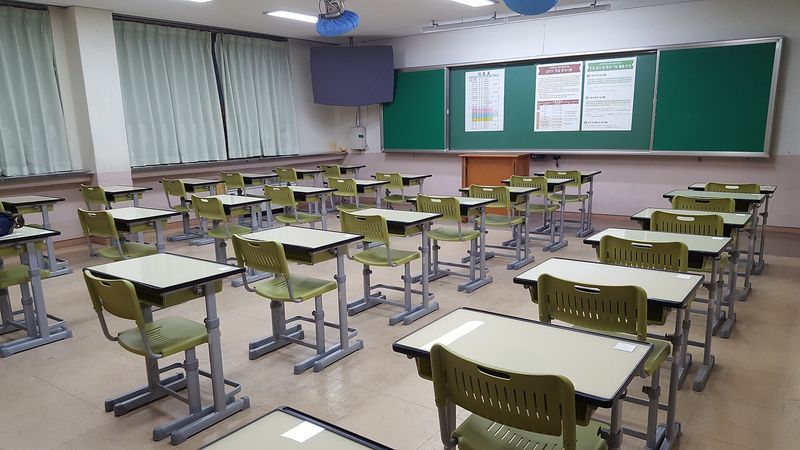
SEOUL, November 15, 2026 — The confession came in two forms on Sunday, and both were unambiguous. Appearing on the YouTube channel of attorney Lee Don-ho, the top scorer on South Korea’s 63rd national tax accountant exam apologised and said, in the words reported by Reuters: “I cheated using electronic devices and generative AI. My passing the exam with the top score was not the result of fair effort.” The same day, he submitted a written confession to Seoul police. Reuters identified him by the surname Han; the Seoul Economic Daily, which has reported the case in the fullest detail, named him as Han Won-seok, 34. The full name is the Seoul Economic Daily’s reporting, and it is attributed that way here: police have not publicly confirmed it.
What he admitted to, at the level of detail he and the reporting have made public, is this. During the exam, he photographed questions with a microcamera, sent the images to a generative AI tool, and checked the answers on a smartphone. He did so across both rounds of the tax accountant exam — held in April and July — and, by his own admission, in the first round of the certified public accountant exam in March as well. The equipment, according to the Seoul Economic Daily, cost about 110,000 won in total. He has withheld the specifics of how the devices were carried and used, and this article does not speculate about them: he has said the details are being kept back precisely so that the method cannot be copied, and the open reporting supports no more than the outline above.
The reason the confession landed with such force is the record it retroactively rewrote. Han did not merely pass a brutally selective professional exam; he produced numbers that had already made him famous and, in time, suspect. In the first round he answered 159 of 160 questions correctly, scoring 397.5 out of 400 for an average of 99.375, including a perfect score in introductory tax law — a section that 74.21% of test-takers failed. In the second round he scored 663 out of 800 and finished first overall. Those are the results, the Seoul Economic Daily reported, of a man who was consulting an AI in the exam room. Every candidate who sat the same papers, every employer who read the rankings, and every official who certified them now has to absorb the same fact: the best performance in the country was not a performance at all.
A near-perfect score, in an exam built to be failed
The tax accountant exam is one of the pillars of South Korea’s credential state. It is administered by the Human Resources Development Service of Korea, the state agency that runs national qualification testing, and it licenses the professionals who stand between Korean companies, Korean families and the Korean tax code. It is taken in two rounds months apart, and it is designed to be punishing: pass rates are low, preparation routinely consumes years of a candidate’s life, and the introductory tax law section of the first round — the one Han aced — failed nearly three-quarters of the people who sat it this cycle.
That context is what made the first-round numbers so difficult to explain away. A score of 159 out of 160 is not the profile of a strong candidate having a good day; in an exam calibrated so that a foundational section eliminates most of the field, it is close to the statistical ceiling of what the test allows. A perfect score in the very section with a 74.21% failure rate compounded the anomaly. The second round, a written examination scored out of 800, then placed him first overall with 663 — a result that converted a startling first round into the top ranking in the country, and attached his name to the 63rd edition of the exam in a way no ordinary pass could have.
South Korea runs on examinations of this kind to a degree few countries match. University places, civil service posts and professional licenses are allocated through national tests whose legitimacy rests on a single public belief: that the room is sealed, the paper is the same for everyone, and the ranking that emerges is a ranking of effort and ability. It is the same belief that, every November, stops aircraft movements and delays stock-market openings for the College Scholastic Ability Test, the university entrance exam known as the Suneung. A scandal inside that system is therefore never only about one candidate. It is about whether the seal on the room can still be trusted — and Sunday’s confession said that, at least once, it could not.
Months of suspicion, a wall of denials, then a confession
The suspicion did not begin on Sunday. It began with the scores themselves. In the months after the April and July rounds, the near-perfect marks drew sustained speculation that something other than preparation had produced them, and the theories circulated widely enough that Han was answering them in public. Among the claims aired was that he had used AI-enabled smart glasses in the exam room. He denied the allegations — in media interviews, and in a published account of his studies that presented his result as the product of methodical work. On Sunday he admitted those denials were lies. The device at the center of the confession was not the smart glasses of the rumors but a microcamera, and the studying in the published account had not produced the score at all.
The sequence matters, because it defines what kind of scandal this now is. This is not a case of an exam board detecting an irregularity and accusing a candidate who maintains his innocence. It is a case in which the accusation circulated informally for months, was denied on the record, and was then confirmed by the accused himself, voluntarily, in a recorded apology and a written statement to police. That posture — confession rather than exposure — shapes everything that follows: the police investigation begins from an admission, the ministry’s deliberation begins from an admission, and the questions that remain open are not whether Han cheated, but how far the cheating extended and what the system does about the result it certified.
It also leaves a residue that a detection never would. For months, the official position of the exam’s administrators was, in effect, the ranking as published: Han first, everyone else behind him. Candidates who failed the first round by a question or two, candidates who spent years preparing, and the 74.21% who failed the section he aced all lived inside a result that its own top scorer now says was fabricated. His apology was addressed to them as much as to the public — the statement that his passing “was not the result of fair effort” is, read plainly, an acknowledgment that the effort of others was the thing devalued. No apology, however, re-runs an exam or restores a ranking, which is why the institutional response, not the apology, is where this story now moves.
The admission reached beyond the tax exam
The confession was wider than the result that made him famous. Han admitted that the tax accountant exam was not the only test he had cheated: he had used the same approach in the first round of the certified public accountant exam in March, months before the tax exam’s first round in April. That single sentence widens the case from one compromised ranking to a pattern spanning two of the country’s flagship professional qualifications in a single season — and it raises, immediately, the question investigators will have to answer with evidence rather than inference: whether the CPA result, and any other result of his, stands on the same footing, and whether anyone else was doing the same thing in either room.
Then there is the price of the equipment: about 110,000 won, in total, for the devices the Seoul Economic Daily reported he used. Set that figure against what it defeated. The exam it beat is administered by a state agency, sat in proctored rooms, and built over decades into one of the most trusted sorting mechanisms in Korean professional life. The preparation it outscored is measured in years and, for many candidates, in private tuition and forgone earnings. Against all of that stood a sum small enough to be a routine weekly expense for the candidates he outranked. Whatever else investigators establish, that ratio — the cost of the cheat against the cost of everything it circumvented — is the number that will define this scandal, because it is the number every exam administrator in the world now has to plan against.
The institutional machinery moved on the same day. The Seoul Metropolitan Police Agency assigned the case to its Metropolitan Investigation Unit, which handles major and complex cases, and said the investigation would be swift and rigorous. The Ministry of Finance and Economy, which oversees the tax accountant qualification, will convene the Tax Accountant Qualification Deliberation Committee to suspend Han’s certificate — the formal step that converts a confession into the loss of the license the cheating obtained. Neither step answers the harder questions. The police inquiry will have to establish the facts of the CPA exam and of any wider distribution of cheating devices; the committee’s remit is the certificate of one man. The gap between those two tasks is where the unresolved part of this story sits.
Why this matters
Analysis. Begin with what is confirmed, because the confirmed core is damning enough without decoration. The top scorer of a national professional exam has confessed, publicly and to police, to cheating with a camera and a generative AI in both rounds of that exam and in the first round of a second one. He obtained the country’s top ranking by doing so. He denied it for months, in interviews and in print, before admitting the denials were false. His certificate is headed for suspension and he is under investigation by the metropolitan police’s major-case unit. Those facts are established by his own words and by the official responses they triggered, and they do not depend on any allegation still to be tested.
Everything beyond that core is open, and honest analysis has to keep it open. It is not known whether other candidates cheated in the same exams, or in other state qualifications; the presidential office’s decision to order a full review of suspected AI cheating across state exams is an instruction to find out, not a finding. It is not known whether the tax exam results will be annulled, re-run or left to stand minus one certificate; no authority has announced any such step. It is not known how the devices were obtained or whether a distribution channel exists that police can close. And the copycat risk, while real, has a deliberate limit built into it: Han withheld the operational specifics of his method to prevent imitation, and the public record therefore contains an outline — camera, AI tool, phone — rather than a manual. Readers should treat any more detailed “how he did it” account, wherever it appears, as unsupported by anything he or the authorities have released.
The deeper significance is structural, and it extends well past Seoul. Proctored examination systems everywhere were built against a known catalogue of threats: smuggled notes, impersonation, leaked papers, signals from outside the room. Generative AI changes the economics of the other side of that contest. The expertise that a professional exam exists to certify — the tax code, the accounting standards — is now available, on demand, to any device small enough to see the question. The defense can no longer be the proctor’s eyes alone; it has to be detection, screening and design, applied to every candidate rather than to the suspicious few, because the candidate who triggered this reckoning was, until Sunday, the most celebrated candidate in the country. A system that could not see the cheat at the top of its own ranking cannot claim it would have seen one in the middle of the field — and every testing body that reads this story knows it.
Seoul moves to protect Thursday’s college entrance exam
The government’s response was calibrated to a date four days away. On Sunday the presidential office held an emergency meeting chaired by Ha Joon-kyung of the Office of Policy Planning, which ordered a full review of suspected AI cheating across state qualification exams and turned immediately to the largest examination event on the Korean calendar: the College Scholastic Ability Test, which hundreds of thousands of students sit this Thursday, November 19. Ha’s framing, reported by the Seoul Economic Daily, was blunt: “The fairness of exams is directly tied to public trust, and no cheating can be tolerated.”
For Thursday’s exam, the measures announced reach every candidate rather than a sample: AI-device checks for all test-takers, dedicated staff assigned to the task at each test site, and thermal imaging under consideration as an additional screen. The prime minister’s office set the same expectation in its own statement, saying the government “will prepare thoroughly in advance and closely oversee the process until the very end to ensure the college entrance exam is conducted fairly and stably.” A vice-ministerial meeting chaired by the prime minister follows on Monday, November 16, to carry the review forward. The sequencing is the message: with the Suneung four days out, the state is treating one man’s confession as a systemic warning and spending its credibility, in advance, on the proposition that Thursday’s rooms will be clean.
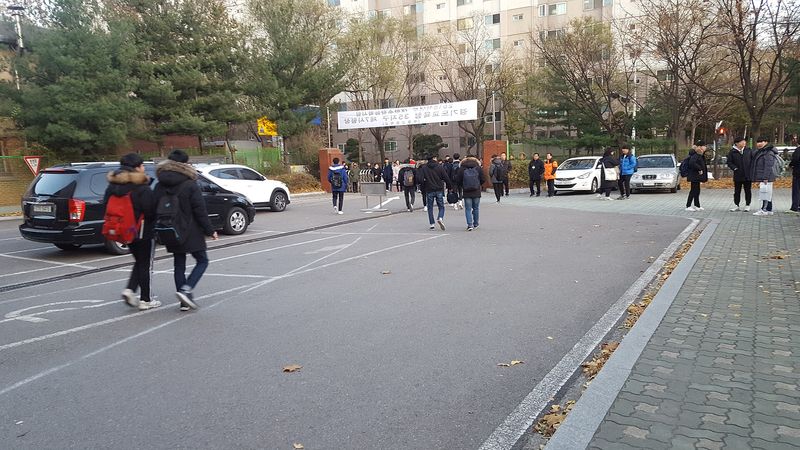
That is a heavy promise to make on a four-day fuse, and Thursday will test it in the most literal way. The Suneung is not one exam hall but a national operation, administered simultaneously across the country to a cohort whose families have organized years around its outcome. Screening every one of those candidates for devices of the kind used in the tax exam — devices defined, above all, by being hard to see — is a logistical undertaking that has to be designed, staffed and executed between a Sunday confession and a Thursday morning. If it works, the government will have converted a scandal into a demonstration. If a single device is found in a single room, the demonstration runs the other way. Either outcome now carries the weight of the promise made this weekend.
What happens next
The near-term sequence is procedural. The Metropolitan Investigation Unit’s inquiry proceeds from the written confession into the questions a confession cannot answer by itself: the CPA first round in March, the sourcing of the devices, and any evidence of other users. The Tax Accountant Qualification Deliberation Committee takes up the suspension of the certificate. The vice-ministerial meeting on Monday extends the review across state qualification exams, and Thursday’s Suneung proceeds under the new screening regime, in full public view. Each of those steps has a date or a venue; none of them, yet, has a conclusion that can be reported as fact.
The longer questions will take longer. Whether the 63rd tax accountant exam’s results can stand as published — with the top place vacated by confession but the rest of the ranking intact — is a decision the authorities have not announced, and it will be contested by the candidates whose lives the ranking ordered. Whether the CPA exam’s first round requires its own remedy is equally undecided. And whether the devices Han used reached him through a channel that served others is the question on which the difference between a scandal and a system failure ultimately turns. Signal Post News will report each of those answers when the institutions responsible for them actually give one — and not before.
Related coverage: South Korea Bank Cyberattack: AI-Driven Hack Wave Hits Five Top Lenders · South Korea Exports October 2026 Jump 93.7% to $115.28 Billion as AI Chips Rewrite the Record Book · Eight states, eight courtrooms: the child safety case against ChatGPT
Sources
Reuters — reporting on the Sunday confession on attorney Lee Don-ho’s YouTube channel (“I cheated using electronic devices and generative AI. My passing the exam with the top score was not the result of fair effort”), the microcamera-and-smartphone method, the written confession submitted to Seoul police, the months of speculation after the April and July exams, and the prime minister’s office statement on the November 19 college entrance exam. Seoul Economic Daily — reporting identifying the top scorer as Han Won-seok, 34 (Reuters identified him by surname only); the 63rd tax accountant exam results (first round 159/160, 397.5/400, perfect score in introductory tax law, a section 74.21% of takers failed; second round 663/800, first overall); the admission covering both tax rounds and the CPA first round; the approximately 110,000 won cost of the devices; the prior denials, including of smart-glasses claims, in interviews and a published study account; the Seoul Metropolitan Police Agency’s assignment of the case to the Metropolitan Investigation Unit; the Ministry of Finance and Economy’s planned Tax Accountant Qualification Deliberation Committee; and the presidential office emergency meeting chaired by Ha Joon-kyung, the review of suspected AI cheating across state exams, and the November 19 measures (AI-device checks for all test-takers, dedicated staff per site, thermal imaging considered, vice-ministerial meeting on November 16). Human Resources Development Service of Korea — administrator of the tax accountant exam. Photographs: Wikimedia Commons (CSAT test-site classroom and students at Puhung High School, file photos, CC BY 4.0; Gwanghwamun Square, Republic of Korea, CC BY-SA 2.0).