South Korea exports October 2026
Track it live: live markets tracker
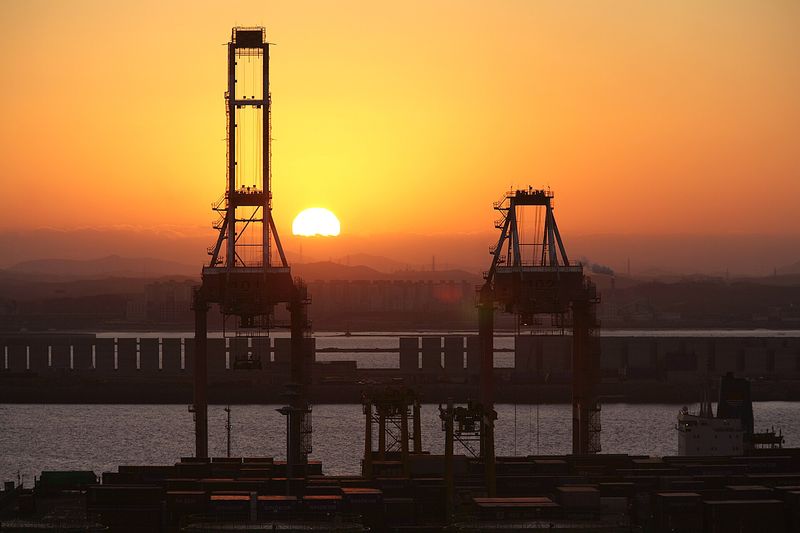
SEOUL — South Korea exports October 2026 data, released Sunday by the Ministry of Trade, Industry and Resources, show an economy selling to the world at a pace with no precedent in more than half a century. Exports climbed 93.7 percent from a year earlier to $115.28 billion, edging past the 93.2 percent median forecast in a Reuters poll of economists and accelerating from September’s 83.7 percent gain. It was the strongest annual growth rate since January 1974, the second consecutive month above $110 billion, and the highest total ever recorded for an October. Only one month in Korean history was bigger: September itself, at $121.1 billion.
Imports rose 36 percent to $72.78 billion, leaving a trade surplus of $42.5 billion for the month. But the headline that will travel furthest is the cumulative one. Exports for the first ten months of the year reached $930 billion, up 60.6 percent and past $900 billion for the first time — roughly $70 billion short of $1 trillion in a single year, a milestone Trade Minister Kim Jung-kwan said is now all but certain to be reached in November. If it is, South Korea will become only the fourth country in history, after the United States, China and Germany, to export $1 trillion of goods in a year.
What the October data shows
The honest way to read a 93.7 percent increase is to ask how much of it the calendar bought. October contained more working days than the same month a year earlier because of how the Chuseok holiday fell, and the ministry is open about the fact that this flattered the headline. What matters is what survives the adjustment — and most of the boom does. Working-day-adjusted average daily exports rose about 76 percent from a year earlier to $5.24 billion, staying above $5 billion for a second straight month. A surge that still runs at three-quarters strength after the calendar effect is removed is not an accounting artefact; it is a demand shock working its way through ports and fabs.
The 1974 comparison deserves a moment of its own, because it frames the scale. The last time Korean exports grew this fast, the country was an emerging industrialiser shipping textiles, steel and wigs from a low base, and triple-digit percentage gains were achievable because the starting totals were small. October’s 93.7 percent was achieved on a base of nearly $60 billion a month, by the world’s fifth-ranked goods exporter, in a global trading system many times larger. Percentage growth at this altitude is a different phenomenon from percentage growth in 1974 — it requires the world’s largest companies to be spending, simultaneously, on one category of goods that one country happens to dominate.
That category is memory. But October was not a one-product month, and the breadth matters for judging how long the run can last. Eighteen of the twenty main export categories grew. Exports excluding semiconductors still rose 34 percent — a figure that, in any ordinary month, would itself be the headline.
Chips first: semiconductors are now half the story
Semiconductor exports jumped 259.4 percent to $56.44 billion, exceeding $50 billion for a second consecutive month and accounting for roughly 49 percent of all exports. The ministry attributed the surge to continued facility investment by global big-tech firms competing for leadership in artificial intelligence, which kept both chip prices and shipment volumes high at the same time — the most profitable combination the memory industry ever produces. The two companies at the centre of it, Samsung Electronics and SK Hynix, the world’s two largest memory makers, both posted surging — in SK Hynix’s case record — profits in their latest results, and both have signalled that tight supply will persist.
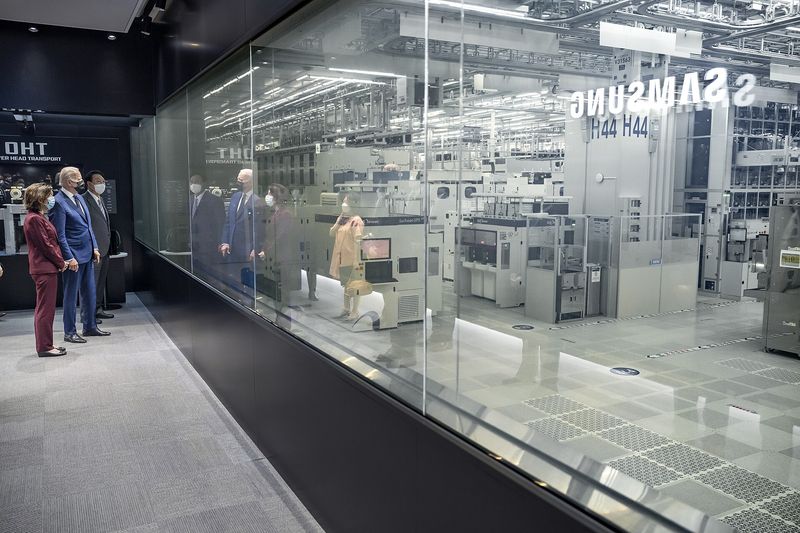
The second act of the AI build-out is visible one line down the table. Computer exports surged 496.6 percent to about $5.85 billion, on demand for the servers and storage drives that fill AI data centres — Korea is not only selling the memory inside the machines, it is increasingly selling the machines’ guts as well. Petroleum products rose about 80 percent to roughly $6.92 billion, petrochemicals gained 28 percent, and automobile exports rose 18 percent as Hyundai’s production normalised after labour unrest was settled. An export engine firing on chips, servers, fuels, chemicals and cars at once is harder to dismiss than one firing on chips alone — but the proportions still define the risk, as the analysis below sets out.
Why this matters
South Korea is the global economy’s bellwether: an export-dependent economy, early in the supply chain, whose monthly trade release is one of the first hard-data reads on world demand each month. When Korean exports nearly double, the signal is not really about Korea. It is evidence that the artificial-intelligence investment boom — the largest coordinated capital-spending programme in technology history — is still accelerating at the level of physical goods: wafers, servers, transformers and cable crossing docks, not just commitments announced in press releases. Every hyperscaler data centre rising in Virginia, Texas or Johor has a Korean invoice attached to it.
For Korea itself, the stakes run through the currency, the budget and the central bank. A $42.5 billion monthly trade surplus floods the economy with export earnings, supports the won, swells corporate tax receipts and gives the Bank of Korea a growth cushion few of its peers enjoy. Exports on this scale also reorder politics: the trade minister is no longer managing a sector, he is announcing national milestones — $900 billion passed, $1 trillion in sight — and a president can plausibly campaign on the country joining a club of three.
And for everyone watching the AI trade, October supplies the demand-side proof that sceptics keep asking for. Questions about whether AI spending earns its keep are legitimate, but they are questions about returns in 2028. The customs data answer a narrower question about 2026: is the spending real, physical and growing? On the evidence of $115.28 billion of goods in a single month, it is.
Background: the bellwether, September’s record and the October preview
October did not arrive from nowhere; it is the third act of a sequence this newsroom has followed month by month. In September, as we reported at the time, South Korea’s September exports passed $120 billion for the first time, reaching $121.1 billion on growth of 83.7 percent — then the fastest since February 1974 — with the same AI memory supercycle doing the lifting. October’s full-month total of $115.28 billion sits just below that record, which is precisely what makes the pair historic: no economy Korea’s size has previously strung together two consecutive months above $110 billion, and October is seasonally the harder month to do it in once the holiday calendar is stripped out.
The middle act came from the customs preview. The first twenty days of October, covered in our report that South Korea’s exports surged 105 percent in the October 1–20 preliminary data, showed shipments of $61.6 billion with chips at $27.5 billion and a daily pace of $4.74 billion. The full-month release both confirms and refines that picture. The growth rate moderated from the preliminary 105 percent as the month’s final third — with fewer working days — entered the count, yet the adjusted daily average actually improved to $5.24 billion. The preview said the boom was real; the full month says it was, if anything, understated on the measure that matters most.
The deeper background is industrial strategy. Korea’s position rests on three decades of concentrating national resources on memory semiconductors, an industry with brutal cycles that twice nearly broke its champions. What the AI era changed is the customer: demand no longer comes mainly from cyclical consumer electronics but from a handful of the richest companies on earth building infrastructure they regard as existential. Samsung and SK Hynix between them hold the dominant share of high-bandwidth memory, the specialised product AI accelerators cannot run without. October’s numbers are what that bottleneck looks like when it is priced in dollars per month.
Where the goods went: America first, China close behind
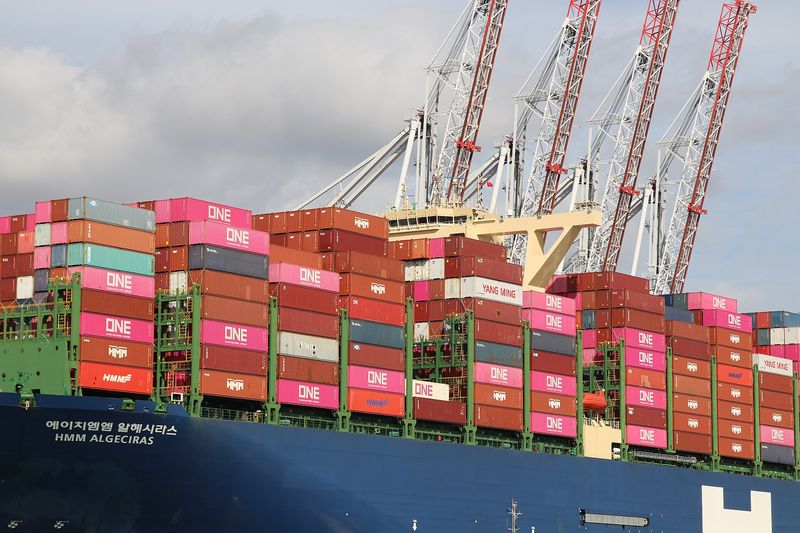
By destination, the map tilted toward the two economies building the AI future fastest. Exports to the United States surged 185.8 percent to $24.9 billion, carried by chips, computers and the electrical equipment — transformers, wire and cable — that AI infrastructure consumes in vast quantities. Exports to China topped $20 billion for a fifth straight month and more than doubled from a year earlier. Korea is, in other words, selling record volumes to both sides of the technology rivalry at once, in the product category that rivalry is about. That balancing act has defined Korean economic statecraft for a decade; October’s data raises the value of getting it right, and the cost of getting it wrong, by roughly 94 percent.
The import side confirms the story rather than contradicting it. Imports rose 36 percent to $72.78 billion — the inputs of an export machine running flat out: semiconductor equipment and materials, energy, and components that return to the world embodied in higher-value Korean goods. The resulting $42.5 billion surplus was narrower than September’s record, but a surplus of that size, in a single month, remains one of the largest Korea has ever recorded.
Winners and risks
The winners
Samsung Electronics and SK Hynix sit at the top of the list, converting scarcity into pricing power and posting the profits to prove it; behind them stand their equipment suppliers, materials firms, the server and storage makers riding the 496.6 percent computer surge, and the shipyards and shipping lines — HMM among them — that move the goods. The hyperscalers win differently: every billion dollars of Korean memory and server exports is a billion dollars of AI capacity that actually exists, delivered into a market where rivals are queueing for the same supply. The Korean state wins fiscally and symbolically, with a $1 trillion milestone that no amount of industrial-policy rhetoric could buy as cheaply as the customs data just did.
The concentration risk
The same table that makes October historic also marks the exposure. At roughly 49 percent, semiconductors are approaching half of everything Korea sells to the world. Part of that share is price, not volume: export values can fall without a single fab slowing, if memory prices crack — and memory prices have cracked in every previous cycle, usually just after capacity ordered at the peak arrives. The calendar flatters the headline by several points. The two largest customers are the two capitals most likely to restrict the trade for strategic reasons. And the entire structure leans on one assumption — that global big-tech AI capital spending keeps rising — which is a decision made in five boardrooms, not a law of nature. None of this argues the boom is fake; the adjusted daily figure settles that. It argues the boom is leveraged, and leverage cuts in both directions.
The road to $1 trillion
Cumulative exports of $930 billion through October, up 60.6 percent, leave roughly $70 billion to the milestone — less than three weeks of exports at October’s adjusted daily pace. “With exports continuing solid growth of more than $110 billion in October, it is becoming certain that annual exports of $1 trillion will be reached within November,” Trade Minister Kim Jung-kwan said. Only the United States, China and Germany have ever exported $1 trillion of goods in a year. Korea’s arrival would make it the fourth — and the first to do it on the back of a single technology cycle rather than the whole breadth of an industrial economy, which is either the most impressive version of the feat or the most fragile, depending on how the next section’s questions resolve.
What happens next
Three markers will tell readers whether October was a plateau or a peak. First, the November release at the start of December: expect the $1 trillion crossing itself to dominate, but read the daily adjusted figure underneath — a hold above $5 billion a day says the pace survived; a slide toward $4.5 billion says September–October was the crest. Second, memory pricing and the chipmakers’ own guidance: Samsung and SK Hynix have signalled shortages persisting for years, and any softening in contract prices will show up in export values a quarter before it shows up in volumes. Third, the policy weather in Washington and Beijing — export controls, tariffs and AI-infrastructure politics can re-route these flows faster than any fab can be built. For now, the numbers describe an economy having the best export year in its history, powered by the defining technology race of the decade, eleven months into a twelve-month story whose ending — $1 trillion — is no longer really in doubt.
Related coverage: AI Boom Powers South Korea’s September Exports Past $120 Billion · South Korea Exports Surge 105% to a Record $61.6 Billion as Chip Sales Triple
Sources and reporting notes
- Reuters: “South Korea exports nearly double in October, strongest growth since 1974” (November 1, 2026) — headline growth of 93.7 percent to $115.28 billion, the Reuters poll median of 93.2 percent, the January 1974 comparison, semiconductor growth of 259.4 percent, imports and the $42.5 billion surplus.
- The Wall Street Journal: “South Korea’s Chip-Led Exports Accelerate, Bringing $1 Trln Annual Target Closer” (November 1, 2026) — cumulative exports of $930 billion, Samsung and SK Hynix record earnings, and destination growth to the United States and China.
- Yonhap via Korea JoongAng Daily: “Exports jump nearly 94% in October to hit record $115.3 billion on chip demand” (November 1, 2026) — the ministry release in full, semiconductor exports of $56.4 billion, and exports to the United States up 185.8 percent to $24.9 billion.
- Seoul Economic Daily: “Korea’s October Exports Surge 93.7% to Second-Highest on Record” (November 1, 2026) — working-day-adjusted daily exports of $5.24 billion up 76 percent, computer exports of $5.85 billion, exports excluding semiconductors up 34 percent, and Trade Minister Kim Jung-kwan’s $1 trillion statement.
- Ministry of Trade, Industry and Resources, “October 2026 Export and Import Trends” release (November 1, 2026) — the underlying trade data: exports $115.28 billion, imports $72.78 billion, surplus $42.5 billion, category and destination breakdowns, and January–October cumulative exports of $930 billion.
Reporting note: Export totals, growth rates, category and destination figures and the trade minister’s statement come from the cited reporting of the ministry release. Analysis of the calendar effect, concentration risk and the $1 trillion milestone is Signal Post News’ own.