Three South Korean personnel were wounded on September 21 when a mine detonated inside the Demilitarized Zone; the September 30 joint investigation found another active North Korean anti-personnel mine south of the Military Demarcation Line.
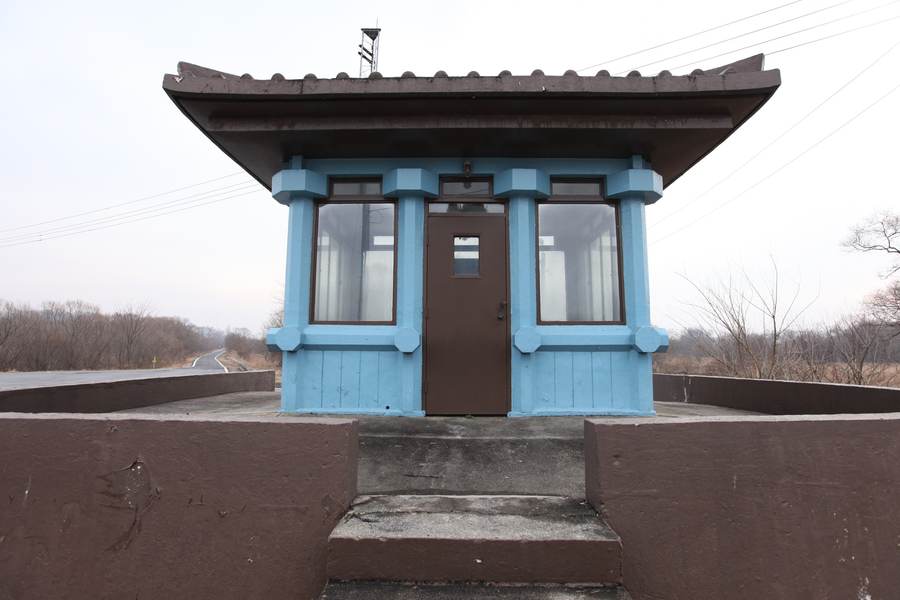
What happened
On September 21, 2026, a mine detonated inside the 4-kilometre-wide Korean Demilitarized Zone, wounding three South Korean military personnel — two of them seriously — during a reconnaissance mission, according to South Korea's defence ministry. Nine days later, on September 30, United Nations Command announced it had completed a joint on-site investigation with the South Korean military, and the findings were blunt: the investigative team discovered another active North Korean anti-personnel mine on the South Korean side of the Military Demarcation Line. In UN Command's formal language, "an Armistice Agreement violation occurred," a finding it said would be addressed "through established armistice mechanisms."
South Korean Defence Minister Kang Shin-chul, speaking to lawmakers on September 29, left no ambiguity about Seoul's reading: North Korean mines caused the blast, he said, and South Korea would take "corresponding" action. Kang added that North Korea had likely planted the mines while fortifying its side of the border — part of the extensive barrier-building, mine-laying and trench-digging Pyongyang has carried out along the frontier since 2024.
Pyongyang's answer came within hours, and it was pure Kim Yo Jong. In a statement carried by the state-run Korean Central News Agency (KCNA), the North Korean leader's sister dismissed the joint investigation as a "farce" and accused Seoul of fabricating evidence. "It is too low and dirty as befitting the tribes of South Korea," she said, adding: "Such a farce is by no means new."
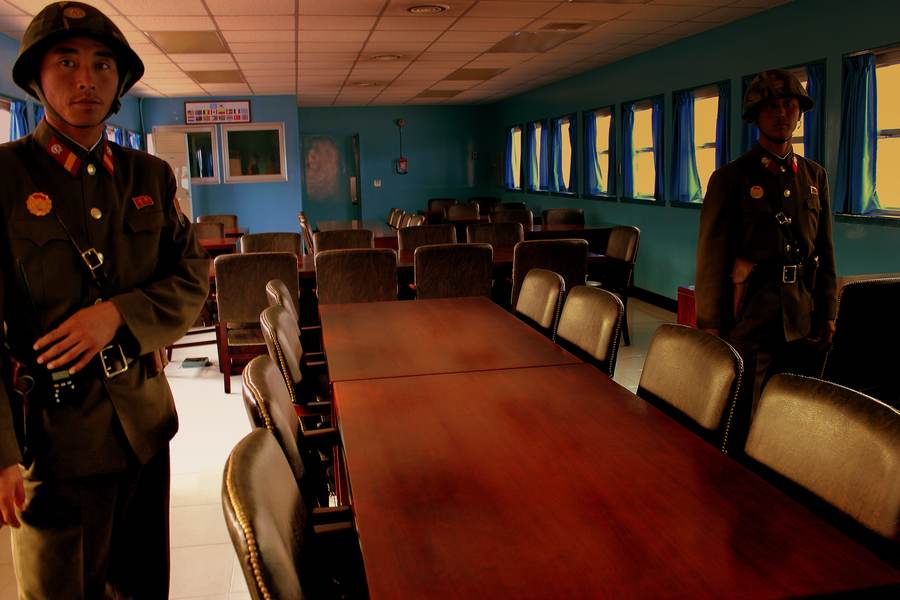
Why this matters
This is not a border skirmish that both sides can walk back with a hotline call. A formal UN Command finding of an armistice violation is the Korean Peninsula's equivalent of a referee's red card: it goes on the permanent record of the 1953 Armistice Agreement, the fragile document that has kept the Korean War technically "paused" — never ended — for 73 years. Such findings are rare precisely because the bar is high and the politics are explosive. The last comparable moment was the August 2015 DMZ landmine incident, when two South Korean soldiers were maimed by North Korean wooden-box mines; Seoul responded by blasting propaganda broadcasts across the border, Pyongyang declared a "quasi-state of war," and the crisis only defused after marathon talks at Panmunjom.
The timing is what makes this genuinely dangerous. The peninsula is already in one of its tensest stretches in years: North Korea has spent 2024–2026 fortifying the border with new mines, anti-tank barriers and trenches; inter-Korean military communication is essentially dead; and both sides are operating with thinner margins for miscalculation than at any point since 2015. A second live North Korean mine found south of the demarcation line is not an accident report — it is evidence of a pattern, and Seoul is treating it as one.
There is also the question both capitals are now asking in private: was the September 21 blast the result of mines drifting south in heavy rain — which has happened before in the DMZ's mine-saturated soil — or of deliberate emplacement? Kang's assertion that the North planted mines while fortifying the border points to the latter. If Pyongyang is seeding the southern approaches as part of its fortification drive, that is a qualitatively different provocation from a washed-out legacy mine — and it would explain why Seoul is promising "corresponding" action rather than a diplomatic note.
Seventy-three years of tripwires
The DMZ is the most heavily mined place on earth — an estimated 2 million mines are buried in and around the 4km-wide, 250km-long strip, a legacy of the Korean War and decades of mutual distrust. The 1953 Armistice Agreement prohibits exactly what UN Command says happened here: introducing new weapons and military equipment into the zone, and any hostile act across the demarcation line.
The precedent that hangs over this crisis is August 2015. Then, as now, South Korean soldiers on patrol inside the DMZ were hit by North Korean mines — wooden-box devices Pyongyang denied planting. Then, as now, the South's defence establishment concluded the mines had been deliberately emplaced. The 2015 crisis escalated with startling speed: propaganda loudspeakers, artillery exchanges, a 48-hour ultimatum from Pyongyang, and finally a negotiated climbdown. The lesson both sides took from 2015 was that the DMZ's mine regime is a tripwire wired directly to the peninsula's escalation ladder.
What has changed since is the context of North Korea's border fortification campaign. Since early 2024, Pyongyang has been sealing the border in earnest — laying fresh minefields, building anti-tank walls, digging trenches, and cutting the symbolic arteries of inter-Korean connection (roads, rail links). South Korean and U.S. intelligence have tracked multiple North Korean casualties from their own minefields during this work. The fortification drive is widely read as Kim Jong Un's physical inscription of his 2023–2024 doctrinal shift: South Korea is no longer a wayward brethren to be reunified with, but a "primary foe" to be walled off. Mines planted during that campaign drifting — or being pushed — south of the line fit the pattern.
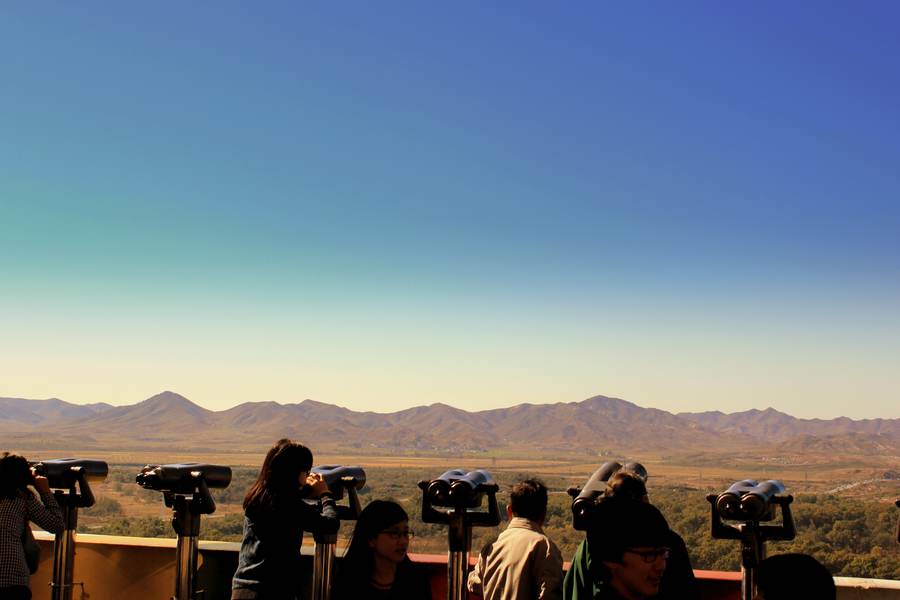
Who gains, who loses, and what the critics say
Seoul's hawks gain. A formal armistice violation finding hands South Korea's security establishment exactly what it needs to justify a harder line: resumed propaganda broadcasts, forward-deployed assets, and a freer hand for "corresponding" measures. Kang Shin-chul's language was deliberately calibrated — "corresponding" echoes the proportional-response doctrine Seoul has honed since 2015.
Pyongyang's play is denial plus contempt. Kim Yo Jong's "farce" dismissal follows the established North Korean script: deny, deride, and dare the other side to escalate. The insult-laden register — "tribes of South Korea" — is aimed as much at the domestic audience as at Seoul, reinforcing the "primary foe" narrative that justifies the fortification campaign itself. Notably, KCNA's statement stopped short of threatening retaliation for any South Korean response, which analysts will read as a deliberate leaving of room.
The critics' case — from arms-control advocates and some South Korean progressives — is that the mine regime itself is the scandal: two million mines in a 4km strip, in a country that has signed neither the Ottawa Convention's universal ban (neither Korea has) nor any bilateral demining protocol with teeth. The 2018 inter-Korean agreement to clear mines around the JSA and Arrowhead Hill showed demining is possible when politics allow; the 2024–2026 fortification drive has run precisely in the opposite direction. Every new minefield is a future 2015 waiting for rain, a patrol, or a misstep.
The losers are the soldiers on both sides who patrol the most dangerous 4 kilometres in Asia, and the long-term project of inter-Korean risk reduction, which has now gone backwards for three straight years.
What the numbers actually tell us
Three wounded (two seriously) on September 21; one additional live mine found on September 30. Those are small numbers with a large multiplier. In 2015, two maimed soldiers nearly triggered a war. The arithmetic of the DMZ is not linear — it is escalatory, because each incident is read through the lens of intent. A single mine can be an accident; a second mine, found by a joint UN–ROK team on the southern side of the line nine days later, reads as a pattern. That is why the formal violation finding matters more than the casualty count: it converts suspicion into record.
The other number that matters is 73 — the years the armistice has held. The agreement has survived precisely because its mechanisms (the Military Armistice Commission, the Neutral Nations Supervisory Commission, UN Command investigations like this one) give both sides a procedural off-ramp. UN Command's statement that the finding will be addressed "through established armistice mechanisms" is the tell: the system is working as designed, producing a formal record rather than a firefight.
What happens next
Three scenarios, in descending order of likelihood. First, managed escalation: Seoul resumes or expands anti-North propaganda broadcasts and takes visible "corresponding" military measures; Pyongyang responds with rhetoric and perhaps trash-balloon or GPS-jamming provocations; the armistice machinery processes the violation; both sides pocket the domestic political gains. This is the 2015 playbook minus the artillery, and it is the base case.
Second, quiet de-escalation: back-channel contacts — which have survived even the worst inter-Korean freezes — produce a tacit understanding on minefield discipline, and the incident fades into the armistice's long case file. Less likely given the "primary foe" doctrine, but the absence of a retaliation threat in Kim Yo Jong's statement keeps this door ajar.
Third, miscalculation: a South Korean "corresponding" measure — a live-fire drill near the line, an aggressive patrol — intersects with a North Korean unit operating under shoot-first fortification orders, and a mine incident becomes a shooting incident. This is the tail risk that makes the DMZ the world's most dangerous 4 kilometres, and it is why the next 72 hours of force postures on both sides deserve close watching.
One certainty: the mines are not going anywhere. Until the peninsula's politics change, the DMZ will remain what it has been for seven decades — a beautiful, forested, mine-sown tripwire, and the truest measure of whether the Korean War is really over. It is not.
Related coverage
Sources
- Reuters — Jack Kim and Kyu-seok Shim, UN Command finding and South Korean response (September 30, 2026).
- United Nations Command — official releases and statements.
- KCNA report via L.A. Post — Kim Yo Jong's response to the investigation.
- Korea Economic Institute of America — background and archival photo context.