World · Africa · South Africa
Two attacks, roughly 536 kilometres (333 miles) apart, in the same Sunday night hours: nine people shot dead inside a four-room shack in Jeffsville, west of Pretoria, and eight men found dead in a bullet-riddled car at Sweetwaters, outside Pietermaritzburg. Police say the South Africa mass shootings that left 17 killed were unrelated. The motives are unknown, and no one has been arrested.
Track it live: Africa wars tracker
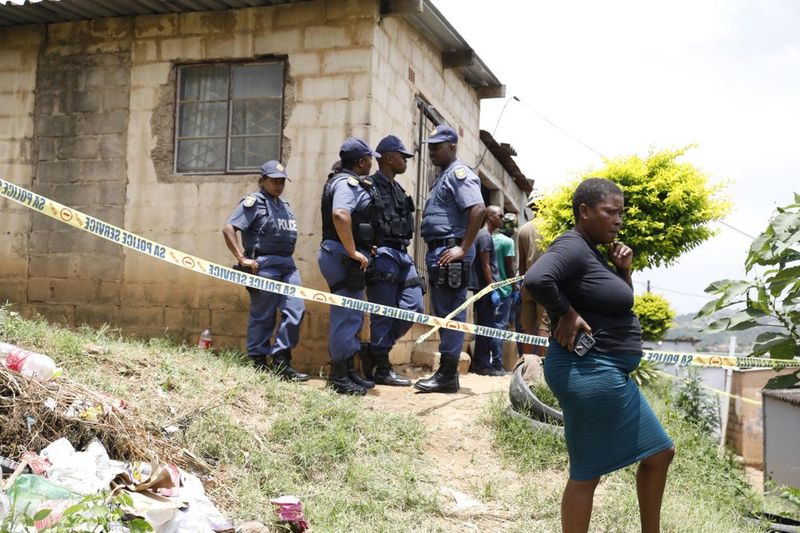
JOHANNESBURG, November 16, 2026 — South Africa woke on Monday to two manhunts and a single grim total: 17 people killed in two mass shootings on Sunday night, November 15, in attacks police say were not connected. In Jeffsville, an informal settlement in Atteridgeville west of Pretoria, nine people — six men and three women — were found dead on Monday morning inside a four-room shack. In Sweetwaters, in the Mabane area outside Pietermaritzburg in KwaZulu-Natal, eight men were found dead inside a white seven-seater vehicle that had been riddled with bullets. The two places are about 536 kilometres (333 miles) apart. Police in both provinces say the motives are unknown and no arrests have been made.
Jeffsville: nine dead in a four-room shack
The Jeffsville shooting is believed to have happened between 22:00 and 23:00 on Sunday night. Police were alerted only at about 07:30 on Monday morning, when the nine bodies were found in the shack. Gauteng police spokesperson Brigadier Brenda Muridili confirmed the toll — six men and three women. Whether any children were among the dead had not been confirmed in the police statements available on Monday, and this article does not state otherwise.
The investigation has been assigned to Gauteng’s Serious and Violent Crimes, Murder and Robbery Unit. Gauteng provincial commissioner Lieutenant General Tommy Mthombeni has set up a dedicated team drawing on crime intelligence and tracking capacity to hunt the gunmen. National Police Commissioner General Fannie Masemola was expected to visit the scene. Police have appealed for information through Crime Stop on 08600 10111 and the MySAPS app.
Mthombeni raised one line of inquiry in careful terms: a possible link between the Jeffsville attack and last year’s mass shooting in nearby Saulsville, in the same Atteridgeville area, in which 12 people were killed and 13 injured. It is important to be precise about what that is. It is a possibility the commissioner raised, not a conclusion police have reached, and no evidence connecting the two attacks has been made public. What the two scenes share, so far, is geography and method — gunmen, a dwelling, a community left to find the dead in the morning — and in Atteridgeville that resemblance alone is enough to frighten people.
Sweetwaters: eight men dead in a seven-seater
The second attack, in KwaZulu-Natal, was discovered in Sweetwaters, in the Mabane area outside Pietermaritzburg. Eight men were found dead inside a white seven-seater vehicle, each with multiple gunshot wounds. The car had been riddled with bullets. The men had not been identified in the police statements available on Monday. KwaZulu-Natal police spokesperson Colonel Robert Netshiunda said the vehicle was used for e-hailing and is owned by a resident of Verulam, north of Durban.
Inside the vehicle, police recovered two firearms, 14 rounds of ammunition and a blank gun. One of the firearms had been reported stolen in Highflats in October 2026; the other belongs to a Gauteng security company and had not been reported stolen. Those facts will anchor a forensic trail — ballistics, ownership records, the path each weapon took — but they need to be handled with the same precision police themselves used on Monday: the presence of firearms inside the victims’ vehicle does not, on its own, prove who fired the shots that killed the eight men, and police have not said that it does. Whether the men were passengers, whether the vehicle was ambushed or stopped, and why anyone would want eight men in one car dead are questions the investigation has not yet answered in public.
Why this matters
Analysis. Seventeen dead in one night is a headline anywhere. In South Africa it is also, unavoidably, a fraction of an ordinary day. The South African Police Service recorded 5,427 murders in the April–June 2026 quarter — roughly 60 murders a day, every day, in a country of some 63 million people. Sunday night’s two attacks account for more than a quarter of one average day’s killing, compressed into two scenes. That arithmetic is not a reason to look away from Jeffsville and Sweetwaters; it is the context that makes them legible. Mass shootings of this kind — multiple victims, a single location, gunmen who escape — have become a recurring form within the larger murder crisis, striking taverns, hostels, homes and, now, an e-hailing car. In September 2026, 28 people were killed in two attacks in Gauteng and the Western Cape, including the tavern shootings in Wedela that this newsroom covered at the time. The pattern repeats faster than the investigations close.
Three structural threads run through Sunday night. The first is where the killing happens. A four-room shack in an informal settlement is the most exposed kind of home in South Africa: densely packed neighbours, thin walls, unlit streets, slow emergency access, and — as the Jeffsville timeline shows — a shooting at 22:00 that police learned of at 07:30. Nine people can be murdered in a settlement and the state can find out the next morning. The second thread is the guns. A 2026 study published in the South African Medical Journal found that firearms’ share of murders rose from 31% in 2020 to 44% in 2025 — the killing is increasingly done with guns, and the Sweetwaters recoveries sketch the supply: a firearm stolen in Highflats last month, another belonging to a private security company in Gauteng, the country’s vast legal and illegal arsenals leaking steadily into criminal hands. The third thread is the e-hailing question, which Sweetwaters raises without answering. Drivers and passengers in app-based transport have been attacked before in South Africa, and a seven-seater full of men, far from its owner’s home, will prompt investigators — and the industry — to ask what trip this was, who booked it, and whether the vehicle was the target or merely the container. Those are questions, not findings, and they are recorded here as such.
What is known, and what is not
It is worth separating the two columns plainly, because early reporting on mass shootings hardens fast. Known: 17 people were killed on Sunday night — nine in Jeffsville (six men, three women) and eight men at Sweetwaters; police say the attacks were unrelated; the Jeffsville shooting is believed to have occurred between 22:00 and 23:00 and was reported to police at about 07:30 on Monday; the Sweetwaters vehicle was used for e-hailing and owned by a Verulam resident; two firearms, 14 rounds and a blank gun were recovered inside it, one firearm reported stolen in Highflats in October 2026 and one owned by a Gauteng security company; two provincial manhunts are under way, with a crime-intelligence and tracking team established in Gauteng. Not known: the motives for either attack; the identity of any gunman; the identities of the eight Sweetwaters dead; whether children were among the Jeffsville victims; and whether the Jeffsville attack is connected to last year’s Saulsville shooting — a possibility raised by Commissioner Mthombeni, and nothing more at this stage.
What happens next
The immediate work is forensic and identificatory: post-mortems, ballistics on the recovered firearms and the cartridge cases at both scenes, and the naming of the eight men from Sweetwaters, whose families, as of Monday, may not yet know. General Masemola’s expected visit to Jeffsville will bring the now-familiar choreography of national attention — and the community’s now-familiar question, which is what changes after the convoy leaves. Beyond the two manhunts, Sunday night will be entered into the running argument about South Africa’s murder rate: whether a state recording roughly 60 murders a day can treat each mass shooting as an exception, or whether the exceptions have become the description. Police have asked anyone with information to call Crime Stop on 08600 10111 or use the MySAPS app. This article will be updated as police name the dead, make arrests, or establish a motive in either case.
Related coverage: 27 Killed in Twin South Africa Tavern Shootings as Police Hunt Gunmen · South Africa Deploys 510 Troops to KwaZulu-Natal as Anti-Migrant Protests Turn Deadly
Sources
Associated Press, November 16, 2026, read via the Ottumwa Courier — at least 17 people killed in two separate shootings in South Africa on Sunday night; nine in Jeffsville, Atteridgeville, west of Pretoria; eight in a car at Sweetwaters, outside Pietermaritzburg; police statements from Gauteng spokesperson Brig. Brenda Muridili and KwaZulu-Natal spokesperson Col. Robert Netshiunda; the e-hailing vehicle, its Verulam owner, and the firearms recovered inside it (AP via Ottumwa Courier). Inside Politic, November 16, 2026 — manhunts launched after 17 killed in two mass shootings in Gauteng and KwaZulu-Natal; Commissioner Lt Gen Tommy Mthombeni’s crime-intelligence and tracking team and the possible Saulsville link he raised (insidepolitic.co.za). African Times (atnews.co.za), November 16, 2026 — nine killed in the Atteridgeville mass shooting as police hunt the gunmen (atnews.co.za). Context data: SAPS recorded crime statistics, April–June 2026 (5,427 murders); South African Medical Journal, 2026 (firearms’ share of murders, 31% in 2020 to 44% in 2025).