World / Africa — South Africa deploys troops to KwaZulu-Natal: President Cyril Ramaphosa has sent 510 SANDF soldiers to back the police under Operation Prosper after a month of anti-migrant protests, torched vehicles and looted shops — and days after a foreign national was beaten to death by a crowd of about 50 people in central Durban.
Track it live: Africa wars tracker
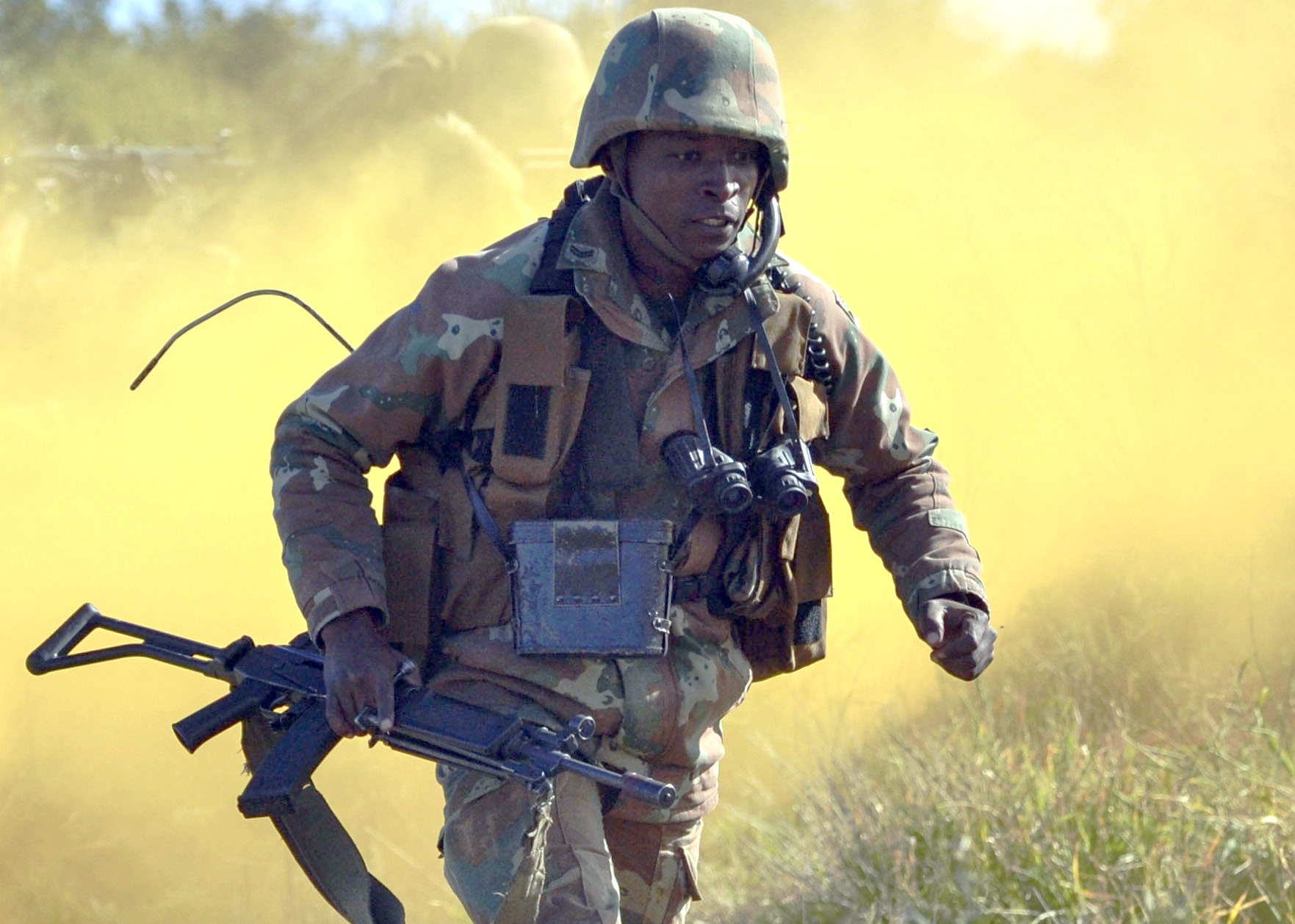
South Africa deploys troops to KwaZulu-Natal in the most direct state response yet to a year of anti-migrant unrest. In a statement dated Tuesday, October 27, 2026, the Presidency said President Cyril Ramaphosa had informed National Assembly Speaker Thoko Didiza and National Council of Provinces Chairperson Refilwe Mtsweni-Tsipane of his decision to deploy 510 members of the South African National Defence Force (SANDF) in KwaZulu-Natal, in cooperation with the South African Police Service (SAPS), in support of Operation Prosper. The soldiers will assist the police in maintaining law and order in the province and will be on standby to support police for any eventuality.
The Presidency tied the deployment explicitly to the unrest of recent weeks. The SANDF members, the statement said, will assist SAPS “especially in light of recent violent actions arising from a campaign of misinformation about the Constitutional Court judgment on the Refugee Act.” That sentence carries the government’s central claim about October’s violence: that it was fuelled not simply by grievances about migration, but by false claims about what South Africa’s highest court actually decided. Protest organisers and their supporters dispute that framing, and the argument between the two accounts is now being conducted with soldiers on standby.
The deployment is authorised under section 201(2)(a) of the Constitution — the provision that requires the president to inform Parliament when the defence force is employed in cooperation with the police — and runs for the period from October 9, 2026 to November 30, 2026. Its expected cost is R34,082,720 — about 34.1 million rand, or $2.05 million at the rate Reuters cited of $1 to 16.6688 rand. Presidency spokesperson Vincent Magwenya issued the statement. The dates matter as much as the number: the deployment window spans the November 4 local government elections, and its formal start date of October 9 means the authorisation covers the very period in which the month’s worst violence occurred.
What the deployment does — and what it does not do
Operation Prosper SANDF: soldiers in support of police, not in place of them
The structure of the mission is deliberately limited, and the limits are part of the story. The SANDF is deployed “in cooperation with” SAPS and “in support of” Operation Prosper: policing remains a police function, arrests remain police arrests, and the soldiers’ stated role is to assist in maintaining law and order and to stand by for any eventuality. That is the classic posture for a domestic military deployment in South Africa — visible reinforcement intended to free police capacity, deter crowd violence and reassure residents and businesses — rather than a transfer of authority to the army.
Provincial politics pushed in the same direction. KwaZulu-Natal Premier Thami Ntuli had requested military assistance as the October protests escalated, South African reporting said, after police in the province found themselves confronting torched vehicles, looted foreign-owned shops and crowds that rubber bullets did not immediately disperse. The provincial request and the presidential authorisation together describe a chain of escalation: a province that judged its police stretched, and a national government that judged the moment serious enough to put troops behind them.
It is also a deployment with a stated end. The authorisation expires on November 30. Between now and then sit the November 4 local elections, the period in which anti-migrant groups have called for nationwide protests, and the continuing police investigation into the Durban killing. The government has, in effect, bought itself a reinforced security posture for exactly the five weeks it considers most dangerous — and set a date by which it will have to argue the danger has passed, extend the mission, or withdraw the soldiers into whatever conditions then exist.
October’s unrest: Durban, Soweto and a province asking for help
Durban anti-immigrant protests: 14 vehicles torched in the initial outbreak
The violence that preceded the deployment was concentrated in two of South Africa’s best-known urban landscapes. Anti-migrant protests in Durban — KwaZulu-Natal’s biggest city — and in Johannesburg’s Soweto township turned violent this month, with vehicles torched and foreign-owned shops looted. South African reporting by the Eyewitness News chain put 14 vehicles torched in the initial Durban outbreak and described police using rubber bullets to disperse crowds. By October 11, 30 people had been arrested nationwide — 25 in KwaZulu-Natal and five in Gauteng — for public violence, unlawful gathering and related offences.

The pattern in both cities followed the shape of this year’s earlier marches: a mobilisation framed by organisers around undocumented migration, jobs and public services, which in places tipped into attacks on property associated with foreign nationals. Reuters reported that South Africa has seen months of anti-migrant marches this year, drawing international criticism, with some descending into violence, and that thousands of African foreign nationals have fled the country. October was not the beginning of the campaign. It was the month the campaign turned deadly in Durban — and the month the state answered with soldiers.
The Durban killing: a man beaten to death on the sidelines of a march
Foreign national beaten to death Durban: what police have — and have not — confirmed
On October 22, a foreign national was beaten to death by a crowd of about 50 people in central Durban, on the sidelines of a march. Reuters and Al Jazeera reported that South African police opened a murder investigation. SAPS said the victim, thought to be in his late 30s or early 40s, was declared dead at the scene. In its first account, police did not give the man’s nationality or a motive — two absences that matter, because they mark the boundary between what investigators have established and what a shocked public immediately assumed.
South African reporting later described the victim as a Ugandan national and reported that five men aged 19 to 46 had been arrested in connection with the killing. Those details are attributed here to South African reports, as they should be: they go beyond the police’s initial public position, in which nationality and motive were not officially confirmed. The distinction is not pedantry. In a case arising from a march about nationality, the victim’s nationality is the fact on which the public meaning of the crime turns — and it is precisely the fact the police were most careful not to state before they were sure of it.
On October 24, the South African Human Rights Commission condemned the killing as a grave violation of the right to life. The condemnation placed the Durban death where the Commission judged it belonged: not as an incident of protest policing, but as a killing of a person entitled to the protection of South African law whatever his documents said. A murder investigation, arrests reported by local media, and a constitutional watchdog’s intervention now run in parallel with the military deployment — the criminal track and the security track of the same October.
The court ruling at the centre of the misinformation dispute
Refugee Act judgment: access to a process is not a grant of status
Both the Presidency’s statement and Reuters’ account locate the immediate trigger in a courtroom. The deployment, Reuters reported, followed recent violence linked to misinformation about a Constitutional Court ruling on asylum seekers: a July ruling that asylum seekers cannot be denied access to South Africa’s asylum system solely for procedural reasons. The ruling restored access to an asylum determination process. It did not itself grant refugee status, residence or amnesty to anyone.
That distinction — between being allowed to apply and being granted anything — is the core of the dispute. The government’s position, stated in the deployment announcement itself, is that a campaign of misinformation about the judgment converted a procedural ruling into a public belief that the court had opened the country’s doors, and that the false version helped drive people into the streets and some of them into violence. Protest voices, for their part, have framed their campaign around undocumented migration and border control rather than around the judgment’s text. Readers should hold the two claims separately: what the court decided is a matter of record; who misrepresented it, and with what effect, is the argument the two sides are having.
The legal point deserves its weight either way. An asylum system that turns people away on procedural grounds alone leaves their claims unheard; a ruling restoring access to that system changes who gets a hearing, not what the hearing decides. South Africa’s asylum process still determines each case, and the Constitutional Court’s judgment did not alter the criteria for refugee status. If the violence of October was partly built on the belief that it had, then correcting the record is not public relations — it is one of the few interventions that addresses a stated cause rather than a symptom. The soldiers address the symptom.
Why this matters
It matters, first, because a domestic troop deployment is a threshold a democracy does not cross casually. Five hundred and ten soldiers is not an occupation force; it is a signal — to crowds considering violence, to police officers considering their odds, to foreign nationals considering whether to flee, and to voters considering the government’s competence eight days before local elections. Ramaphosa’s government chose the signal knowing it cuts both ways: troops may deter the next torching, and their presence also concedes that ordinary policing was judged insufficient for a province in an election month.
It matters, second, because of what the unrest is doing to South Africa’s standing and to the people inside its borders who were born elsewhere. About 2.4 million foreign nationals live among South Africa’s population of about 62 million, on government figures reported by Al Jazeera — just under four percent of the population. Reuters reported that thousands of African foreign nationals have already fled the country this year. Each departure is a private decision with a public meaning: people who judge that the state cannot, or will not, keep them safe make that judgment with their feet, and neighbouring states and investors read the same footage.
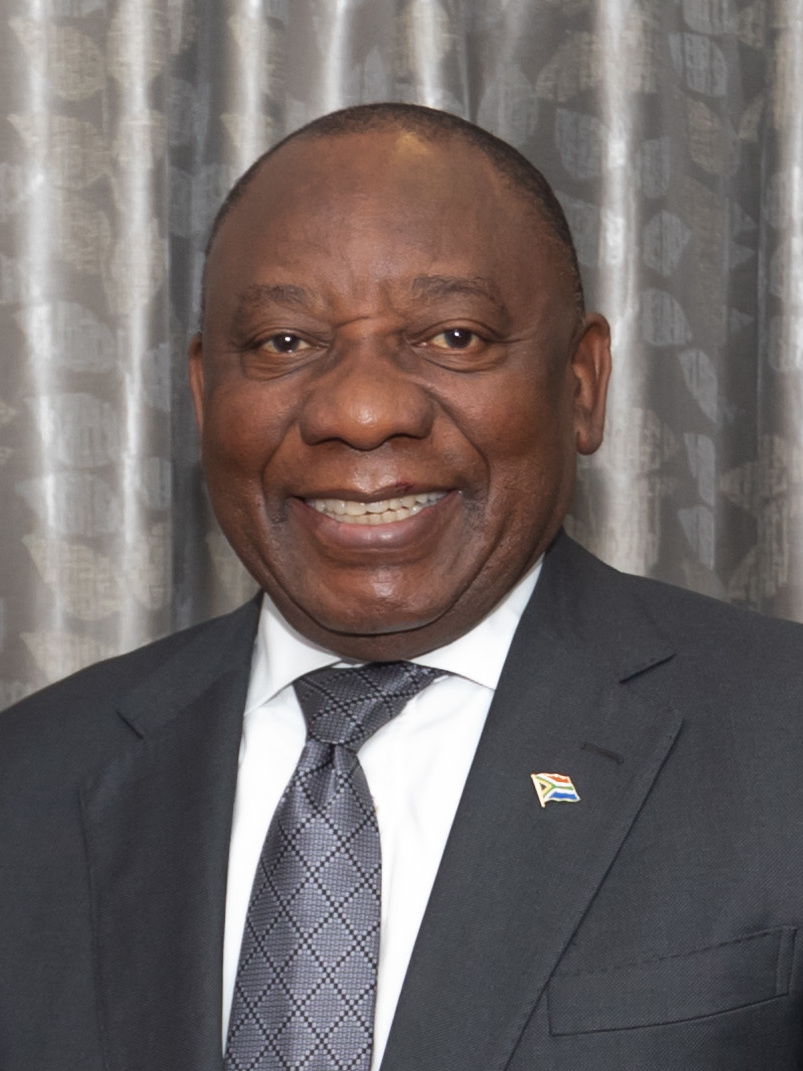
It matters, third, because the fight is also over information. The Presidency did not merely announce troops; it named a cause — a campaign of misinformation about a court judgment — in the same breath. That makes the deployment a test of two theories of October. If the government is right that false claims about the Refugee Act judgment were a principal accelerant, then the correction of those claims, visibly enforced calm, and a peaceful election are the metrics by which the mission should be judged. If the unrest is rooted instead in the grievances marchers themselves state — jobs, services and borders — then troops can hold a line for five weeks without touching the cause, and November 30 will arrive with the argument exactly where October left it.
Background: the grievances, the evidence and a long history
South Africa anti-immigration unrest: protests began in June
The current protest campaign began in June, according to the reporting assembled by Reuters and Al Jazeera, and its stated grievances have been consistent throughout. Demonstrators say undocumented migration strains jobs and public services, and that border control is weak. The border point is not contested by the president: Ramaphosa himself has acknowledged the weakness of border control while denouncing anti-migrant violence. The government’s position thus separates the grievance from the method — migration enforcement is a legitimate policy argument, it says; mob violence against foreign nationals is a crime, and a man is dead in Durban.
The counter-argument comes from researchers and critics, who say sweeping claims blaming migrants for unemployment — roughly a third of South Africa’s workforce is unemployed — and for crime are not supported by evidence. On that view, the numbers in this story cut against the marches’ framing: foreign nationals are under four percent of the population, and the country’s jobs crisis long predates the current protest wave and reaches far beyond any plausible effect of migration alone. Protest supporters answer that national averages conceal local pressure — the specific clinic, the specific township labour market, the specific street of foreign-owned shops competing with South African traders. Both claims are carried here as their holders make them; the evidence for nationwide blame is what researchers dispute, and the local experience is what marchers cite.
None of this is new, and the history is the heaviest context of all. South Africa has a long history of xenophobic violence stretching over nearly two decades, in which earlier waves of attacks on foreign nationals — shopkeepers, workers, asylum seekers — killed people, emptied neighbourhoods and forced previous governments into the same sequence of condemnation, policing and inquiry. October 2026 fits that pattern in its particulars: the march, the looted shops, the torched vehicles, the man beaten to death at the roadside of a protest. What is different this time is the combination of a contested court ruling at the centre of the argument, an election eight days away, and soldiers deployed before the election rather than after a larger death toll.
The migration question also reaches beyond South Africa’s internal argument. Signal Post News has covered how migration politics in the United States has turned toward South Africans specifically, in Trump 17,500 White South African Refugees Plan: 2027 Cap for One Group — a reminder that South Africa’s arguments about who belongs are being watched, and used, far from Durban. And the country’s diplomatic temperature has been tested on other fronts this autumn, as our report on how South Africa summoned the U.S. ambassador in a third diplomatic rebuke described. A state managing that much external friction can ill afford a domestic crisis that hands the world images of mob violence — one more reason the government moved at presidential level, and in writing to Parliament, this week.
Who benefits, who loses — and what critics say
The government’s calculation
The clearest beneficiary, if the deployment works, is the government’s claim to control. A calm KwaZulu-Natal through the November 4 elections lets Ramaphosa’s administration argue that it acted lawfully, transparently and in time: Parliament informed, a constitutional section cited, a cost published, an end date set. SAPS benefits operationally — 510 soldiers on standby is 510 reinforcements for cordons, guard duties and rapid response that police commanders did not have in the second week of October. Foreign nationals in the province benefit in the most concrete way available: a visible state presence between them and the next crowd.
The costs, counted and uncounted
The losers ledger is longer. Foreign-owned businesses looted in October have already lost stock, premises and trading days that no deployment refunds. The family of the man killed in Durban on October 22 has lost the most, in a case whose public facts remain incomplete a week on. KwaZulu-Natal’s economy absorbs the softer damage — the province whose largest city is now globally associated, for this news cycle, with torched vehicles and a mob killing — and South Africa’s courts absorb another: a Constitutional Court judgment so thoroughly misdescribed in public that the presidency blames the misdescription for violence. Protest movements that kept their marches peaceful lose too, folded by events into a story about the ones that did not.
What critics on each side say
Critics of the deployment’s premise argue that “misinformation” is a convenient single cause for a government facing multiple failures — porous borders it concedes, an unemployment rate around a third of the workforce it has not cured, and services under strain — and that soldiers cannot arrest a narrative. Critics from the other direction argue the state moved late: that a campaign running since June, turning violent in October with 30 arrests by October 11 and a killing on October 22, met its military answer only on paper from October 9 and in public on October 27. Both critiques can be true at once, and both will be tested against the same evidence over the next five weeks: whether the streets stay calm, whether the election passes peacefully, and whether the Durban murder case produces prosecutions rather than statements.
The numbers in context
- 510 soldiers: the SANDF members deployed to KwaZulu-Natal in support of Operation Prosper.
- R34,082,720: the expected cost of the deployment — about 34.1 million rand, or $2.05 million (Reuters; $1 = 16.6688 rand).
- October 9 to November 30, 2026: the authorised deployment period under section 201(2)(a) of the Constitution — spanning the November 4 local government elections.
- 14 vehicles: torched in the initial Durban outbreak, per South African reporting (Eyewitness News chain).
- 30 arrests: nationwide by October 11 — 25 in KwaZulu-Natal, 5 in Gauteng — for public violence, unlawful gathering and related offences.
- About 50 people: the crowd that beat a foreign national to death in central Durban on October 22, per Reuters and Al Jazeera.
- Five men, aged 19–46: reported by South African media as arrested in connection with the Durban killing.
- 2.4 million foreign nationals: living among a population of about 62 million (government figures reported by Al Jazeera).
- Roughly a third: the share of South Africa’s workforce that is unemployed — the figure at the centre of the disputed claims about migration’s effects.
Read together, the figures describe a response scaled to a province, not a country: 510 troops for KwaZulu-Natal alone, at roughly R66,800 per deployed member across the period, for a crisis whose drivers — an unemployment rate near a third, a contested court ruling, an asylum system under argument — no deployment budget touches. The arithmetic is the analysis: the state has purchased five weeks of reinforcement, and priced it. What those five weeks contain will decide whether the purchase looks prudent or merely postponing.
What happens next
The troops remain on standby through November 30, and the calendar inside that window is crowded. The November 4 local government elections are the fixed point: whether voting in KwaZulu-Natal proceeds peacefully, with soldiers visible in support of police, is the first test the deployment set for itself. Anti-migrant groups have called for nationwide protests — whether those calls produce marches, whether the marches stay peaceful, and whether police with military backing handle them without a repetition of October’s torchings and looting are the second test, running on no fixed date.
The third test is the Durban murder investigation. Police opened the case without publicly confirming the victim’s nationality or a motive; South African reports have since described a Ugandan victim and five arrests. Whether those arrests become charges and court appearances — and whether the police confirm, on the record, the identity they initially withheld — will determine how the killing is remembered: as the moment the state reasserted the law, or as an unsolved footnote to a month of unrest. The Human Rights Commission’s condemnation ensures the case will not quietly disappear from the official record either way.
Beyond November, the argument returns to the ground it started on: the asylum system the Constitutional Court addressed in July, the border control the president concedes is weak, and the jobs and services the June marchers named. The deployment expires on November 30. The questions it was sent to hold at bay do not. Signal Post News will follow the election period, the protest calls and the Durban case as they develop — and the wider security picture across the continent, including the kind of sudden urban violence examined in our coverage of the twin South Africa tavern shootings and the police hunt for the gunmen, is tracked on our Africa wars tracker.
Related coverage: Trump 17,500 White South African Refugees Plan: 2027 Cap for One Group · South Africa Summons U.S. Ambassador Bozell in Third Diplomatic Rebuke · 27 Killed in Twin South Africa Tavern Shootings as Police Hunt Gunmen
Sources
- The Presidency of South Africa, statement, October 27, 2026 — President Cyril Ramaphosa informed National Assembly Speaker Thoko Didiza and NCOP Chairperson Refilwe Mtsweni-Tsipane of the deployment of 510 SANDF members in KwaZulu-Natal in cooperation with SAPS in support of Operation Prosper, to assist in maintaining law and order especially in light of violent actions arising from a campaign of misinformation about the Constitutional Court judgment on the Refugee Act; authorised under section 201(2)(a) of the Constitution for October 9 to November 30, 2026; expected expenditure R34,082,720; spokesperson Vincent Magwenya: thepresidency.gov.za / gov.za.
- Reuters, October 27, 2026 (10:49 UTC, Johannesburg) — the deployment costs 34.1 million rand ($2.05 million; $1 = 16.6688 rand), comes before the November 4 local government elections and after calls by anti-migrant groups for nationwide protests; months of anti-migrant marches this year have drawn international criticism, some descending into violence, and thousands of African foreign nationals have fled the country; the violence followed misinformation about the July Constitutional Court ruling that asylum seekers cannot be denied access to the asylum system solely for procedural reasons: reuters.com.
- Eyewitness News (EWN) reporting, October 2026 — 14 vehicles torched in the initial Durban outbreak, police using rubber bullets, KwaZulu-Natal Premier Thami Ntuli requesting military assistance, and 30 arrests nationwide by October 11 (25 in KwaZulu-Natal, 5 in Gauteng) for public violence, unlawful gathering and related offences: ewn.co.za.
- Reuters and Al Jazeera, October 22–24, 2026 — police investigating the killing of a foreign national beaten to death by a crowd of about 50 people in central Durban on the sidelines of a march; SAPS said the victim, thought to be in his late 30s or early 40s, was declared dead at the scene and did not initially give his nationality or a motive; the South African Human Rights Commission condemned the killing on October 24 as a grave violation of the right to life; government figures of about 2.4 million foreign nationals among a population of about 62 million: aljazeera.com.
- South African reporting on the Durban killing (via EWN and national outlets), October 2026 — the victim later described as a Ugandan national, with five men aged 19–46 reported arrested in connection with the killing; attributed to South African reports, as police had not confirmed nationality or motive in their initial statement.