War / Yemen
Saudi airstrikes Yemen market: the Houthi-run Health Ministry says strikes on a crowded market and a fuel station in Al-Hazm, the capital of Al Jawf province in northern Yemen, killed 13 people and wounded 16 on Wednesday — the gravest single claim of a day that also brought explosions at Aden’s airport and a tightening siege around Taiz. Every figure in this report traces to Houthi-run authorities, none has been independently verified, and the Saudi-backed Yemeni government had not commented.
Track it live: Live Global War Tracker
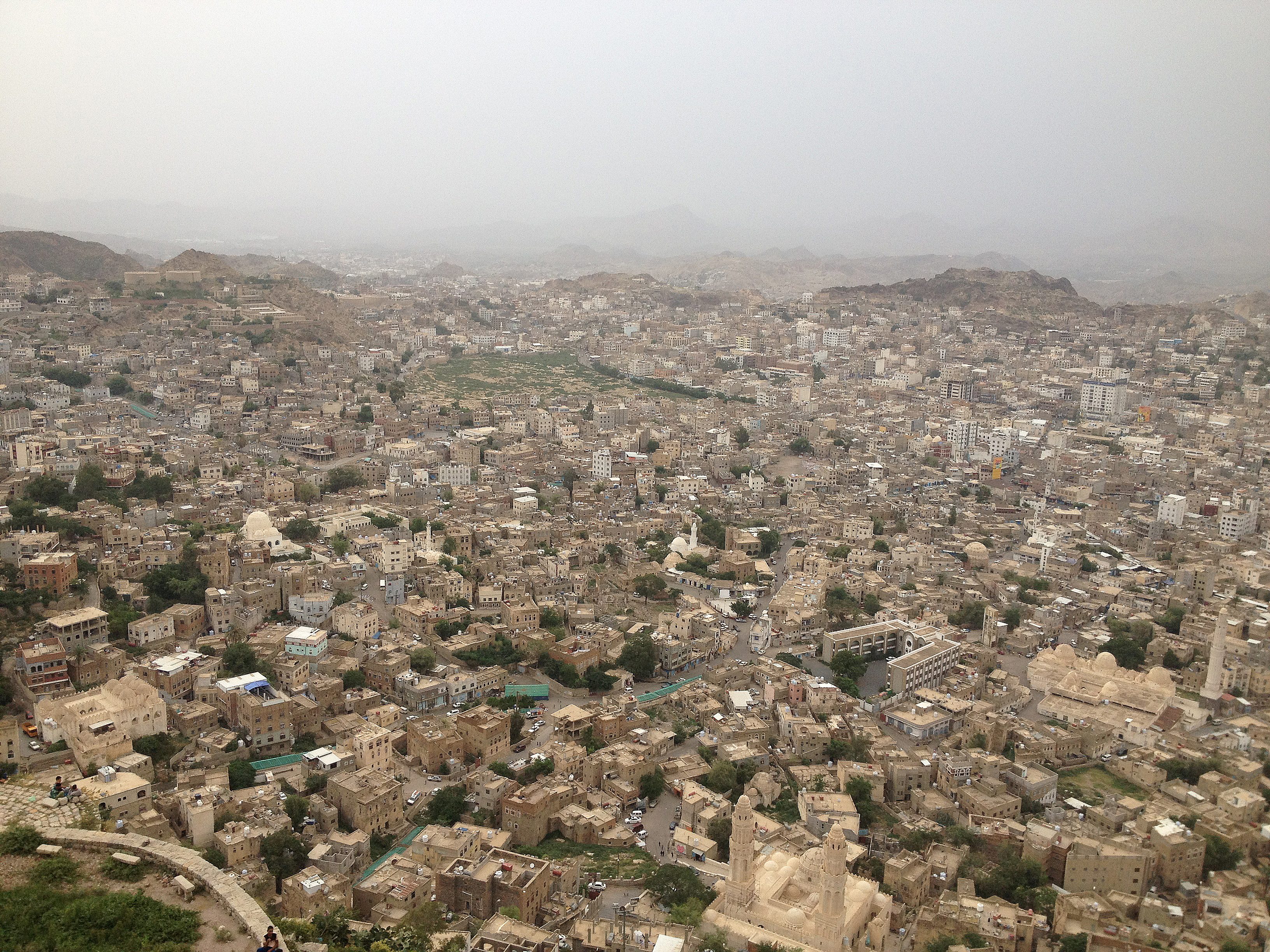
Saudi-led airstrikes hit a crowded market near a gas station in Al-Hazm, the capital of Al Jawf province in northern Yemen, on Wednesday, killing 13 people and wounding 16 others, according to the Houthi-run Health Ministry, the Associated Press reported. The market was packed with shoppers when the strikes came. Three women were among the wounded, and shops and nearby houses were heavily damaged, the ministry said.
The ministry called the attack a war crime and said it required an international investigation. There was no immediate statement from the Saudi-backed Yemeni government, and the figures could not be independently verified. Al-Hazm sits in Houthi-held territory, where access for independent journalists, investigators and aid assessors is tightly restricted — a fact that shapes everything that can, and cannot, responsibly be said about what happened there on Wednesday.
The toll does not yet agree
The first problem with Wednesday’s numbers is that there are three of them. The Associated Press, citing the Houthi-run Health Ministry, reported 13 killed and 16 wounded. Anadolu Agency, citing Houthi sources, reported a preliminary toll of 14 killed and 10 wounded, including women and children, and warned that the figure could rise. Hodhod Yemen News, a Houthi-aligned outlet citing the Sanaa Health Ministry, reported 14 killed and 15 wounded, and said the strikes hit both the Al-Hazm market and a nearby fuel station — with four of the dead killed at the Al-Taysir fuel station.
Those differences are worth explaining plainly rather than averaging away. Every one of the three counts traces back to Houthi-run authorities; none comes from an independent body with access to the scene, the hospitals or the morgues. The AP count is the most conservative of the three, and it is the one carried in this article’s headline. The gaps between the counts may reflect different moments of counting, different sites — a market toll and a fuel-station toll compiled separately and combined differently — or simple error in the first chaotic hours. What they cannot yet reflect is verification, because Al-Hazm is in territory where the institutions that would normally confirm a toll answer to the same movement publishing it. In Houthi-held Yemen, independent confirmation of an event like this is slow, and sometimes never arrives at all. The honest sentence is the narrow one: Houthi authorities say at least 13 people were killed; other Houthi-sourced counts say 14; nobody outside the movement has confirmed either number.
The same morning, explosions in Aden
Al-Hazm was not Wednesday’s only front. In Aden, the seat of the internationally recognised government in the south, an AP reporter witnessed explosions that shattered windows at the airport building and in nearby homes, after the Houthis’ military spokesman, Yahya Saree, had urged people to evacuate the airport. Salem Al-Awlaqi, an airport employee, told the AP the airport was completely deserted. A security official said flights from Cairo and Mumbai were diverted to Seiyun Airport in Hadramawt province, and that a further flight from Cairo was canceled.
Signal Post News covered the evacuation order and the explosions as they unfolded on Wednesday in our report on the Houthi order to evacuate Aden airport. The connection between the two stories is Saree’s stated reason for the warning: he said a Saudi military cargo plane carrying weapons was at the airport. He provided no evidence for that claim, the AP reported, and Saudi Arabia has not confirmed that any such aircraft was there. As with the market toll, the claim and the fact must be kept apart: what is established is that explosions were heard and seen in Aden and the airport emptied; what is claimed, by one side, is why.
Taiz: a siege tightening around a city
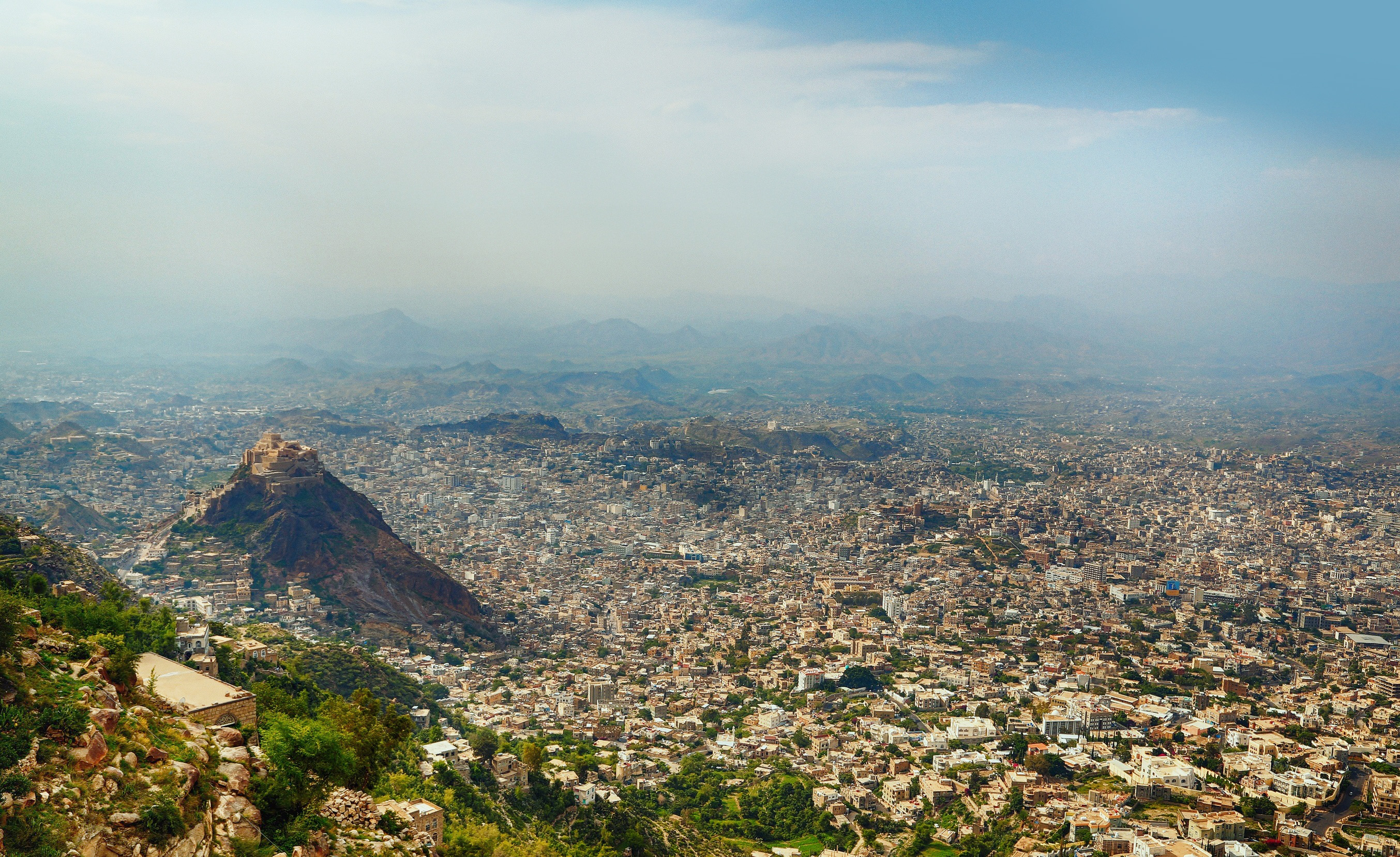
Between the northern strike and the southern airport lies the war’s centre of gravity on Wednesday: Taiz, Yemen’s third city, where government officials appealed for international help to protect civilians and reopen the roads into the city. Governor Nabil Shamsan said residents had lost access to about 3 million liters of water drawn from wells in Wadi al-Dhubab, an area now under Houthi control — a figure the AP said it could not independently verify. Eshraq al-Maqtari, the government’s legal affairs minister, said more than 2,000 projectiles and explosives fired by the Houthis had struck districts of Taiz in recent days.
Shamsan said the city is now encircled on all four sides, and that fighting has intensified as the Houthis deploy reinforcements to the fronts around it. The siege is not new, but its tightening has been the autumn’s steady story in the centre of the country: Signal Post News reported earlier this month on the fall of Misrakh and the shelling that drove tens of thousands from their homes. The human arithmetic has since widened. United Nations reporting puts the number displaced across Yemen since August at roughly 260,000 people, with about half of them taken in around Taiz — a city whose own water, roads and hospitals are the things now being squeezed.
Why this matters
Read Wednesday as a map and the pattern is the story. A market-strike claim in the far north, an airport evacuation in the far south, and a siege closing in the centre, all on the same day: Yemen’s war is no longer a set of separate fronts that flare in turn, but one nationwide escalation, running since the UN-brokered truce that had largely held since 2022 collapsed in July 2026. A strike claim against a market and a fuel station lands differently in Yemen than it would in a richer country, because markets and fuel stations are precisely the civilian infrastructure an import-dependent economy runs on — the nodes where food, fuel and cash reach ordinary households. Damage there, real or credibly claimed, is felt far beyond the street it happens on.
Wednesday also underlines where this war is now fought as hard as any front: in the casualty figures themselves. With independent access so limited, tolls issued by party-run ministries have become the war’s main information battlefield, and each side’s numbers arrive pre-loaded with an argument — war crime, in the Houthi telling of Al-Hazm; silence, so far, from the government and the coalition. That is why the unglamorous work of verification matters more, not less, when the claims are loudest: a toll that cannot be checked is a weapon that cannot be answered, whichever side issues it.
The regional layer widened in the same hours. This week the Houthis have claimed attacks aimed at Riyadh’s Defense Ministry and at Saudi Arabia’s Ras Tanura refinery, while Saudi air defences have reported interceptions — claims and counter-claims we tracked in our report on the coalition’s interceptions and the Ras Tanura claim. And in Tehran, the foreign ministers of Iran, Saudi Arabia, Pakistan and Turkey met in a session that Iran’s Abbas Araghchi hailed as a step toward dialogue — even as the strikes it might one day restrain were intensifying. Diplomacy and escalation are not taking turns in this war. They are running at the same time, and Wednesday belonged to the escalation.
How Yemen got here
The war’s outline is a decade long. The Houthis seized the capital, Sanaa, in 2014 and drove the internationally recognised government south, eventually to Aden. In March 2015 a Saudi-led coalition intervened militarily in support of that government, beginning an air campaign and a blockade politics that, with the ground war, produced what the United Nations calls one of the world’s worst humanitarian crises. A UN-brokered truce agreed in 2022 largely held for more than four years, freezing the front lines without settling the war underneath them.
That truce collapsed in July 2026, after an Iranian aircraft landed in Sanaa in defiance of Saudi control of Yemeni airspace, Anadolu reported. Fighting since then has spread back across the country — to the Red Sea coast and the Bab el-Mandeb strait, to Aden’s airport again and again through October, to Taiz’s roads and wells, and now, if the Houthi account is accurate, to a market in Al-Hazm. Wednesday is what the post-truce war looks like when all of its fronts move at once.
What happens next
Five things will show whether Wednesday was a peak or a step. First, any statement from the Saudi-led coalition or the Yemeni government on Al-Hazm: a denial, a justification or continued silence each carries a different meaning, and so far there has been only silence. Second, independent confirmation of the toll — from hospitals, from UN agencies, from anyone not answerable to a party to the war. Third, Aden airport: whether it reopens and flights resume, or whether an evacuation order issued by the airport’s enemy becomes, in effect, a closure. Fourth, Taiz: whether any road into the city reopens and whether the Wadi al-Dhubab water supply is restored, the two measures that decide how fast a siege becomes a famine story. Fifth, Tehran: whether the dialogue track Araghchi praised survives a week in which the war it is meant to calm visibly accelerated.
Editor’s note: The confirmed core of Wednesday’s Yemen story is narrow — explosions were witnessed in Aden, the airport there emptied, government officials in Taiz made specific appeals and claims, and Houthi-run authorities published casualty figures for Al-Hazm. The Al-Hazm toll, the responsibility for the strike, and the claim of a Saudi weapons plane at Aden airport are claims attributed in this report to those who made them; none has been independently confirmed, and this article will be updated if confirmation, or a coalition response, emerges.
Sources
- Associated Press, October 28, 2026: “Houthis say Saudi-led airstrikes killed 13 at a market in northern Yemen.” reflector.com
- Anadolu Agency, October 28, 2026, via EuropeSays: report of the Al-Hazm strike and the preliminary toll of 14 killed and 10 wounded, citing Houthi sources. europesays.com
- Hodhod Yemen News Agency, October 28, 2026: “At least 14 killed, 15 wounded in Saudi airstrikes on local market, fuel station in Jawf,” citing the Sanaa Health Ministry. hodhodyemennews.net
- Signal Post News prior coverage: the Houthi order to evacuate Aden airport; the tightening siege of Taiz; the coalition interceptions and the Houthi Ras Tanura claim.