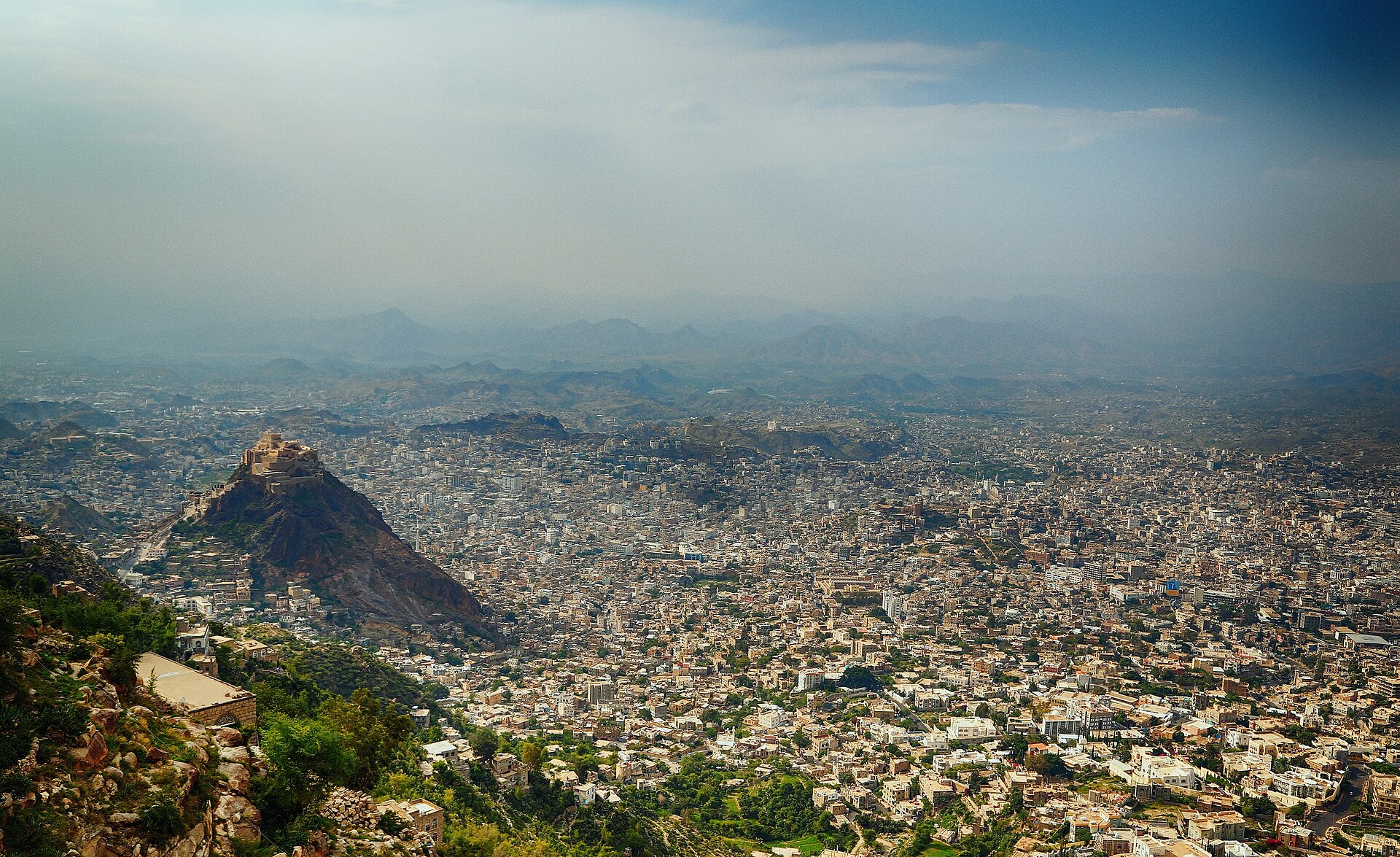
Houthi siege of Taiz: Houthi forces seized the district of Misrakh south of Taiz on Monday and shelled Yemen's third city through the night, tightening an encirclement that aid agencies say has cut off assistance to some 800,000 people — with government sources saying 80,000 residents have fled the latest fighting.
Taiz: The Siege Ring Closes Again
Track it live: Live war tracker — follow the fighting in Yemen and other active conflicts as they develop, including the Middle East tracker.
The fall of Mudiriyat al-Misrakh on Monday, reported by Reuters from military sources, was the latest step in an encirclement that has been closing for weeks. Residents described heavy shelling of the city on Monday night. Yemeni government sources blamed the Houthis for the bombardment and for the advance; a Houthi spokesperson did not immediately respond to a request for comment. The main road between Taiz and Aden, the southern port through which the city breathes, was cut last week, leaving government forces inside Taiz effectively encircled — holding the city, but no longer connected to it by any main route.
A city that knows this script
Taiz has lived some version of this for a decade. The siege first imposed in 2015–16, when the city became one of the war's most notorious humanitarian emergencies, was broken in 2016 — but a partial blockade never fully lifted. A route into the city from the east, reopened in 2024 after years of closure, has shut again in the current fighting. In September, Houthi forces took the coastal town of Mocha to the west. On October 4, Al Turbah — the town guarding the last main road south — fell. Misrakh's capture this week tightened the southern arc. What changed in the latest round, which reignited last month as the wider war flared again amid the confrontation between the United States, Israel and Iran in the Gulf, is that the remaining gaps in the ring have closed one after another.
There is fighting elsewhere, and it cuts both ways. Government-aligned forces said last week they had recaptured ground near Bab el-Mandeb, the strait at the Red Sea's mouth — a reminder that the front is moving in more than one place, and that the government's remaining strength is concentrated far from the city now being squeezed. Inside Taiz, the arithmetic is simpler: whatever is already inside the ring is what the city has.

Hospitals overwhelmed, aid cut off
On Wednesday the humanitarian picture darkened further. The International Committee of the Red Cross said front-line hospitals in Taiz, Marib and along Yemen's Red Sea coast are receiving unprecedented numbers of weapon-wounded patients, with some facilities admitting more than 700 casualties in a single week. Feras Abusamra, the ICRC's health coordinator, said trauma staff are under enormous pressure, that only a small share of functioning facilities can provide comprehensive trauma care, and that shortages of surgical supplies, anaesthesia, oxygen and medicines are biting — a health system, he warned, with limited capacity to absorb another mass-casualty surge.
The World Food Programme said fighting has cut off life-saving assistance to around 800,000 people in Taiz and other affected areas. Some districts are simply inaccessible — sealed by fighting and road closures — and wheat flour stocks are nearly exhausted, with the food remaining in local markets likely to last only a short time. That converges with what government health authorities in Taiz have been warning: that hospitals are near collapse for want of fuel, with emergency care, surgery, intensive care, dialysis and neonatal units all dependent on generators whose diesel is running out, along with ambulances and the cold chains that keep medicine viable. The authorities demanded the siege be lifted and the routes reopened.
For families, the siege is measured in smaller units. The Associated Press described residents stockpiling groceries while they still can, diesel and cooking gas running low, and some households burning cardboard and wood to cook. Weam Abdullah fled with her husband and two children just before the October 4 capture of the town that largely completed the encirclement. Shaif al-Gabiri, a nonprofit consultant in the city, warned that remaining stocks will run out if the siege continues. The IOM's Katja Juric put the city's population at almost 600,000 — wider estimates for the urban area run above a million — and government sources say 80,000 people have fled Taiz in the latest fighting. Across Yemen, the IOM counts more than 200,000 displaced since the war reignited last month.
Why this matters
Taiz is not a peripheral town. It is Yemen's third city, a commercial and industrial centre whose encirclement has been the war's most durable humanitarian story precisely because it is slow: sieges do not produce single dramatic days so much as a grinding subtraction of food, fuel, medicine and hope. What makes this week different is the completeness of the ring and the speed of the casualty flow behind it. When the Red Cross reports single hospitals taking 700 weapon-wounded in a week, and the WFP reports flour nearly gone for a population of 800,000 cut off from aid, the question is no longer whether Taiz is a crisis but how many weeks of stocks stand between the city and a famine dynamic.
The military logic is equally stark. Taiz commands the approaches between Yemen's north and south and sits astride routes toward the Red Sea coast. A completed encirclement hands the Houthis leverage that no single battlefield victory elsewhere in the country quite matches: a major city, held hostage by geography, whose relief would require either a negotiated opening or a costly government offensive through the same hills that have frustrated every army in this war. The government's recapture of ground near Bab el-Mandeb matters to the Red Sea shipping story; it does not feed Taiz.

What the numbers actually say
Set the figures side by side. Eighty thousand people fled Taiz in this round of fighting, by the government's count; more than 200,000 have been displaced across Yemen since September. Eight hundred thousand people in and around Taiz have lost access to WFP assistance. Seven hundred casualties in a week at individual front-line hospitals. Each number is an estimate with a source and a margin — displacement counts in Yemen have been contested throughout the war — but they point the same direction, and they come from agencies (IOM, ICRC, WFP) whose business is counting carefully. The honest uncertainty is not about whether the situation is deteriorating; it is about the rate.
What happens next
Three clocks are now running. The first is stocks: flour, diesel and medicine inside the ring, measurable in weeks if the agencies' warnings are right. The second is military: whether the government attempts to reopen the Aden road by force, whether the Houthis press from encirclement into assault, and what the fighting near Bab el-Mandeb means for the wider front. The third is diplomatic: sieges in Yemen have historically ended, when they ended, through negotiated local arrangements as often as through battle — but negotiation requires the besieger to see more value in a deal than in the squeeze, and nothing in this week's statements suggests that calculation has been made. Until one of the clocks runs out, Taiz does what it has done for a decade: it endures, at rising cost, while the agencies write down the numbers.
Related coverage: Taiz's renewed siege: fuel prices soar as the roads close · Houthis capture Al Turbah, severing Taiz's Aden supply route · 200,000 displaced across Yemen, IOM says
Sources: Reuters (October 13); Associated Press reporting from Taiz (October 13); Reuters on the ICRC and WFP warnings (October 14). Casualty, displacement and aid figures are as reported by the agencies and officials cited; the Houthis did not immediately comment to Reuters.