War / Yemen
Explosions were heard in Aden on Wednesday, and then the Houthis told everyone at the city’s international airport to get out immediately — blaming the presence of a Saudi military cargo plane. No casualties have been reported, it has not been confirmed that the airport was hit, and Saudi Arabia has said nothing.
Track it live: Live war tracker · Middle East tracker
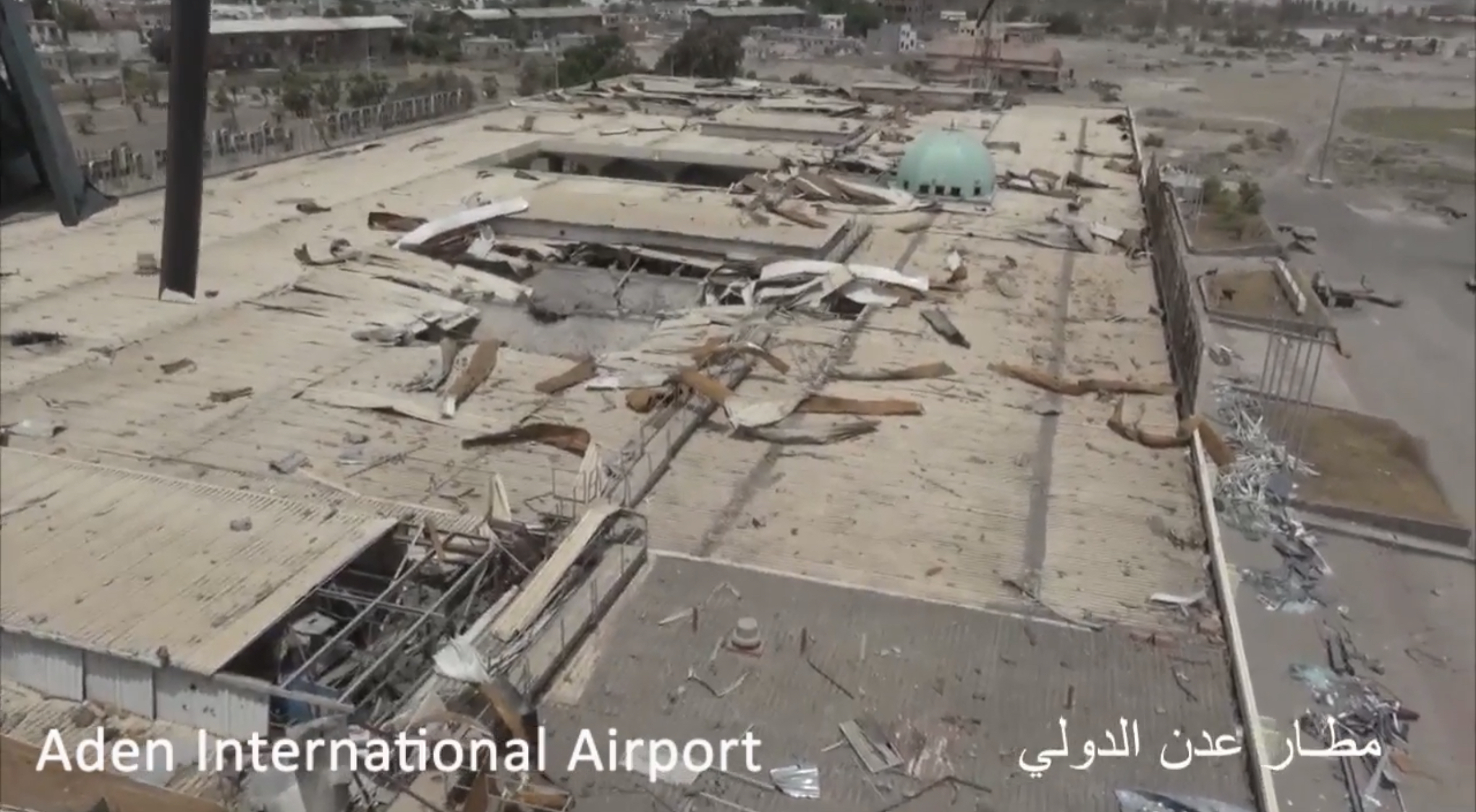
Yemen’s Iran-aligned Houthis on Wednesday called on people to evacuate immediately from the international airport in Aden, the seat of the country’s internationally recognised, Saudi-backed government, after explosions were heard in the city, Reuters reported. The Houthis’ military spokesman, Yahya Saree, said in a post on X that the evacuation was necessary because of what he said was the presence at the airport of a Saudi military cargo aircraft carrying weapons. That claim has not been independently verified. There was no immediate comment from Saudi authorities, and no casualties have been reported.
The warning, reported by Reuters on Wednesday, October 28, and also carried by Sky News Arabia, is a different kind of escalation from this month’s missile strikes. The airport has been attacked twice in October without public warning. This time the threat itself was the act: a public order, issued by the armed group that controls Yemen’s capital, telling civilians to leave the government’s main air gateway at once. Whatever follows — a strike, a standoff, or silence — the order has already done part of its work, because an airport that empties is an airport that stops.
Precision matters here, because the facts are thin and the claims are loud. Reuters did not report that Aden airport was struck on Wednesday. It reported explosions heard in the city, according to residents, and a Houthi call to evacuate the airport — two separate facts, kept separate throughout this article.
What we know and what we do not know
What is confirmed, from Reuters’ reporting and the spokesman’s own post, is a short list. The Houthis, through Yahya Saree, publicly called on Wednesday for the immediate evacuation of Aden International Airport, giving as the reason the alleged presence of a Saudi military cargo aircraft carrying weapons. Explosions were heard in Aden before the warning, residents told Reuters. Saudi authorities had made no immediate comment. And no casualties have been reported in connection with either the explosions or the evacuation call.
What is not known is a longer list. The cause of the explosions has not been confirmed; no authority has established what exploded, where, or who was responsible. It has not been confirmed that the airport itself was struck, damaged, or even targeted on Wednesday. The alleged Saudi cargo aircraft has not been independently verified — no photograph, manifest, or third-party sighting has been produced, and Riyadh has neither confirmed nor denied the claim. And it is not known whether a strike will follow. An evacuation call can be a prelude, a bluff, or a pressure tactic complete in itself — Wednesday’s facts support all three readings, which is why none should be reported as settled.
The statement, and the silence
Saree is the Houthis’ principal military spokesman, and his posts on X function as the group’s official channel for announcing operations and warnings. Wednesday’s post followed his established pattern: a specific target named, a justification offered, an instruction directed at civilians. In the Houthi account, the airport is not threatened as a civilian facility; it is, on Saree’s telling, being used for military purposes — allegedly hosting a Saudi military cargo aircraft carrying weapons. Note the structure: if the airport is a military site, then in the Houthis’ framing a strike on it is a strike on a military target. That framing is an argument, not a finding, resting on an unverified allegation.
Against the statement stands a silence. Saudi authorities made no immediate comment, Reuters reported. That silence proves nothing either way: it is neither confirmation that a Saudi aircraft was at Aden nor a denial. The recognised government in Aden faces its recurring choice this month — keep the airport operating as an assertion that the capital functions, or close it as an admission that it cannot be protected. As of publication, neither government had announced a closure, and no flight suspension had been reported.
Explosions first, warning second
The order of Wednesday’s events deserves attention, because in this war sequence is often the story. The explosions came first; only afterwards did Saree post the evacuation call. That sequence cuts in several directions. If the explosions were connected to the airport, the warning could be read as a follow-on — a threat of more to come. If they were elsewhere in the city, or unconnected to the Houthis, the warning could equally be read as exploiting a frightened city’s attention: a public order issued at the moment it would be most believed.
The distinction is not academic. In October’s strikes, cause and effect were visible: missiles arrived, damage was assessed, responsibility was argued over. On Wednesday the observable events are sounds in a city and a post on social media; everything beyond that — intent, target, consequence — is inference. Residents who heard explosions and then read an evacuation order will reasonably connect them; officials should be slower. Wednesday’s account is not yet an account of an attack, but of a warning issued after explosions of unknown origin, against an airport targeted all month.
A city already hit four times in a month
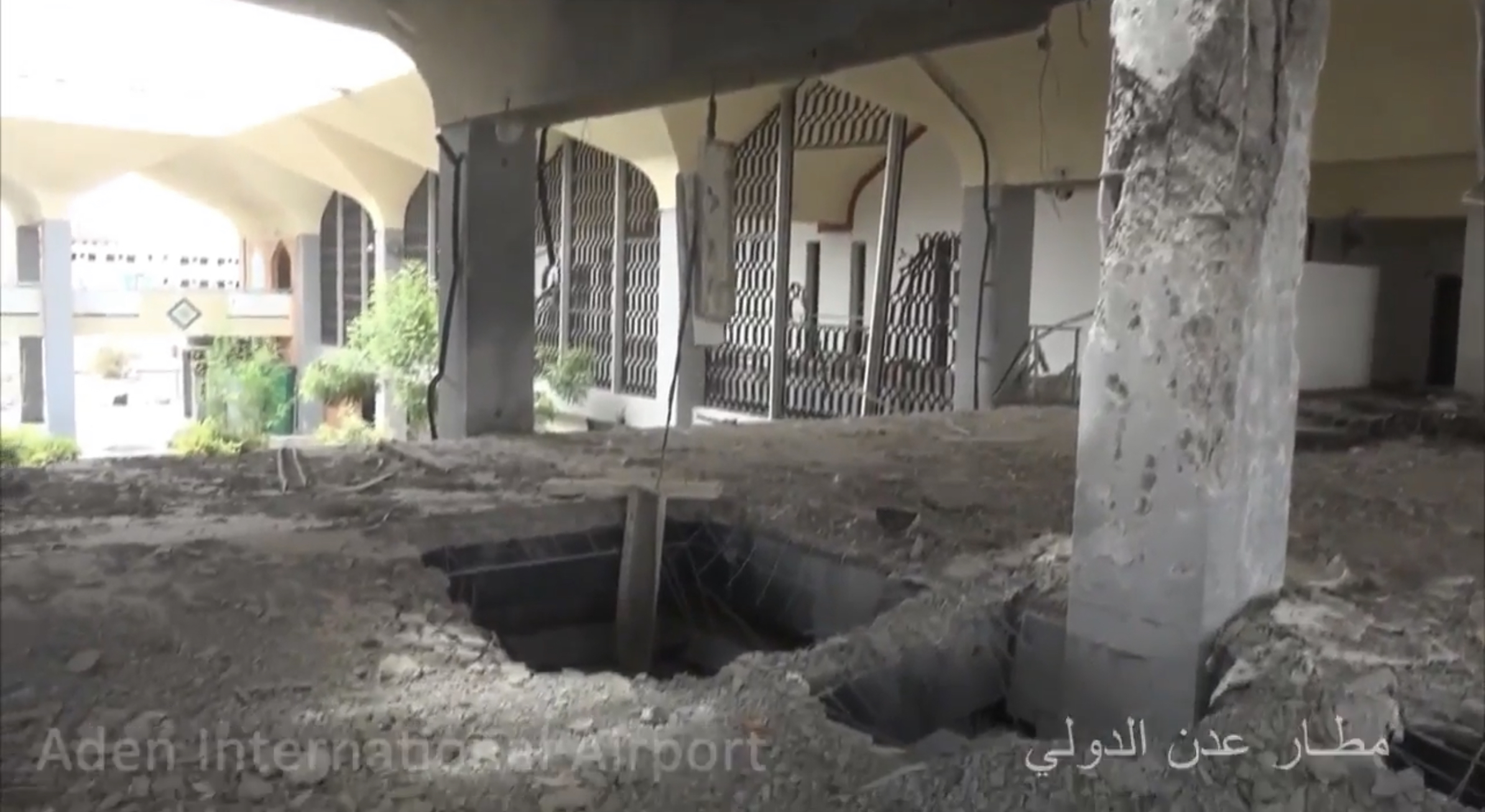
Wednesday’s warning lands on a city struck again and again since the summer collapse of the truce that had held, in some form, since 2022. On October 7, missiles hit Aden airport itself: projectiles landed near the runway, a Yemenia Airways flight was diverted to Jeddah, the terminal was evacuated, and no casualties were reported — the attack we covered in our report on the first Aden airport strike of October. On October 16, the airport was struck again, with missiles landing about 500 metres from a passenger aircraft preparing for departure — the second strike, which we reported as Saudi Arabia intercepted a missile bound for Yanbu. The presidential palace compound was attacked in mid-October, and on October 24 Houthi missiles hit Coast Guard facilities in Khormaksar and Tawahi — the Coast Guard attack, the fourth strike on the city in weeks.
Read as a sequence, October in Aden is a ladder: the airport on the 7th; the airport again on the 16th, closer to a loaded airliner; the seat of government itself; then the Coast Guard, the state’s maritime arm, in two districts at once. Wednesday adds a rung of a different type — not a new target, but a new method: the announced threat, delivered in advance, against the target at the top of the list. The Houthis have now struck the airport twice and publicly ordered it emptied once, in three weeks.
Why this matters
First, because an evacuation warning against a civilian airport is itself an act of coercion, whether or not anything is ever fired. A warning costs the side issuing it nothing. It costs the other side an airport: passengers scatter, staff leave, airlines reassess, insurers reprice, and the government must either defy the threat publicly or comply with it visibly. If flights stop, the Houthis will have closed their enemy’s airport without spending a missile. That dual-use quality — genuine notice and a cost-free weapon at once — makes the tactic effective, and hard to answer.
Second, because of what this airport is. Reuters describes it as a humanitarian lifeline and a gateway for southern Yemen, and the description is literal: it is the recognised government’s main air link for officials, aid workers, medical travellers and the diaspora whose remittances keep households alive. The alternative, Sanaa airport, sits in Houthi-controlled territory. Every day Aden’s airport is closed or feared closed, the south’s connection to medicine, aid logistics and the outside economy narrows to roads and sea lanes that are themselves contested — so a threat against the airport is also a threat against the humanitarian operation that runs through it.
Third, because the warning-before-strike pattern has a history in the region’s wars, and signals position on an escalation ladder. Armed forces in the region have repeatedly issued public evacuation calls before major operations — framed by their issuers as civilian protection, by their critics as psychological warfare and legal cover prepared in advance. A group that warns first addresses several audiences at once: civilians are told to move, the enemy is told a strike can come at a chosen time, mediators are shown a lever that can be left unpulled, and the record is told that what happens next was announced. Wednesday’s warning fits that grammar; what it does not reveal is whether the Houthis intend to climb the next rung, or to be seen standing on this one.
Fourth, because civil aviation absorbs risk in ways that outlast any single incident. Airlines and insurers do not wait for a direct hit; they respond to patterns, and Aden now has one — two strikes and a public evacuation order in under a month, one strike landing 500 metres from a passenger jet. Yemenia kept flying through October, diverting a flight to Jeddah on October 7 rather than cancelling the route. Whether it keeps flying after a direct, named threat is one of the fastest tests of what Wednesday changed.
Who gains, who loses
The angles are not symmetrical. The Houthis gain leverage either way the day resolves: disruption without expenditure if the airport empties, and a prepared justification if it does not. The Aden government loses either way: it must spend authority defying a threat it cannot intercept in advance, or obeying one it did not issue. Saudi Arabia, named in Saree’s allegation, is pressed to answer for an aircraft whose presence it has not acknowledged; its silence declines the invitation to argue on the spokesman’s terms.
Critics of the Houthis argue that a public order to empty a civilian airport is a threat against civilian infrastructure by another name, and that no allegation about a single cargo aircraft converts a passenger terminal into a legitimate target; the group has now twice struck the airport this month, once near a boarding airliner. Critics of the Saudi-led coalition answer differently: that Yemen’s airports have been shaped by a decade of war in which the coalition itself restricted Sanaa’s airport for years, and that military use of facilities around Aden follows from the coalition’s own footprint in the south. Both critiques belong to this long war’s record, and both are claims about responsibility — to be held separately from Wednesday’s narrow verified facts.
The airport in numbers
By Signal Post News’ count of its October coverage, Aden’s facilities have been attacked four times in October 2026: the airport on October 7, the airport again on October 16, the presidential palace compound in mid-October, and Coast Guard facilities in Khormaksar and Tawahi on October 24. Wednesday’s evacuation order is the fifth hostile act directed at the city in the period, and the first made of words rather than munitions. One of the two airport strikes put missiles within about 500 metres of a passenger aircraft; the October 7 attack forced a diversion to Jeddah and a terminal evacuation; across the month’s airport strikes, no casualties were reported at the airport itself. Behind the count sits a structural fact: Yemen’s two principal international airports sit on opposite sides of the war, Sanaa in Houthi hands and Aden in the government’s, so pressure on Aden is pressure on the only gateway the recognised government fully controls.
What happens next
Three scenarios cover most of what could follow, read as scenarios, not predictions. In the first, a strike follows the warning: the evacuation call becomes the opening move of an attack on the airport or the alleged aircraft. In the second, the warning is the whole operation — pressure without a strike, designed to close or chill the airport and demonstrate reach at no cost; the story would then be measured in cancelled flights and quiet insurance decisions rather than damage. In the third, the day de-escalates through response: a Saudi or Yemeni statement addressing the cargo-aircraft allegation, an airport announcement that operations continue, and flights departing on schedule as a deliberate show of normalcy, as Aden’s authorities have done after previous attacks.
The indicators to watch are concrete: any Saudi statement addressing Saree’s allegation; Yemenia’s schedule over the next 48 hours, the clearest real-time measure of the warning’s effect; statements from the airport authority and the Aden government, showing defiance or compliance; and the movement decisions of humanitarian agencies operating through Aden.
For now, the verified core of Wednesday’s story is small and should not be inflated: explosions were heard in Aden; the Houthis ordered its airport emptied and blamed a Saudi cargo plane they say was there; Saudi Arabia has not commented; nobody has been reported hurt; and the airport has not been confirmed hit. Everything else — what exploded, whether the plane exists, whether a strike is coming — remains unproven. In a month in which Aden has been attacked four times, an unproven warning is still a serious event. But it is a warning, and reporting it as anything more would be its own kind of escalation.
Sources
- Reuters, October 28, 2026: “Yemen’s Houthis call for immediate evacuation of Aden airport.” reuters.com
- Sky News Arabia, October 28, 2026: report of the Houthi call to evacuate Aden airport (10:39 UTC).
- Yahya Saree, Houthi military spokesman, statement on X, October 28, 2026 (the evacuation call and the Saudi cargo aircraft allegation, attributed to him as a claim).
- Signal Post News prior coverage: the October 7 Aden airport strike; the October 16 Aden airport strike and Yanbu intercept; the October 24 Coast Guard headquarters attack.