War · Black Sea
The Black Sea ship drone attack campaign struck again on Wednesday, this time in the middle of a meeting called to stop it. Three naval drones hit the container ship Contship Jet off Bulgaria’s northern coast while the defence ministers of Bulgaria, Romania and Turkey were discussing Black Sea security in Sofia — and Turkey’s minister used the occasion to deliver Ankara’s most direct warning yet to both Russia and Ukraine. The crew was evacuated and no injuries were reported. Nobody has claimed the attack, and it was not clear on Wednesday who carried it out.
Track it live: Live war tracker — follow the war in Ukraine and the widening Black Sea shipping crisis as they develop, including the Ukraine war map.
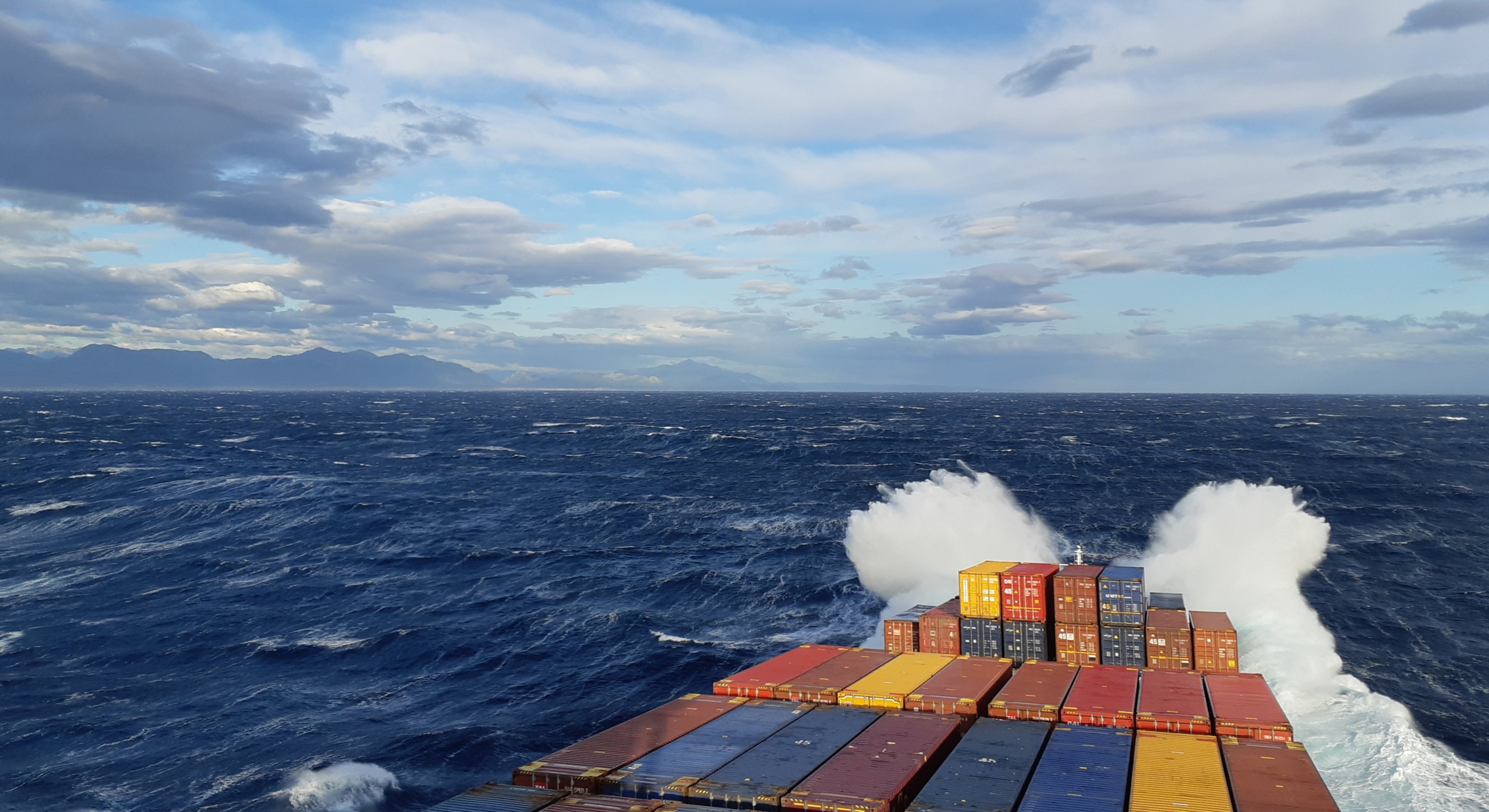
SOFIA — Sea drones struck a container ship off Bulgaria on Wednesday, Defence Minister Dimitar Stoyanov said, in the latest of a series of attacks on merchant vessels in the western Black Sea that have killed or left missing dozens of international seafarers in recent weeks. “A container ship was hit…with 3 naval drones, approximately 21 miles southeast of Shabla,” Stoyanov said, according to Reuters, placing the strike inside Bulgaria’s exclusive economic zone, off the country’s northern coast near the Romanian border. The ship was a Greek container vessel sailing under the Liberian flag, and a maritime security source told Reuters its crew had been evacuated. Bulgaria’s national radio reported that a tanker was sent to assist the stricken vessel.
The ship was en route from Haifa, Israel, to Constanța, Romania, Reuters reported — a routine commercial run between two ports that have nothing to do with the war, along a coast that now does. Rapporteur, the Euractiv network’s news service, independently identified the vessel as the CONTSHIP JET and reported that three maritime drones struck her at 12:46, about 21 nautical miles off Bulgaria’s northern coast, and that her crew evacuated to life rafts with no injuries reported. The vessel’s Greece-based owner and manager, Contships Management, did not immediately respond to a request for comment, Reuters said. And on the question that hangs over every one of these attacks, both reports were equally blunt: it was not clear who carried out the strike.
A meeting interrupted
The timing gave the attack a symbolism no communiqué could have scripted. Stoyanov made the announcement after hosting his Romanian and Turkish counterparts, Stefan-Radu Oprea and Yasar Guler, in Sofia for talks on Black Sea security — talks convened, in large part, because merchant ships keep getting hit in the waters all three countries share. “While this meeting was going on, a container ship was hit,” Stoyanov said, according to Rapporteur. Three NATO defence ministers sat down to discuss how to protect civilian shipping, and while they were in the room, another civilian ship was struck some 21 miles off the Bulgarian coast. The ministers were, in effect, briefed by events.
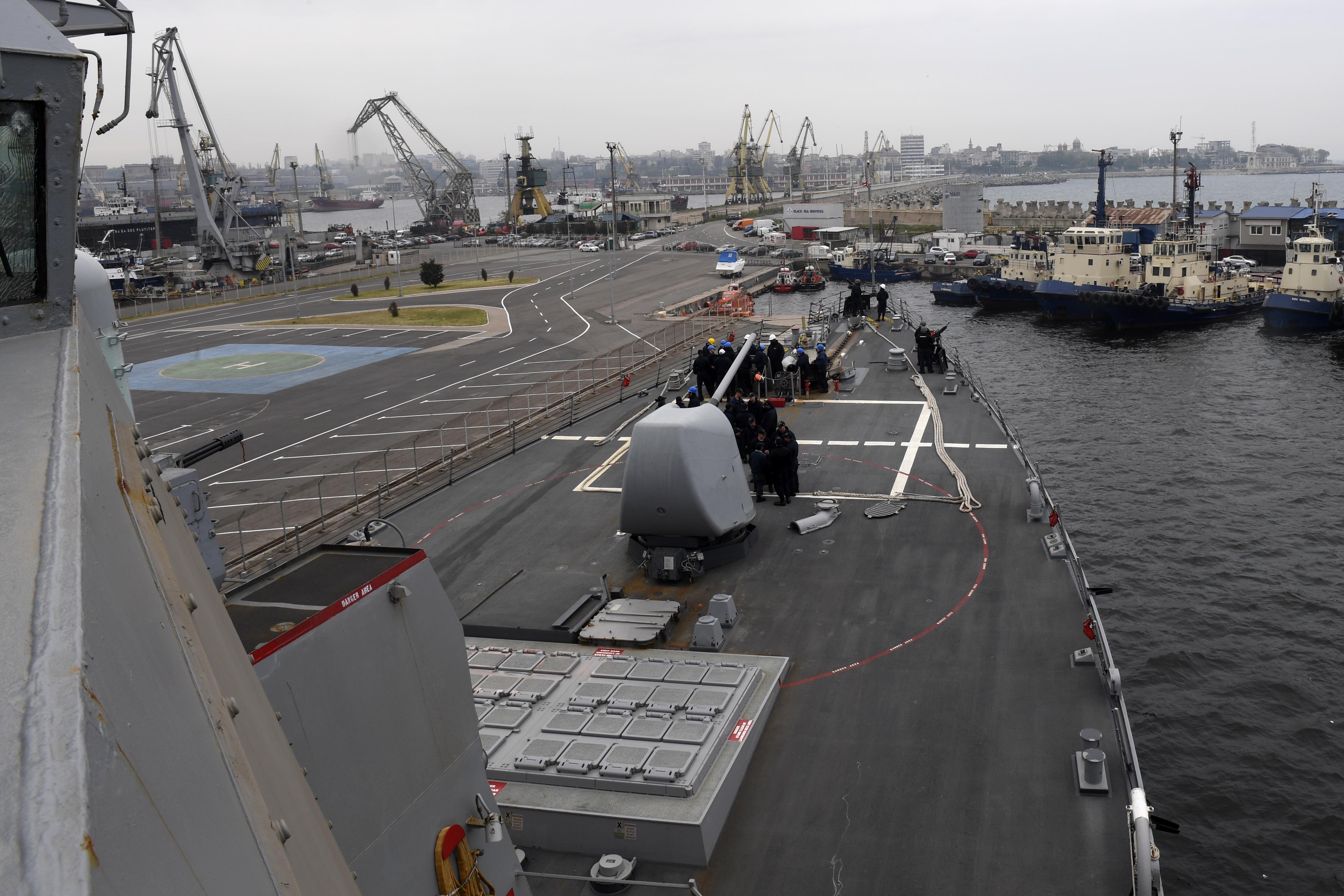
What came out of the meeting, beyond the alarm, was machinery. The three ministers agreed to establish a trilateral coordination mechanism, Rapporteur reported, with political talks to be held in Bucharest and military expert meetings in Ankara — an attempt to turn three national responses into one shared operating picture for a sea where drones, mines and missiles have made the western shipping corridor a war-risk zone. Romania’s Oprea called the strikes a “dangerous escalation of the risks posed by Russia’s aggressive war against Ukraine,” Rapporteur reported, and pointed to his own country’s exposure: Romania has shot down six drones during air-policing missions this year and is strengthening its counter-drone and mine-countermeasure capabilities. Bulgaria, Romania and Turkey are the alliance’s three Black Sea littoral states, and Wednesday’s strike landed in the waters of one of them while the other two were sitting in its capital.
Turkey’s warning: a red line, addressed to both sides
The second development of the day may prove the more consequential. Turkish Defence Minister Yasar Guler, standing in Sofia, warned Russia and Ukraine against further attacks on commercial vessels and said Ankara reserved the right to take legal action — Turkey’s most direct intervention to date, Reuters reported. Turkey has repeatedly called on both sides to halt Black Sea attacks that have also struck Turkish-flagged and Turkish-owned vessels, and Ankara is still waiting for responses to a proposal it conveyed to Russia and Ukraine to stop the intensifying attacks and ensure the safe shipment of grain.
“We follow with concern the intense attacks on commercial vessels in the Black Sea and call on the sides to act with common sense, in line with the principle of navigational safety in open seas,” Guler said, according to Reuters. “We also reserve every legal right regarding attacks on Turkish-flagged or Turkish-owned vessels.” Rapporteur reported the same message in sharper language: Guler called the security of Black Sea trade routes an “inviolable red line” and said Ankara was warning “both sides.” The symmetry is deliberate and significant. Turkey controls the Bosphorus and the Dardanelles, the Black Sea’s only outlet; it has kept a working relationship with both Kyiv and Moscow throughout the war; and it brokered the earlier grain arrangements that kept Ukrainian exports moving. When Ankara addresses a warning to both capitals in the same sentence, it is spending diplomatic capital it has carefully hoarded — and signalling that the attacks are beginning to cost Turkey itself, in hulls, in trade and in the safety of the straits it guarantees.
The toll, kept in two counts
Wednesday’s crew was lucky. The wider campaign’s crews have not been, and the numbers deserve to be stated exactly as their sources state them, because the two principal counts in circulation do not match and should not be blended into one. Reuters reported on Wednesday that drone attacks on merchant ships off Bulgaria have likely killed some two-dozen international seafarers in recent weeks, and that at least six merchant vessels have been attacked. Rapporteur put the same campaign differently: three earlier vessels have since sunk, and around 20 sailors are missing. Those are different measures from different newsrooms — one an estimate of the dead across all the attacks, the other a count of the missing from the sinkings — and the gap between them reflects how hard these incidents are to tally: crews are multinational, reporting is fragmented across three countries, and men listed as missing are not the same as men confirmed dead. What both accounts agree on is the direction: a campaign measured in weeks has produced a casualty list measured in dozens, drawn overwhelmingly from third-country merchant crews who signed on to move cargo, not to sail through a conflict.
The Contship Jet’s clean outcome — crew off the ship, into life rafts, no injuries reported — is therefore the exception that proves the pattern’s danger. A container ship hit by three naval drones in daylight, close enough to shore for a tanker to be sent to her aid, is a survivable incident. The same strike at night, further offshore, in worse weather, or against a laden tanker, is a mass-casualty event. That arithmetic, more than any single hull, is what has moved the argument in Sofia, Bucharest and Ankara from concern to coordination.
Who is responsible? The attribution question
No party has claimed Wednesday’s attack, and no government has formally attributed it. That restraint has limits, and they were visible in Wednesday’s reporting. Ukraine has blamed the attacks on Russia, Reuters reported. Bulgarian Prime Minister Rumen Radev has said the attacks appear to benefit Russia; Rapporteur, summarising the Bulgarian position, reported that Sofia has not formally named the attacker, though Radev has said the evidence points towards Russia. Moscow has denied involvement. Romania’s Oprea, in the words Rapporteur carried, framed the strikes as an escalation of the risks posed by what he called Russia’s aggressive war against Ukraine.
Those positions should be read for what they are: accusations, inferences and denials, not findings. No public evidence dossier — recovered drone fragments, radar tracks, signals intelligence — has been published for the Contship Jet or, so far, for the earlier sinkings, and the government closest to the wreck, Bulgaria’s, has stopped short of a formal attribution even while its prime minister says the evidence points one way. The evidentiary question matters beyond blame: a formal attribution by a NATO member, backed by wreckage and data, would change the alliance’s decision-making in a way that ministerial concern does not. Until then, the honest account of Wednesday is the one Reuters led with — a ship was hit, the crew survived, and it was not clear who did it.
Bulgaria’s answer: missiles, and a seat inside the shield
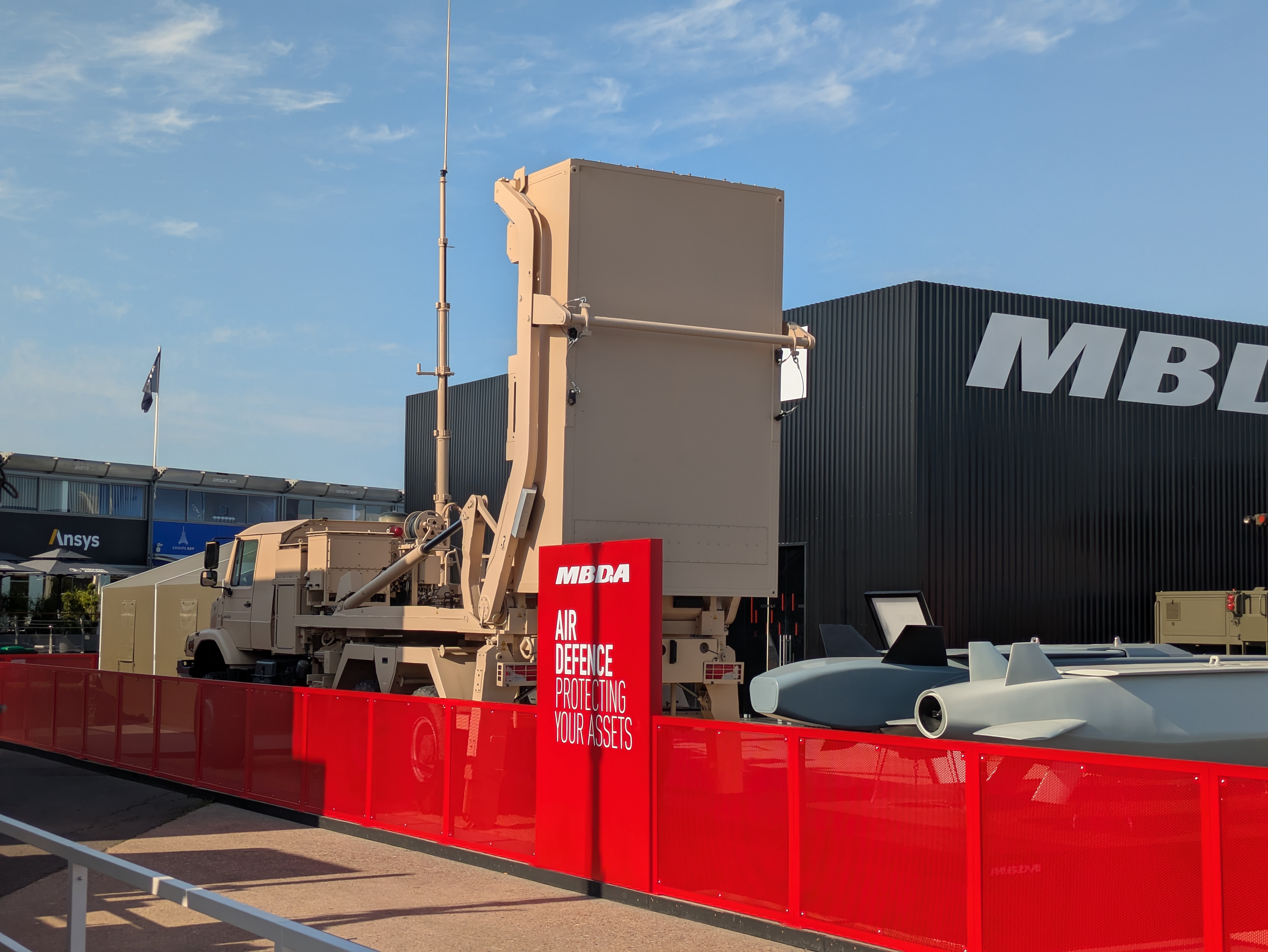
Sofia did not spend Wednesday only reacting. Bulgaria’s cabinet approved joining a multinational counter-drone initiative launched by the defence ministers of Belgium, Denmark, Finland, Greece, Romania, Sweden and Turkey, Rapporteur and Bulgarian National Radio/BTA reported — entry by diplomatic note, pending ratification. The cabinet also approved Bulgaria’s entry into a Franco-Danish framework for the joint procurement of VL MICA air-defence systems, including 32 missiles for the navy’s multipurpose patrol vessels, financed through the European Union’s 150-billion-euro Security Action for Europe (SAFE) defence loan scheme. Parliament must still approve the spending, and no price was disclosed.
The two decisions are the procurement shadow of the morning’s diplomacy, and they connect directly to the coverage this site published earlier this month: Bulgaria had already asked NATO for jets and drone defences and expected to join the alliance’s anti-drone initiative by October 30, as we reported in Bulgaria’s push to join the NATO anti-drone initiative after two sinkings off its coast. Wednesday’s cabinet votes move that intention into formal process — a diplomatic note for the counter-drone initiative, and a missile purchase designed to give Bulgarian patrol vessels their own air-defence umbrella rather than leaving the coast’s protection to allied aircraft and shore batteries alone. VL MICA is a short-range air-defence system; 32 missiles is a starter inventory, not a shield wall. But for a navy whose patrol ships sail the same waters where drones are now hitting merchantmen in daylight, it is the difference between watching for drones and being able to answer them.
Context: a month of attacks on the western Black Sea
Wednesday’s strike was not an isolated incident but the latest entry in a sequence this newsroom has tracked through October. Drone attacks struck merchant shipping off Bulgaria on October 6 and again on October 13, when the HS Dignity sank with 11 sailors missing and the Chelsea 3 was hit — the night that pushed Bulgaria towards the NATO anti-drone initiative, covered in our report on the twin attacks on the Chelsea 3 and the HS Dignity. Days later, the cargo ship Khoryv was sunk by a drone off Constanța, in Romanian waters — see our coverage of the Khoryv sinking off Constanța. Read together, the incidents describe a campaign with a consistent geography and a quickening tempo: foreign-flagged merchant ships, hit by uncrewed systems, in or near the waters of the two NATO states that host Ukraine’s alternative export corridor, at a rate of roughly one attack a week and accelerating.
The geography is the strategic point. Since the collapse of the earlier grain arrangements, Ukraine’s seaborne trade has leaned on a coastal corridor hugging Romanian and Bulgarian waters to Constanța and the Danube ports — a route that works precisely because it sails under the umbrella, however informal, of NATO’s shoreline. Attacks inside that umbrella test whether the umbrella means anything. Each strike asks the same question in a new form: whether the alliance will treat the protection of civilian shipping in its members’ waters as a core task, with standing patrols, shared sensors and rules of engagement to match, or as a series of national incidents to be regretted one hull at a time. Wednesday’s trilateral mechanism, and Bulgaria’s missile and counter-drone decisions, are the littoral states’ attempt to force the first answer before a seventh, eighth or ninth ship makes the second one untenable.
Why this matters
Three things make Wednesday larger than one damaged container ship. The first is legal and human: the victims of this campaign are civilian crews of many nationalities sailing commercial routes, and the law of the sea that protects them is only as strong as the consequences for breaking it — which is why Turkey’s reservation of “every legal right” over attacks on its flagged and owned vessels is more than rhetoric. It is a flag state announcing, in advance, that it will treat the next attack on a Turkish hull as a claim, not just a tragedy. The second is economic: the western Black Sea corridor carries the exports of one of the world’s major grain producers, and war-risk insurance prices risk, not intentions. Every additional strike raises the premium on every sailing, and at some point the arithmetic of insurance, not the arithmetic of navies, closes the corridor. Ankara’s stalled proposal — conveyed to both Russia and Ukraine, still awaiting responses, aimed at stopping the attacks and ensuring safe grain shipment — is aimed at exactly that threshold.
The third is about escalation management inside NATO. Bulgaria, Romania and Turkey are coordinating among themselves first — a trilateral mechanism, talks in Bucharest, experts in Ankara — rather than waiting for the full alliance to move. That is both practical and telling: the states with hulls in the water are building the response at the speed of the threat, and the alliance’s wider machinery will be asked to ratify what the littoral three design. It also lowers the temperature deliberately. A trilateral coordination mechanism is a step short of convoys, escorts or an Article 4 confrontation, and it gives every capital — including Moscow and Kyiv, the two addressees of Turkey’s warning — an off-ramp that does not require anyone to climb down in public.
What happens next
The immediate questions are maritime ones. The Contship Jet’s condition, and whether she proceeds to Constanța under her own power or with assistance, will say something about the damage three naval drones do to a modern container ship; her owner had not commented by Wednesday evening. The trilateral mechanism now has dates to meet: political talks in Bucharest and military expert meetings in Ankara, where the unglamorous substance — shared radar pictures, patrol coordination, who shoots at what, and under whose orders — will either become real or remain a communiqué. Bulgaria’s parliament must still approve the VL MICA spending, and the counter-drone initiative entry awaits ratification, tests of whether Wednesday’s cabinet urgency survives contact with legislatures.
Above all of it sits the unanswered proposal in Ankara. Turkey has asked Russia and Ukraine to stop the attacks and guarantee safe grain shipment, and is still waiting for replies. If either capital answers — or if the attacks simply pause — Wednesday may read, in retrospect, as the day the littoral states organised themselves faster than the campaign against their shipping. If an eighth vessel is hit, the argument changes again: legal claims reserved become legal claims filed, coordination mechanisms acquire escorts, and a campaign that has so far killed seafarers without a single admitted author will have forced NATO’s Black Sea states to decide what their umbrella is actually for. The Contship Jet’s crew came home on Wednesday. The question the next ship’s crew is sailing into is whether anyone has made sure they will too.
Sources: Reuters (October 28, 2026) on the strike on the container ship off Shabla, the evacuation and the vessel’s Haifa–Constanța route; Reuters (October 28, 2026) on Turkey’s warning to Russia and Ukraine and Ankara’s pending proposal; Rapporteur (Euractiv network, October 28, 2026) on the identification of the Contship Jet, the Sofia trilateral meeting and Bulgaria’s counter-drone and VL MICA decisions; Bulgarian National Radio / BTA (October 28, 2026) on the Sofia talks and cabinet approvals. Casualty figures are stated separately as reported by Reuters and by Rapporteur and have not been merged. No party has claimed the attack on the Contship Jet, Bulgaria has not formally attributed it, and Moscow has denied involvement in the campaign, as reported above.