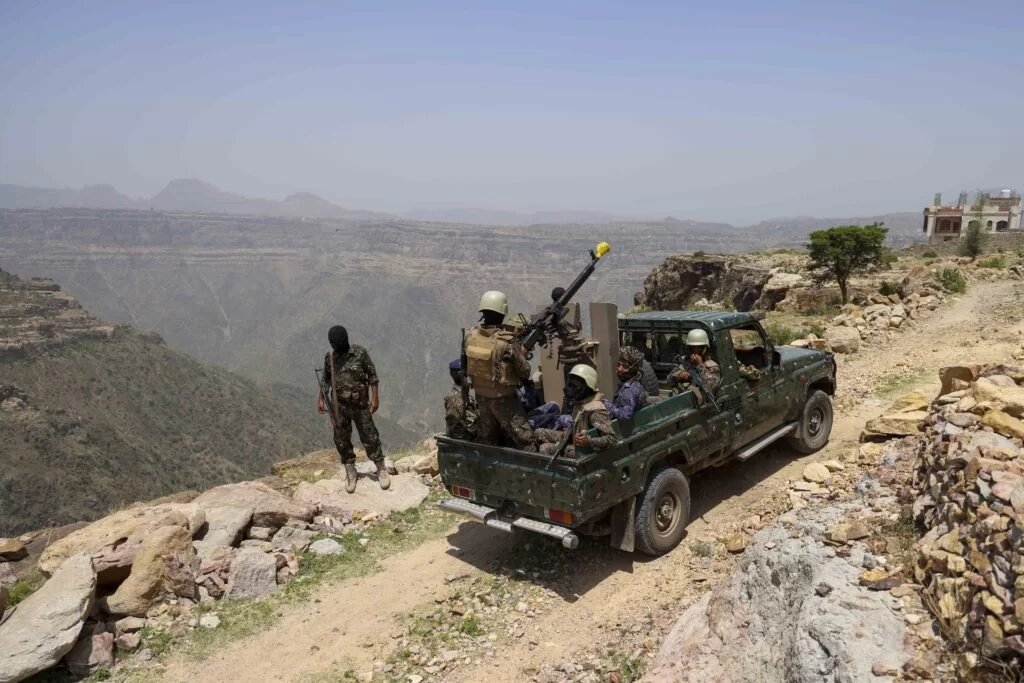
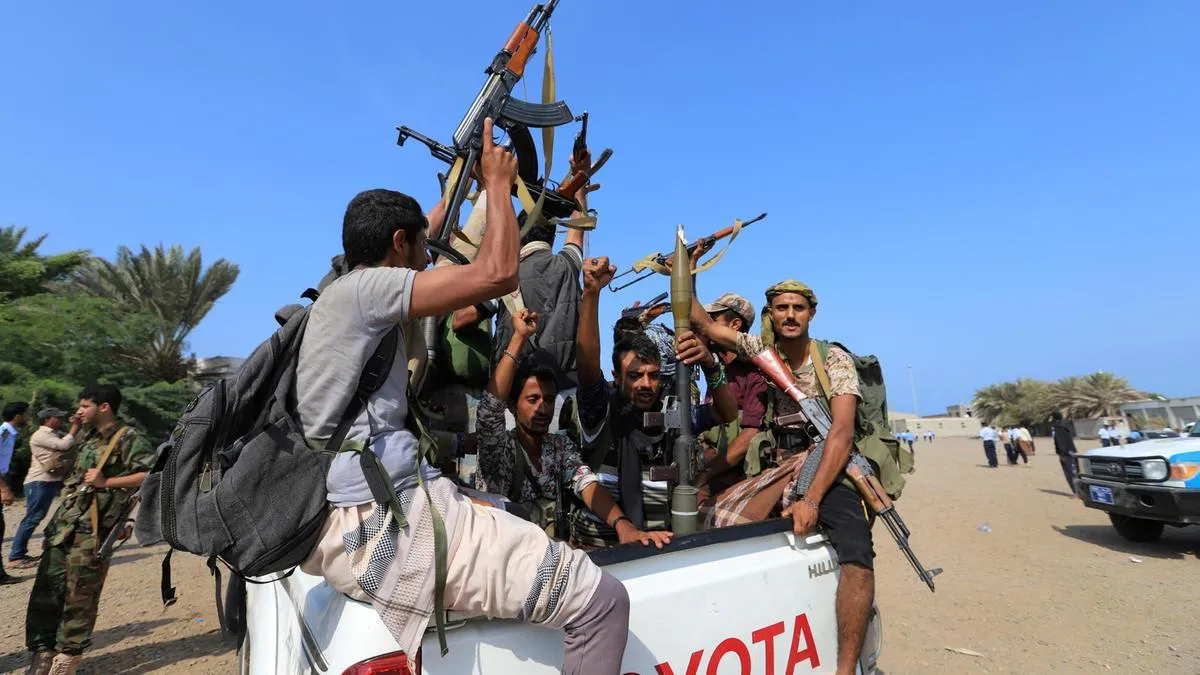

Saudi airstrikes Yemen civilian deaths became the defining phrase of a rapidly widening war after reports said a residential house in Mocha and a prison in Al-Jawf were struck within hours of each other. Xinhua, in a report republished by The Business Standard, said three Saudi airstrikes hit a home in Mocha in Taiz province early on September 22, killing six people—including two children and a woman—and wounding eight. Houthi-run Al-Masirah television aired footage that it said showed the aftermath. Signal Post News could not independently verify the site, casualty count or the provenance of the footage.
In Al-Hazm, the capital of Al-Jawf, IANS reported through The Freedom Press that a Saudi strike on the night of September 21 hit a prison and killed nine detainees captured in the recent fighting. Abdul Qader al-Murtada, the Houthi movement’s prisoner-affairs chief, announced that claim on X and said names would follow. The identity of the dead, the prison’s status and the circumstances of the strike were not independently verified. Saudi Arabia issued no immediate comment on either the Mocha house report or the Al-Jawf prison report.
Other reported casualties deepened the Al-Jawf picture. Nation Press said strikes on telecommunications towers killed four workers and injured three on September 21. Xinhua, in a separate account republished by Antiwar.com, reported that a woman and child were killed when another civilian home was hit. These are attributed reports from a battlefield where outside access is restricted; they should not be read as a single independently audited casualty list.
More than 150 dead in two days
AFP reported Houthi military officials saying at least 118 people had been killed since Sunday across Taiz, Al-Jawf, Marib and Saada. AFP separately cited Yemeni government sources saying at least 36 government fighters were killed. Deutsche Welle put the combined two-day toll at more than 150, based on officials from both sides. The figures may overlap and neither belligerent has supplied a complete name-by-name accounting, but they describe a sharp increase in the tempo and lethality of the war.
The before-and-after comparison is stark. United Nations reporting cited earlier in the escalation put the cumulative toll at roughly 700 dead over a longer period; more than 150 in two days would amount to over one-fifth of that earlier total compressed into roughly 48 hours. This comparison does not prove a new steady daily rate. It does show that the current fighting has moved beyond intermittent exchanges into a concentrated offensive-and-retaliation cycle.
The Houthis’ Yemeni Armed Forces, or YAF, claimed Saudi Arabia carried out 157 airstrikes and missile attacks on September 22 and 917 since the escalation began. Those numbers come from a party to the war and have not been independently verified. Even so, the claimed 917-strike count, measured against the lower tempo that followed the 2022 truce, is intended to convey both scale and political grievance. It is also a messaging weapon: a high count helps the movement frame its cross-border attacks as retaliation rather than initiation.
Retaliation spreads across Saudi Arabia
The Cradle, citing YAF and Al-Masirah, reported air-raid sirens in Najran, Asir, Jizan, Abha, Jeddah, Yanbu and Al-Ula amid claimed Houthi missile and drone attacks. Signal Post News has not independently verified that all of those places were attacked or that claimed targets were hit. The geographic spread nevertheless illustrates the pressure Saudi planners must account for: border provinces, the Red Sea coast, an oil-export hub and major population centers can all be named in the same retaliation cycle.
A September 19–20 attempt to strike Riyadh had already shown the strategic reach at issue. The earlier Signal Post News report on Houthi attacks toward Riyadh set out competing Saudi and Houthi accounts and noted that Houthi claims of successful strikes on sensitive sites and Aramco facilities remained unverified. The latest wave raises the same evidentiary problem at greater scale: sirens and official statements can establish an alert or a claim, but not necessarily impact, damage or casualties.
Homes, prisons and the law of war
The Mocha and Al-Hazm reports put civilian protection at the center of the escalation. International humanitarian law requires parties to distinguish civilians and civilian objects from military objectives, to take feasible precautions and to avoid attacks expected to cause civilian harm excessive in relation to the concrete and direct military advantage anticipated. A residence is presumptively civilian. A prison is also a protected civilian object unless and for such time as it is used in a way that makes it a military objective.
Detainees remain protected persons. Capturing fighters does not make the building holding them a free-fire zone, and an attacker must account for their presence in proportionality and precaution assessments. At the same time, the legal judgment in any specific strike depends on facts not yet public: what intelligence identified the target, whether military operations were being directed from it, what weapons were used, what warnings or precautions were feasible, and whether the expected civilian loss was disproportionate. The available reporting supports investigation, not a final legal verdict.
The same standard applies to Houthi vessel attacks. Human Rights Watch warned on September 15 that several recent Houthi attacks on commercial shipping likely amounted to war crimes because civilian vessels and crews are protected. Its warning is relevant to the current exchange: neither a Saudi strike allegation nor a Houthi claim of retaliation cancels the other side’s obligations. Law follows the target and the conduct, not the flag.
How Yemen returned to full-scale war
Yemen’s civil war has lasted about 12 years. The Houthis seized Sanaa in 2014, and a Saudi-led coalition intervened in March 2015 on behalf of the internationally recognized government. The 2015–2022 air campaign produced a large civilian toll, damaged homes, markets, hospitals and infrastructure, and became a defining source of criticism of the coalition. The exact aggregate varies by monitor and methodology, but the historical comparison is essential: every new house or detention-site allegation is assessed against years in which air power repeatedly harmed civilians.
A U.N.-brokered truce in April 2022 sharply reduced major fighting and cross-border attacks, even after its formal term expired. That relative calm collapsed in July 2026. The September sequence then accelerated: Houthi forces seized Mocha on September 10, followed by Dhubab and Mayyun, or Perim Island, on September 11; Saudi strikes hit on September 19–20; and a Houthi offensive toward the Kahboub Mountains opened on September 21.
The Kahboub Mountains fighting matters because high ground can protect or isolate the coastal gains. If Houthi forces consolidate the ridges and roads behind Dhubab and Perim, those positions become harder to dislodge. If Saudi-backed forces hold or retake the heights, they can threaten the supply lines that turn a dramatic coastal seizure into a durable military position.
Britain has also entered the operational picture by providing Royal Air Force air-to-air refuelling support for Saudi Arabia. That assistance does not establish British participation in any particular strike, but it creates a direct political question about mission limits, target oversight and what assurances London has received. President Donald Trump reportedly called off planned U.S. airstrikes, while Secretary of State Marco Rubio reiterated U.S. support for Saudi Arabia. The combination—British enabling support, American restraint and American political backing—shows an allied posture that is neither full disengagement nor direct entry into the air campaign.
Why Bab al-Mandab is now the strategic center
For much of the war, Yemen’s decisive geography lay around Sanaa, Marib and the Saudi border. The September coastal offensive has shifted the center of gravity toward Bab al-Mandab. The strait connects the Red Sea to the Gulf of Aden and carries about 6% of global seaborne oil, according to RocketNews. Mocha, Dhubab, Perim and the Kahboub highlands form a connected military map around its eastern side.
Control of territory does not automatically close the strait. It can, however, improve observation, create launch options, protect coastal deployments and raise the cost of passage. Insurers respond to credible attack capability before a waterway is physically blocked. Carriers can divert around the Cape of Good Hope, but that adds time, fuel, crews and vessel capacity. The Bab al-Mandab Red Sea crisis therefore transmits through freight rates and insurance long before it shows up as an empty chokepoint on a map.
The Houthis may also see coastal control as negotiating leverage. A movement able to threaten shipping and Saudi energy routes can demand more than one confined to Yemen’s interior. That leverage has limits: attacks on civilian vessels can harden international opposition, justify counterstrikes and expose Houthi-held infrastructure. The strategic gain is real only if the movement can hold terrain without triggering a coalition capable of reversing it.
The Saudi restraint-versus-retaliation dilemma
Two Yemeni officials told Reuters, in reporting relayed by Profile News, that Riyadh wanted to avoid a broader escalation because of the risk from Houthi drones. Saudi officials did not respond to Reuters. That posture explains the kingdom’s dilemma. Restraint can protect cities, airports and oil infrastructure from another round of retaliation, but it may also allow Houthi territorial gains to harden. Retaliation can slow advances and reassure Saudi-backed forces, but it risks civilian casualties, diplomatic damage and more attacks inside the kingdom.
The air campaign’s immediate winner, if strikes disrupt Houthi forces without provoking successful retaliation, would be Saudi-backed government troops contesting the coast and highlands. The Houthis benefit if civilian deaths and an expanding strike count strengthen recruitment, unify supporters or improve their negotiating case. Neither gain is guaranteed. Critics of Riyadh argue that the 2015–2022 record shows air power cannot produce a stable political order. Critics of restraint argue that leaving Mocha, Dhubab, Perim and Kahboub uncontested would hand the Houthis a durable choke-point position.
Oil prices: the transmission mechanism
The Yemen war oil prices link does not require a direct hit on a tanker. RocketNews reported that a Houthi drone attack forced the shutdown of Saudi Arabia’s East-West pipeline, the route designed to move crude from eastern fields to the Red Sea coast and bypass the Strait of Hormuz. If the pipeline or Yanbu route is unavailable while Bab al-Mandab is risky, exporters lose redundancy and more barrels become exposed to whichever passage remains usable.
Brent crude reached roughly $107–$110 a barrel in mid-September, according to Reuters reporting carried by Profile News, before easing below $100 in later reporting by the Maltese Herald. That retreat shows markets had reduced the immediate worst-case premium; it does not mean the underlying infrastructure or shipping risk disappeared. RocketNews cited a Goldman Sachs scenario of $120 oil if hostilities persist. A scenario is not a forecast, but it identifies the transmission chain: attacks or shutdowns reduce route flexibility, traders add a risk premium, refiners pay more for feedstock, diesel and freight costs rise, and oil-importing economies absorb the bill through transport, food and inflation.
Who wins, who loses—and what the numbers mean
Civilians lose first. Residents near front lines and strike sites face immediate death and injury; families then lose housing, income, schools and access to care. Deutsche Welle reported that the United Nations says more than 125,000 people have been displaced in recent weeks. An earlier benchmark was more than 120,000. The increase of at least 5,000 is modest beside the total but severe in operational terms: every new family needs transport, shelter, water, documents and protection in a response already stretched thin.
The separate Signal Post News analysis of the Yemen displacement crisis in 2026 reported an even higher UNHCR figure of more than 130,000 since September began and a warning that another 100,000 could flee within three months. Different publication cutoffs and U.N. products can produce different totals. They should not be blended into a false precision. The consistent finding is direction: displacement is rising rapidly across multiple governorates.
Oil importers and shipping lose next. A higher risk premium functions like a tax collected by insecurity rather than government. Shipowners pay more to insure vessels, importers pay more for cargo, and consumers ultimately absorb part of the increase. Shipping companies can gain short-term revenue from longer routes and tight vessel supply, but crews face greater danger and customers pay more. The Houthis may gain leverage from the threat to trade; Saudi Arabia may gain tactical effect from air superiority. Both can lose strategically if escalation locks them into costly commitments and international criticism.
The contested strike numbers require similar discipline. A claimed 917 Saudi strikes is not comparable one-for-one with the reported 150-plus dead; many strikes may hit empty terrain, air-defense sites or repeated targets, while one strike can kill many people. Nor can the two-day toll be assumed to continue. What the pair shows is saturation: a very high claimed operational tempo alongside a casualty spike large enough to overwhelm local medical and documentation systems.
What happens next
- Kahboub consolidation. Watch whether Houthi forces can hold the mountains and roads behind their coastal gains. Verified control of the heights would make Mocha, Dhubab and Perim more defensible and increase bargaining leverage; a government counteroffensive could split the coastal position from inland supply.
- Dhubab and Perim watch. Vessel advisories, insurer notices and evidence of launch infrastructure will matter more than rhetoric. A confirmed attack launched from or protected by the new positions would change the maritime-risk calculation.
- UNGA diplomacy. U.N. General Assembly week gives Saudi, U.S., European, Iranian and Omani diplomats a channel for de-escalation. The first credible sign would be a defined pause covering cross-border attacks, airstrikes and humanitarian access—not a broad statement without monitoring.
- U.S. posture under diesel-price pressure. Washington must weigh support for Saudi defense against the inflationary effect of a widening energy war. If diesel prices rise, pressure for restraint will intensify even as officials seek to deter attacks on Saudi territory and commercial shipping.
- Humanitarian access. Roads, telecom links, detention sites and displacement centers are immediate tests. Independent access to Mocha and Al-Hazm could verify casualty claims, identify detainees and preserve evidence. Without it, partisan accounts will harden faster than facts.
The most important distinction is between leverage and control. The Houthis can threaten a chokepoint without closing it; Saudi Arabia can fly hundreds of sorties without determining the political end state; outside powers can refuel aircraft or cancel strikes without stopping the war. The two-day death toll shows the cost of that gap. Military tools are multiplying faster than the diplomatic mechanism needed to contain them.
Sources and reporting notes
- Xinhua via The Business Standard: reported Mocha residential strike, six deaths, eight wounded and Al-Masirah footage
- IANS via The Freedom Press: Houthi claim that an Al-Hazm prison strike killed nine detainees
- AFP-sourced report: casualty claims from Houthi military officials and Yemeni government sources
- Deutsche Welle report: more than 150 killed over two days and U.N. displacement figure above 125,000
- Profile News: Reuters-sourced Saudi restraint reporting, oil-market context and Red Sea geography
- Nation Press: reported deaths of four telecommunications workers in Al-Jawf strikes
- Human Rights Watch, September 15: attacks on commercial vessels and international-humanitarian-law concerns
Reporting cutoff: September 23, 2026 at 11:15 a.m. PDT. Strike locations, casualty figures and attack counts attributed to Houthi officials, Houthi-run media, YAF, AFP sources or other parties have not been independently verified by Signal Post News. Government-side casualty figures are attributed to AFP’s Yemeni government sources. Saudi Arabia issued no immediate comment on the reported Mocha house strike or Al-Hazm prison strike. Comparisons and scenario analysis are Signal Post News calculations and judgments based on the cited figures.