What happened
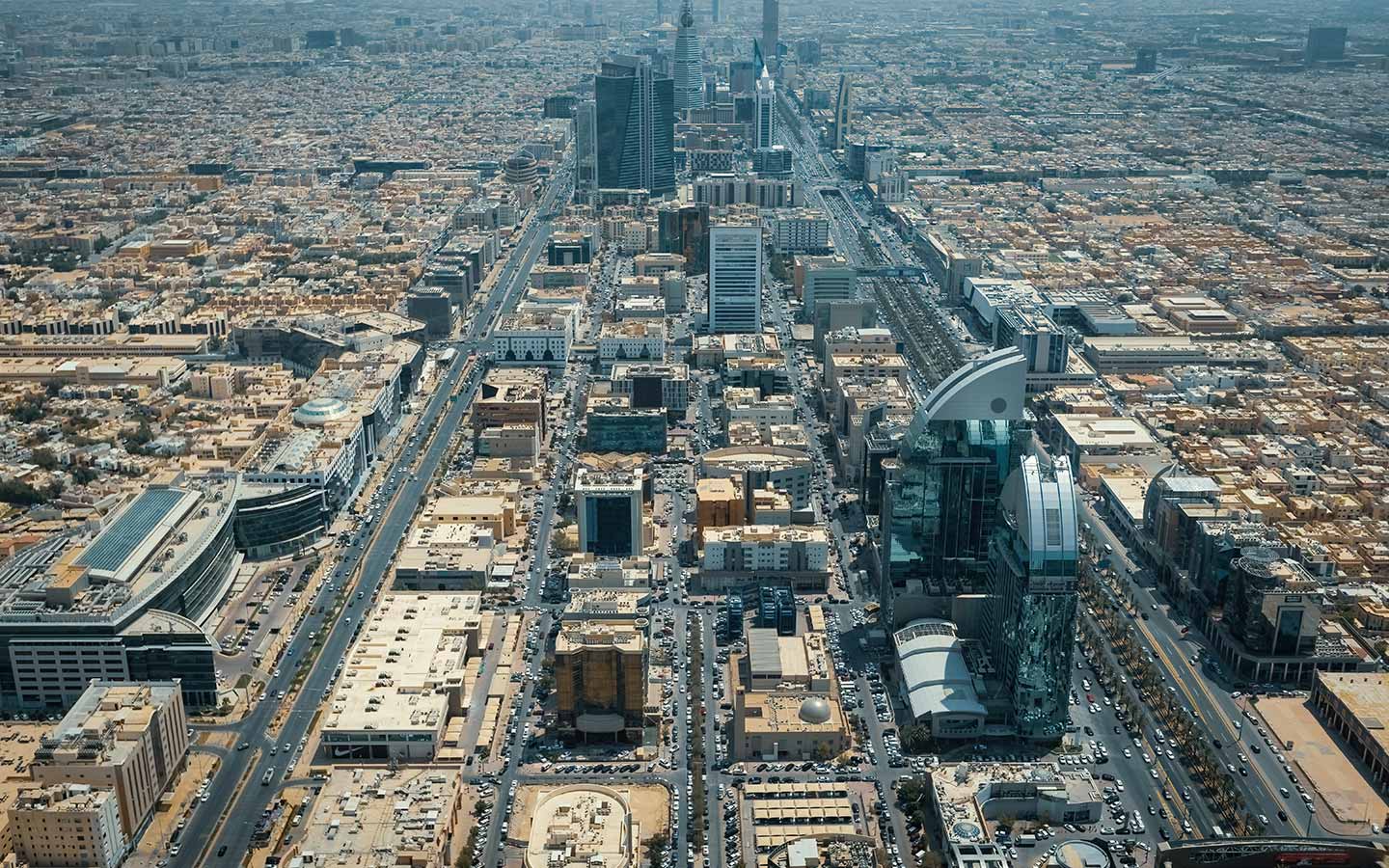
According to the Saudi-led coalition fighting in Yemen, air defense systems intercepted a ballistic missile launched by Yemen's Houthi rebels toward Riyadh in the early hours of Saturday. Residents of the capital reported hearing an explosion, and a plume of smoke was later observed near King Khalid International Airport. Saudi authorities reported no casualties and no damage from the interception, and released few additional details.
The coalition also said Houthi forces attempted attacks on civilian infrastructure in Yanbu, Taif, Baysh and Farasan, and that those attempts were thwarted. The Houthis offered a sharply different account: their military spokesperson, Brig. Gen. Yahya Saree, said the group had targeted what he called "sensitive sites" in Riyadh and facilities belonging to the state oil company Aramco in Yanbu, and claimed the strikes caused major fires. He provided no evidence, and the claims could not be independently verified. Aramco did not comment.
Saree said the group used ballistic and cruise missiles as well as drones, and alleged — again without supporting detail — that Saudi Arabia had attempted to strike Sanaa, the Houthi-held Yemeni capital. The competing claims, issued within hours of each other, illustrate how little independent visibility exists into a confrontation now being fought largely through dueling communiqués.
A week of rapid escalation
Saturday's attempted strike did not come out of nowhere. On Thursday, Saudi civil defense authorities reported the first civilian death linked to the latest hostilities: debris from an intercepted Houthi drone killed a Yemeni resident living in Saudi Arabia. A day earlier, Riyadh accused the Houthis of attempting a drone attack on Mecca — an allegation the group denied.
The exchange follows what the New York Times has described as a Houthi push to expand territory inside Yemen, including the capture of Mokha and islands near the Bab el-Mandeb Strait, one of the world's most important shipping chokepoints. Those gains, if confirmed, would strengthen the group's ability to monitor vessels transiting between the Red Sea and the Gulf of Aden.
The United States responded on Saturday with a worldwide caution urging Americans to reconsider travel to and through West Asia, warning of possible rapid escalation, flight disruptions and attacks targeting US interests. The State Department said the security environment "remains complex with the potential for unforeseen escalation," and noted that Iran and groups supportive of Tehran could target American interests, businesses and institutions overseas. For Saudi Arabia specifically, the department maintains a Level 3 "Reconsider Travel" advisory. Qatar's Foreign Ministry separately condemned the Houthi launches as a "blatant violation" of Saudi sovereignty and a breach of international law.
How we got here
The Houthis, a movement drawn from Yemen's Zaidi Shia minority, seized Sanaa in 2014, prompting a Saudi-led military intervention in March 2015 that has made Yemen one of the world's worst humanitarian crises. Riyadh is no stranger to Houthi missiles: in November 2017 the group fired a ballistic missile toward King Khalid International Airport, and further attempts followed through 2018 and 2019, most of them intercepted by Patriot batteries.
A UN-brokered truce in April 2022 brought the heaviest fighting to a near halt. The current round marks the breakdown of that relative calm. What has changed is the regional backdrop: the confrontation is now unfolding alongside a wider Iran-related conflict, which both Riyadh and Washington cite when describing the stakes. The Houthis are described by the United States and Saudi Arabia as backed by Iran — a characterization Tehran has historically downplayed, and one that shapes how every incident is read in Washington and Gulf capitals.
Why this matters
A missile aimed at a capital of roughly 7 million people is a different category of event from strikes on border provinces, and both sides know it. For Riyadh, the interception is a demonstration that its layered air defenses still work — but also a reminder that they must work every single time, while an attacker only needs to succeed once. The smoke seen near the kingdom's busiest airport, whatever its precise cause, was visible to ordinary residents in a way that no communiqué can manage.
The reported targeting of Yanbu matters for a second reason: energy geography. Yanbu is the western terminus of Saudi Arabia's East-West pipeline, the conduit that lets Saudi crude reach the Red Sea without passing through the Strait of Hormuz. A credible threat to that infrastructure would reverberate through oil markets far beyond the region — which is precisely why the Houthis would claim it, and precisely why the claim demands independent verification before it moves prices or policy.
Competing narratives
Saudi Arabia's account is straightforward: an act of aggression against its capital and civilian infrastructure, defeated by its defenses, legitimizing further defensive and retaliatory measures. The kingdom's framing emphasizes sovereignty and civilian protection.
The Houthi account inverts the sequence: Saree described the launches as retaliation for a Saudi attack on Sanaa, casting the group as responding rather than initiating. The group has repeatedly said it will continue operations as long as it perceives Saudi pressure on its positions in Yemen. Neither side's account of who struck first in this round has been independently corroborated.
The US position is a third, distinct one: de-escalation in rhetoric, protection of citizens in practice. The travel advisory commits Washington to no military course of action, but it raises the political cost of any attack on American interests — effectively drawing a line without deploying anything new. Qatar's condemnation, meanwhile, reflects a Gulf consensus that has largely held despite the blockade years: when Saudi territory is hit, the Gulf states close ranks publicly.
What the numbers tell us
Distance is the crucial figure here. Riyadh sits roughly 900 to 1,000 kilometers from Houthi-held territory in northern Yemen, depending on the launch point — a range that puts the attack in the medium-range ballistic missile category and implies a meaningful advance over the shorter-range systems the group fielded a decade ago. Whether through indigenous development, external supply or both is a matter of active dispute among analysts, and none of the weekend's official statements resolved it.
The human toll so far is small in absolute terms — one reported civilian death from falling debris on Thursday — but the direction of travel is what alarms observers. The 2022 truce years saw near-zero cross-border strikes; the current round has produced attempted strikes on the capital, the holy city of Mecca (alleged and denied), and Red Sea port infrastructure within a single week. That compression of the escalation timeline is the genuinely new fact.
What happens next
Three scenarios are plausible, and they are not mutually exclusive. The first is retaliation: Saudi coalition forces retain the capacity for airstrikes on Houthi launch sites, command nodes and logistics, and past rounds suggest a response is likely. The second is a return to back-channel diplomacy — Saudi Foreign Minister Prince Faisal bin Farhan has previously said the door to diplomacy is not closed, and Oman has historically mediated between the parties.
The third is the most dangerous: a sustained tit-for-tat in which each round normalizes a higher level of violence, drawing in Red Sea shipping, energy infrastructure and eventually outside powers. The Houthis' reported gains around the Bab el-Mandeb give them leverage over global trade that they did not possess in 2015; using it would invite a much broader response.
Sources
New York Post, "Saudi Arabia confirms Yemen's Houthi rebels tried to attack its capital with ballistic missile," September 20, 2026: Read the report
DNTWOK, "Saudi Arabia Says It Intercepted Houthi Ballistic Missile Targeting Riyadh," September 20, 2026: Read the report
Press Rundown, "Saudi Arabia Confirms Houthis Tried to Attack Riyadh With a Missile," September 2026: Read the report
Open Chronicle, "Saudi Arabia Intercepts Houthi Ballistic Missile Targeting Riyadh as Regional Conflict Escalates," September 20, 2026: Read the report
ANI via Industries News, "Qatar strongly condemns Houthi attacks on Saudi Arabia," September 21, 2026: Read the report