Russian attacks Ukraine September 2026
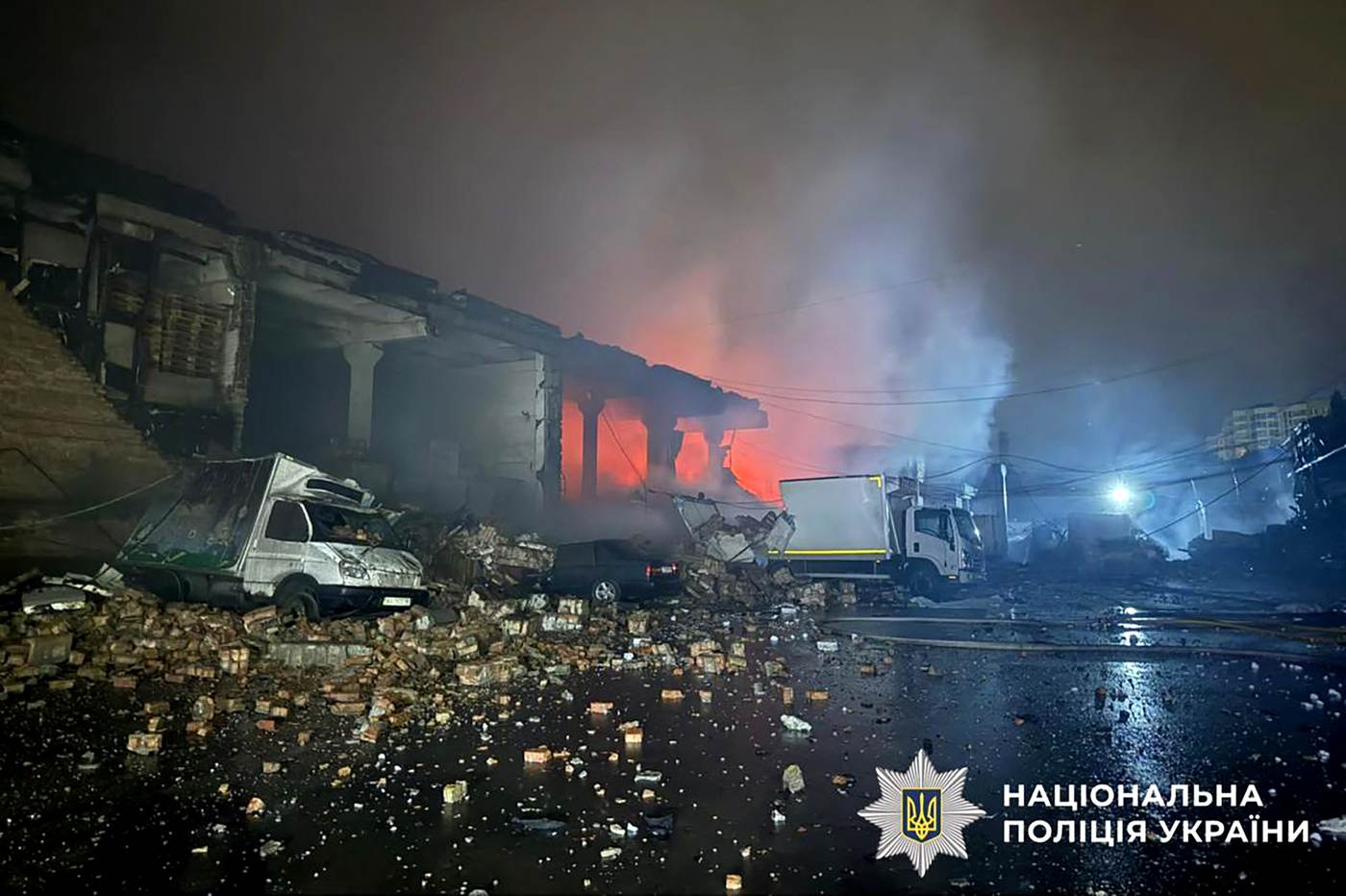
A Russian strike hit an agricultural enterprise at Stara Hnylytsia, southeast of Kharkiv, on the morning of September 24 while employees were sorting vegetables inside a storage facility, according to Ukrainian officials and AFP reporting. Six people were killed and 12 injured. Prime Minister Sergiy Koretsky first announced seven deaths. His spokesman later revised the number to six, bringing the government’s account into line with emergency services. That correction is important: the six-death figure is the latest reported total at this cutoff, not evidence that the initial report was fabricated, and casualty figures can still change as identification and medical work continue.
Images published by the regional prosecutor’s office showed apples scattered across the floor of the destroyed warehouse and a large opening in the roof. Prosecutors said preliminary information indicated the weapon was a Banderol. That identification has not been presented as a final forensic finding. Banderol is generally described as a relatively low-cost cruise-missile/attack-drone hybrid that can be launched in volume, complicating interception and forcing defenders to spend scarce air-defense capacity across many possible targets.
The strike landed during the week of the U.N. General Assembly, when leaders were arguing in New York over ceasefire terms and the costs of another winter of war. The U.N. Human Rights Monitoring Mission in Ukraine said at least 200 civilians were killed and 1,234 injured from September 1 through September 24. Verification was continuing, and the mission expected the totals to rise. The simultaneity is the central fact: diplomacy was active, but it did not impose a pause.
Why this matters
The Stara Hnylytsia deaths matter first because the victims were doing ordinary agricultural work. A facility where people sorted food became a lethal site within minutes. Danielle Bell, head of the U.N. Human Rights Monitoring Mission in Ukraine, summarized the civilian pattern directly: “Workers have been killed while sorting vegetables. Families have been caught beneath the rubble of their homes.”
Bell added: “This is 48 hours in Ukraine, and it comes after months of mounting civilian casualties.” Her formulation connects a single scene to a broader acceleration. The U.N. cited strikes affecting shopping centers, pharmacies, food warehouses and fuel stations—places whose civilian function is visible even when a belligerent alleges a nearby military purpose.
The attack also exposes three kinds of vulnerability at once. Human vulnerability is obvious in the deaths and injuries. Economic vulnerability follows because damage to farms, storage sites and transport can destroy work, food and income far beyond the blast radius. Strategic vulnerability appears when repeated, relatively inexpensive weapons compel Ukraine to protect cities, electricity, rail, communications and industry with a limited inventory of interceptors.
The direct losers are the workers and their families, the wounded, the surrounding agricultural community and civilians living under repeated alerts. Russia may gain a short-term military advantage if strikes force Ukraine to disperse defenses or slow logistics, but attacks that produce visible civilian loss also strengthen Kyiv’s case for more foreign air defense. Ukraine’s long-range attacks can impose refinery and repair costs inside Russia, yet they also expose Russian civilians and infrastructure to greater risk and can harden Moscow’s support for retaliation. The beneficiaries are therefore narrow and provisional; the losses are immediate and widely distributed.
How we got here
September’s violence followed a summer escalation in which both sides increasingly targeted systems that sustain military operations and civilian life. Russia continued striking Ukraine’s grid, fuel network, transport, urban neighborhoods and other civilian locations. Ukraine increased attacks inside Russia, including reported strikes on refineries at Ufa and Samara, seeking to reduce fuel output, raise repair costs and pressure the revenues that support the war.
That reciprocal infrastructure campaign does not make every target equivalent, and it does not erase the legal obligation to distinguish military objectives from civilians and civilian objects. It does explain the strategic logic each side says it is pursuing: attack the opponent’s capacity behind the front when ground fighting produces no decisive break. Our report on Kyiv data-center strikes and internet disruption shows how contested descriptions of infrastructure can determine whether a site is framed as military support or a civilian lifeline.
The political backdrop moved to New York. Zelenskyy used his September 23 General Assembly speech to argue that Ukraine would retaliate and make winter painful for Russia if Moscow would not accept reciprocal restraint. His proposed exchange was specific: Ukraine would stop attacks on Russian refineries if Russia stopped attacks on Ukraine’s energy system. The wider case in his U.N. General Assembly address was that outside governments could not treat the war as background noise.
Secretary of State Marco Rubio and Russian Foreign Minister Sergei Lavrov discussed a limited grain-and-energy ceasefire, but the diplomatic overlap remained narrow. At the Security Council, Russia rejected pressure for an immediate pause while Ukraine and supporting states demanded one. The Security Council dispute over Lavrov’s “no pause” position captures the contradiction: the parties can explore sector-specific restraint while remaining far apart on territory, sequencing, security guarantees and the meaning of a broader ceasefire. The Kremlin said there were no grounds for peace talks, even as it maintained that it remained open to talks.
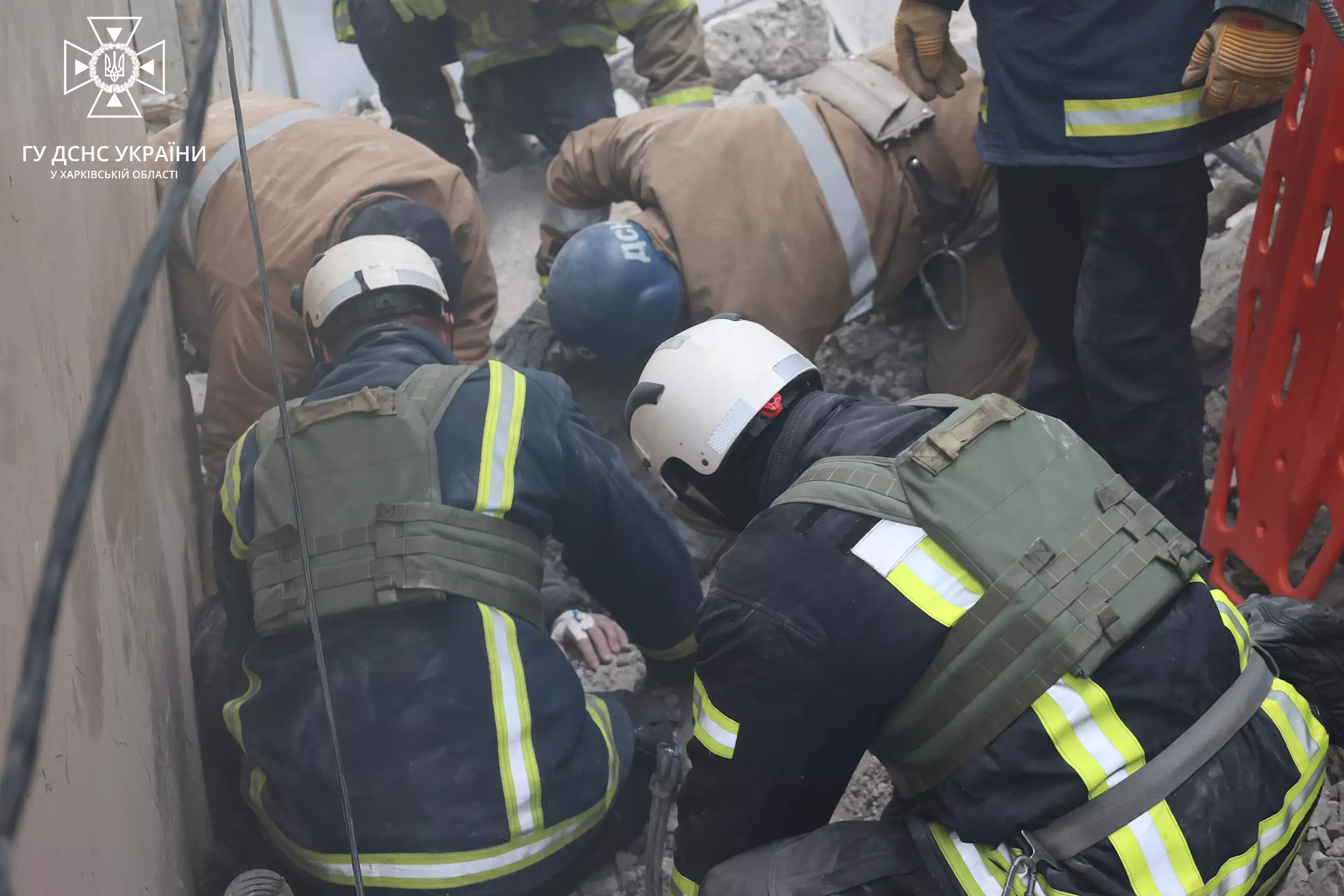
Three ways to read one warehouse
As a civilian workplace. The immediate evidence describes people sorting vegetables in a storage facility. That is the default factual frame unless reliable evidence establishes that the site had acquired a military function. A warehouse can be economically useful and still remain civilian; wartime proximity to transport routes or industry does not automatically turn it into a lawful target.
As an economic node. Agricultural storage links farms to markets. Destroying the building can eliminate inventory, interrupt wages, burden transport and make nearby producers search for replacement capacity. Those secondary effects are difficult to calculate from early imagery, so no monetary estimate is assigned here. But their direction is clear: the harm does not end with the blast.
As a test of the air-defense contest. A preliminary Banderol identification would fit a campaign in which low-cost weapons are mixed with faster or more destructive missiles to saturate sensors and interceptors. Defenders must choose what to engage, preserve expensive ammunition for the highest-risk threats and cover a vast geography. Attackers benefit whenever a cheap incoming weapon draws a costly interceptor—or slips through because no interceptor is available. Civilians bear the consequence of that arithmetic.
Those readings can coexist. Calling the site a workplace does not settle every military question; describing it as part of an economy does not prove why it was struck; discussing air-defense pressure does not excuse civilian loss. The correct analytical discipline is to keep verified facts, official claims and inference separate.

The numbers, in context
The U.N. mission’s minimum for September 1–24—200 civilians killed and 1,234 injured—equals at least 1,434 recorded casualties in 24 days, or nearly 60 per day on average. An average is not a prediction and does not mean violence was evenly distributed. Large attacks can produce sudden spikes, while delayed verification can move casualties into the total after the day on which they occurred.
Kyiv recorded civilian casualties on 16 of the first 24 days of September, the highest monthly frequency since the full-scale invasion began, according to the U.N. mission. Frequency describes how often residents faced lethal or injuring attacks; it is different from the number killed in any one strike. The metric matters because repeated smaller incidents can produce sustained fear, service disruption and pressure on emergency crews even when no single event dominates headlines.
Odesa also endured repeated attacks, while the U.N. documented harm at shopping centers, pharmacies, food warehouses and fuel stations. The pattern spreads risk across daily routines: obtaining medicine, buying food, going to work, refueling a vehicle or sleeping at home. It also strains response capacity because crews cannot assume the next strike will fall in the same district or target the same kind of site.
The same caution applies to Russian territory. Ukraine stepped up long-range strikes, and Russian local authorities reported rising civilian casualties. Those claims require independent checking, particularly during active hostilities, but civilian-protection rules do not change at the border. A balanced assessment records harm on both sides while recognizing that the invasion and the scale and geography of the campaigns are not symmetrical.
What happens next
Analysis — Winter energy war deepens. The most direct continuation is an intensified exchange against refineries, power generation, substations, fuel storage and logistics as temperatures fall. Russia would seek to degrade Ukrainian electricity and heating; Ukraine would seek to reduce Russian fuel production and impose costs far from the front. This path rewards dispersal, repair speed and air-defense endurance, but leaves civilians most exposed to blackouts and service failures.
Analysis — Limited energy truce through the Trump channel. A narrower bargain remains conceivable because both sides can define a reciprocal exchange without resolving the war: Ukraine halts refinery strikes while Russia stops attacks on the Ukrainian energy system. The Trump channel could supply political sponsorship and pressure, with Rubio–Lavrov contacts handling details. The hard problems are definitions, monitoring and response to an alleged violation. Whether ports, fuel depots, data centers and dual-use facilities are covered would decide whether the arrangement meaningfully reduces civilian risk or merely moves the target list.
Analysis — Grinding continuation and an air-defense race. If diplomacy produces no enforceable restraint, the likely baseline is continued strikes alongside incremental reinforcement of Ukraine’s defenses. Patriot interceptors remain central against some ballistic threats, but inventories and launch capacity are limited. France has said radar systems and additional missiles are being transferred under its air-defense roadmap; President Emmanuel Macron also announced in New York a contract for radars and interceptors. The type, quantity and delivery schedule of the September contract were not specified, so the pledge should not be counted as an immediate or quantified shield.
None of these paths is predetermined. A truce can emerge from mutual vulnerability, but the same vulnerability can also encourage a race to inflict pain before winter. The next indicators are practical: whether talks produce written definitions and monitoring, whether strike patterns around energy sites change, whether promised interceptors and radars arrive, and whether U.N.-verified civilian casualties begin to fall rather than merely fluctuate.
Sources
- AFP report: Stara Hnylytsia agricultural-enterprise strike and casualty revision
- U.N. Human Rights Monitoring Mission in Ukraine: September civilian-casualty update
- U.N. News: mounting civilian casualties and Danielle Bell’s assessment
- Reuters via The Business Standard: Zelenskyy’s reciprocal energy-strike proposal
- Le Monde: Zelenskyy’s U.N. address and defense of Ukrainian strikes
- Élysée: Macron’s France–Ukraine air-defense roadmap address
- Reuters: Macron announces a radar-and-interceptor contract after meeting Zelenskyy
Reporting basis: Fixed September 24, 2026 cutoff. Civilian casualty totals were still being verified and were expected to rise. The Stara Hnylytsia death toll was revised from an initial seven to six; six is the latest reported figure used here. The Banderol identification is preliminary. Russian and Ukrainian military claims are attributed, and forward scenarios are clearly labeled as Signal Post News analysis.