Russia strikes Liberian ship Odesa
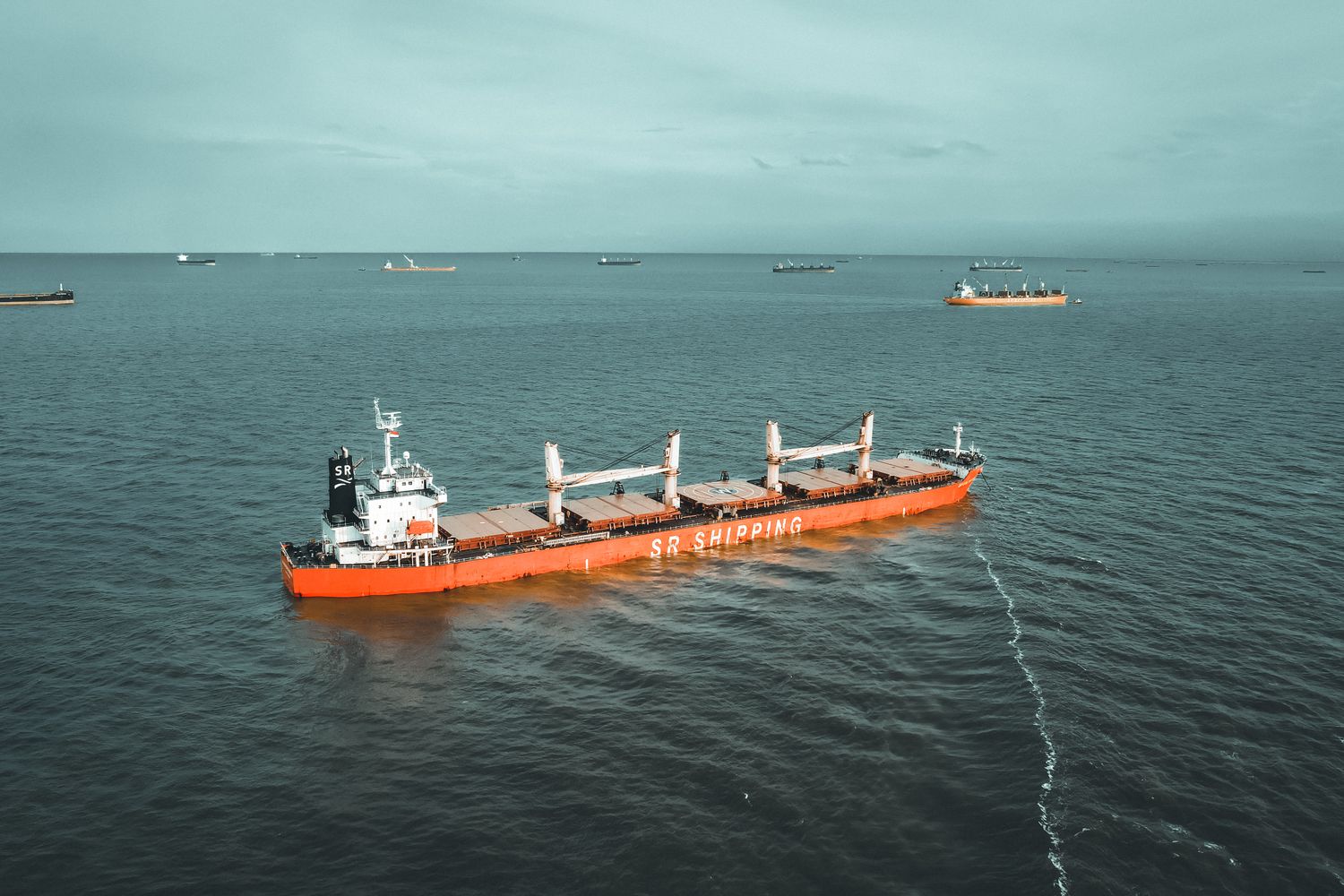
The vessel was a civilian cargo ship sailing under the flag of Liberia, the world’s most common ship registry, when it came under attack at one of the Black Sea ports in the Odesa region. Ukraine’s Sea Ports Administration (USPA/AMPU) announced the toll on Telegram on Saturday: one person killed, three injured, and 13 evacuated to safety. Neither the authority nor the Reuters report that confirmed the casualty figures identified the vessel, the specific port, the crew’s nationalities, or the nature of its cargo.
Russia’s defence ministry later confirmed it had carried out the strike, according to the Interfax news agency. Moscow said the vessel was transporting military cargo and had violated a naval blockade Russia says it has declared on Odesa. Ukraine did not respond to that claim. The circumstances could not be independently verified — a caveat that now applies, in some form, to nearly every reported incident at sea in this war.
Why this matters
This was not the sinking of a warship, and that is precisely the point. The ship was, on Ukraine’s account, an ordinary merchantman — a motorman, an engine-room rating doing shift work, is now dead. When civilian shipping becomes a regular target, the damage is not measured in hulls but in behavior: insurers reprice, owners reroute, crews refuse to sail, and a country’s export economy degrades without a single warship needing to exchange fire.
Odesa’s ports are Ukraine’s economic lifeline. Before the full-scale invasion, roughly two-thirds of the country’s trade by volume moved through Black Sea ports; grain and steel are the two exports that matter most, and both leave by sea. Reuters noted that Russia’s renewed blockade since the summer has disrupted trade routes, reduced grain and steel exports, and dealt a heavy blow to the Ukrainian economy. Each strike on a foreign-flagged vessel sends a message that the port is not merely contested — it is a place where showing up can get your crew killed. The economic warfare is the point; the missile is just the punctuation.
There is a second, quieter significance. Flag states matter in maritime law: a Liberian-flagged ship is Liberian jurisdiction on the high seas and in port, and Liberia is not a party to this war. Striking it — even if Moscow’s military-cargo claim were true, which remains unverified — drags neutral third-party shipping into the crossfire and tests how far the international community will go to defend the principle that merchant vessels are not targets. That principle has been eroding in two seas at once this autumn: the wave of tanker attacks in the Strait of Hormuz is the same story playing out in a different strait.
How we got here: from the grain deal to a renewed blockade
The Black Sea has been through this cycle before. In July 2022, the UN- and Turkey-brokered Black Sea Grain Initiative briefly guaranteed safe passage for grain ships out of Odesa; Russia walked away from the deal in July 2023 and immediately began treating Ukrainian ports as military targets. Ukraine answered by carving out a unilateral “maritime corridor” hugging the western coastline, which — improbably — kept grain flowing. For three years it mostly worked: ships came, insurers stayed, and Ukraine’s exports recovered to something approaching pre-war volumes.
Summer 2026 broke that equilibrium. Reuters reports that Russia effectively renewed its blockade of Ukraine’s Black Sea ports, and the strike tempo changed with it. Turkey’s IMEAK Chamber of Shipping now counts at least 226 civilian and commercial vessels hit in the Black Sea since the full-scale invasion began in February 2022 — and roughly 70 percent of those attacks, about 163 of them, happened in the first eight months of this year alone. The arithmetic is stark: in eight months of 2026, the Black Sea saw more strikes on commercial vessels than in the previous four years combined.
London’s marine insurers have responded the way insurers do: they recently expanded the area classified as high risk to cover the entire Black Sea. That designation is not symbolic. It triggers war-risk premiums, notice requirements, and in some policies outright exclusions — costs that flow directly into freight rates and, eventually, into the price of Ukrainian grain on world markets. The corridor is still open, but every strike makes it narrower in the only sense that counts: the commercial one.
Two accounts, one unverifiable claim
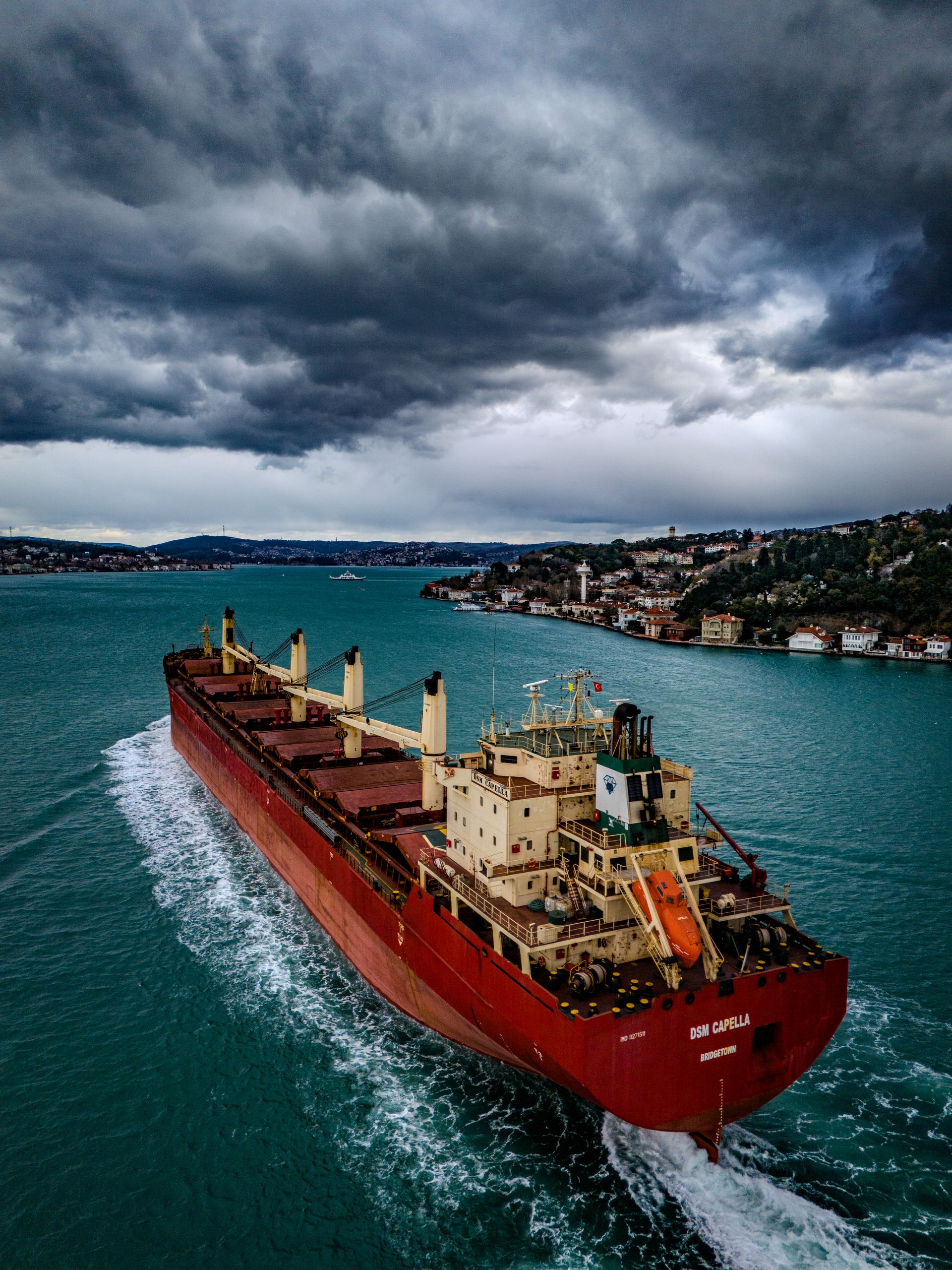
The two sides’ accounts diverge on exactly the question that determines legality and legitimacy. Ukraine’s sea ports administration calls the vessel a civilian cargo ship, full stop. Russia’s defence ministry, via Interfax, says the ship was carrying military cargo and had breached a naval blockade Moscow declares over Odesa. Ukrainian officials did not address Moscow’s version.
Neither claim is verifiable from the public record. The ship’s name, its cargo manifest, and even the precise port have not been disclosed by either side. Russia has made the military-cargo claim about other struck vessels too — Ukrainian authorities describe those as civilian as well — and the fog of an active blockade zone makes independent inspection nearly impossible. What is verifiable: a ship was struck, a motorman died, three crew were wounded, and thirteen were evacuated. The claims about what the ship carried are, for now, competing assertions.
What we can evaluate is the pattern of the claims themselves. Moscow has struck multiple foreign-flagged vessels near Odesa in recent weeks while asserting military use each time; Kyiv has uniformly called them civilian. That symmetry of claims is worth noting precisely because it recurs: it is the same rhetorical shape as Russia’s broader conduct at sea this summer, and Ukraine’s parallel campaign against what it calls Russia’s shadow fleet of sanctions-evading tankers. Both sides now treat merchant shipping as an arena of the war. Neither has offered the kind of evidence — manifests, photographs, inspection records — that would let the public check the claim.
A pattern, not an exception: the data behind the strikes
The October 3 strike is the fifth attack on civilian shipping off Ukraine in roughly three months to produce confirmed deaths, and the tempo is accelerating:
- July 2026 — the Guinea-Bissau-flagged Golden Leo, carrying corn, was hit near Odesa. Reuters reported nine crew members and a Ukrainian maritime pilot killed — ten dead — and the damaged vessel sank a week later.
- September 17 — a Tanzanian-flagged vessel was attacked in the Black Sea. The captain was killed and three crew members injured.
- September 23 — an Antigua-and-Barbuda-flagged vessel, identified by maritime outlets as the tanker Mentor, was hit by a Shahed drone overnight; the Ukrainian captain was killed, a fire broke out on board, and the remaining 15 crew were evacuated by the Ukrainian Navy.
- September 28 — President Volodymyr Zelenskyy said Russian forces had attacked a Palau-flagged vessel in the Odesa region.
- October 3 — the Liberian-flagged cargo ship: one dead, three wounded, thirteen evacuated. Russia claimed military cargo and a blockade breach.
Known deaths across those five incidents: thirteen. Known injuries: at least six. And those are only the strikes with confirmed fatalities — the full count of attacks, per Turkey’s chamber, is an order of magnitude larger. The flag states read like a registry roll call — Liberia, Antigua and Barbuda, Tanzania, Palau, Guinea-Bissau — which tells its own story: these are flags of convenience, the registries commercial shipping uses precisely because they are neutral, cheap, and global. Neutrality is not protecting them.
The comparison that puts this in perspective is the IMO’s. At World Maritime Day 2026, the International Maritime Organization warned that the rules protecting shipping are under strain as seafarers face deadly attacks — a diplomatic way of saying that the law of the sea is being violated routinely and visibly, and nobody is enforcing it. Erdogan, speaking at the UN General Assembly, called attacks on commercial vessels in the Black Sea “unacceptable,” regardless of which side was responsible. Turkey proposed that Russia and Ukraine halt attacks on civilian vessels. Neither side acted on it.
Who pays: insurers, markets, and the crews
The winners in a blockade are rarely obvious, so start with the losers. Ukrainian farmers and steel mills are first: reduced export capacity means lower farm-gate prices for grain that cannot reach the sea and higher costs for whatever does. Charterers are next — every vessel that calls at Odesa now carries a war-risk surcharge, and after a strike like Saturday’s, some owners simply refuse the voyage.
The insurers are the quiet fulcrum. Marine war-risk insurance is priced on observed loss frequency, and the Black Sea’s 2026 loss frequency is the worst in the market’s modern memory. If premiums keep rising, the effect is the same as a physical blockade achieved by pricing: fewer ships, less cargo, thinner margins. The whole-Black-Sea high-risk designation by London insurers is the market’s verdict on whether the corridor is still “open.”
Then there are the crews — the most under-covered actors in this story. Seafarers sailing into designated warlike areas have the contractual right to refuse, and maritime unions report crews are increasingly exercising it. Where they sail anyway, pay doubles while in the area, and death and disability compensation doubles too. The Philippines’ labor authorities have barred deployment of Filipino seafarers — a huge share of the world’s crews — to the Northern Black Sea. Each refusal, each repatriation, narrows the pool of vessels willing to call at Ukrainian ports. A motorman died on October 3; the next motorman’s union rep has leverage, and he knows it.
Who benefits? Russia’s objective is economic strangulation of Ukraine, and the mechanism is working without a formal naval quarantine. Ukraine’s counter-benefit is narrative and diplomatic: every civilian-ship strike is evidence for Kyiv’s argument that Moscow targets civilians, useful in every Western capital where aid packages are debated. And Ukraine’s own campaign against Russia’s shadow fleet — Ukrainian drone units say they disabled 300 vessels over eleven weeks, including 21 tankers “burned” in three days — shows both sides have concluded that the other’s export revenue is a legitimate target. The loser, in the end, is the old idea that merchant shipping is off-limits.
What critics — and the mediators — say
The international reaction has been condemnation without consequence. Erdogan’s UNGA remarks were the sharpest: attacks on commercial vessels are “unacceptable” no matter who is responsible, coupled with a call to end them. But Turkey’s own proposal to halt attacks on civilian vessels has gone nowhere — a telling data point about the limits of middle-power diplomacy when both belligerents see merchant shipping as leverage.
Maritime-industry critics make a sharper point: the system designed to protect civilian shipping has no enforcement mechanism. The IMO can warn; insurers can reprice; flag states like Liberia, Panama, and the Marshall Islands can protest — but there is no maritime police force, and the UN Security Council is structurally incapable of acting against a permanent member. The result is a two-tier law of the sea: binding where states consent, ornamental where they do not.
Russia’s defenders — few in the West, more numerous in the Global South — argue the blockade logic is symmetrical: Ukraine hits Russia’s shadow fleet and port infrastructure too, as seen in the same season’s strike campaigns around Odesa and Kyiv’s bridges. The counter-argument, from Kyiv and maritime lawyers, is that Ukraine’s targets are sanctions-evading tankers feeding Russia’s war machine, while Moscow is hitting plainly civilian grain and general-cargo traffic. The two campaigns may look alike from 30,000 feet. The legal and moral evaluations diverge sharply — which is exactly why Russia’s “military cargo” claim matters, and exactly why its lack of evidence matters more.
What happens next
Three trajectories are plausible, and they overlap. The first is the insurance squeeze: if strikes continue at the autumn tempo, war-risk coverage for Odesa calls could become prohibitively expensive or conditional — a de facto commercial closure of the ports without any new Russian announcement. Watch the London market’s next designation review; it is the canary.
The second is diplomatic, and it runs through Ankara and possibly the next round of U.S.-Russia-Ukraine talks, where energy and sanctions — including the Lukoil file — are already on the table. A civilian-shipping ceasefire is the kind of limited, verifiable agreement that mediators love and belligerents use as bargaining chips. Turkey tried and failed in 2026; a U.S.-backed version with sanctions relief attached might succeed where goodwill did not.
The third is escalation at sea: Ukraine’s shadow-fleet campaign and Russia’s blockade strikes are already a tit-for-tat, and tit-for-tats have their own momentum. The risk is a miscalculation — a strike on a vessel whose flag state decides this one cannot pass, or an incident in the Bosphorus approaches where Turkey’s patience is thinnest.
The near-term watchlist is concrete: whether Ukraine names the vessel and its cargo (which would test Russia’s claim), whether insurers move again after this strike, whether grain freight rates out of Odesa tick up in the coming days, and whether the weekend’s second reported vessel strike — Russia said it hit two cargo ships near Odesa over the weekend, both claimed as military targets — gets corroboration. Until then, the motorman’s death stands as the human ledger entry for a blockade that Russia no longer bothers to call by name.
Sources
- Reuters (via WNCY): Russia hits Liberian-flagged ship in Ukraine’s Odesa port, kills one — the October 3 strike on a Liberian-flagged cargo ship in the Odesa region; one killed (a motorman), three injured, 13 evacuated, per Ukraine’s sea ports administration on Telegram; Russia’s renewed blockade of Ukrainian Black Sea ports since the summer disrupting grain and steel exports. Reporting by Olena Harmash, editing by Toby Chopra.
- gCaptain (Reuters): Russia Hits Liberian-Flagged Ship in Ukraine’s Odesa port, Kills One — confirmation of the casualty figures and the USPA statement; notes the war is in its fifth year and the blockade’s economic toll on Ukraine.
- Devdiscourse (Reuters): Russia strikes cargo vessel in Ukraine’s Odesa port, Interfax says — Russia’s defence ministry, via Interfax, confirming the strike and claiming the ship carried military cargo and breached Moscow’s declared naval blockade of Odesa.
- Seawanderer: Russian forces attack Liberian-flagged civilian vessel at Odesa port, killing one — the October 3 toll; the September 28 Palau-flagged vessel attack cited by Zelenskyy; the September 17 Tanzanian-flagged vessel attack (captain killed, three injured).
- SAFETY4SEA: Russian strike on commercial vessel in Odesa kills captain — the September 23 Antigua-and-Barbuda-flagged vessel strike killing the Ukrainian captain; Turkey’s IMEAK Chamber of Shipping figures: at least 226 civilian and commercial vessels hit in the Black Sea since February 2022, ~70% in the first eight months of 2026; Turkey’s unacted-on proposal to halt attacks on civilian vessels; Ukraine’s shadow-fleet campaign figures from Maj. Gen. Brovdi.
- AZE.US: Strike on Cargo Ship in Odesa Port Kills One, Injures Three — vessel name, port, and cargo undisclosed in initial announcements; July 2026 Golden Leo (Guinea-Bissau flag) strike: nine crew and a Ukrainian pilot killed, vessel sank a week later; London insurers’ whole-Black-Sea high-risk expansion; Erdogan’s UNGA remarks calling attacks on commercial vessels “unacceptable.”
Casualty figures for the October 3 strike are from Ukraine’s Sea Ports Administration via Telegram, as reported by Reuters; the vessel’s name, exact port, and cargo were not disclosed and the circumstances could not be independently verified by Signal Post News. Russia’s claim of military cargo and a breached blockade is reported via Interfax and is likewise unverified; Ukrainian officials did not address it. Strike-pattern figures (226 vessels, ~70% in 2026) are from Turkey’s IMEAK Chamber of Shipping as reported by maritime outlets. Images are representative photographs, not depictions of the struck vessel.