Kyiv Northern Bridge strike

KYIV — The Kyiv Northern Bridge strike on Sunday marked a fifth consecutive day of Russian attacks on the capital's Dnipro crossings, according to Ukrainian officials. Mayor Vitali Klitschko said the roadway was damaged, hot-water service was disrupted and two people were injured. Russia's Defence Ministry claimed the attack and said the bridge carried troops and military cargo.
The same ministry said Russian forces hit two dry cargo vessels carrying military equipment toward Odesa. Earlier, it said an overnight attack struck a dry cargo vessel east of Odesa, a Nova Poshta logistics center in Chornomorsk and a data center in Odesa. Reuters reported the claims and said it could not independently verify either side's battlefield accounts.
Why this matters: five days turns a raid into a campaign
A single bridge hit can be tactical. Repeated attacks across five consecutive days reveal a campaign against a network. On Thursday and Friday the Southern Bridge was reportedly hit five times in less than 24 hours. The Northern Bridge was then struck on Saturday and Sunday. Each hit forces inspection, closure, rerouting and repair even when the structure remains standing.
Kyiv is divided by the Dnipro. Its business and government center lies largely on the right bank, while dense residential districts stretch across the left. A crossing carries more than vehicles: buses, utility lines, emergency traffic and the daily confidence that the city still works. Ukraine's infrastructure minister said Kyiv plans alternative crossings if attacks continue, evidence that officials now treat repetition as an operating assumption.
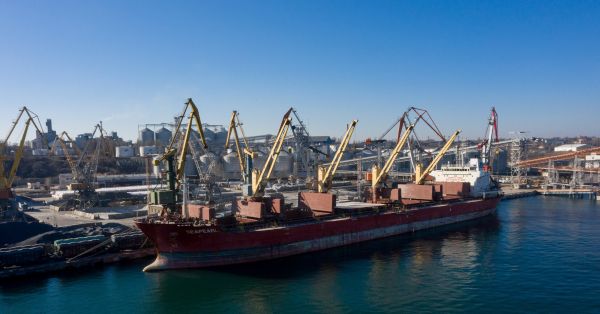
From Kyiv crossings to Odesa-bound vessels
The Russian claim and the verification gap
Moscow said the two dry cargo vessels carried military equipment. It did not publish evidence sufficient for independent verification in the reporting reviewed for this article. The ships' names, flags, crews, exact positions and damage status were not immediately clear. Those gaps matter because the legal and strategic character of an attack depends on what a vessel carried, where it was and whether it was participating in military support.
The claimed strikes widen the geography and the target category. A bridge is fixed national infrastructure. A cargo vessel may be commercial, foreign-flagged and crewed by civilians while carrying mixed goods. Moving the air war onto maritime logistics could raise insurance costs, complicate port calls and increase the chance that a third country becomes involved through a ship, owner or crew.
Historical parallel: the Black Sea grain corridor
The Black Sea has repeatedly moved between constrained access and active contest since Russia's full-scale invasion. The 2022 grain initiative showed that limited maritime arrangements could keep commercial traffic moving even without a comprehensive ceasefire. Its collapse showed how quickly insurance, inspection and security guarantees can unravel. Sunday's vessel claims do not by themselves amount to a blockade, but sustained attacks on ships bound for Odesa would test the same fragile commercial logic.
Multiple angles: military logic, civilian cost and political signal
Who may benefit
Russia can gain if repeated bridge strikes slow Ukrainian troop movement, burden air defenses and force Kyiv to spend on alternate crossings. Pressure on logistics centers, data infrastructure and shipping could increase the cost of receiving military supplies. The ministry's public claim also signals that Moscow wants the crossings understood as military objectives.
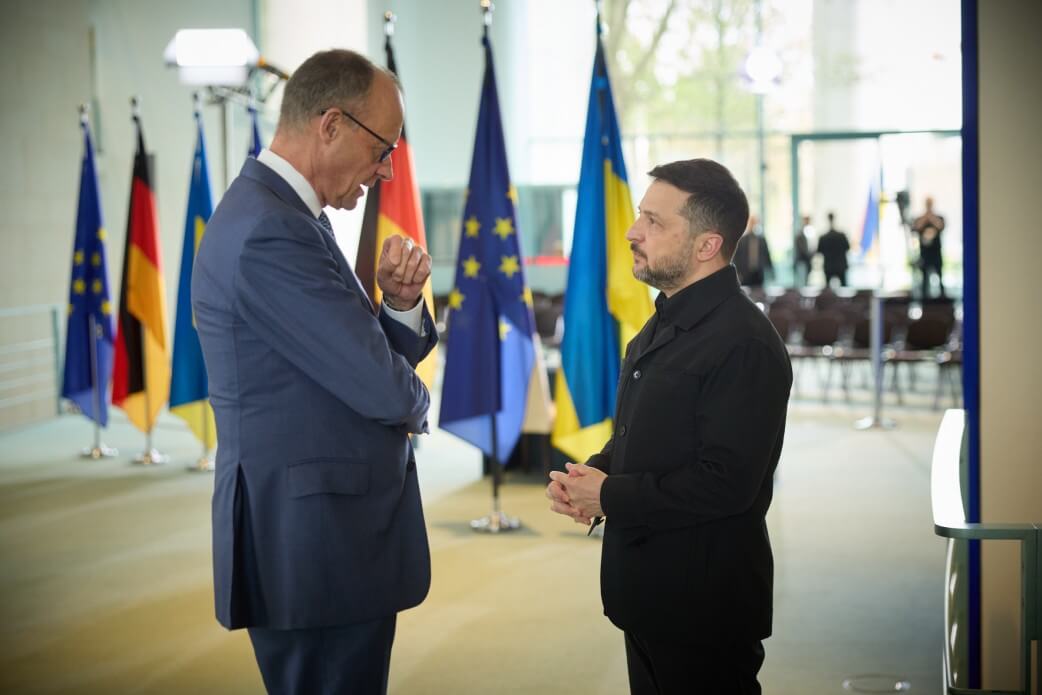
Ukraine can gain diplomatic leverage from the timing and visibility of the attacks. German Chancellor Friedrich Merz arrived under air-raid sirens and later toured the National Academy of Sciences with President Volodymyr Zelenskyy. The visit placed a major European leader beside the infrastructure campaign at the moment Germany was preparing larger military and energy support.
The civilians who cross the river, rely on hot water, work at logistics sites or crew cargo ships bear the clearest loss. Even a quickly repaired road surface produces delays and fear; a severed heating line reaches homes far from the blast. The strategic debate cannot erase those effects.
Critics on both sides' escalation logic
Moscow says the strikes answer Kyiv's campaign against Russian refineries and target military or dual-use infrastructure. Kyiv says refinery attacks reduce fuel and revenue supporting Russia's war and denies deliberately targeting civilians. Critics of Russia argue that “related infrastructure” can become an elastic category covering systems essential to urban life. Critics of Ukraine warn that deep strikes can invite retaliation and tighten fuel markets without changing Kremlin decisions quickly.
For the broader declaration, see Signal Post News's analysis of Russia's vow to intensify strikes. For the visit, aid and earlier bridge attack, read our Merz Kyiv report.
What the numbers mean
Five consecutive days: duration is the key indicator. Repetition compels Kyiv to defend and inspect several crossings at once. The Southern Bridge absorbed five reported hits in less than a day; the Northern Bridge was struck on the next two days. The sequence suggests an effort to degrade redundancy rather than produce one spectacular collapse.
Two injured and one utility disruption: Sunday's immediate human toll was limited compared with mass-casualty attacks, but the hot-water interruption shows how a hit can propagate through city systems. Damage to utilities can impose more person-hours of disruption than the blast itself.
Two Odesa-bound vessels: if independently confirmed, two ships in one statement would indicate a broader maritime target set. Without vessel identities and cargo records, the claim should be treated as Russia's account, not a settled fact.
559 drones: Russia said it intercepted that many Ukrainian drones between 8 p.m. Saturday and 8 a.m. Sunday Moscow time. Reuters could not verify the figure. It is far larger than Ukraine's report of 135 Russian drones in the October 3–4 overnight wave, but the windows, territories, systems and official counting methods differ; the two numbers are not a like-for-like score.
Merz's visit as a coalition-response test
Merz said, “If Russia is not stopped, sooner or later its war machine will turn against us.” The planned response pairs roughly $1.1 billion in military aid with about $394 million for energy repairs and a German-Ukrainian agreement on long-range drone production, with a stated range exceeding 600 miles. The mix addresses both defense and retaliation: intercept more attacks, restore what gets through and expand Ukraine's own reach.
The political signal is sharper because Merz arrived during the attack cycle. If Germany converts the visit into fast deliveries and production contracts, Moscow's strike timing may strengthen European resolve. If implementation lags, the visit risks becoming symbolic reassurance against a campaign measured in daily impacts.
What happens next
Scenario one: bridge strikes become the new normal
Russia could continue attacking road surfaces, rails and utilities without trying to collapse entire spans. Kyiv would answer with dispersal, decoys, repair crews and temporary crossings. The result would be chronic disruption rather than one decisive break.
Scenario two: a Black Sea escalation ladder
More attacks on vessels or port approaches could raise insurance premiums and produce diplomatic protests from flag states. Ukraine could respond against Russian maritime logistics, creating a cycle in which commercial shipping absorbs growing risk. The decisive indicators will be verified ship identities, crew casualties and whether port traffic materially falls.
Scenario three: allied aid changes the equation
Additional air defenses, counter-drone systems and domestic production could make repeated strikes more expensive and less effective. Long-range Ukrainian systems could also deepen Russia's incentive to retaliate. The question is whether deterrence emerges from mutual vulnerability or whether both sides simply widen their target lists.
The next evidence to watch is practical: inspection results from the Northern Bridge, restoration of hot water, construction timetables for alternative crossings, verified information about the vessels and the pace of German deliveries. Those facts will show whether Sunday's strike was another damaging episode or the clearest marker yet of a new infrastructure campaign.
Sources and reporting notes
- Reuters, October 4 — Russian claims regarding the Northern Bridge, Odesa-bound vessels and drone interceptions
- CNN, October 4 — bridge damage, injuries, repeated strike timeline and Merz visit
Russian military claims about vessel cargoes and the 559-drone interception figure were not independently verified by Reuters at publication.