Lukoil Ukraine oil deal
Inside the $20 Billion Lukoil Deal Now Entangled in Ukraine Peace Talks
Vladimir Putin pitched the sale of Lukoil's global oil empire to Donald Trump's envoys as proof that Russians and Americans can do business again. Now the oil deal sits inside the Ukraine negotiations — and everyone from Kyiv to Brussels is watching.
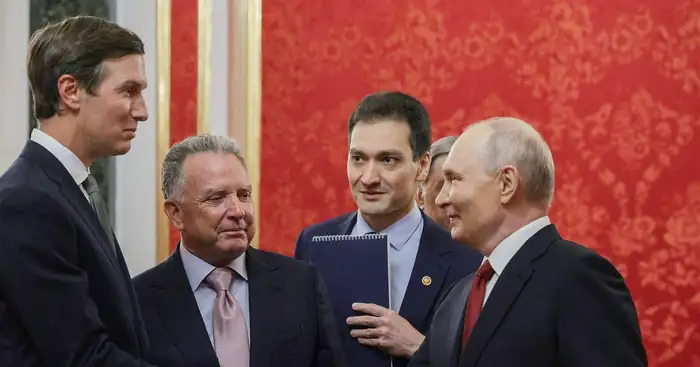
The Lukoil Ukraine oil deal has moved into the center of the Trump administration's talks with Russia on ending the war in Ukraine. The New York Times reported on Saturday, in an account carried by Reuters, that negotiators are discussing a multibillion-dollar transaction centered on the international assets of Russian energy giant Lukoil. The portfolio — oil fields, refineries and gas stations around the world valued at roughly $20 billion to $22 billion — would be one of the largest energy deals in years, and it is now sitting at the table where the fate of the war is being negotiated.
What the Lukoil Ukraine oil deal actually is
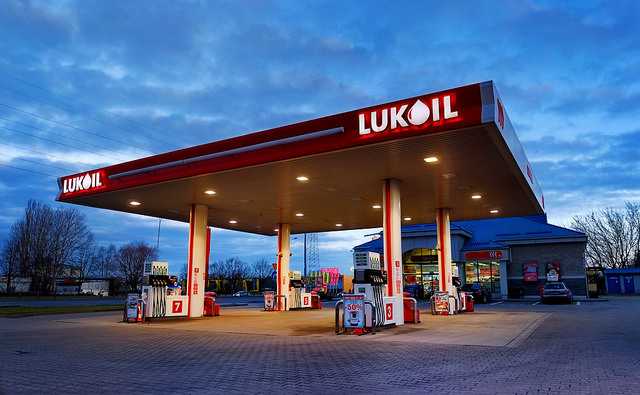
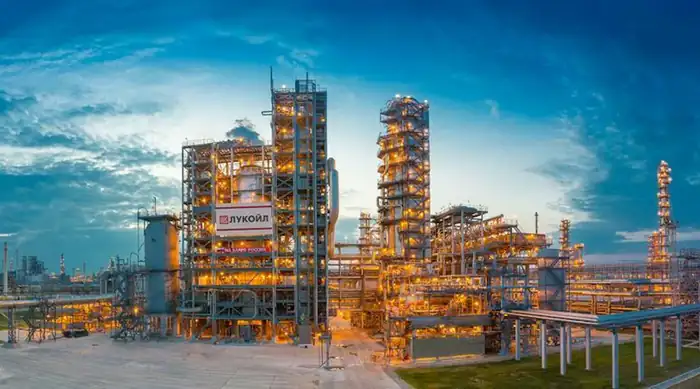
Lukoil, one of Russia's biggest energy companies, agreed in January to sell its international assets to the private equity firm Carlyle. That sale is still pending because it needs approval from the United States, which imposed the sanctions that made it difficult for Lukoil's Russian owners to keep operating those assets abroad. The assets up for sale span oil fields, refineries and retail gas stations across multiple continents. Now, according to the Times, a rival group led by American investor and billionaire Todd Boehly — a co-owner of the Los Angeles Dodgers — is competing for the portfolio, alongside two Middle Eastern business groups and, strikingly, an arm of the U.S. government itself: the U.S. International Development Finance Corporation, or DFC, is seeking a stake. The Financial Times has reported that investors from the United Arab Emirates and Qatar are part of the Boehly consortium.
How the Lukoil international assets sale entered the peace talks
According to the Times, citing people familiar with the meeting, Vladimir Putin raised the deal during his September 5 meeting at the Kremlin with U.S. negotiators Steve Witkoff and Jared Kushner. Putin framed the transaction as a way to show Russians they could do business with the United States again after years of sanctions — a demonstration, in his telling, that the relationship could be restored. Witkoff and Kushner told Putin they would work on the deal, the report said, viewing it as a way to build goodwill with the Kremlin and potentially bring down global energy prices. A senior administration official confirmed to the Times that the two envoys helped negotiate the federal government's financial terms, including what the official described as “a substantial upfront payment and profits interest for the United States.”
The reported discussion came amid renewed contacts between Washington and Moscow: Reuters reported on September 29 that Putin envoy Kirill Dmitriev had met U.S. officials in Washington to discuss both possible paths toward ending the war and future U.S.-Russia energy projects. The White House, the U.S. Treasury Department and Lukoil did not respond to requests for comment on the Times report.
Why the US-Russia energy deal matters for Ukraine
Peace talks usually trade in territory, security guarantees and sanctions relief. Folding a $20 billion commercial transaction into the negotiation is something else — it turns the talks into a marketplace as well as a war-ending exercise. The significance is twofold. First, it reveals the Trump administration's working theory of the conflict: that economic entanglement can be a lever for peace, giving both sides a stake in the deal that only survives if the guns go quiet. Second, it puts a price — a very specific, very large price — on what “normalization” with Russia would actually look like.
For Ukraine, which has spent the war trying to choke off Russian oil revenue, the prospect of Washington brokering the resale of a Russian oil empire is, at minimum, an awkward signal. Ukrainian drones have repeatedly struck Russian refineries, including at Samara; see our report on Ukraine's Samara refinery and Black Sea strikes. For the sanctions architecture built up since 2022, the Lukoil sale is a live test of whether the pressure campaign can be partially unwound before the war itself is over.
Who benefits from the Todd Boehly Lukoil bid — and who loses
The winners are easy to name: the bidding groups, which would acquire a global energy portfolio at a moment when sanctions have depressed its price; Lukoil's shareholders, who have been sitting on stranded assets; and the U.S. Treasury, which stands to collect an upfront payment and a profits interest if the DFC takes part. Todd Boehly's group, backed by Gulf capital and Washington itself, would gain a foothold in energy assets across multiple continents.
The losers are harder to pin down but easier to imagine. Kyiv has been pressing for tighter sanctions on Russian energy, not a managed resale of it — every dollar of oil revenue that keeps flowing is a dollar that can fund the war effort, in the Ukrainian view. European governments, which have their own sanctions on Russian energy, may bristle at a U.S.-brokered deal that undercuts the transatlantic line. And Carlyle, which struck the original January agreement, now faces a politically connected rival for the same prize.
The conflict-of-interest question around Witkoff, Kushner and Lukoil
The deal's optics are already drawing scrutiny. Boehly donated $2 million to Trump's political efforts — $1 million to MAGA Inc. in December 2025 and another $1 million through Eldridge Industries to the inauguration, according to the Times' reporting. Two Middle Eastern groups in the consortium have done business with the Kushner or Witkoff families. The Times noted that there is no indication Witkoff or Kushner themselves stand to profit from the transaction — an important fact, and one worth stating plainly. Still, the structure — the president's negotiators shepherding a deal that benefits his donors and their business associates' partners, inside talks meant to end a war — is exactly the kind of arrangement that invites questions about whether diplomacy and private interest are being kept separate. Neither the White House nor the Treasury has publicly addressed those questions.
What the $20 billion to $22 billion valuation actually implies
Twenty to twenty-two billion dollars is a striking figure, and it helps to put it in context. It is roughly three-quarters of the $27 billion defense-budget gap Ukraine has said it faces — the number Kyiv has been citing as it asks partners for more support. In other words, the commercial value being negotiated over the peace table is nearly as large as the entire additional war budget Ukraine says it needs.
It is also a fraction of what Russia's oil and gas sector generates in a year of wartime exports, which means the deal's real significance is symbolic and structural, not fiscal: whoever buys Lukoil's international assets gains leverage over energy infrastructure in multiple countries, and the seller — Moscow, effectively — gets the demonstration effect Putin explicitly wanted: proof that Russia can transact with the West again. The “substantial upfront payment and profits interest for the United States” matters too, because it gives Washington a direct financial stake in the transaction's success — a stake that exists independently of how the war ends.
What happens next in the US-Russia Ukraine peace talks
Three scenarios are worth watching. In the first, the U.S. government approves the sale and the deal becomes the sweetener Putin intended: a tangible, televised symbol of restored business ties that greases a broader settlement. In the second, the Treasury or Congress blocks or stalls it, and the deal becomes a different kind of instrument — leverage Washington holds over Moscow, releasable only if Russia moves on the battlefield terms. In the third — the one history would bet on — the transaction drifts through months of regulatory review while the war grinds on, and the “oil for peace” framing fades into the background noise of a conflict that has resisted every deadline so far.
What to watch in the coming days: whether the White House or Treasury comments on the record; any signal from the Kremlin that the deal is a condition rather than a sweetener; Kyiv's reaction, which has not yet come publicly; and whether European capitals coordinate with Washington or go their own way on the sanctions question. The oil is real. The peace is not yet. The wider diplomatic picture remains unsettled: Putin has also praised Modi's Ukraine peace proposals at the Valdai Forum, while Ukraine has pressed its own military leverage, including the first reported combat use of the FP-7 ballistic missile.
Sources
- Reuters: “US-Russia talks on Ukraine involve multi-billion dollar oil deal, NYT reports”
- The New York Times, October 3, 2026: original reporting, republished by CDM
- Financial Times reporting on the Boehly consortium bid, summarized by Oil & Gas Middle East
- Reuters, September 29, 2026: Dmitriev's Washington talks on Ukraine and energy projects
Sourcing note: Core deal terms and the September 5 meeting account come from The New York Times reporting carried by Reuters. The White House, U.S. Treasury and Lukoil did not respond to Reuters' requests for comment, and no final sale has been approved.