A night after Russia's heaviest strike on Ukraine's power grid in months, Moscow's drones and missiles came again — this time splitting between the capital and the Black Sea port city, damaging infrastructure in Odesa and wounding two people.
What happened
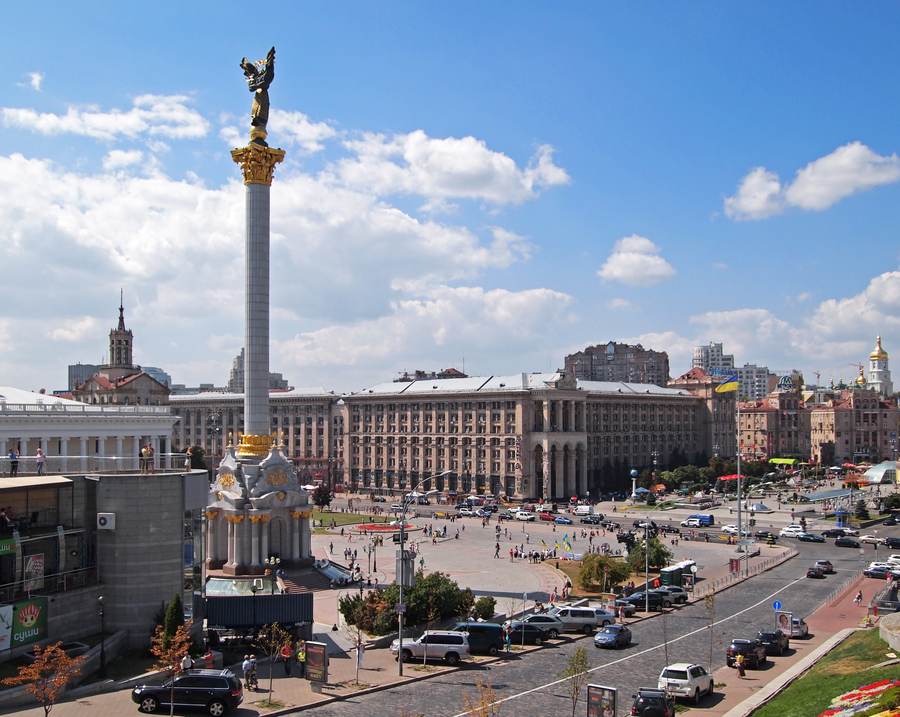
Russian air strikes hit the Ukrainian capital Kyiv and the Black Sea port city of Odesa overnight into Thursday, October 1, injuring one person in each city, Ukrainian officials said. The country's State Emergency Service and an Odesa city official reported the casualties on the Telegram messaging app, according to Reuters.
In Odesa, infrastructure was damaged, said Serhiy Lysak, the head of the city's administration, on Telegram — without giving details. Russia attacks Odesa frequently as it tries to prevent Ukraine from earning export revenue, Reuters noted, and the port city has absorbed repeated strikes for months.
Russia's Defence Ministry, also on Telegram, claimed a different version of the night: it said its forces had hit a logistics hub in Kyiv, a data center in Odesa and a cargo vessel in the nearby port of Chornomorsk — all of which it said were used for military purposes. Reuters said it could not independently verify those claims, and Ukrainian officials have not confirmed Russia's description of any of the targets.
A note on sourcing: The casualty figures come from Ukraine's State Emergency Service and Odesa's city administration, as reported by Reuters' original October 1 wire. Russia's target claims come from the Russian Defence Ministry's own statements; they are presented as Moscow's account, not as confirmed fact.
Why this matters
This is the second straight night of significant strikes — and that is the real story. The night before, Russia launched what officials described as its heaviest combined strike on Ukraine's energy infrastructure since the last heating season: roughly 190 drones plus ballistic and hypersonic missiles aimed at power plants and substations in and around Kyiv, killing at least seven people including a child and forcing emergency power cuts in the capital for the first time since spring (full coverage here). A one-night barrage can be read as retaliation or spectacle; a second night, redirected at new targets hundreds of kilometres apart, reads as a campaign.
First, Odesa is back in the crosshairs — and Odesa is the economy. Russia's stated objective around the port city is explicit: deny Ukraine export revenue. Hitting infrastructure there, and publicly claiming a cargo vessel at Chornomorsk, is economic warfare with a naval accent. Every strike on the port belt raises the risk calculus for shippers and insurers, and the grain and cargo flows that keep Ukraine's wartime economy afloat are the collateral. The September record around Odesa makes the pattern plain: a Palau-flagged vessel struck, a residential high-rise hit with two killed and 26 wounded, repeated drone attacks on port infrastructure.
Second, Moscow keeps naming data centers — a "digital front" is taking shape. A Kyiv logistics hub, an Odesa data center: these join a growing list that includes the De Novo internet exchange in Kyiv, the Kyivstar head office, and two Kyiv data centers Russia said it struck in late September. The framing is always the same — facilities supporting the Ukrainian armed forces. Whether the military utility is real or pretext, the targeting logic is consistent: degrade the information infrastructure the way the energy strikes degrade the power infrastructure. It is the same campaign applied to a different grid.
Third, the verification gap is itself the fog of this war. Ukrainian officials say infrastructure was damaged but give no detail; Russia claims specific military-linked targets; neither claim can be independently checked in the dark. Readers should hold both accounts at arm's length — the truth about a burning building in Odesa usually arrives days later, if at all.
Background: how we got here
The September escalation did not come out of nowhere. Russian President Vladimir Putin had said publicly that Moscow's forces were preparing massive strikes against energy infrastructure, and for weeks Russia has pounded Kyiv almost continuously — including daylight raids by jet-powered drones, adapted Shahed variants flying up to 500 km/h at altitudes that defeat most mobile air defenses. Late September brought the strike on Ukraine's National Academy of Sciences in central Kyiv and on the Kyivstar headquarters, with Ukrainian officials reporting seven killed in one 24-hour span (reported here).
Then came September 30: the energy-grid barrage — Trypilska thermal power plant, Kyiv CHP-5, the Kyiv hydroelectric plant — and emergency blackouts. Ukraine's air force has claimed steady interception rates, but the sheer volume, and the mix of ballistic, hypersonic and jet-drone weapons, keeps enough getting through to matter.
The backdrop on the ground has been moving the other way. President Zelensky visited a command post near Lyman this week to mark a Ukrainian counteroffensive — Operation Vivaldi — that Kyiv says has recaptured 176 square kilometres in Donetsk. Moscow's answer, as so often in this war, is to make the cities pay for the front line's stubbornness.

Who gains, who pays
Moscow gains a demonstration effect: it can strike the capital and the main port on consecutive nights, on the eve of the heating season, with weapons that increasingly outrun Ukraine's mobile defenses. The cost is the familiar one — the claims about what was hit remain unverified, and the drones that get through are offset by the ones that don't.
Kyiv gets a stronger case for the air defenses Zelensky has been demanding — systems and interceptors that can catch ballistic missiles, not just drones. The price is measured in repair crews, blackout schedules and port revenue. Emergency cuts in Kyiv for the first time since spring are a reminder that the energy war is a war of attrition on civilian patience as much as on turbines.
Shippers and insurers are the quiet losers of every Odesa night. Each claimed vessel strike, verified or not, nudges risk premiums higher on the Black Sea corridor. Ukraine has kept exports moving through months of this; the question is at what margin.
Civilians pay in the currency of air-raid nights — two wounded this time, but the accumulation is the point. September's running toll across the Kyiv and Odesa waves now stretches into the dozens killed and well over a hundred wounded, almost all of it in cities far from any front line.
The critics' view is worth stating plainly: Russia insists it strikes only military-linked facilities; Ukraine and Western officials say the pattern — apartments, a science academy, power plants, a telecom HQ — shows a deliberate campaign against civilian life-support systems. The dual-use gray zone (a data center that routes military traffic and civilian banking alike) is where both narratives live, and where international law gets hardest to apply.
What the numbers say
Two wounded is a small number next to the nights that preceded it: seven killed including a child on September 30, nine killed across the country on September 28, seven killed on September 28-29 including the Academy of Sciences strike. But the tempo is the figure that matters. Nearly 190 drones in a single night on September 30. Eleven oblasts under attack in one wave. Emergency blackouts in Kyiv for the first time in six months. And in Odesa, a metronome of strikes — September 13 (five wounded), September 27 (two killed, 26 wounded in a high-rise), September 28 (the Palau-flagged vessel), September 30 (port infrastructure), October 1 (infrastructure damaged, one wounded). The numbers describe a campaign that has stopped being episodic and become routine — which is exactly what makes it dangerous.
What happens next
Three things to watch. First, the heating season. Russia ran this playbook in previous winters and the September 30 wave was explicitly framed by Moscow as preparation for more. If the blackouts of this week repeat in December, the pressure on Ukraine's grid — and on European energy solidarity — compounds.
Second, the air-defense race. Zelensky's ask is specific: more systems that can intercept ballistic missiles and faster drones. Whether Western partners deliver, and how fast, will set the ceiling on what nights like this one cost. Watch for announcements after this week's waves; they usually follow within days.
Third, the maritime escalation. A claimed cargo-vessel strike at Chornomorsk, after the Palau-flagged vessel in September, suggests the Black Sea corridor is becoming a routine target set rather than a red line. If commercial shipping starts treating Odesa the way it treated the Red Sea, Ukraine's export economy faces a slow strangulation — the outcome Moscow's Odesa campaign has been chasing all along.
The war's center of gravity keeps shifting between the trenches of Donetsk, where Ukraine is clawing back ground, and the cities and ports, where Russia is trying to make that ground irrelevant. October opened with the second option on full display.