Topicsrussian casualties september 2026 recordrussia record monthly losses ukraineukraine general staff 46230russian daily losses record 2090operation vivaldi lyman gainsrussian army recruitment crisisfpv drones russian casualtiesrussia manpower losses ukraine war
The record Russian casualties of September 2026 are now on the books: 46,230 killed and wounded, according to Ukraine's General Staff — the highest monthly figure of the year, and a number that lands uncomfortably close to the threshold Ukrainian officials say could break Moscow's ability to sustain the war. The claim, reported October 2 by Al Jazeera's John T Psaropoulos and carried by The Telegraph's "Ukraine: The Latest" podcast and The Gaze, cannot be independently verified — Al Jazeera explicitly notes it cannot confirm casualty claims from either side. But the trajectory behind it is harder to dismiss: January's 31,710 has given way to roughly 40,000 Russian losses a month since June, and September's 46,230 is nearly 46% higher than where the year began.
The headline number is only the start. On September 28, Ukraine says Russia lost 2,090 troops in a single 24-hour period — the highest daily figure of the entire war, a record corroborated in scale by UK Defence Intelligence, which notes that the only previous 2,000-plus days all fell in 2024, on three occasions. The fourth-highest daily toll, 1,960, came on September 16. Britain's analysts attribute the spike to intense fighting around the fortified-cities belt in the east, particularly near Dobropillia — the grinding, settlement-by-settlement combat that has defined this phase of the war.
Why this matters: the 50,000-a-month theory
There is a number hanging over this war that matters more than any single monthly tally: 50,000. In January 2026, President Volodymyr Zelenskyy set a target of inflicting 50,000 Russian losses a month, and former defence minister Mykhailo Fedorov argued that roughly 50,000 a month is what it would take to seriously degrade Moscow's ability to keep fighting, as reported by The Telegraph. September's 46,230 is the closest Ukraine has come to that line.
But attrition is a relative weapon, and the exchange rate matters. British military intelligence estimated on September 11 that 500,000 Russians have been killed since February 2022, with total casualties at 1.5 million — and that the vast majority of those losses, incurred since January 2023, bought Russia roughly 2% of Ukrainian territory. That is the bargain Moscow is defending: staggering human cost for incremental ground. If 50,000 a month is the point at which the war machine stalls, September suggests that point is no longer theoretical — it is visible on the horizon.
How drones rewrote the loss curve
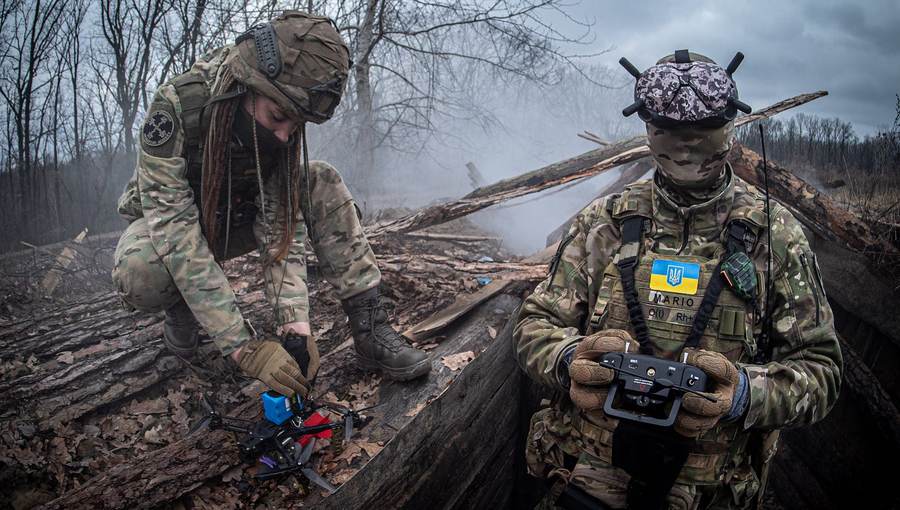
The January-to-September arc — 31,710, then about 40,000 a month from June, then 46,230 — maps almost exactly onto the maturation of Ukraine's drone kill chain. More than 90% of Russian casualties are now caused by FPV drones, according to Al Jazeera's reporting, and Ukraine says it holds video evidence for each casualty it claims — a feature of a war in which the kill is increasingly recorded, geolocated and archived. The drone did not merely add a weapon to the battlefield; it collapsed the distance between spotting a target and destroying it, and turned Russia's willingness to trade men for metres into a conveyor belt of recorded losses.
That same drone economy explains the record single days. When assaults concentrate around fortified belts like Dobropillia, massed infantry meets massed FPV coverage — and the result is daily tolls, like September 28's 2,090, that would have been unthinkable in the war's first year.
Operation Vivaldi: the other side of the ledger
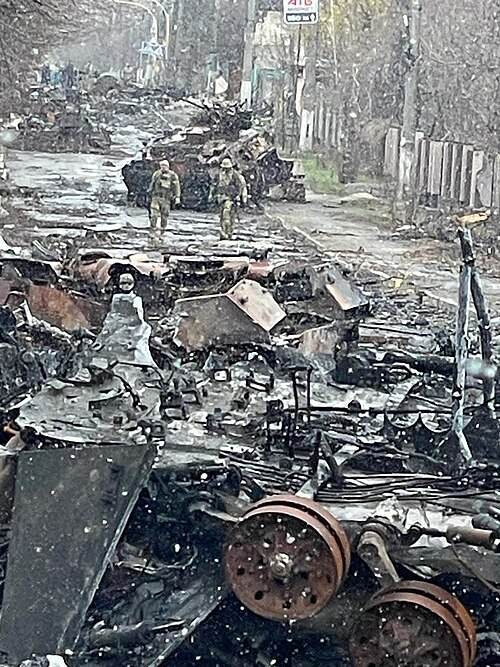
Losses are only half the story. In recent weeks, the Third Army Corps' third phase of Operation Vivaldi reclaimed 176 square kilometres near Lyman, according to Ukrainian reporting. Brig. Gen. Andriy Biletsky's approach, as described in coverage of the operation: a feigned attack from the west that forced Russia to burn reserves in counterattacks, followed by the real push from the north — alongside remotely operated Russian APCs packed with explosives and driven into Russian defences, and drone operations that starved Russian positions of ammunition and fuel. Russia denies the gains and has published videos presented as evidence to the contrary. The denial is worth recording, and so is the pattern: Ukrainian claims of territorial recovery in 2026 have repeatedly drawn Russian video rebuttals, with the truth usually settling somewhere between the two communiqués. (Related: our reporting on Zelenskyy's Lyman frontline visit and the Vivaldi counteroffensive in Donetsk.)
The recruitment arithmetic Moscow can't publish
Wars are not decided by body counts but by replacement rates — and here the numbers turn against Moscow. Western officials estimate Russia is losing roughly 6,000 more soldiers a month than it can recruit, according to The Gaze. Ukraine's military intelligence chief, Oleg Ivashchenko, puts the daily maths at 1,000–1,200 recruits a day against 1,410–1,551 daily casualties, around 60% of them killed — and projects, as an explicitly unverified estimate, that Russia could exhaust its resources as early as 2028 at current rates. Treat that 2028 figure as what it is: a projection, not a fact. But the recruiting gap underneath it is the structural story of 2026: Russia can still find men, but not fast enough to cover what the drones are taking.
What comes next: a winter drone campaign against a manpower crunch
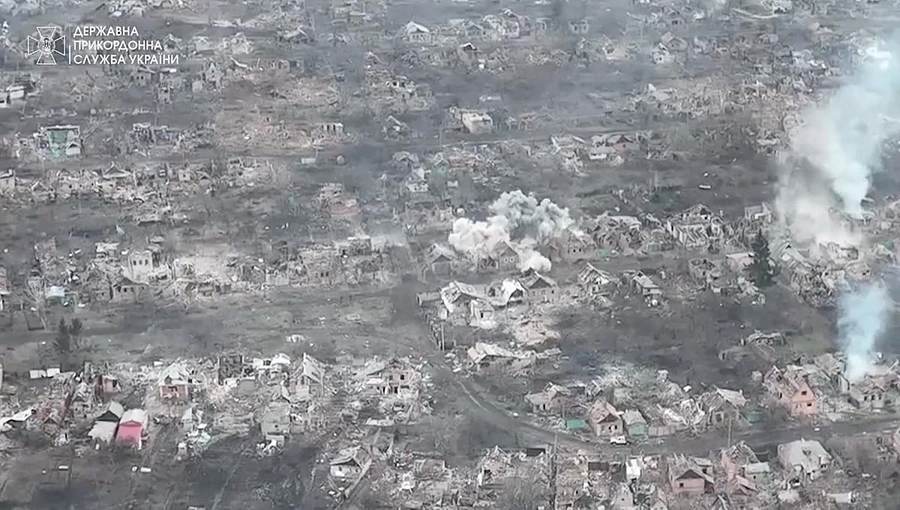
Al Jazeera's framing of the moment is the one to watch: Russia is deploying new drones to beat Ukrainian defences ahead of winter while trying to freeze Ukraine — a campaign aimed at energy and heat, not just trenches — even as Moscow has lost occupied territory. Three scenarios branch from here. First, Russia trades men for a winter freeze campaign and the loss curve climbs further, testing the 50,000 line. Second, the recruitment gap forces a reduced offensive tempo, and the war's centre of gravity shifts from the front to the energy grid. Third — and most likely — both sides' drone economies keep raising the lethality floor, so that even "quiet" months produce 2024-scale casualties. September's record may not stand for long. (Context: Putin's own admission that Ukrainian refinery strikes cost Russia 1% of GDP shows the economic front is biting too.)
Sources: Al Jazeera (John T Psaropoulos, October 2, 2026); The Telegraph ("Ukraine: The Latest"); The Gaze; UK Ministry of Defence Defence Intelligence.