War · Ukraine
More than 600,000 people in Dnipropetrovsk region woke on Sunday without electricity after Russia’s overnight wave of 164 drones and three guided missiles damaged key energy facilities, DTEK said — and with Kharkiv region’s outages added, some 850,000 people were left without power across Ukraine, two days before US-brokered trilateral talks in Abu Dhabi.
Track it live: Live war tracker · Live Ukraine war map
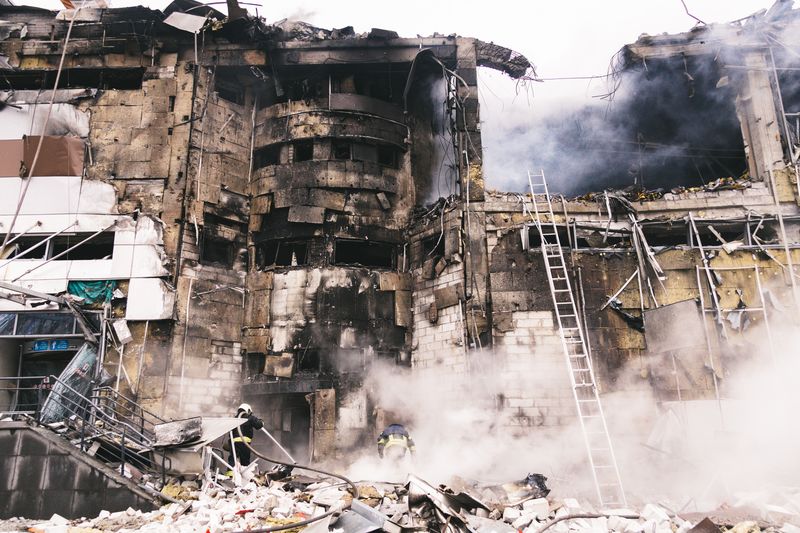
KYIV, November 8, 2026 — The Russia 164 drones Ukraine attack that began on Saturday evening ended, by Sunday morning, as the largest single blackout event of the autumn campaign so far. DTEK, Ukraine’s largest private energy company, said an overnight attack damaged important energy facilities in Dnipropetrovsk region, leaving more than 600,000 people without electricity. In Kharkiv region, a drone strike on critical infrastructure left nearly 250,000 customers without power, according to a local mayor — putting the combined total for the two regions at about 850,000 people. President Volodymyr Zelenskyy said the strikes triggered widespread power outages across the country, including in Kharkiv and Zhytomyr, and accused Moscow of intensifying its attacks ahead of US-brokered trilateral talks in Abu Dhabi on November 10–11. One person was killed in Odesa. The outage and casualty figures in this report come from Ukrainian officials, regional authorities and DTEK, and had not been independently confirmed at the time of publication.
What happened overnight, hour by hour
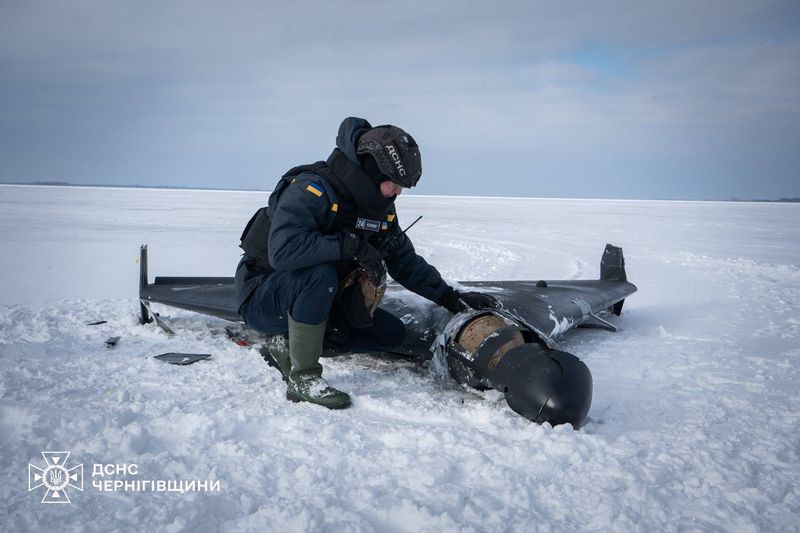
The wave began at 18:00 on Saturday, November 7. According to the Air Force of the Armed Forces of Ukraine, Russia launched three Kh-59/69 guided missiles from airspace over the Sea of Azov and 164 attack drones from six directions: Oryol, Kursk, Millerovo and Primorsko-Akhtarsk in Russia, the occupied city of Donetsk, and Hvardiiske in occupied Crimea. Of the drones, 112 were jet-powered Shahed-type aircraft, the Air Force said, with Gerbera and Parodiya decoys — cheap airframes designed to draw fire and exhaust interceptors — making up much of the remainder. The launch details come from the Air Force statement reported by Kyiv24, Ukrinform, UNN and EuropeSays, and had not been independently verified at publication.
The first confirmed ground damage came late on Saturday evening in Odesa, where an attack damaged infrastructure and killed one person, as Signal Post News reported in our first report on the 164-drone wave. By 08:00 on Sunday, the Air Force said, air defence had neutralised 137 of the 164 drones — including 88 of the jet-powered type — in preliminary figures. Even so, impacts were recorded at 23 locations and falling debris at six more. Sunday then brought the second half of the story: DTEK announced the Dnipropetrovsk damage, Zhytomyr officials described a destroyed substation, and Russia’s Defence Ministry issued claims of its own about what its forces had hit.
The Dnipropetrovsk blackout
DTEK said the overnight attack damaged important energy facilities in Dnipropetrovsk region, leaving more than 600,000 people without electricity. The region’s head, Oleksandr Hanja, said outages spread across five districts — Dnipro, Kamianske, Samariv, Pavlohrad and Synelnykove — a swath of industrial cities along the Dnipro river. Hospitals and other critical facilities switched to generator power, officials said, keeping emergency services and water pumping running while the grid was down. In Dnipro itself, the regional capital, the metro stopped, along with trams and trolleybuses — the electric backbone of daily movement for hundreds of thousands of residents.
DTEK said repairs were being complicated by repeated attacks, a pattern in which renewed strikes and alerts force crews off work sites mid-repair. The grid operator Ukrenergo kept hourly power restrictions in place, and no deadline for full restoration had been given by Sunday: officials would not say when all 600,000 customers would be reconnected. For residents, the practical meaning is a Sunday of rolling darkness at the start of the heating season, with outage schedules rather than steady supply as the best case until repairs hold.

Kharkiv, Zhytomyr, Odesa and Khmelnytskyi: the wider toll
Dnipropetrovsk was the largest, but not the only, blackout. In Kharkiv region, Mykola Baksheyev, the mayor of Zlatopil, said a Russian drone struck critical infrastructure and left nearly 250,000 customers without power. Added to DTEK’s figure, that brought the combined total to about 850,000 people without electricity — drawn from Ukrainian official and company reports, and not independently confirmed. Zelenskyy likewise pointed to widespread outages across the country, naming Kharkiv and Zhytomyr among the regions hit.
In Zhytomyr region, west of Kyiv, officials said the Ovruch substation had been destroyed and heating infrastructure damaged — a combination that matters more with each week of falling temperatures, because damaged heating plant leaves homes cold even where the lights return. Russia’s Defence Ministry said on Sunday that its forces had struck a power substation in Zhytomyr region, claiming it supplied Ukraine’s defence industry. That is Moscow’s characterisation, reported here as a Russian claim; Ukrainian officials described the same regional damage as a destroyed substation and harmed heating infrastructure. The Russian ministry also claimed a strike on a container ship south-west of Odesa, claiming the vessel carried weapons. That claim is not confirmed: no independent verification or Ukrainian confirmation of a ship strike had been reported, and it should not be read as an established fact.
What Ukrainian officials did report from Odesa was serious enough on its own: Serhii Lysak, head of the Odesa city military administration, said an attack late on November 7 damaged infrastructure in the city and killed one person. In Khmelnytskyi region, in western Ukraine, officials said a drone damaged residential buildings and one person was injured. Together with hits at 23 locations, the regional reports sketch a wave whose damage ran from the Black Sea coast to the country’s west.
Why this matters
Analysis. The first reason this wave stands out is its composition. Jet-powered drones made up 112 of the 164 launched — 68 per cent. On the night of November 5–6, by the Air Force’s figures, the share was 86 of 227, or 38 per cent. In two days, the mix flipped from roughly one jet-powered drone in three to more than two in three. Jet-powered Shahed-type drones fly faster than the propeller-driven originals, compressing the reaction time of the mobile fire groups and guns that carry much of Ukraine’s drone defence, while Gerbera and Parodiya decoys force defenders to spend scarce interceptors on airframes carrying no warhead. Ukraine still neutralised 137 drones; the problem is that the leaking fraction of a faster wave lands on a grid with ever less slack.
The second reason is the calendar. CNN’s analysis of this autumn’s campaign is that Russia is hitting Ukraine’s energy infrastructure harder and earlier than in previous years — not waiting for deep winter, but degrading generation, substations and heating plant ahead of it, while peace talks are live. The campaign’s logic, as Ukrainian officials and Western analysts describe it, is cumulative: to make the repair bill — in money, crews and transformer stocks — grow faster than Ukraine and its partners can pay it, and to make cold and darkness a standing condition of life before any settlement is signed.
The third reason is diplomatic timing. The wave landed on the last weekend before the Abu Dhabi talks, and Zelenskyy explicitly accused Moscow of intensifying attacks ahead of them. Whether the timing is coercive signalling or simply the campaign’s own tempo is genuinely contested: strike waves have preceded earlier negotiating rounds throughout this war, and Russia presents its attacks as operations against military and dual-use infrastructure. But the effect is the same either way — Ukraine’s delegation flies to Abu Dhabi from a country where about 850,000 people in just two regions spent Sunday without power.
Who gains, who loses — and the critics on both sides
If the aim is leverage, Russia’s negotiators gain a fresh demonstration that the grid campaign can be dialled up at will; if the aim is attrition, the cost falls on Ukrainian repair crews, interceptor stocks and civilians in unheated homes, while Kyiv gains a concrete argument for more air defence and energy aid. Critics of Kyiv’s position note that the night’s numbers, from the 164 launched to the 850,000 left in the dark, rest on Ukrainian official and company tallies that outsiders cannot fully verify. Critics of Moscow’s position answer that the documented outcomes — a dead civilian in Odesa, damaged homes in Khmelnytskyi, hospitals on generators in Dnipropetrovsk — are not the signature of precision strikes on purely military targets, and that hitting heating infrastructure in November is a choice about civilians’ winter. What is established sits between those arguments: the interception tally, the outage reports, one death reported by officials, and a second consecutive night of mass attack.
Context: an autumn campaign against the grid
Saturday night was the second heavy night in a row. On November 6–7, Russia launched 36 ballistic missiles and 172 drones at Kyiv, closing the Northern Bridge, wrecking a kindergarten and blacking out Chernihiv, as Signal Post News reported in our report on the ballistic missile attack on Kyiv. A week before that, on November 1, came the season’s largest drone wave yet — the 433-drone barrage that cut power across Ukraine. Read together, the three nights describe an escalation ladder: a record drone count, then a ballistic-missile night against the capital, then a jet-heavy drone wave whose damage concentrated on the grid of two industrial regions.
The background is a grid already living under management rather than normality. Ukrenergo’s hourly restrictions were in place before this weekend and remain so, which means each new wave lands on a system with no reserve to absorb it. Ukraine has spent three autumns repairing substations, importing transformers and hardening energy sites, and each season Russia has adjusted: more drones per wave, more decoys, and now a sharply higher share of jet-powered aircraft. The November 7–8 figures may prove a spike rather than a new baseline, but they point the same way as the campaign’s evolution: toward speed and saturation.

What happens next
The immediate story is restoration. DTEK and regional crews were working at the damaged Dnipropetrovsk facilities on Sunday, but repairs are complicated by repeated attacks, hourly restrictions remain in force, and no official has offered a full restoration deadline. The measure to watch is the outage schedules: if the five Dnipropetrovsk districts and the Zlatopil area move from emergency cuts back to planned hourly restrictions, the grid is recovering; if emergency cuts persist into the week, the damage was worse than first suggested. A third consecutive heavy wave on Sunday night would say much about intent: this autumn’s pattern suggests further waves should be expected.
Then comes Abu Dhabi. The trilateral talks open on November 10–11, and Zelenskyy’s framing of the strikes as intensification ahead of them makes an energy-infrastructure pause — of the kind proposed, and abandoned, before — a natural first test of the meeting, whether or not it appears on any agenda. Watch for three things in the next 48 hours: whether the delegations publicly connect the blackouts to their negotiating positions; whether casualty and outage figures are revised; and whether the Russian claims about the Zhytomyr substation and the ship near Odesa acquire any independent confirmation.
Do you think an energy-infrastructure pause should be the first item on the Abu Dhabi agenda — or would freezing the strike campaign on paper simply reward the blackout strategy? Follow Signal Post News for continuing coverage of the war in Ukraine, the grid campaign and the Abu Dhabi talks.
Sources
- Air Force of the Armed Forces of Ukraine statement (November 8, 2026), via Kyiv24, “Russia attacks Ukraine with three missiles and 164 drones”, and via Ukrinform and UNN reporting carried by EuropeSays, “Russia attacks Ukraine with three missiles and 164 drones”
- DTEK statement (November 8, 2026) on damage to important energy facilities in Dnipropetrovsk region and the outage affecting more than 600,000 people, as reported by AFP and Reuters via Arab News, and by Centreline, AnewZ and EuropeSays
- Oleksandr Hanja, head of the Dnipropetrovsk regional military administration — the five-district outage and Dnipro transport suspensions; Mykola Baksheyev, mayor of Zlatopil — the Kharkiv region outage
- President Volodymyr Zelenskyy — widespread outages, including Kharkiv and Zhytomyr, and the strikes’ timing ahead of the Abu Dhabi talks; CNN — analysis that Russia is hitting energy infrastructure harder and earlier than in previous years
- Serhii Lysak, head of the Odesa city military administration — Odesa damage and the one person killed; Zhytomyr regional reports — the destroyed Ovruch substation; Khmelnytskyi regional reports — homes damaged, one injured
- Russia’s Defence Ministry (November 8, 2026) — claims to have struck a power substation in Zhytomyr region and a container ship south-west of Odesa, reported in this article as Russian claims and not as verified fact