War / Ukraine
Track it live: Ukraine war map — follow the front lines and strike reports on our live tracker
Russia launched 433 long-range drones at Ukraine in a single night, the Ukrainian Air Force said on Sunday, in one of the largest drone barrages of the war — a Russia drone attack on Ukraine's power network that cut electricity to hundreds of thousands of households across at least eight regions as November, and the winter heating season, began. Air defences shot down or suppressed 371 of the drones, the Air Force said, but strikes were recorded at 16 locations and falling debris hit 14 more.
President Volodymyr Zelenskyy said Russian forces had hit power infrastructure in four regions overnight. "The intensity of the strikes is very high, and the Russians are seeking to maximally exploit the deficit of ballistic missile interceptors," he wrote on Telegram, in comments reported by Reuters. Dozens of drones were still in the air on Sunday morning, the Air Force said, and Kyiv alone had issued six separate air-raid alerts since midnight.
What happened overnight
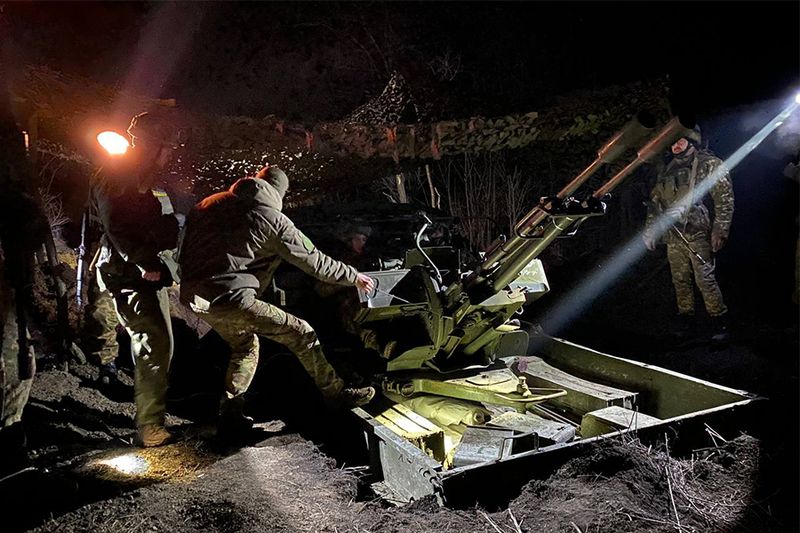
The attack began on Saturday evening, October 31, and ran through the night into Sunday, November 1. According to the Air Force figures reported by Ukrinform and LaPresse, the 433 drones included Shahed-type strike drones — 64 of them jet-powered — alongside Gerbera drones and Parodiya decoys, launched from Oryol, Kursk, Shatalovo, Bryansk and Millerovo in Russia and from the occupied city of Donetsk. Of the jet-powered drones, 47 were among those neutralised, Ukrainian reports said. The defence was fought by aircraft, anti-aircraft missile units, mobile fire groups, electronic-warfare units and interceptor-drone teams.
The barrage was the third wave in just over a day. Across three consecutive Air Force reports since the evening of October 30 — 134 drones the first night, 168 during the day on October 31, and 433 overnight — Ukrainian tallies list 735 drones in total, although the reporting periods partly overlap and the figure should be read as the scale of the campaign rather than a precise count of separate aircraft.
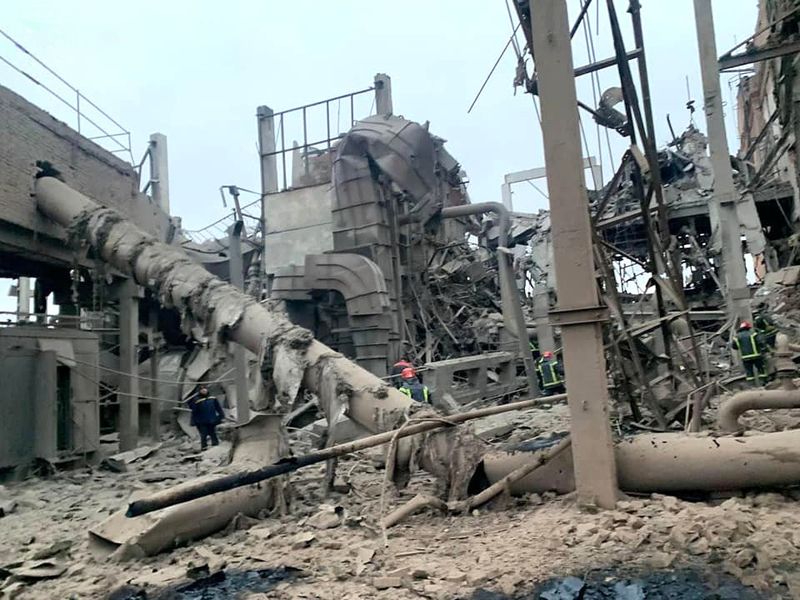
In Kyiv, a strike on the TEC-6 power plant left much of the capital struggling for power through Sunday, and a 12-year-old girl was injured when drone debris fell on a shopping centre in the Obolonsky district, according to the regional recap compiled from Ukrainian official reports. In Dnipropetrovsk region, a strike on Pavlohrad injured eight people, including three children, and damaged several apartment buildings, the head of the regional military administration, Oleksandr Ganzha, said; across 20 attacks in the region, 17 people were injured, including the three children. In Kharkiv region, an MLRS strike on Izyum on Sunday morning damaged more than 10 houses and a gas station, with no injuries reported, regional head Oleh Syniehubov said, while Banderol missiles hit railway infrastructure in Kharkiv city, injuring a 57-year-old man. Late on October 31, a Russian airstrike destroyed the Kramatorsk city executive committee building, Ukrainian outlets RBC-Ukraine and Censor.net reported. The General Staff counted at least 264 combat engagements along the front in the previous 24 hours, on day 1,712 of the full-scale war.
The grid is the target
Emergency power outages were reported on November 1 in eight regions — Zhytomyr, Donetsk, Zaporizhzhia, Kyiv, Dnipropetrovsk, Sumy, Cherkasy and Kharkiv — according to UATV reporting cited by 112.ua, which said more than 350 strikes on Ukraine's energy facilities have been recorded since the start of autumn. Khmelnytskyi region also reported emergency outages after Geran drones hit energy infrastructure and substations, regional officials said.
The pattern is consistent with the campaigns of the previous three winters: generation and transmission assets are struck faster than they can be repaired, and grid operators impose emergency and rolling cuts to keep the system from collapsing outright. What has changed is the mix. Jet-powered Shaheds fly far faster than the propeller-driven originals, compressing the reaction time of the mobile fire groups and gun teams that form Ukraine's cheapest defensive layer, while decoy drones are mixed in to soak up attention and ammunition.
Why this matters
The significance of the 433-drone night is not only its size. It is the economics it exposes. A Shahed-type drone costs a small fraction of the interceptor missiles needed to stop faster threats, and Zelenskyy's own framing — that Moscow is exploiting a "deficit of ballistic missile interceptors" — concedes the pressure point: every night of mass launches forces Ukraine to choose which targets get its scarcest defensive missiles and which are left to guns, jamming and luck. An 86 percent interception rate sounds like a defensive success, and by the standards of this war it is. But against 433 launches, the 14 percent that got through still meant hits at 16 locations — enough, when the targets are substations and power plants, to darken eight regions.
The timing compounds the effect. The barrage landed on the first night of November, at the start of the heating season, on the final day of the six-day humanitarian ceasefire around Russian-occupied Oleshky — where evacuees had just been reunited with families in Ukrainian-controlled territory — and days before a hoped-for trilateral meeting window in Abu Dhabi between November 6 and 10. Ukraine says it supports a full ceasefire on energy targets; Moscow has not agreed one. Each side is therefore still using the other's energy system as leverage: the same night Russia was striking Ukraine's grid, Ukrainian drones were hitting the NORSI refinery at Kstovo and the Kamensky missile-fuel plant in Rostov region.
Who gains, who pays
Russia gains a grid that enters winter already degraded, and a Ukrainian government forced to spend political capital pleading for interceptors. Ukraine gains, from its own strikes, pressure on Russian fuel supply and missile production — Deputy Prime Minister Alexander Novak acknowledged on state television on Sunday that Ukrainian refinery strikes were adding to global fuel-market imbalances, without mentioning the Nizhny Novgorod damage directly. The clearest losers are civilians on both sides of the line: Ukrainians facing winter in darkened apartments, and Russian motorists whom the Nizhny Novgorod regional government was already urging on Sunday not to panic-buy fuel. Russia's Defence Ministry said its forces downed 235 Ukrainian drones overnight; neither side's figures can be independently verified in full.
What happens next
Three things will decide whether this weekend marks an escalation or simply the winter campaign's opening tempo. First, repair speed: Ukraine's ability to restore substations and generation between waves determines whether emergency cuts harden into a season-long rationing regime, and Türkiye has signalled it could increase supplies of generators and energy equipment as early as this week. Second, interceptor supply: Zelenskyy's public emphasis on the ballistic-interceptor deficit is aimed squarely at Washington and European capitals ahead of the diplomatic calendar — the G20 foreign ministers have just met in Atlanta, U.S. Secretary of State Marco Rubio says Washington is reviewing Turkish and Indian proposals for a limited Black Sea ceasefire, and the Abu Dhabi window opens within days. Third, reciprocity: Kyiv has made clear it never agreed to pause refinery strikes, so each Russian grid barrage should be expected to draw another Ukrainian answer against Russian oil and missile infrastructure. If the 433-drone night becomes the weekly norm rather than an exception, the war's centre of gravity this winter will sit less on the front line than on two national power and fuel systems — and on which one blinks first.
Related coverage
Ukraine's Neptune Strike on the Kamensky Rocket-Fuel Plant in Rostov
Reunited After 1,711 Days: Oleshky Evacuees Return Under the Melania Trump-Brokered Ceasefire
Sources
Reuters, "Russian strikes cut power to thousands in Ukraine as drones damage Russian facility," November 1, 2026 — https://www.reuters.com/world/europe/russian-strikes-cut-power-thousands-ukraine-drones-damage-russian-facility-2026-11-01/ · Ukrainian Air Force figures via Ukrinform, reported by LaPresse, November 1, 2026 · AJ News, "Ukraine Regional Recap and Damage Report Up To 9am on November 1st" (General Staff and regional administration reports) · 112.ua / UATV, "Russian Strikes Cause Widespread Power Outages Across Eight Ukrainian Regions," November 1, 2026 · UNN drone-wave tallies via EuropeSays, November 1, 2026.