War · Russia · Ukraine · Diplomacy
Speaking in Shenzhen after the first-ever Trump–Xi–Putin trilateral, the Russian president said the Crimean Bridge attacks ended any deal on halting strikes at sea or on energy sites — and promised a response “far more painful” than the bridge strikes themselves.
Track it live: Ukraine war map · War tracker
SHENZHEN, November 19, 2026 — Russian President Vladimir Putin said on Thursday that Moscow would no longer consider a moratorium on strikes in the Black Sea or on energy infrastructure following Ukraine’s attacks on the bridge linking Russia and Crimea, vowing a harsh response. He spoke at a press conference in Shenzhen after the first-ever Trump–Xi–Putin trilateral at the APEC summit. The phrase “Putin rules out energy ceasefire” captures the day’s shift in one line: a partial-truce idea that had been alive in the Abu Dhabi talks is, by Putin’s own account, now dead.
What he actually said
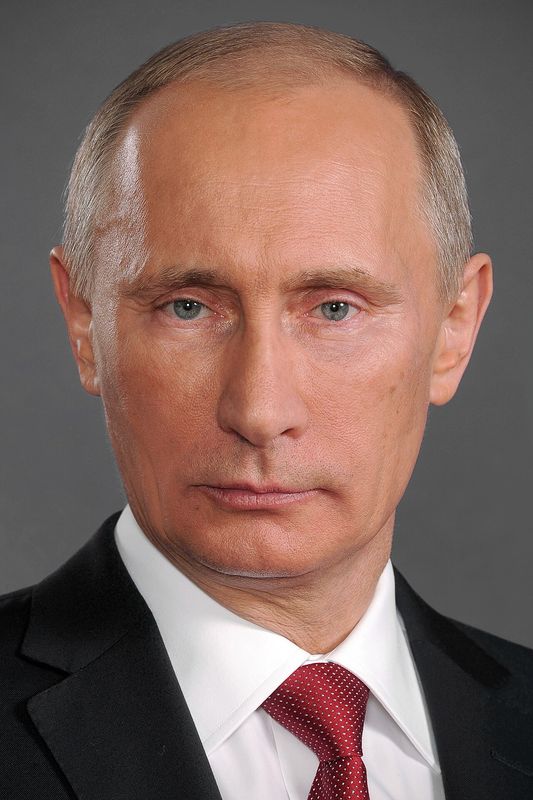
Putin said he had discussed a possible halt to attacks at sea and on energy facilities with Russia’s Security Council and had “asked everyone to give it further thought and come back to it, hoping that perhaps some kind of agreement could be reached.” Then came the turn: “But after the strikes on the Crimean Bridge, there will be no agreements. We will respond to these strikes. And I want everyone to know this: I believe our response will be far more painful than what the Kyiv regime did to the bridge.” The phrase “Kyiv regime” is Putin’s wording, quoted here as he used it; it is not this newsroom’s description of Ukraine’s government.
He added: “We will, of course, restore the bridge. The road section suffered serious damage,” according to Reuters. The Times’ live blog reported the same remarks, with Putin vowing a “much more painful” response and saying Kyiv’s actions mean there will be no negotiations about a possible ceasefire, and carried his line: “Putin: Only God knows if there will be peace.”
What he did not say matters too. He promised retaliation, not a date, a target or a scale. The threat is open-ended by design: it keeps every Ukrainian planner guessing across the two domains he named — energy and the Black Sea — while committing Moscow to nothing it can be measured against. Statements of this kind are instruments as much as announcements, and they should be read as both.
The bridge strikes
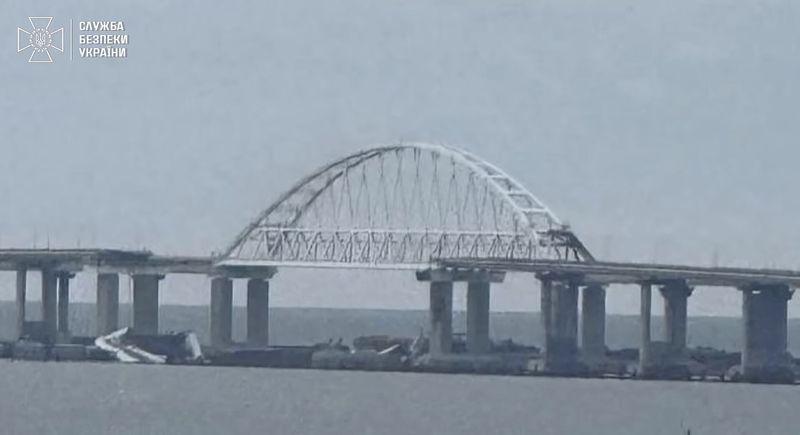
Ukraine struck the bridge for the third time in a week early on Thursday, November 19, targeting the railway section. The week’s attacks came in sequence: on November 16, an attack that shifted a road arch by about 15 degrees; on November 17, an attack that collapsed the road arch and the main span; and on November 19, the strike on the rail section. Russia’s Transport Ministry said rail traffic was suspended and no one was hurt — a claim attributed here to the ministry. The full account of the 17 November road-span collapse is in our earlier coverage of the Crimean Bridge third strike, and of the operation as Kyiv describes it in our report that Zelenskyy confirmed the seven-stage operation.
One dispute sits underneath every argument about the bridge, and it is unresolved. Putin said the bridge was used exclusively for civilian purposes, not to transport military equipment — as Kyiv has alleged — or petroleum products. Kyiv alleges the bridge is used for military purposes. Neither claim is independently verified, and this article does not pretend otherwise: the two governments cannot agree on what the bridge is for, which is one reason they cannot agree on what striking it means.
Why this matters
The partial-ceasefire track was the one live de-escalation channel to come out of the Abu Dhabi talks. Its closure leaves the winter energy campaign and Black Sea shipping with no agreed restraint at the exact moment both are escalating. That timing is not incidental to the statement’s significance — it is the significance. A moratorium on energy strikes matters most in the weeks when the grid is under its heaviest attack and the cold is arriving; a Black Sea restraint matters most when shipping is being contested. Putin has withdrawn both, publicly, at the point of maximum leverage.
The setting sharpens the point. The trilateral’s joint declaration did not mention the war in Ukraine at all — a fact examined in our coverage of how the Trump–Xi–Putin trilateral ended with no breakthrough in Shenzhen. The Shenzhen format produced symbolism — a first-ever three-way meeting — but no Ukraine outcome. That pairing, a headline summit with nothing on Ukraine and a partial truce killed the same day, is the story’s deeper significance: the diplomacy that exists is not, right now, the diplomacy that can stop the strikes.
Background: how the energy truce died before it was born
At the Abu Dhabi talks, Ukraine raised an energy ceasefire, the unblocking of the Black Sea and a prisoner exchange. The Russian delegation said it had no mandate on the energy truce — a procedural answer that left the idea technically alive and practically frozen. President Volodymyr Zelenskyy said on November 14 that “Putin personally does not support a ceasefire.” Thursday’s statement converts that assessment into Putin’s own words.
The United Kingdom’s statement to the OSCE on November 19 records the other side of the ledger: that Ukraine has agreed to a full, immediate and unconditional ceasefire, and to a full energy ceasefire — and that Russia has refused both. The same statement records the scale of the autumn campaign the moratorium would have restrained: October saw a record 4,000 jet drones and about 150 ballistic missiles fired at Ukraine, and the night of November 2–3 was the largest attack on Ukraine’s energy system this year, forcing three thermal power plants offline. Against that background, allied support continues on other tracks — including the package covered in our report on Britain’s 1,000 long-range strike drones for Ukraine in a £260 million Berlin package.
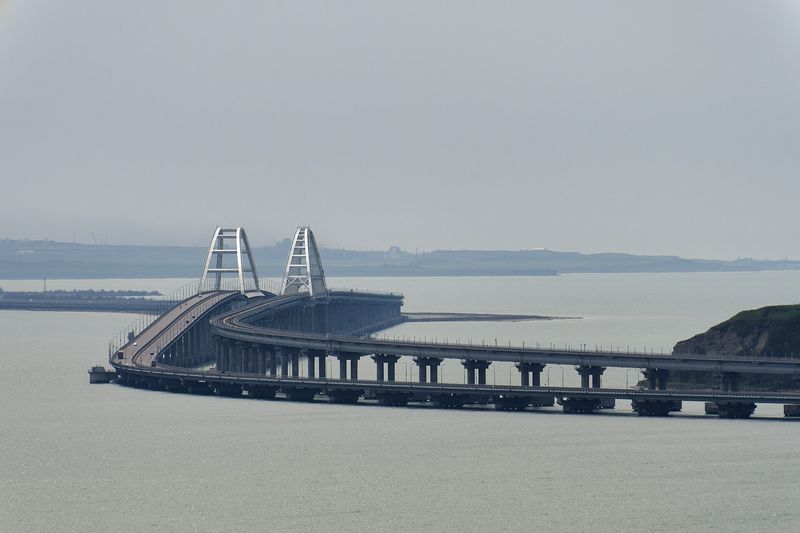
The bridge itself is both symbol and supply route — the structure whose destruction Kyiv treats as leverage and Moscow treats as an attack on civilian infrastructure. The unresolved dispute over its use is why the two sides cannot even agree on what was hit, let alone on what a proportionate answer to hitting it would be.
Multiple angles
Moscow’s framing
In Moscow’s account, Thursday is retaliation for a strike on a civilian bridge, and the promised response is framed as proportionate punishment — severe, but presented as an answer to an act Ukraine chose. The Security Council detail does rhetorical work here: it presents the moratorium as something Russia had genuinely weighed and Ukraine’s strikes destroyed, placing the responsibility for the truce’s death on Kyiv.
Kyiv’s framing
In Kyiv’s account, the bridge is a legitimate military target and leverage in talks where Russia, in Kyiv’s view, refuses a ceasefire Ukraine has already accepted — in full and, on the energy track, in the specific form Moscow now says is closed. On this reading, the statement does not kill a live option; it announces, for the record, a refusal that the Abu Dhabi mandate problem had already revealed.
Washington and Beijing
The trilateral produced a joint declaration but no Ukraine line, leaving both Washington and Beijing able to claim a successful summit while the war’s diplomacy stalls. Neither capital was asked, in the declaration’s text, to spend anything on Ukraine — and neither, on Thursday’s evidence, chose to.
The critics, on both sides
Those who doubt a partial truce was ever real point to the Abu Dhabi mandate problem: a delegation that cannot agree to an energy ceasefire has not, in any practical sense, been offered one by its own side. Those who see the truce’s loss as a genuine setback answer that energy and Black Sea restraint was the narrowest, most achievable deal on the table — narrow precisely because it asked so little of either side’s war aims — and that even a fragile, partial restraint would have spared civilians a winter of unrestrained grid attacks. Both readings can be true at once: the truce may never have been likely, and its formal burial may still cost lives.
The numbers in context
Figures in this war arrive wearing uniforms, and they should be read with their attribution attached. The New York Post reports that Ukraine fired 1,441 drones in the Tuesday barrage. Russia’s Defence Ministry says it downed 709 Ukrainian drones across 14 regions, according to Al Jazeera on November 19. Neither figure is independently confirmed, and they are not measurements of the same thing — but set against the OSCE-recorded October total of 4,000 jet drones fired at Ukraine in a month, they make the escalation legible: a single night’s barrage is now a substantial fraction of what a whole month produced not long ago. That is what an escalating drone war looks like in the data. And three thermal power plants forced offline in one night, on November 2–3, is the energy campaign’s concrete cost — not an abstraction, but heat and light removed from a country entering winter.
What happens next
Watch, first, for the promised “far more painful” response. The energy grid and Black Sea shipping are the named domains, because those were the two moratoriums on the table; a response outside them would itself be information. Watch, second, whether the rail section is repaired first, and how fast, since the road section is already seriously damaged by Putin’s own description — repair speed is the most honest available measure of how much the week’s strikes actually cost. Watch, third, the next Abu Dhabi round, and whether Europeans take part: the mandate question that sank the energy truce last time has not been answered, and Thursday gave it a harder edge. And watch the Shenzhen format itself. A second trilateral would need a Ukraine line to matter for the war. The first one did not have one.
Related coverage: Crimean Bridge hit for a third time this week as traffic halts again · Trump–Xi–Putin trilateral ends with no breakthrough in Shenzhen · Zelenskyy confirms the Crimean Bridge attack was a seven-stage operation · Britain’s 1,000 long-range strike drones for Ukraine
Sources
Sources: Reuters, November 19, 2026 — reporting Putin’s Shenzhen press-conference remarks ruling out agreements on halting strikes in the Black Sea and on energy infrastructure after the Crimean Bridge strikes, his promised response, and his statement that the bridge’s road section suffered serious damage — reuters.com. The Times, live blog, November 19, 2026 — reporting the same remarks, including the “much more painful” vow and the line “Only God knows if there will be peace” — thetimes.com. New York Post, November 19, 2026 — source of the reported figure of 1,441 drones fired by Ukraine in the Tuesday barrage (quoted figure only; its characterisations are not adopted here) — nypost.com. GOV.UK, November 19, 2026 — UK statement to the OSCE recording that Ukraine has agreed to a full, immediate and unconditional ceasefire and a full energy ceasefire, that Russia has refused both, and the October and November 2–3 attack figures cited in the text — gov.uk. Al Jazeera, November 19, 2026 — reporting Russia’s Defence Ministry claim of 709 Ukrainian drones downed across 14 regions. Russia’s Transport Ministry — statement that rail traffic over the Crimean Bridge was suspended after the November 19 strike and that no one was hurt. Analysis in this article is Signal Post News’s own and is distinguished from the reported facts above; the drone figures attributed to the New York Post and to Russia’s Defence Ministry are not independently confirmed, and neither side’s claim about the bridge’s use has been independently verified.