Putin army expansion decree 2026
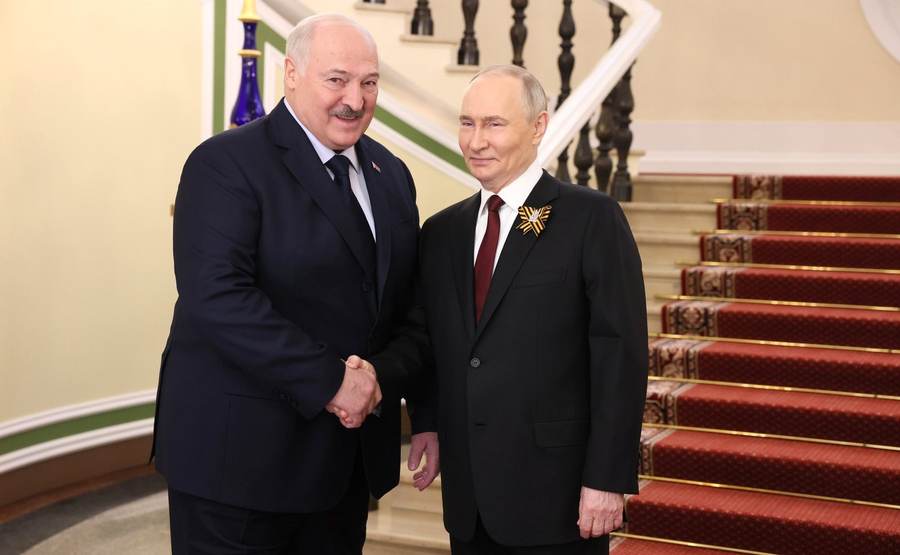
On Monday, Vladimir Putin signed a decree setting the authorized personnel strength of the Russian Armed Forces at 2,441,630 — including 1,550,500 active-duty military personnel, an increase of 15,500 over the previous figure. The decree was published on Russia’s official portal of legal acts and reported by Russian news agencies. It offered no explanation for the increase.
It is the fourth time this year that Putin has expanded the military’s authorized size — following adjustments in March, June and late July — and the seventh such expansion since Russia’s full-scale invasion of Ukraine began in February 2022, according to a tally by The Moscow Times. The drumbeat is the story as much as the number: a state that keeps rewriting its army’s authorized size upward every few months is not a state planning to demobilize.
The decree in numbers — and what “authorized strength” actually means
The figures, confirmed across multiple outlets with matching specifics, are precise. Total authorized personnel: 2,441,630. Of those, 1,550,500 are military servicemen — up 15,500 from the 1,535,000 set by the previous decree this summer, LaPresse reported, citing Russian news agencies. The 2026 sequence runs: a March adjustment setting the force at 2,391,770 total with 1,502,640 active soldiers; a June 12 order raising active troops to 1,510,000; a late-July decree adding 25,000 for dedicated military construction units; and now September’s addition of 15,500.
Precision matters, because “authorized strength” is not a headcount. It is a legal ceiling — the maximum number of billets the defense ministry may fill, and the basis on which recruitment, pay, housing and pensions are budgeted. Raising the ceiling does not conjure 15,500 soldiers overnight. But it is how a bureaucracy pre-authorizes them: every new billet is a line in next year’s budget before it is a body in uniform. Military analysts quoted by the South China Morning Post read the repeated increases as a sign Russia is preparing for a prolonged conflict rather than a near-term settlement. For scale, 15,500 is roughly a full division’s worth of manpower.
Why this matters: the Kremlin’s planning horizon, written in troop ceilings
Governments reveal their true timelines in boring documents. A terse decree with no stated reason, the fourth in nine months, is a planning signal aimed at Russia’s own military bureaucracy — keep recruiting, keep building, keep spending — and it lands in sharp contrast with the diplomacy playing out in New York. At the UN General Assembly, Foreign Minister Sergey Lavrov accused Europe of blocking peace talks, Donald Trump publicly urged Volodymyr Zelenskyy to “settle with Putin,” and Pope Leo used a Monday address to plead for dialogue. Meanwhile the General Staff’s establishment table got bigger. When words and paperwork disagree, the paperwork is usually the more honest forecast.
There is a second, quieter significance. Each expansion normalizes a larger permanent force. The Russian military that emerges from this war — whenever it ends — will be legally authorized at a size far beyond its pre-2022 establishment. That has consequences for European security planning that outlast any ceasefire: a 1.55-million-strong authorized force does not simply evaporate when the guns fall silent.
The casualty math Moscow doesn’t publish
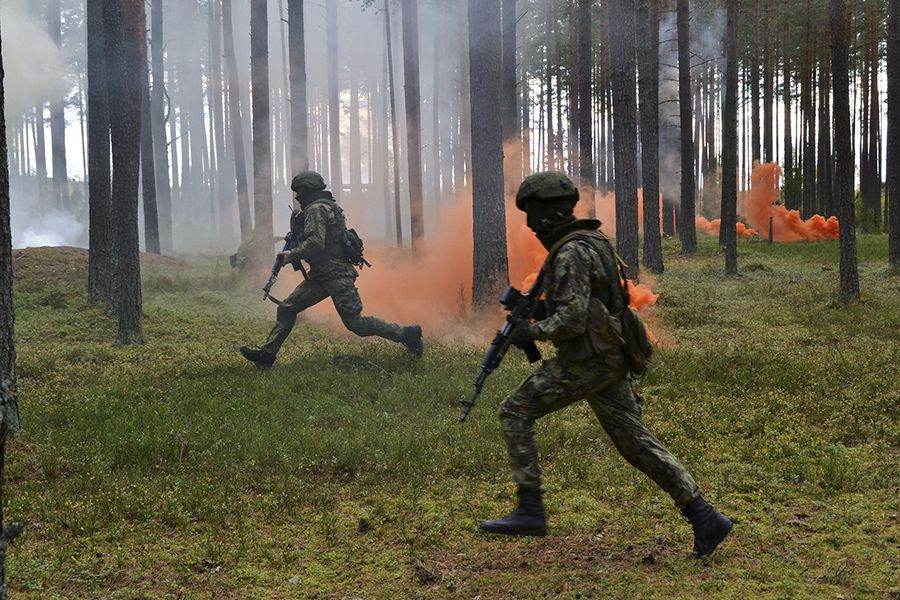
Fifteen thousand five hundred new authorized billets must be set against the churn of a war now in its fifth year. Moscow publishes no official casualty figures, but British estimates cited in recent reporting put total Russian casualties near 1.5 million since February 2022, including around 500,000 dead. Those figures cannot be independently verified, and all casualty estimates in this war should be treated with caution — but the direction of travel is not seriously disputed: Russia is burning through manpower at a rate that requires constant replenishment.
That is the context for two claims from Kyiv. In his September 28 nightly address, Zelenskyy said Ukrainian intelligence believes Moscow is preparing an additional mobilization wave and planning to mobilize up to 300,000 personnel a year — the same address in which he said more than 8,000 North Korean troops are already on Russian soil with 10,000 more being readied. The foreign pipeline and the domestic decree are two halves of one manpower strategy: import soldiers where possible, authorize more billets at home, and keep the recruitment machine ahead of the casualty curve.
The money behind the manpower
Soldiers cost money long before they reach the front. Draft budget projections for 2027 put Russian defense allocations at 17.1 trillion rubles — about $223.6 billion, or roughly 35 percent of all federal expenditure, according to reporting on the draft figures. That budget is the fiscal twin of the manpower decree: you do not authorize 1.55 million servicemen without budgeting to pay, house and equip them. Our earlier analysis of the record 2027 defense budget laid out what that spending crowds out — and the strain is visible on both sides of the front. Ukraine’s prime minister said Monday that Kyiv will postpone reconstruction spending because foreign aid is arriving late; Russia’s answer to the same fiscal pressure has been to keep spending anyway.
What Moscow says versus what Moscow signs
Three days before signing the decree, Putin insisted Russia is “not preparing” for war with Europe, accused European governments of deliberately escalating tensions by warning their populations of a possible Russian attack, and claimed Moscow was aware of alleged civil-rights violations against Russian speakers in the Baltic states. The two messages serve different audiences: reassurance outward, preparation inward.
A balanced reading does not require treating the expansion as proof of a European war plan. The additional 15,500 billets are modest against a 1.55-million establishment, and the decree’s silence on purpose cuts both ways — it may reflect routine force-generation for Ukraine as much as any wider ambition. But the backdrop Europeans actually see includes what NATO’s top military commander, US General Alexus Grynkewich, described to EU lawmakers on Monday: an ongoing Russian sabotage campaign on the continent, from an explosive-laden drone at a German airport to a Russian naval vessel firing flares at a Danish helicopter. Signed decrees and sabotage reports are read together in European capitals, whatever the Kremlin’s stated intent.
Who gains, who pays — and what the skeptics say
The winners from a bigger authorized force are, first, the Russian General Staff, which gains planning certainty; second, the contract-recruitment pipeline of signing bonuses and salaries that has become one of Russia’s largest labor-market interventions; third, the defense-industrial complex that must equip the larger establishment; and fourth, partners like North Korea, which trades manpower for military technology. The losers include the Russian budget’s non-military half, the regions bearing the recruitment burden, European security planners pricing in a permanently larger Russian army, and Ukrainian forces facing an adversary with a deeper bench — even as Ukraine’s Operation Vivaldi makes gains in Donetsk and Russian strikes hammer Kyiv.
The skeptics have a fair point that deserves airing: a ceiling is not a census. Authorized strength has repeatedly run ahead of actual strength, and previous expansions did not instantly produce tens of thousands of effective new soldiers — recruitment, training and equipment are the binding constraints, not decree numbers. Russia’s demographic headwinds are real, and quantity has repeatedly collided with quality on the battlefield. The decree tells us what Moscow wants its army to be allowed to become, not what it is today.
What happens next: three scenarios
First, the grind continues. Contracts, periodic decree bumps and the North Korean pipeline keep the force replenished; the war extends into 2027 and beyond under the 17.1-trillion-ruble budget. This is the path of least resistance — and the one the paperwork points to.
Second, the build-up precedes a push. An expanded establishment gives the General Staff room to generate fresh formations for a renewed offensive. Watch the fall conscription cycle and whether force generation visibly accelerates on the front.
Third, leverage. Manpower growth becomes a bargaining chip — negotiate from a position of apparently inexhaustible supply, while urging Ukraine to “settle” before the arithmetic gets worse.
What to watch in the coming weeks: whether a fifth decree arrives before year’s end; whether actual recruitment keeps pace with authorized numbers; how the 2027 budget fares in the Duma; and whether the fall draft brings the quiet, bureaucratic kind of mobilization that never gets a televised announcement. The decree gave no reason. The pattern is the reason.
Sources: LaPresse; South China Morning Post (via Vesper); Jnews (citing Russia’s official legal acts portal); UNITED24 Media (citing The Moscow Times); UK Pulse.