Russia 2027 military spending
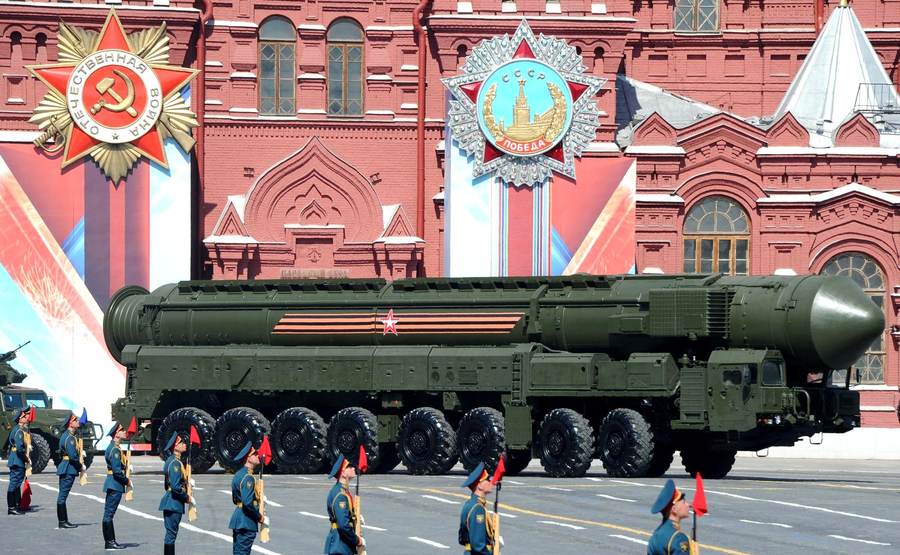
MOSCOW — Russia plans to spend 17.1 trillion roubles ($202.58 billion) on defence in 2027, around 27% more than the 13.5 trillion roubles originally budgeted and the highest figure since the start of the war in Ukraine in 2022, according to government budget documents seen by Reuters on Monday. Total defence spending over the next three years would amount to 50 trillion roubles (about $592 billion).
The draft figures, first reported by Reuters' Darya Korsunskaya, land on the same day Russian drones were pounding Kyiv, Dnipro and Kharkiv in one of the heaviest bombardment waves of the year — and they read like the balance sheet of a country preparing to fight on, whatever the cost.
Why this matters
Budgets are policy in numbers, and this one tells a blunt story: the Kremlin is not winding down for a negotiated settlement. It is financing a long war. The 27% jump is not just an accounting revision — it is a strategic choice made in the same week the Institute for the Study of War concluded Moscow is shifting to massive combined missile-and-jet-drone strikes aimed at forcing Ukraine to surrender before spring 2027. Money is the other half of that doctrine: strikes need missiles, drones need factories, factories need payrolls.
For Ukraine, the timing could hardly be sharper. President Zelenskyy told allies this month that Kyiv faces a $27 billion defence budget gap — and is now asking its partners to underwrite it while Russia's own defence budget climbs to roughly a quarter of all federal spending.
The numbers, in context
Start with the headline: 17.1 trillion roubles for defence in 2027. At Reuters' conversion rate of 84.41 roubles to the dollar, that is $202.6 billion — the largest military budget Russia has ever planned in a single year of this war. For perspective, 2025's allocation of 13.5 trillion roubles was already a record at the time. The 2026 budget had planned 12.1 trillion — but the actual 2026 figure is classified and will not be disclosed, and the documents note that some military spending sits in other parts of the budget, so the true figure is almost certainly higher than what is on the page.
Defence at 12.1 trillion out of 48.6 trillion in total 2026 spending means roughly one rouble in four the state spends already goes to the war machine — and 2027 pushes that share further still.
The United States spends far more in absolute terms on defence, but a far smaller share of its economy. Russia is approaching a Soviet-style militarization of public finances — the kind of fiscal posture that sustained a superpower for decades, and eventually helped hollow it out.
The war-finance squeeze
The documents do not only show where the money is going — they show where it is coming from, and the strain is visible everywhere:
The deficit is doubling. The government raised its 2026 budget deficit estimate to 3.2% of GDP, up from 1.6% previously. Total 2026 spending rises 13.2% to 48.6 trillion roubles, or 20.9% of GDP.
Borrowing is surging. Net borrowing for 2026 rises 26% to 5 trillion roubles, and total 2027 borrowing jumps 43% to 7.7 trillion. State debt is projected at 21.7% of GDP in 2027, above the 20% level the authorities themselves consider safe.
The war chest is being raided. The government will spend 459 billion roubles — about 11% of the liquid portion of the National Wealth Fund — to plug the deficit. The NWF, built up in the fat years of high oil prices, is the shock absorber between the war economy and a fiscal crisis. Every year it shrinks, the absorber gets thinner.
Oil money is drying up. The oil-and-gas revenue estimate for 2026 was cut to 7.6 trillion roubles from 8.9 trillion — a direct measure of what sanctions, price caps and Ukraine's long-range strikes on refineries are costing Moscow. Ukrainian drones have hammered Russian refining capacity for two years; the revenue line in the budget now quantifies the damage.
Taxpayers will pay the rest. Last week Moscow announced new tax hikes for 2027, and the documents detail a new windfall tax on metals and mining companies expected to raise about 200 billion roubles a year. Russian businesses and households, not just the state, are financing the war.
Who benefits, who loses
The winners are clear: the defence-industrial complex — the Tactical Missiles Corporation, Rostec enterprises, drone manufacturers, and the millions of workers whose wages now depend on military orders. Arms-plant towns across the Urals and Siberia are booming while civilian industries stagnate.
The losers are quieter but numerous: metals and mining firms facing the windfall tax, ordinary taxpayers absorbing the new levies, social and regional budgets squeezed by a defence share that crowds out everything else, and future Russians who will inherit the debt. The National Wealth Fund — meant to be a pension for hard times — is being spent in real time.
Critics, including Western economists, call the trajectory unsustainable: a war economy financed by borrowing, reserve raids and tax hikes while the revenue base erodes. The Kremlin's counter-argument is that it has already survived the worst of the sanctions shock, that the economy adapted, and that military spending is itself stimulus — wages, orders, full employment. Both claims can be partly true at once: an economy can keep financing a war long after it stops being a good idea.
What happens next
The draft budget goes to parliament by October 1, where approval is a formality — the Duma does not say no to the Kremlin. Watch three things after that: the rouble, which tends to wobble when borrowing plans grow; the National Wealth Fund's liquid balance, the truest gauge of fiscal room; and whether oil-and-gas revenues keep sliding, which would force either deeper cuts elsewhere or more borrowing.
The deeper question is what the spending is for. Combined with the ISW assessment — that Moscow's new "theory of victory" is to batter Ukraine into surrender before spring 2027 through escalating strikes — the budget reads as the financial twin of the battlefield doctrine. Kremlin spokesman Dmitry Peskov said Monday that Ukraine "will have to pay a price" for its strikes on Russia. The 17.1 trillion roubles is the price Russia is preparing to pay for imposing it.
For Kyiv and its partners, the message is uncomfortable: the war of attrition is being budgeted on both sides, and Russia is writing cheques for three more years. Whether Ukraine's allies match that commitment — closing the $27 billion gap Zelenskyy has named — will decide whether 2027's record budget buys Moscow the leverage it is paying for.
Sources
- Reuters (Sept 28): Russia raises 2027 military spending by 27%, budget documents show — the exclusive: 17.1 trillion roubles ($202.58B) for defence in 2027, 50 trillion over three years, deficit raised to 3.2% of GDP, oil-and-gas revenue cut, windfall tax on metals and mining.
- Defense News (Sept 28), via Reuters: Russia raises 2027 military spending by 27% — corroboration of the budget-document figures and the October 1 parliamentary submission deadline.
- SFG Media (Sept 28): Russia Will Increase Military Spending to 17.1 Trillion Rubles in 2027 — context: the 2025 record of 13.5 trillion roubles and the 2026 budget's 12.93 trillion baseline.
This article is based on Reuters' September 28 exclusive on Russian government budget documents, corroborated by Defense News and SFG Media. Figures are reported as stated in the documents; the actual 2026 defence figure is classified and undisclosed, and some military spending may be recorded elsewhere in the budget, so true totals may differ. Signal Post News has not independently verified the budget documents. Analysis and projections are the author's own.