World · Religion · Peru
The Pope Leo Peru tour Cusco stop was only the first quarter of an extraordinary Sunday: 2,270 kilometres in 12 hours, four events, from the Inca fortress of Saqsaywaman at 3,700 metres to the Amazon gateway of Pucallpa — on the penultimate day of a 12-day tour that has drawn some 12 million people, the largest crowds of his papacy, in the country he served for two decades and whose citizenship he holds.
CUSCO, November 15, 2026 — Papal itineraries are usually exercises in stately proximity: a capital, a cathedral, a stadium, a palace. Sunday’s was a traverse of a continent-sized country in a single day. Pope Leo spent November 15 crossing Peru — 2,270 kilometres (1,410 miles) in 12 hours, for four events in two cities that between them contain the whole argument of his visit: Cusco, the former capital of the Inca Empire high in the Andes, and Pucallpa, the lowland gateway to the Peruvian Amazon, Reuters reported. He began the day in Chiclayo, the northern diocese he served as bishop from 2015 to 2023, and was to end it in Lima. On Monday he leaves for Rome, closing a 12-day, three-nation South America tour on its penultimate day with the most physically demanding schedule of his papacy — undertaken, it should be said plainly and without dramatisation, five weeks after surgery.
The crowds require a sentence of their own, with their attribution kept intact. Across the tour, some 12 million people have turned out, according to Reuters’ reporting of the estimates — the largest crowds of Leo’s papacy, a figure for the whole 12 days and three nations, not for Sunday alone. In Cusco he arrived to an open-air popemobile route lined for miles, with volunteers in yellow “Friends of Leo” shirts marshalling the welcome. Numbers on that scale stop being logistics and become a political fact in their own right: whatever else this tour is, it is a demonstration that the first pope from the Americas’ south — Chicago-born, Peruvian by citizenship and by twenty years of his life — commands a popular devotion in his adopted homeland that no European tour of his young papacy has matched.
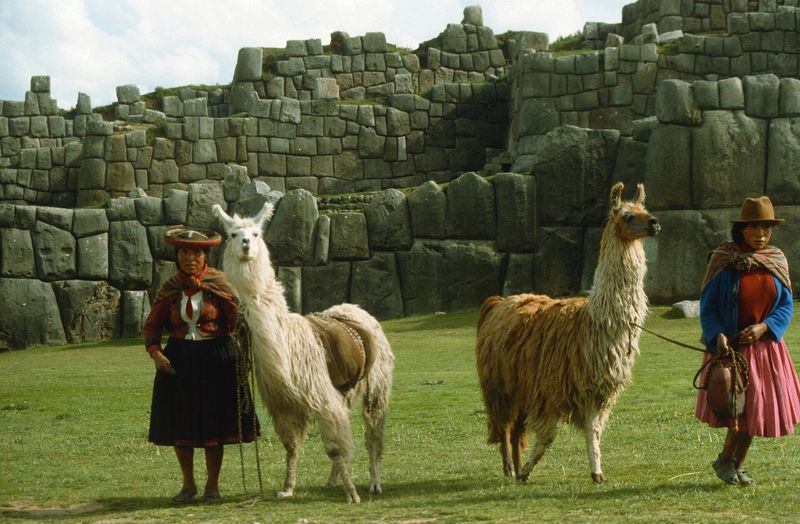
Cusco: the fortress above the city
The Cusco stop centred on the esplanade of Saqsaywaman, the ancient Inca fortress that watches over the city from 3,700 metres (12,139 feet) — a citadel of stones so large and so precisely fitted that its construction still argues with visitors about what pre-industrial engineering could do. The Inca Empire it guarded ran from about 1438 to 1533; after the conquest, its stones were quarried to build the churches of colonial Cusco, a recycling that Sunday’s visit quietly reversed: the Church, in the person of its first Peruvian pope, came back up the hill to honour the place the stones came from. The Rev. Julio Velazco Paz, a spokesperson for the Cusco archdiocese, told Reuters the visit was shining a light on “the richness of our faith, our culture, our traditions” — a sentence that, in Cusco, is not boilerplate. Faith, culture and tradition there are layered in a single street: Inca walls, colonial churches on Inca foundations, and a Catholicism that has been negotiating with the Andes for five centuries. A pope who is himself a product of that negotiation — an Augustinian who spent two decades in Peruvian parishes and a Peruvian diocese — does not need the symbolism explained to him, and the crowds lining his route for miles suggested nobody needed it explained to them either.
Pucallpa: the Amazon asks to be heard
If Cusco was the tour’s past, Pucallpa was its demand. The city on the Ucayali River is home to the Shipibo-Konibo Indigenous people, and the local hope for the visit — reported by Reuters in advance of any words the pope may have spoken there — was bluntly transactional in the best sense: that a few hours of the world’s attention might be converted into pressure on the conditions people live in. Cecilio Soria, an Indigenous human rights activist, told Reuters the arrival was a joy and “a great opportunity to make our demands, our grievances, and our problems heard.” Church leaders hoped Leo might address illegal logging. Behind that hope sits a documented catastrophe: gold mining has cleared some 140,000 hectares (540 square miles) of rainforest since 1984 and poisoned waterways, according to a 2025 report by the Monitoring of the Andean Amazon Project, via Reuters.
Precision matters here as much as anywhere in this story. The expectation that Leo would speak to logging and mining was, in the reporting, the hope of Church leaders and local activists — not, at the time of the Reuters account, a delivered speech that can be quoted. Papal visits generate a familiar inflation, in which everything a community wishes a pope had said is remembered as said. This article declines the inflation. What can be said is structural: a pope who chose to end his longest day in an Amazon gateway city, among an Indigenous people whose river is being poisoned, has made the argument with his itinerary whether or not he made it with a text. In the grammar of papal travel, where every stop is chosen from a hundred invitations, presence is the first draft of the message.
Saturday in Santa Cruz: the tour’s quiet centre
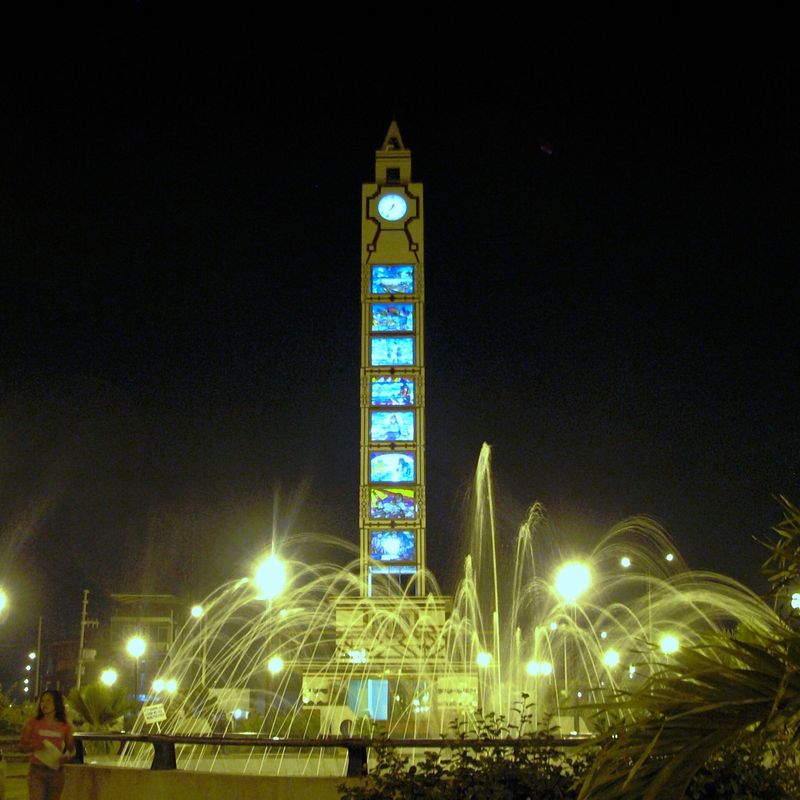
To understand Sunday’s scale, rewind a day. On Saturday, November 14, Leo travelled by helicopter to Santa Cruz de Succhabamba, a remote Andean town of about 6,000 people, 100 kilometres east of the Pacific coast, inside the diocese he once led from Chiclayo. The Vatican estimated the crowd at about 20,000 — more than three times the town’s population, drawn from the surrounding hills. There he spoke about the forces emptying such communities: migration, falling birth rates and poverty. It was the least mediated event of the tour and, in the judgement of this column, its centre of gravity. The mega-crowds in the capitals demonstrate reach; a helicopter landing in a town of 6,000 demonstrates memory. This is a pope returning to the specific geography of his own ministry — the former Chiclayo bishop coming back to the villages of his diocese as pope — and Peru, the longest stop of the tour, is where that biography and this office fully merge. Earlier legs underlined the scale: Reuters roundups reported crowds of roughly three million in Lima on Wednesday and around a million estimated for the Chiclayo Mass, figures carried here with their Reuters attribution.
The health question, stated carefully
One element of Sunday’s schedule drew attention that should be reported at its correct, modest size. Leo underwent surgery for lung adenocarcinoma on October 13; his doctors said the cancer was localised, had not spread and required no further treatment, Reuters reported. A visit to 3,700 metres a month after lung surgery naturally prompted questions, and this site’s earlier coverage of the pope’s recovery and return to public audiences noted Cusco’s altitude in the schedule at the time. The medical view in the Reuters reporting was reassuring and undramatic: experts said the altitude posed no special dangers in his situation, that he might need rest breaks or supplemental oxygen as many travellers do, and Dr Stephen Cassivi of the Mayo Clinic’s thoracic surgery practice said travelling to high altitude a few weeks after lung surgery is not unusual. That is the whole of it. A 2,270-kilometre day is an endurance fact; it is not a medical alarm, and this article will not manufacture one. If anything, the day’s completion is itself the data point: five weeks after a cancer operation, the patient crossed a country from the high Andes to the Amazon basin in twelve hours, and the story remained the crowds.
Why this matters
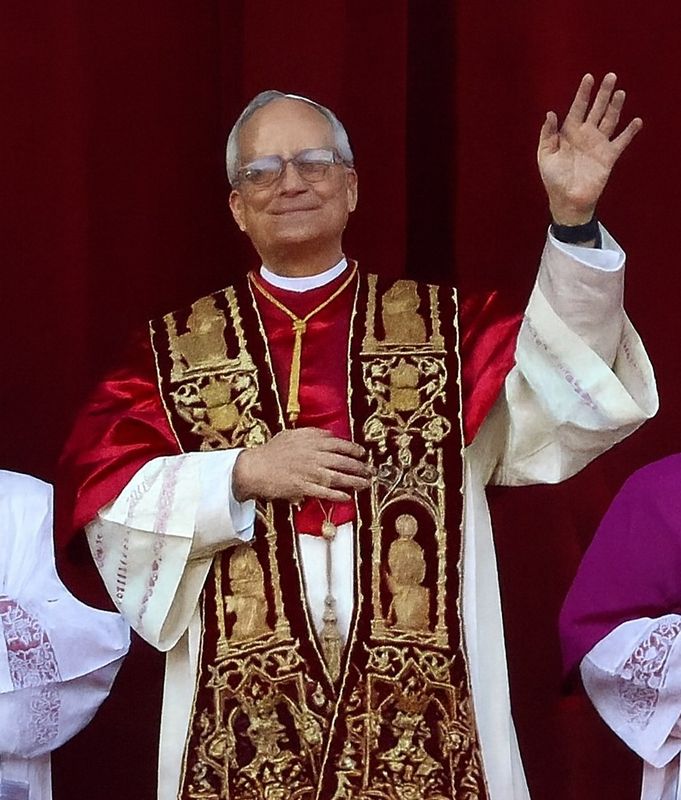
Three things converged on Sunday that rarely converge in a single papal day. The first is identity: Leo is the first Peruvian citizen pope, a man who lived some twenty years in Peru and holds its citizenship alongside his American birth — and this tour, above all its Peruvian leg, is the homecoming that fact promised, as the earlier Uruguay stop in Paysandú was for the tour’s opening movement. The second is agenda: by pairing Saqsaywaman with Pucallpa in one day, the itinerary bound the Church’s Andean past to its Amazonian present — Indigenous dignity, illegal logging, poisoned rivers — in a single line on a map that any Peruvian schoolchild could draw. The third is capacity: twelve million people across twelve days is a mobilisation figure that governments, not just churches, notice. A papacy that can fill three nations’ streets in a fortnight holds a kind of soft power that does not need a doctrine to operate; it needs only a calendar and a plane.
What happens next
The tour closes quickly now. Sunday night ended in Lima; on Monday, November 17, Leo leaves for Rome, and the 12-day, three-nation journey ends. What follows a tour like this is rarely a document; it is a residue — in Peru’s case, a Church freshly conscious of its numbers, an Indigenous Amazonian movement that had its hours in the world’s lens and will now test whether anything follows them, and a pope whose biography has been publicly re-rooted in the country that formed him. The measures will come later and quietly, if they come: in whether the Amazon’s grievances find their way into his future words on the environment, in whether Peru’s emptying mountain towns appear in his teaching on migration, and in whether the Vatican’s centre of gravity, for the rest of this papacy, sits a few degrees further south than it used to. Sunday suggested it might. A man does not cross 2,270 kilometres of his own past in twelve hours unless he intends to bring some of it back with him.
Sources
Reuters, November 15, 2026 (Joshua McElwee, Cusco; published 10:06 UTC, updated 16:09 UTC): the Sunday traverse of Peru on the penultimate day of the 12-day, three-nation tour; 2,270 km in 12 hours and four events in Cusco and Pucallpa; the start from Chiclayo, the day’s end in Lima and the Monday departure for Rome; the tour-wide crowd estimate of some 12 million; the Cusco popemobile welcome and “Friends of Leo” volunteers; the Saqsaywaman visit and the Rev. Julio Velazco Paz quotation; the Shipibo-Konibo context, Cecilio Soria’s quotation, Church leaders’ hopes on illegal logging, and the Monitoring of the Andean Amazon Project 2025 figures on gold mining (140,000 hectares cleared since 1984); and the health context — the October 13 surgery for localised lung adenocarcinoma, no further treatment required, expert views including Dr Stephen Cassivi (Mayo Clinic). Reuters via DevDiscourse and the Tampa Bay Chronicle, November 15, 2026: Saturday’s helicopter visit to Santa Cruz de Succhabamba, the Vatican-estimated crowd of about 20,000, and the remarks on migration, birth rates and poverty. The 12-million figure is a tour-wide estimate, not a Sunday figure; the hope that the pope would address illegal logging is reported as an expectation, not a delivered speech. Photographs are file photos via Wikimedia Commons and do not depict Sunday’s events.