World · Vatican · Uruguay · Religion
The first Mass of Pope Leo XIV’s 12-day South America journey filled a park in a river city of 80,000 people with a crowd half its size — in the most secular country in Latin America, 38 years after a pope last set foot in Uruguay, and less than a month after surgeons removed part of the pontiff’s right lung.
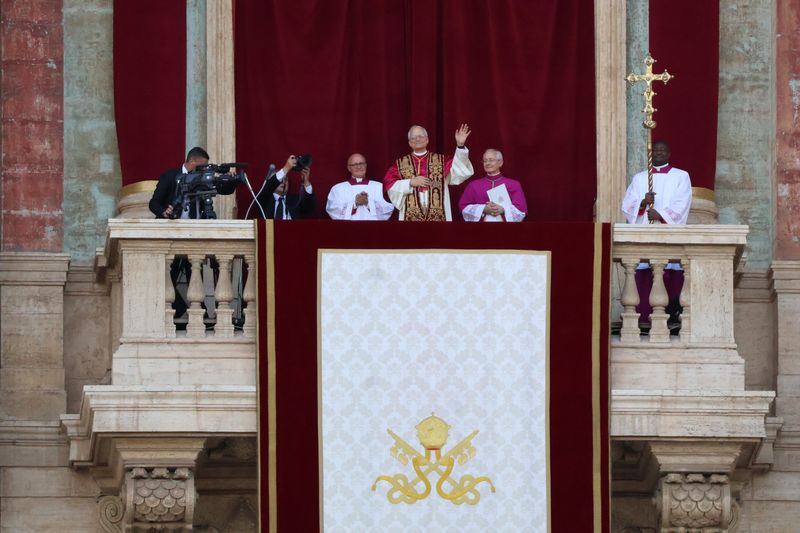
PAYSANDÚ, Uruguay, November 7, 2026 — The Pope Leo Uruguay Mass that opened the public heart of this pontificate’s most demanding journey drew about 40,000 faithful to Parque París Londres in Paysandú on Saturday, local authorities confirmed in the Holy See Press Office bulletin — a crowd equal to half the population of the city itself, gathered for the first Mass of Pope Leo XIV’s South America tour and the first papal visit to Uruguay since St John Paul II came in 1988. No pope had ever visited Paysandú before. By the time the 71-year-old pontiff reached the altar, a river city better known for its bridge to Argentina had become, for one morning, the centre of the Catholic world.
The arithmetic of the morning is the story in miniature. Paysandú is home to about 80,000 people. Roughly 40,000 came to the Mass — one person in the park for every two who live in the city, before counting the visitors who crossed the Uruguay River from Argentina or travelled up from Brazil and the Uruguayan interior. The Associated Press reported that more than 30,000 people had registered in advance, that the gates opened at 5:30 a.m., and that many in the crowd wore rain ponchos against the unsettled spring weather. People do not stand in a park before dawn, in ponchos, for a routine event. They do it for a once-in-two-generations one: the last time a pope celebrated Mass on Uruguayan soil, Leo himself was a 32-year-old Augustinian priest, and most of Saturday’s crowd had not been born.
A crowd half the size of the city
Pope Leo Paysandú Mass: gates before dawn, ponchos against the rain
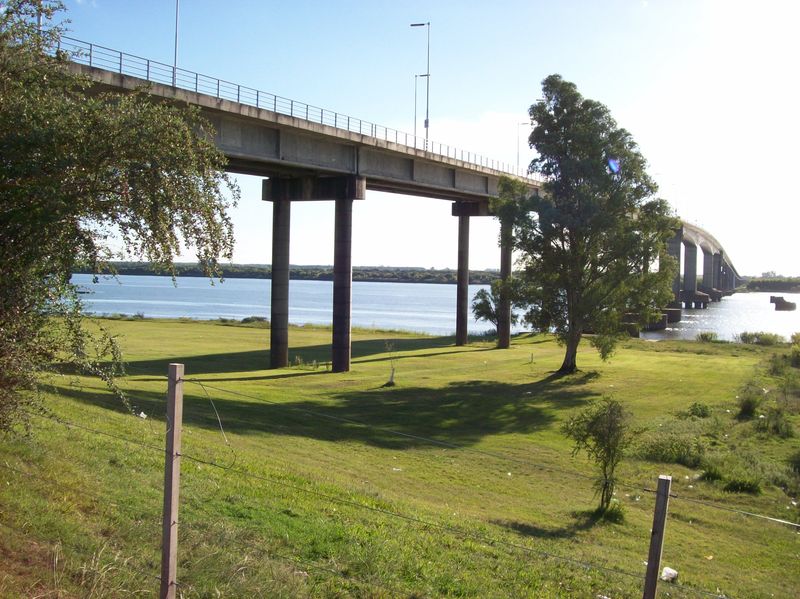
The choice of Paysandú was deliberate, and it explains the turnout. Papal itineraries usually run through capitals; this one opened its Mass schedule 375 kilometres — about 230 miles — northwest of Montevideo, in a department capital on the east bank of the Uruguay River, facing the Argentine city of Colón across the General Artigas Bridge. For the faithful of the Uruguayan littoral, and for Argentines who could cross the river in the morning, Paysandú was closer than any Mass in the capital would ever be. The Vatican had estimated that about 30,000 people turned out on Friday, the first day of the visit, when Leo landed at Montevideo’s Carrasco airport and was greeted by President Yamandú Orsi and two children offering flowers. Saturday’s crowd in a far smaller city exceeded that number — a measure of how deliberately the itinerary was built to leave the capital, and of how long the interior had waited.
There is a second measure, quieter and just as telling. Uruguay is a country of about 3.5 million people and, by every survey the region produces, its most secular and least Catholic nation — a place where church and state were separated more than a century ago and where a large share of citizens claim no religion at all. A crowd of 40,000 at a papal Mass in such a country is not a demographic inevitability; it is an event that had to be chosen, by the Vatican that scheduled it and by every person who registered, travelled and stood in the rain gear. Leo acknowledged the reality directly on Friday evening, at vespers in Montevideo Cathedral, noting that many Uruguayans do not know the faith even though Catholicism is woven into the country’s founding story — the independence struggle of 1825 and the Thirty-Three Orientals whose patroness, Our Lady of the Thirty-Three, he will honour on Sunday.
Bridges, palm groves and mate
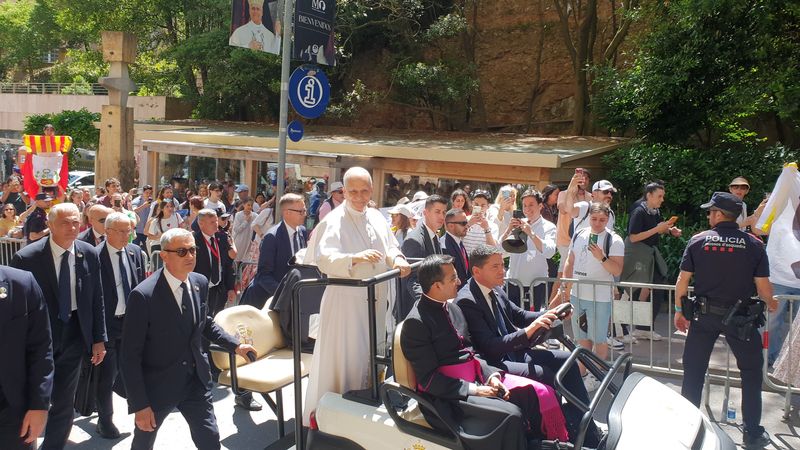
Pope Leo Jacinto Vera homily honours Uruguay’s ‘gaucho bishop’
Leo built his homily around the landscape his listeners live in. He honoured Blessed Jacinto Vera, Uruguay’s first bishop — remembered as the “gaucho bishop” for the years he spent on horseback crossing the young republic to reach communities no bishop had ever visited — and structured the preaching around three images drawn from the littoral itself: bridges, palm groves and mate, the shared drink passed hand to hand across the River Plate region. The exhortation at its centre was quoted in the Holy See bulletin: “continue the mission of evangelization with enthusiasm. Be bridges, so that many may encounter Jesus.”
The imagery was doing precise work. A bridge is not an abstraction in Paysandú: the General Artigas Bridge is the city’s front door, its economy and its daily argument that the river is a connection rather than a border — an argument many in the crowd had made with their feet that morning by crossing it. Mate is the region’s ritual of unhurried welcome, shared across Uruguay, Argentina and southern Brazil alike. And Vera is the homegrown proof Leo’s audience needed for the point he pressed at Friday’s vespers: that the faith is not an import in Uruguay but part of its national biography, carried on horseback by its first bishop before the republic was sixty years old. In the region’s most secular country, the pope did not argue statistics. He argued memory.
Why this matters
Three numbers explain why a Mass in a provincial park drew wire coverage on three continents. Forty thousand in a city of 80,000 is a turnout ratio capital cities rarely match; it suggests the demand for this visit was deepest precisely where papal visits never go, and it will be cited in every future argument about whether mega-journeys should route through the interior. Thirty-eight years is the gap since 1988 — long enough that Saturday functioned less as a return than as a first encounter for two generations, in a country whose secular identity has only deepened in the interval. And 31,000 kilometres is the length of the journey Leo has undertaken to be there: 12 days, three countries, 10 cities, 36 speeches and 12 to 14 flights, begun 25 days after major lung surgery. Each number raises the stakes of the others. A routine trip would not have drawn this crowd; a frail pope would not have attempted this itinerary; a country that had seen a pope recently would not have waited in ponchos before dawn.
The visit also matters for what it sets in motion. On Friday, arriving in Montevideo, Leo urged the countries of South America to tackle the region’s problems together, Reuters reported — a theme the bridges homily carried into Saturday. His audiences later on Saturday were chosen to match it: a social community living with the consequences of problems no country has solved alone, educators, and a stadium vigil of the young. Read as a whole, the Uruguay leg is the thesis statement of the tour: a church that presents itself as connective tissue — between countries, between a secular present and a Catholic past, between a pope and a continent where he spent twenty years as a missionary. What happens next on the itinerary will test whether the thesis travels.
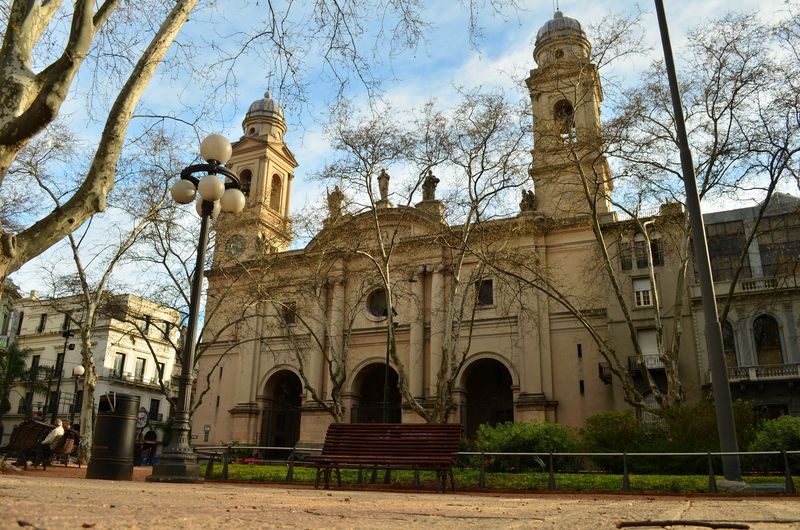
Thirty-eight years: the long wait since John Paul II
The first papal visit to Uruguay since 1988, and the visit Francis never made
To understand Saturday, start in 1988, when John Paul II’s visit fixed the template of what a pope in Uruguay looks like — and then consider everything that did not happen afterwards. Benedict XVI never came. Francis, the Argentine pope from across the river, never came either: the first Latin American pontiff visited much of his continent but never Uruguay, and never made the homecoming trip to Argentina that his countrymen awaited for twelve years. Leo’s itinerary now performs both visits at once. After Uruguay he travels to Argentina from November 8 to 11 — the first papal visit there in 39 years, fulfilling the wish Francis left unfulfilled — and then to Peru from November 11 to 17, the country where the Chicago-born pontiff spent about two decades as a missionary and bishop and whose citizenship he holds. Uruguay, the smallest and most secular of the three stops, goes first: the hardest room on the tour, scheduled before the homecomings.
That sequencing is a statement about priorities that the Paysandú crowd appeared to validate. It also carries a risk the Vatican accepted openly: opening in the country where indifference was most likely to be the story. Instead, the early story of the tour is turnout — about 30,000 on day one by the Vatican’s estimate, 40,000 at the first Mass — in a nation of 3.5 million. Whatever happens in Argentina and Peru, where Catholic identity runs far deeper, Uruguay has already supplied the tour’s first headline and its most exportable image: a full park, in the rain gear, in the interior, at dawn.
A marathon undertaken weeks after lung surgery
Pope Leo lung surgery recovery tour: 31,000 km, 36 speeches, no special precautions
Hovering over every line of the itinerary is the fact that its author spent mid-October in an operating theatre. On October 13, surgeons removed the lower lobe of Leo’s right lung after a diagnosis of lung adenocarcinoma — the story this newsroom covered when the Vatican confirmed his lung-cancer diagnosis and surgery. The Vatican has since said the recovery is complete, that no further treatment is needed, and that the South America journey would proceed unchanged, with no special precautions — a position it has maintained without qualification as the departure approached. Leo’s public return was gradual and closely watched: his first Angelus since the surgery in October, then his popemobile return at his first general audience since the operation. Saturday’s Mass was the moment the recovery narrative ended and the endurance question began.
The schedule ahead would tax a healthy 71-year-old. About 31,000 kilometres — 19,300 miles — of travel; 10 cities; 36 speeches; a dozen or more flights including helicopter hops; and, in Peru, Cusco at over 11,000 feet, where altitude compounds everything a single-lobectomy patient’s doctors would ordinarily counsel against rushing. The Vatican’s answer has been consistent: the itinerary was reviewed, the recovery is complete, and the programme stands. Saturday offered the first public evidence for that position — a full outdoor Mass, celebrated at length, at the start of the longest day of the Uruguay leg rather than the end of it. The remaining eleven days will supply the rest of the evidence, one city at a time.
One day, two cities
Pope Leo Montevideo prayer vigil closes a day that began in Paysandú
Saturday did not end at Parque París Londres. Returning to Montevideo, Leo’s programme moved through three further encounters that map the tour’s priorities as clearly as the Mass did. He met the social community of Casavalle at the Parish of Our Lady of Guadalupe, in a neighbourhood scarred by drug trafficking and gang violence — the constituency every Latin American pastor names first and every visiting dignitary is most tempted to schedule around. He met the education community at the Catholic University of Uruguay. And he closed the day with a prayer vigil at the Centenary Stadium, the national stadium whose tower is Montevideo’s most recognisable silhouette, in front of the young people on whom his Friday message about an unknown faith most directly depends.
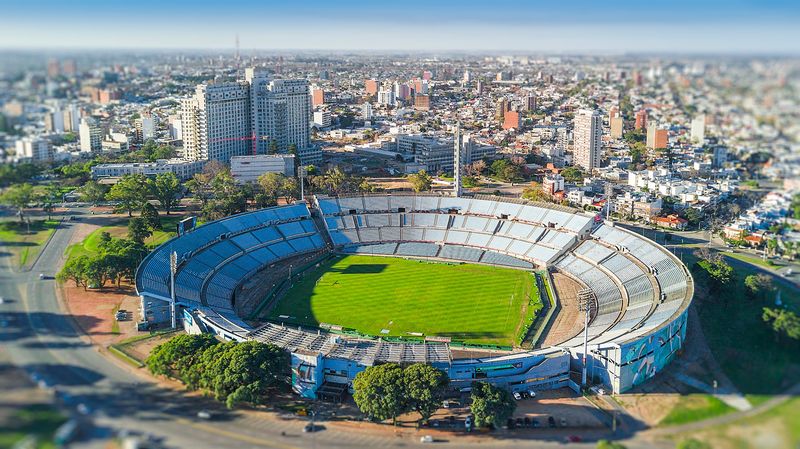
Taken together, the day’s geography was the homily’s geography: a bridge city in the morning, a wounded neighbourhood in the afternoon, a stadium of the young at night. It is a demanding template to repeat for eleven more days, and it is plainly the template — the Argentina and Peru programmes are built from the same elements of Mass, margin and youth. Whether the 71-year-old at its centre sustains it at altitude in Cusco is the open question of the tour. On Saturday’s evidence, the crowds intend to meet him more than halfway.
What happens next
Pope Leo South America tour 2026: Florida on Sunday, then Argentina and the Peru homecoming
Uruguay closes on Sunday, November 8, with Mass in Florida at the National Shrine of Our Lady of the Thirty-Three, the patroness of Uruguay — the Marian heart of the 1825 independence story Leo invoked at Friday’s vespers. Then the Pope Leo Uruguay Argentina Peru trip moves to its second act: Argentina, November 8 to 11, where the first papal visit in 39 years will be read, inevitably, against Francis’s absence and against the hopes his countrymen transferred to his successor. The final and longest leg is Peru, November 11 to 17: for the Chicago-born Leo, who spent about two decades there as missionary and bishop and holds Peruvian citizenship, it is the homecoming around which the whole journey was conceived — and, with Cusco’s altitude on the programme, its sternest physical test.
Watch three things as the tour proceeds. First, the crowds: whether Argentina and Peru, where Leo is a returning son rather than a long-awaited guest, match the turnout ratio that little, secular Uruguay set in Paysandú. Second, the message: whether the regional-unity theme of Friday’s arrival remarks and Saturday’s bridges homily hardens into specific appeals on migration, drugs and inequality in the speeches ahead. Third, the man: 36 speeches and 31,000 kilometres were a bold promise to make for any pontiff four weeks after lung surgery, and every day completed on schedule is itself news. The tour ends on November 17. Its first Mass has already made its argument — in a park in Paysandú, where half a city turned out before breakfast to hear a pope tell them to be bridges.
Does a papal visit still move a secular country — or does a crowd like Paysandú’s say more about Uruguay than about the Church? Follow Signal Post News for continuing coverage of Pope Leo’s South America journey through Argentina and Peru, and share your view in the comments.
Sources
Holy See Press Office, daily bulletin, November 7, 2026 — confirmation by local authorities of about 40,000 faithful at the Holy Mass in Parque París Londres, Paysandú, and the text of the homily honouring Blessed Jacinto Vera: press.vatican.va. Reuters, November 6–7, 2026 — arrival in Montevideo, the greeting by President Yamandú Orsi, the Vatican’s day-one crowd estimate of about 30,000 and the appeal for South American countries to tackle regional issues together: reuters.com. Associated Press, November 6–7, 2026 — more than 30,000 registered for the Paysandú Mass, gates opening at 5:30 a.m., pilgrims from Argentina and Brazil and the rain ponchos in the crowd: apnews.com. Photographs: Wikimedia Commons, as credited in the captions; file photographs are described as such and are not presented as images of the November 7, 2026 Mass.