World · Crime · Cybersecurity
The dark web drug crackdown arrests announced on Thursday are the largest of their kind: 354 people detained across 14 countries, more than $234 million in cash and virtual currency seized, roughly 5.7 metric tons of illicit drugs, 38 pill presses and 209 firearms, according to the U.S. Department of Justice and Europol. Operation TorNado did not shut down a single marketplace. It did something slower and, investigators argue, harder to undo: it arrested the people who had sold and bought on marketplaces that law enforcement seized in earlier operations, using the evidence those seizures left behind.
Track it live: Live markets tracker
WASHINGTON, November 16, 2026 — The announcement came in two capitals at once, which is the first thing to understand about the numbers. On Thursday, November 12, the U.S. Department of Justice, speaking for the Joint Criminal Opioid and Darknet Enforcement team — JCODE — said Operation TorNado had produced 354 arrests worldwide and seizures of more than $234 million in cash and virtual currencies combined, approximately 5.7 metric tons of illicit drugs including fentanyl and other opioids, methamphetamine, heroin, cocaine and ecstasy/MDMA, plus 38 pill presses and 209 firearms. Europol, coordinating the European side from The Hague, announced the same 354 arrests and put the same operation’s totals at 5 tonnes of drugs and over €210 million in criminal assets, of which over €60 million was seized in Europe and over €150 million in the United States. These are not two pots of money and two piles of drugs. They are one operation described by two agencies in two currencies and two rounding habits, and this article will never add them together — because adding them would double-count the largest dark-web enforcement action yet mounted, and the real figure needs no help. FBI Director Kash Patel described TorNado as “the largest interagency takedown of Dark Web drug vendors and buyers to date.” Every person arrested is a defendant, not a convict: as the Justice Department states in its own release, an indictment or complaint merely alleges that crimes have been committed, and defendants are presumed innocent until proven guilty beyond a reasonable doubt in a court of law.
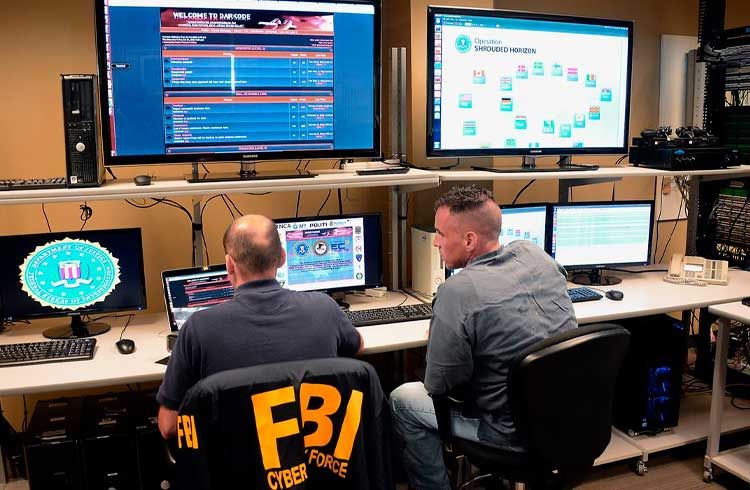
The operation ran from May 2025 to October 2026, and it is the sixth internationally coordinated JCODE action since the team was created in 2018. Its targets were vendors and buyers who had been active on prominent dark-web markets that law enforcement seized in earlier operations — Archetyp, Bohemia, Nemesis, Kingdom and Tor2Door. That sequence is the whole story in miniature, and it is worth stating precisely, because the distinction is routinely lost: TorNado is not a new shutdown of those markets. Those markets were taken down before, in their own operations. TorNado is what happened afterwards — eighteen months of investigators working through the seized servers, order books, cryptocurrency wallets and shipping records of dead marketplaces, resolving pseudonyms into people, and then, in a coordinated sweep across 14 countries, knocking on doors. The marketplace is the crime scene; this was the detective work.

How TorNado worked: the evidence outlives the market
Dark-web markets are built on a promise of forgetting. Buyers and sellers meet under pseudonyms, pay in cryptocurrency, communicate in encrypted messages, and trust that when a market closes — as every market eventually closes, by exit scam, feud or police action — the record closes with it. The JCODE model is an attack on exactly that assumption. When law enforcement seizes a market’s infrastructure, as it did with Archetyp, Bohemia, Nemesis, Kingdom and Tor2Door in earlier operations, it does not merely switch the site off. It takes custody of the ledger: vendor accounts and their sales histories, buyer addresses preserved in order records, wallet addresses, the metadata that pseudonymous commerce cannot help generating. A vendor who sold fentanyl under a handle in 2023, on a market seized in 2024, could be identified in 2025 and arrested in 2026 in an operation whose public name he had never heard. TorNado’s eighteen-month span, May 2025 to October 2026, is the visible signature of that method: this was not a raid planned in weeks but an evidence-processing campaign measured in years, run jointly by the DEA, the FBI and their counterparts abroad, with Europol coordinating across Europe and partner agencies in Australia and New Zealand among those the Justice Department named.
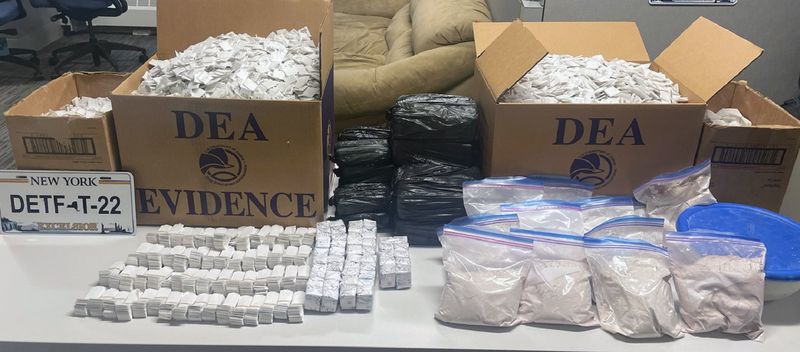
The country breakdown shows where the trade’s centre of gravity sat. The United States accounted for 132 of the 354 arrests, the United Kingdom for 59, Hungary for 45, Germany for 41 and France for 23, according to the DOJ and Europol figures, with the remaining arrests spread across the other participating countries. Read the list as a map of the postal system as much as of the internet: dark-web drug commerce is, in the end, a mail-order business, and its arrests cluster where the packages land. The 38 pill presses matter for the same reason. A pill press is not inventory; it is capacity — the machine that turns bulk fentanyl and binder into the counterfeit tablets that imitate pharmacy opioids and kill at industrial scale. Seizing drugs subtracts product. Seizing presses subtracts production. And the 209 firearms, noted without elaboration in the releases, are the standard companion statistic of vendor arrests: the point at which a pseudonymous online business turns out to have a house, a stash and a gun behind the handle.
The numbers in context
TorNado’s natural yardstick is its own predecessor. Operation RapTor, in 2025, reported 270 arrests across 10 countries and over $200 million seized. TorNado exceeds it on every axis the agencies publish: 354 arrests against 270, 14 countries against 10, more than $234 million against RapTor’s $200 million, and approximately 5.7 metric tons of drugs in the Justice Department’s accounting. The growth is not incidental; it is the method compounding. Each seized market feeds the evidence base for the next sweep, each sweep’s arrests generate devices, wallets and records that identify more accounts, and the JCODE series — six coordinated actions since 2018, each billed as larger than the last — has become a ratchet that turns in one direction. Officials calling TorNado the largest such takedown to date are, on the published figures, simply reading their own table.
Two disciplines are required to read that table honestly, and this article observes both. The first is the currency discipline already stated: the Justice Department’s $234 million and 5.7 tonnes and Europol’s €210 million-plus and 5 tonnes are the same seizures described twice, once in dollars from Washington and once in euros from The Hague. Any account that sums them into a $450-million operation has invented the difference. The second is a silence in the sources that must not be filled. Neither release splits the $234 million between cash and cryptocurrency. The DOJ figure is expressly “cash and virtual currencies combined,” and no official breakdown exists in the reporting. That absence matters more than it might seem: the cash-to-crypto ratio is the figure commentators reach for when arguing whether dark-web commerce is a cryptocurrency phenomenon or a conventional cash business wearing digital clothes, and on the evidence of TorNado’s own releases, the honest answer is that the agencies have not said. What they have said is the combined total, and the combined total is what stands.
Why this matters
Vendors and buyers are not a marketplace
The strategic claim embedded in TorNado is that arresting people deters differently from seizing websites. A market takedown, however spectacular, destroys a venue; the trade’s participants scatter to successor markets within weeks, a pattern Europol itself has documented after every major seizure, and the underlying demand — above all for fentanyl and the counterfeit pills pressed from it — reconstitutes the supply. An arrests operation aimed at named individuals works the other side of the equation. It tells every vendor on every surviving market that the pseudonym is a loan, not a gift: that the sales history accumulating under a handle is evidence being warehoused against a future knock. Whether that deterrence is real is genuinely contested. Sceptics note that 354 arrests, against a global dark-web drug trade whose participant count runs to the hundreds of thousands, removes a fraction of the market’s capacity, and that neither agency published an estimate of what share of the trade TorNado took out — because no defensible estimate exists. Supporters answer that the arrests were not random: they were drawn from the vendor and buyer rolls of five major markets, concentrated among the accounts the evidence could identify, and weighted toward the sellers whose pill presses and fentanyl volumes made them dangerous rather than merely present. Both readings can be true at once. TorNado can be the largest operation of its kind and still be a small share of the trade it polices; the agencies’ claim is about the record, and the record is real.
The fentanyl arithmetic behind the headline
Strip the operation to the drug at its centre and the stakes sharpen. Fentanyl’s lethality is a function of dose measured in milligrams, which is why the tonnage figures in the releases — 5.7 metric tons of mixed illicit drugs in the DOJ’s count, including fentanyl and other opioids alongside methamphetamine, heroin, cocaine and MDMA — resist easy translation into lives. The releases do not break the tonnage down by substance, and this article will not perform the conversion the agencies declined to perform. What can be said is structural. Dark-web fentanyl commerce connects three systems that policy usually treats separately: the online market, where the sale is arranged; the postal and parcel network, where the product moves; and the pill press, where bulk powder becomes the counterfeit tablet that reaches a buyer who believes he is taking a pharmaceutical. TorNado’s seizure list — drugs, presses, firearms, money — is a cross-section of all three systems at once, which is precisely what its architects designed it to be. Attorney General Todd Blanche fronted the Washington announcement on November 12; the message discipline around it, from both the DOJ and Europol, was that this is now a standing campaign with a series number, not an episode.
The limits of the claim
A balanced account has to end its analysis where the evidence ends, and TorNado’s evidence, as published, ends in three places. First, arrests are allegations. The 354 people detained now enter fourteen different legal systems; some will be charged, some convicted, some neither, and the Justice Department’s own formulation — defendants are presumed innocent until proven guilty beyond a reasonable doubt — is not boilerplate but the operative fact about every name in the sweep. Second, the operation’s measure of itself is internal: arrests, seizures and tonnage are enforcement outputs, not market outcomes, and no agency claimed that dark-web drug availability, price or purity moved as a result. The history of this beat, including this site’s coverage of the KillSec ransomware dismantlement and of the SBI dark-web data leak, is a history of networks absorbing blows and re-forming — which is an argument about adaptation, not an argument that the blows are worthless. Third, the identification method that powers the whole model cuts both ways in the courtroom: evidence drawn from seized servers must survive challenges to its provenance, its chain of custody and the legality of its collection in each jurisdiction where it is used, and defence lawyers in RapTor-era cases have tested exactly those seams. TorNado’s trials, spread across years and continents, will test them again at larger scale.
What happens next
The near term is procedural: initial court appearances, extradition requests where arrests and charges sit in different countries, and the slow conversion of a coordinated sweep into hundreds of individual prosecutions. The Justice Department says investigations to identify further account holders are still under way, which in the grammar of these announcements means the evidence base from Archetyp, Bohemia, Nemesis, Kingdom and Tor2Door has not been exhausted — more names are in the ledger than were in the sweep. The medium term is the market’s answer: successor venues will absorb displaced vendors, surviving markets will market their longevity as proof of security, and Europol’s own analysts will watch, as they have after every previous action, for the migration patterns that reveal where the trade reassembles. And the long term is the series itself. JCODE has now run six coordinated actions since 2018, each larger than its predecessor, on a model that treats every seized marketplace as a down payment on the next operation. If that ratchet holds, the question TorNado leaves is not whether there will be a seventh operation, but what its name will be, how many countries it will span — and whether the vendors now opening fresh accounts on fresh markets understand that the ledger they are writing, line by line, is the evidence file of the operation that has not been announced yet.
Sources
U.S. Department of Justice / Drug Enforcement Administration, for the JCODE team, November 12, 2026: Operation TorNado produced 354 arrests worldwide across 14 countries; seizures of more than $234 million in cash and virtual currencies combined, approximately 5.7 metric tons of illicit drugs (fentanyl and other opioids, methamphetamine, heroin, cocaine, ecstasy/MDMA), 38 pill presses and 209 firearms; the operation ran May 2025 to October 2026 and is the sixth internationally coordinated JCODE action since 2018; targets were vendors and buyers active on the previously seized markets Archetyp, Bohemia, Nemesis, Kingdom and Tor2Door; arrests by country including the United States (132), United Kingdom (59), Hungary (45), Germany (41) and France (23); and the Department’s statement that an indictment or complaint merely alleges crimes and defendants are presumed innocent until proven guilty. Europol, November 12, 2026, “354 dark web vendors and buyers arrested in Europol-coordinated global crackdown”: the same 354 arrests, with operation totals expressed as 5 tonnes of drugs and over €210 million in criminal assets (over €60 million seized in Europe and over €150 million in the United States) — the same seizures as the DOJ figures, presented in euros, and not additional to them. FBI Director Kash Patel’s description of TorNado as the largest interagency takedown of dark-web drug vendors and buyers to date is as quoted by the agencies. Predecessor comparison: Operation RapTor (2025), 270 arrests across 10 countries and over $200 million seized, per agency reporting. Neither release divides the $234 million between cash and cryptocurrency, and no such split is reported here. Photographs are file photos and do not depict Operation TorNado.