
KillSec ransomware has been dismantled. On October 1, 2026, Europol and Eurojust announced the results of Operation KillSwitch, a coordinated international strike that seized the KillSec ransomware-as-a-service operation's leak site, five central servers, and at least 110 terabytes of stolen victim data. Three suspects were provisionally arrested in raids across Spain, Greece, Romania and the United Kingdom — and the most startling detail is the age of the alleged ringleader: a 16-year-old Romanian national detained in Alicante, Spain, whom Europol describes as the group's "administrator" and investigators believe was its main operator.
The operation was led by Hamburg's State Criminal Police Office and sequenced jointly with the FBI's San Juan field office, which publicly announced the action on its Cyber Division's social channels. A fourth suspect — an alleged developer who turned 18 in August and is described as having committed some offences as a minor — has been identified but not yet arrested. The investigation began in 2025 and remains open, with authorities tracing cryptocurrency transactions and combing through seized devices.
How KillSec worked — and why it mattered
KillSec was not a top-shelf operation. Threat-intelligence analysts describe it as a low-to-mid-tier threat actor — but that is precisely what made it dangerous. The group launched its ransomware rental platform in June 2024 with a $250 entry fee and let affiliates keep 88% of successful ransom payments, one of the cheapest RaaS schemes on the dark web. Low prices meant volume: Europol attributes roughly 1,000 suspected attacks worldwide to the group, about 500 of which investigators have so far confirmed as successful.
KillSec specialized in data theft and double extortion rather than pure encryption. Its playbook: exploit software vulnerabilities and poorly secured access points — particularly those connected to cloud storage — exfiltrate sensitive data, name victims on a dark-web leak site, send samples of stolen files as proof, and threaten public release unless ransoms were paid. When victims refused, the group sometimes published the data for free download. Investigators identified suspects in four distinct roles — administrator, developer, negotiator and affiliate — a professionalized structure run, in part, by teenagers. Europol says the group showed no particular regional or industry preference; at least 70 of the attacks touched government organizations.
Why this matters
The KillSec takedown matters less for the group it removed than for the template it demonstrated. Ransomware in 2026 is no longer the work of shadowy syndicates alone; it is a gig economy with bargain-basement entry costs. A $250 RaaS subscription puts industrial-scale extortion within reach of a teenager in a hotel room — and the Alicante arrest, after searches of a private home and a hotel, suggests exactly that scenario. The deeper significance is structural: the only enforcement model that has ever worked against ransomware is the one we just saw — multi-jurisdiction, sequenced, infrastructure-first, with the United States, the United Kingdom, Germany, Spain, Romania, Greece, Belgium, Switzerland and the Netherlands acting together alongside Europol, Eurojust and private cybersecurity firms.
Single-country prosecutions don't dent a borderless business. Server seizures do — and 110 terabytes of recovered data is not just evidence, it is a map. Every chat log, wallet address and negotiation transcript inside that trove is a potential future indictment, and the FBI said as much, stating the accumulated actions had "imposed serious cost and degraded the adversary's core capabilities" and that authorities had "undermined the group's ability to rebuild, limited their operational reach and reduced the likelihood of future attacks."

The teen-operator pattern is now a trend, not an anomaly
A 16-year-old alleged ransomware administrator would have been unthinkable a decade ago; today it is a recognizable type. The Lapsus$ and Scattered Spider cases already put teenage hackers on the FBI's radar, and security researchers have tracked a broader shift toward younger, looser, more disposable crews. The economics explain it: RaaS platforms commoditized the hard parts — malware development, leak-site hosting, negotiation infrastructure — so the remaining barrier is nerve, not skill. Spanish child-privacy law means the Alicante suspect's name may never be published, but the pattern is on the record.
That should worry defenders more than it comforts them. Teenage operators are harder to profile, harder to deter, and cheaply replaceable. The fourth suspect — an alleged 18-year-old developer identified but not arrested in Spain — is a reminder that for every arrest, the recruitment funnel keeps flowing.
The extradition case to watch: 'Archduke'
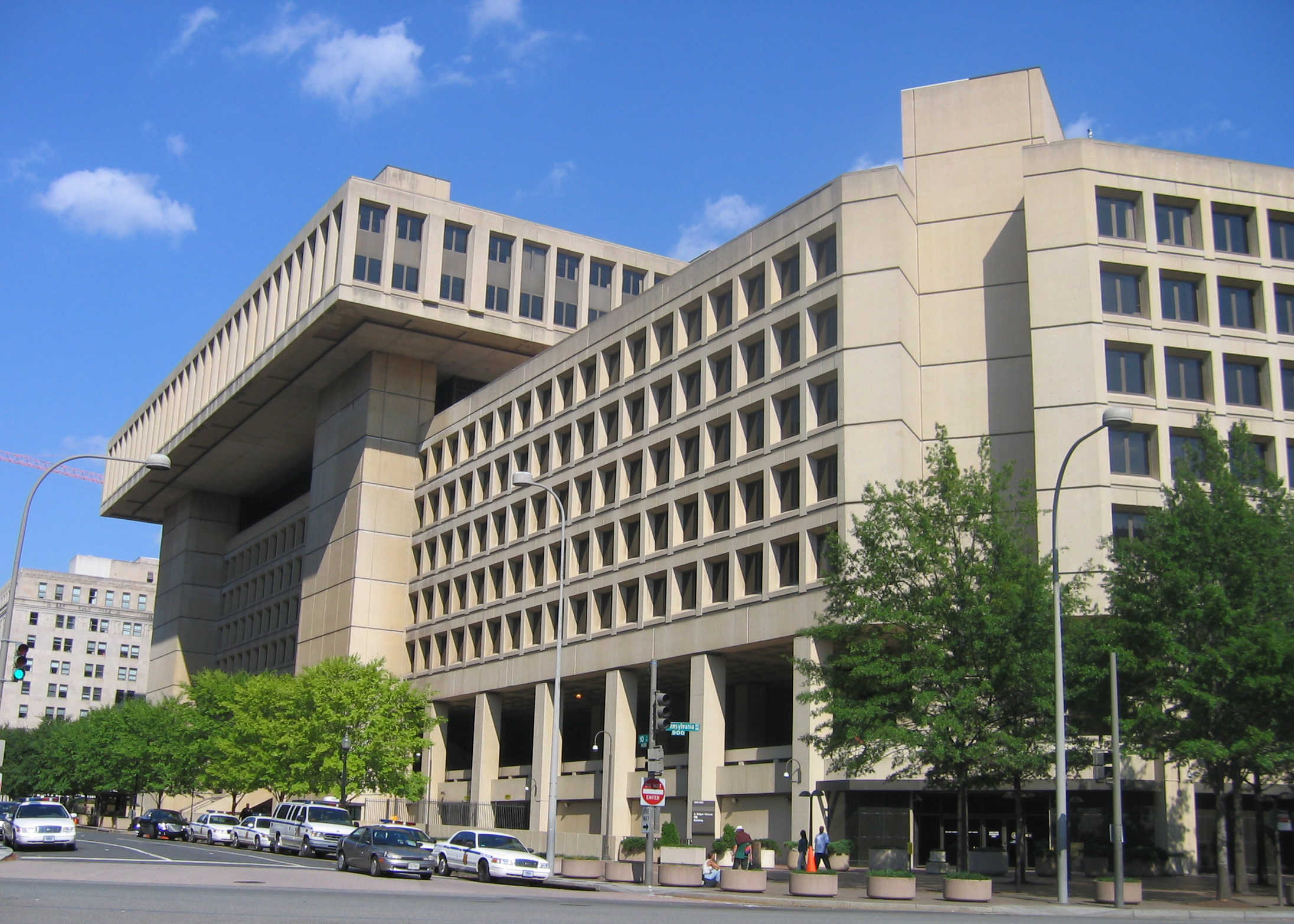
The second arrest is the legally consequential one. Fouad Eltibrizi, a Dutch national arrested in the United Kingdom on September 30 who used the handle "Archduke," has been indicted by a federal grand jury in the District of Puerto Rico on September 16, 2026, on charges of conspiracy to access computers without authorization for financial gain, damaging protected computers, and transmitting extortion threats. The U.S. has filed an extradition request; the UK process is judicial, not administrative, and could take months. He faces a maximum of ten years if convicted, and the charges remain allegations until tested in court.
The Puerto Rico venue is not random. The DOJ framed the case around alleged cybercrime against systems in the United States and Puerto Rico specifically — the March 2025 attack on a Puerto Rico company cited in the indictment — and the territory's federal district has become a more frequent venue for cybercrime indictments, partly because incidents touching U.S. territories outside the mainland route through FBI field offices with jurisdiction there, including FBI San Juan. The indictment names an alleged attack window from at least March 2025 through November 2025, an unusually specific eight-month span that cyber insurers and underwriters will now cite.
The whack-a-mole problem: what dismantling one group actually changes
Here is the honest history: Emotet was dismantled in a landmark 2021 international operation — and re-emerged. Hive was infiltrated and dismantled by the FBI in 2023 — its affiliates scattered to other brands. LockBit was hit by 2024's Operation Cronos — and former affiliates resurfaced under new RaaS names within months. ALPHV/BlackCat was disrupted in 2023 — same story. Every major takedown follows the same arc: infrastructure seized, headlines written, affiliates rebranded.
KillSec's brand is effectively dead. But the tooling is documented, the techniques are public, and the business model provably works — $250 in, 88% of the take out. Nothing about this operation makes the next cheap RaaS platform less attractive to launch. The realistic reading, shared by several analysts covering the takedown, is that former KillSec affiliates will resurface under a new name within months, exactly as LockBit's and Hive's did. Celebrating the takedown and assuming the problem ended are two very different things.
What the numbers actually imply
The headline figures deserve a closer read. Roughly 1,000 suspected attacks versus about 500 confirmed successful means a ~50% conversion rate — high for a low-tier crew, and a reminder that most victims never report. Eight properties searched across four countries, five servers seized: that is a thin infrastructure footprint for a group accused of a thousand attacks, which tells you how cheap and disposable RaaS infrastructure has become. And 110 terabytes — tens of millions of documents — is both a staggering volume of victim data and an intelligence asset that could fuel follow-on indictments for years. The 110TB seizure is arguably the most consequential number in the whole operation, more so than the three arrests.
Who wins, who loses, what critics say
Winners: law enforcement agencies, which get a template win and political capital; cyber insurers, who will cite the named eight-month attack window in underwriting guidance; and the private cybersecurity firms whose cooperation was credited. Losers: the ~500 confirmed victim organizations, whose stolen data now sits in police custody with an uncertain notification path; and the idea — still popular in some boardrooms — that ransomware is someone else's problem.
The critics' case is the serious one: takedowns create vacuums that other groups fill fast. Researchers covering the same week pointed to new crews building destructive ransomware infrastructure from scratch at speed. The failure mode is assuming a single arrest ends the problem. KillSec was opportunistic, not sophisticated — and opportunism scales.
What happens next — and what defenders should do now
Watch three things. First, the Eltibrizi extradition fight — contested multi-month UK extradition proceedings follow a well-worn pattern, and the case will test whether the Puerto Rico venue holds. Second, the rebrand: expect KillSec's former affiliates to appear under a new RaaS banner within months. Third, the 110TB trove: as investigators work through it, additional indictments are likely.
Meanwhile, the threat board is not empty. The same week KillSwitch landed, Symantec's Threat Hunter Team reported that the China-linked Warlock ransomware crew (tracked by Microsoft as Storm-2603) is still actively exploiting SharePoint vulnerabilities — both the 2025 ToolShell flaws and newer 2026 bugs — against water utilities, telecom operators, government bodies and universities, in one case going from webshell to full network encryption in nine days. If there is one immediate defensive action this week, it is this: patch on-premises SharePoint now, rotate ASP.NET machine keys, and hunt for leftover webshells — because patching alone does not evict an attacker who already stole your keys. And audit which cloud-storage buckets and remote-login portals are exposed to the public internet: that is how KillSec got in.
Related coverage
Sources
- Europol / Eurojust announcements on Operation KillSwitch, October 1, 2026
- U.S. Department of Justice indictment of Fouad Eltibrizi (District of Puerto Rico), September 16, 2026
- FBI Cyber Division statement on Operation KillSwitch
- Computer Weekly: Teen hacker arrested amid KillSec cyber gang takedown
- SC Media: Teenager arrested in Spain suspected of leading KillSec ransomware group
- Risky Business: Authorities dismantle KillSec group, arrest members across Europe
- Symantec Threat Hunter Team via The Hacker News: Warlock exploits SharePoint flaws to disable security tools and deploy ransomware
Reporting basis: Europol and DOJ announcements as reported by The Register, The Record, The Hacker News, Computer Weekly and Reuters; Symantec Threat Hunter Team research on Warlock/Storm-2603.