nvidia rtx spark AI PC launch
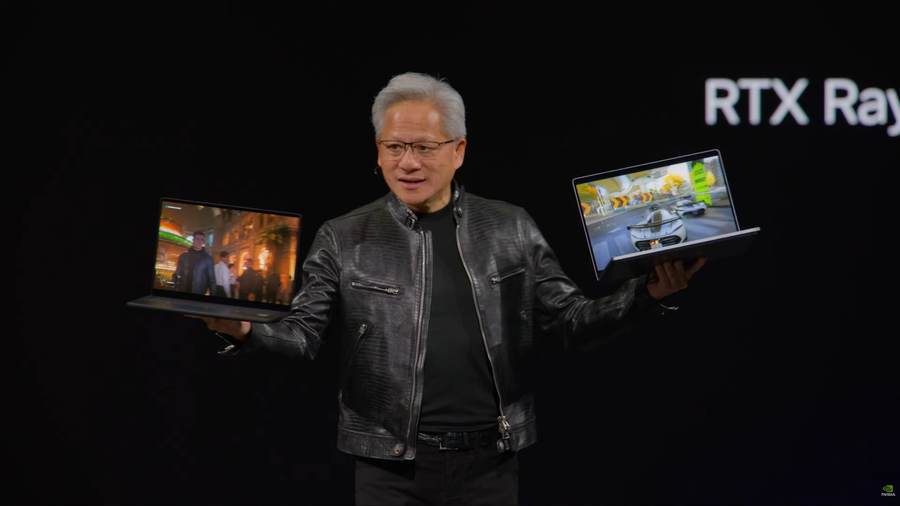
SANTA CLARA, California — The nvidia rtx spark AI PC launch has an October timetable and two first movers. Nvidia said Lenovo and Acer will begin shipping the first Windows PCs based on RTX Spark this month, according to a September 3 Reuters report. It is the clearest retail marker yet for a platform Nvidia and Microsoft introduced on May 31 and demonstrated through the summer.
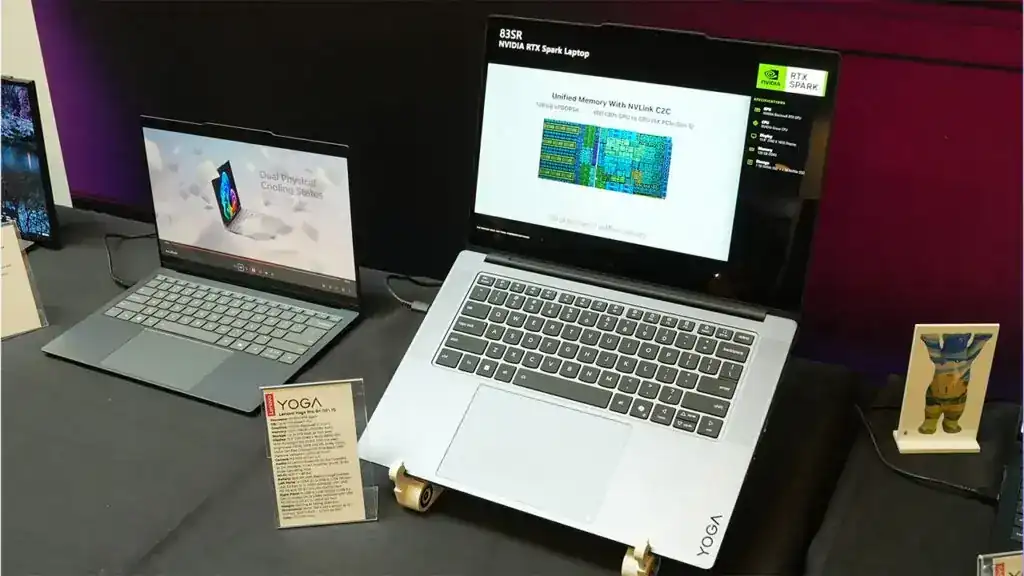
Lenovo's announced systems are the Yoga Pro 9n and Yoga 9n 2-in-1. Acer showed a compact desktop concept, while other manufacturers are preparing their own designs. At IFA Berlin, Asus displayed ProArt P16 and P14 laptops and the GR1X mini PC. Nvidia says the platform combines an Arm-based Grace CPU with a Blackwell RTX GPU and is designed for demanding local model inference, content creation and gaming.
That is the confirmed news. The limits are equally important. Nvidia had not announced final consumer pricing in the source material reviewed for this report, and Signal Post News did not find a confirmed retailer listing showing broad, immediate on-shelf inventory as of October 3. “Ships in October” is a launch window, not proof that every model is available in every market today. Buyers should treat store dates, configurations and the RTX Spark laptop price as model-by-model questions until manufacturers publish order pages.
What Nvidia is actually launching
RTX Spark is not merely a GeForce branding exercise. Nvidia describes a system-on-chip that links Grace CPU cores and Blackwell graphics through NVLink-C2C, with MediaTek contributing to the Arm-based design. The top platform configuration combines a 20-core Grace CPU, 6,144 CUDA cores and as much as 128GB of unified LPDDR5X memory. Nvidia rates the Blackwell side at up to one petaflop of FP4 AI performance.
A lower laptop configuration reported from launch materials uses 18 CPU cores, 5,120 CUDA cores and up to 32GB of memory. Those differences matter: “RTX Spark” will cover more than one performance tier, so shoppers should not assume the headline maximum applies to every thin laptop. Nvidia's chassis target—roughly 14 millimeters thick and around three pounds—also describes an ambition, not a guarantee for every finished product.
The strategic distinction is memory and GPU capability. Most first-generation Windows AI PCs emphasized an NPU that could run camera effects, transcription and compact models at low power. RTX Spark pushes toward much larger local workloads by letting the CPU and GPU work from a shared memory pool. That is why Nvidia calls these the first Windows PCs “purpose-built for personal agents.”
From May reveal to the Lenovo Acer RTX Spark release
May 31: Nvidia and Microsoft make the platform official
Nvidia and Microsoft announced RTX Spark on May 31, positioning it as a Windows platform for a new class of local, agent-driven applications. The architecture paired Nvidia's Grace CPU design with a Blackwell RTX GPU rather than attaching a conventional discrete GPU to an established Intel, AMD or Qualcomm processor.
The partnership is essential. Nvidia can build exceptional silicon, but a mainstream PC platform also needs Windows support, firmware, drivers, security, application compatibility and device-maker commitment. Microsoft provides the operating-system bridge; Nvidia brings CUDA, graphics, model runtimes and a developer audience that already thinks in GPU acceleration.
Computex: designs become visible
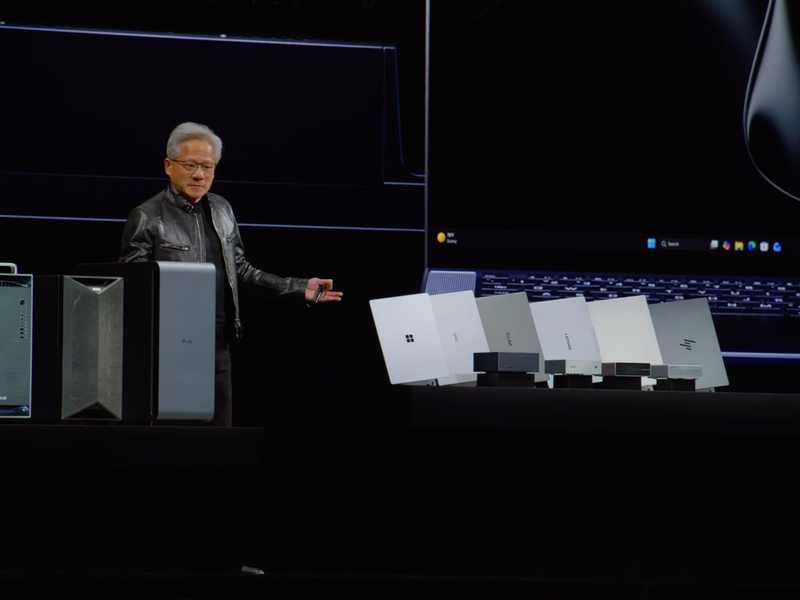
At Computex in late May, Nvidia put the hardware story onstage and manufacturers showed the direction of travel: 14- to 16-inch notebooks and compact desktops rather than a single reference machine. The imagery emphasized thin designs and creator workloads, but the broader message was that RTX Spark could scale from a portable computer to a small workstation.
IFA Berlin: products acquire names
IFA, held September 2–4, supplied the missing product detail. Lenovo named the Yoga Pro 9n and Yoga 9n 2-in-1. Asus presented the ProArt P16, ProArt P14 and GR1X mini PC. Acer showed its own compact design. Reporting from the show said six other manufacturers were preparing systems for October, widening the launch beyond the two brands first out of the gate.
The Asus ProArt RTX Spark lineup also clarifies Nvidia's opening audience. “ProArt” is aimed at creators and professionals, not bargain-laptop buyers. That positioning fits the silicon: large unified memory and Blackwell GPU compute are most valuable when a workload exceeds the limits of a small NPU.
October: shipping starts, but the retail test has only begun
The Reuters timing turned a broad fall target into a month: Lenovo and Acer first, then a wider OEM field. Yet a launch date and a mature retail channel are not the same thing. Availability can vary by country, configuration and sales channel, while review units can precede consumer stock. The honest reading on October 3 is that the shipping phase is beginning; broad shelf presence remains to be demonstrated.
A 20-year approach to the PC's center
Nvidia has spent roughly two decades moving around the edges of the PC processor market without displacing x86 at the center. GeForce made it indispensable for gaming; CUDA made its GPUs foundational in technical computing; Tegra put Nvidia into mobile and embedded devices; Windows RT brought an earlier Arm-Windows experiment that failed to create a durable mainstream laptop business.
RTX Spark changes the ambition. Instead of selling the accelerator around somebody else's CPU, Nvidia is offering the CPU-GPU platform that defines the system. It can now argue that its software stack, memory architecture and graphics technology belong together in the consumer machine—not just in a data center or an add-in card.
That makes this the most consequential Nvidia laptop chip 2026 move, but it does not erase old problems. Windows on Arm has improved, especially through Microsoft's emulation work and the Snapdragon X generation, yet some drivers, specialist utilities, games and enterprise tools still depend on native x86 behavior or kernel-level components. Nvidia has to prove that its performance advantage survives the friction of the Windows ecosystem.
Why this matters
From an “AI feature” to an on-device AI agents laptop
The 2024–25 AI-PC wave largely attached a capable NPU to a familiar notebook and then searched for everyday reasons to use it. RTX Spark reverses the emphasis. Nvidia starts with workloads that are difficult to run locally—larger language and vision models, multi-step agents, creative generation and code tools—and builds a PC around the compute and memory they require.
If the software works, an on-device AI agents laptop could keep more files, prompts and model context on the machine; continue operating with limited connectivity; and cut the recurring cloud cost of repeated inference. Those are real advantages for developers, creators and businesses handling sensitive material. They do not automatically make an agent reliable, safe or useful. Local execution changes where computation happens; it does not solve hallucinations, permissions or poor product design.
CUDA's data-center moat reaches the consumer desk
Nvidia's larger objective is continuity. A developer can prototype locally with familiar libraries, move heavier work to an RTX workstation or cloud GPU, and use similar tools across the path. Nvidia says recent optimizations lift llama.cpp performance by as much as 1.9 times and vLLM by up to 1.4 times on supported workloads. Those are vendor measurements, not independent laptop benchmarks, but they show the strategy: make CUDA and Nvidia-tuned runtimes part of the Windows buying decision.
The advantage compounds if applications arrive first for RTX Spark. Nvidia named game and software partners including Electronic Arts, Embark and Ubisoft, while its PAIR tooling and Windows Agent framework target agent development. A hardware lead would be valuable; a developer ecosystem that keeps users inside Nvidia's tools would be more durable.
RTX Spark vs Snapdragon X, Apple and x86 rivals
Qualcomm Snapdragon X: efficiency benchmark, compatibility precedent
Qualcomm's Snapdragon X Elite established the modern Windows-on-Arm baseline with a Hexagon NPU rated at up to 45 TOPS. Published platform material has cited up to 75 TOPS across compute engines. Its strongest consumer story has been battery life and quiet, thin systems. Its weakness has been the uneven edge cases of Arm compatibility.
RTX Spark vs Snapdragon X is therefore not a simple TOPS contest. Nvidia quotes FP4 GPU throughput in petaflops, while Qualcomm highlights NPU TOPS. Different precision, processors and test methods make those numbers unsuitable for a direct ranking. The practical contest is workload-specific: Snapdragon may remain preferable for office mobility and long unplugged use, while RTX Spark is designed to win when a large model or GPU-accelerated creative task must run locally.
Apple M-series: integration and battery confidence
Apple's M-series offers the comparison Nvidia most clearly wants to invite: Arm CPU, integrated graphics, shared memory and tight software-hardware coordination. Apple's M3 Neural Engine was rated above 18 trillion operations per second, but Apple also uses its GPU and media engines across professional workloads. Raw accelerator labels again tell only part of the story.
Apple's advantage is a mature native software ecosystem and years of shipping battery behavior. Nvidia's opportunity is Windows breadth, CUDA familiarity and a larger local-model memory ceiling in top configurations. The unknown is whether first-generation RTX Spark notebooks can match the unplugged consistency and thermal polish users expect from Apple silicon.
Intel Lunar Lake and AMD Strix: x86 remains the compatibility default
Intel's Lunar Lake platform was presented with up to 48 NPU TOPS and 120 total platform TOPS. AMD's Ryzen AI generation has advertised NPUs up to 55 TOPS, with higher total compute when CPU and graphics are included. Both retain the x86 compatibility that businesses, gamers and specialist Windows users understand.
That creates a clear trade-off. Intel and AMD offer the safer route for legacy applications and peripherals. RTX Spark offers a more aggressive GPU-and-memory architecture for local model work. Until independent reviews measure battery life, sustained performance, fan noise and translated-app behavior on the same tasks, declaring a universal winner would be marketing, not analysis.
Who benefits—and who has the most to lose
Nvidia gains a new route to users
Nvidia wins if “local agent” becomes a purchase category. It would sell more than graphics performance: the company would influence the CPU architecture, memory design, software environment and developer workflow of the PC. Even a premium niche could be strategically important if it becomes the default local-development machine for models that later scale to Nvidia's data-center hardware.
Lenovo and Acer get first-mover attention
The Lenovo Acer RTX Spark release gives both companies a chance to define the category before every rival has a finished shelf lineup. Lenovo can put the platform into recognizable Yoga formats; Acer can test a compact desktop shape that avoids some of the battery and thermal constraints of a notebook. The risk is being first with immature drivers or unclear customer demand.
Microsoft broadens Copilot+—and complicates it
Microsoft benefits from another serious Arm supplier and a stronger answer to Apple's integrated silicon. RTX Spark can stretch the Copilot+ idea from NPU-assisted features toward heavier local agents. But multiple accelerator paths also make Windows development more complex. Microsoft must keep its APIs coherent across Qualcomm, Intel, AMD and Nvidia rather than forcing developers to maintain four different products.
Qualcomm and Intel face different pressure
Qualcomm loses exclusivity as the face of premium Windows on Arm. Its defense is efficiency, established systems and the lessons learned from two years of compatibility work. Intel faces a different challenge: Nvidia now wants a larger share of the system around the GPU. Intel's strongest response is that x86 still carries the broadest Windows compatibility and that its CPU, GPU and NPU platform is already shipping at scale.
Consumers gain choice—and inherit first-generation risk
More architectures should create faster innovation and sharper pricing. It also makes laptop shopping harder. Buyers must now ask not only about battery life and CPU speed, but whether a favored program runs natively, which accelerator it uses, how much memory the GPU can access and whether a local model fits. The best specification sheet will not help if the required software falls back to slow emulation.
The critics' case: price, proof and the word “agent”
First, price. No official RTX Spark laptop price was available in the reviewed launch reporting. The likely creator and developer positioning suggests that top-memory systems will not compete with entry-level notebooks, but any numeric forecast remains speculation until Lenovo, Acer and other OEMs publish configurations. Buyers should be wary of treating analyst estimates as retail announcements.
Second, proof. Nvidia's one-petaflop figure is an FP4 peak measure. It is meaningful for suitably quantized models but does not predict browser speed, office responsiveness, battery runtime or the performance of every neural workload. Independent tests need to measure sustained operation on battery as well as plugged-in bursts.
Third, compatibility. Windows on Arm is no longer the barren ecosystem remembered from Windows RT, but “runs” and “runs without compromise” remain different standards. VPN clients, audio tools, anti-cheat systems, device drivers and specialist corporate software deserve model-specific checks.
Fourth, agents. The phrase “personal agent” can describe genuinely useful local automation, or it can become a vague label attached to tasks a conventional app already performs better. The platform's success depends on permission controls, reliability and obvious daily value—not the number of demonstrations that look impressive on a keynote stage.
Holiday 2026 advice: buy, wait or choose another platform?
Buy early if your work already maps to the hardware
Developers using CUDA, creators with GPU-heavy Windows applications, and teams testing private local models have the clearest reason to evaluate RTX Spark immediately. For them, 128GB-class unified memory could be more consequential than the uncertainties of a first-generation platform. Even those buyers should wait for exact model pages and independent reviews before ordering.
Wait if battery life or legacy compatibility is non-negotiable
Travelers, mainstream office buyers and people dependent on a single specialist x86 application should wait for measured battery results and compatibility reports. A current Snapdragon, Intel or AMD machine may be the safer holiday purchase if the priority is predictable software behavior rather than maximum local model capacity.
Do not search for one “best AI laptop October 2026” answer
The category is splitting. A great mobile office PC, a great local-model development system and a great gaming notebook may all carry an AI-PC label while serving different needs. Compare the actual workload, memory configuration, battery result and native application list. The label alone cannot decide the purchase.
What to watch through 2027
Three outcomes are plausible. In the strongest case for Nvidia, RTX Spark becomes a premium Windows standard: major OEMs ship broadly, local-agent software improves and CUDA makes the platform the obvious choice for developers and creators. In a middle case, it becomes a valuable but narrow workstation category—successful, yet too expensive or power-hungry for the mass market. In the weak case, compatibility gaps, high prices and underwhelming agents repeat the pattern of earlier Windows-on-Arm false starts.
The milestones are concrete: official prices; broad retail stock beyond launch markets; independent battery and thermal testing; native support for major creative, enterprise and gaming applications; and credible software that saves users time without surrendering control. By early 2027, shipment breadth and repeat purchases will matter more than peak-compute slides.
For now, Nvidia has achieved the first step: its long-running ambition to own more of the PC has moved from a platform announcement to named machines with an October shipping window. The next step belongs to Lenovo, Acer and the reviewers who can establish whether RTX Spark is a better computer—not merely a more powerful demonstration.
Sources and reporting notes
- Reuters via SRN News: Nvidia sets October launch for RTX Spark PCs (September 3, 2026)
- Tech Insider: Lenovo and Acer lead the RTX Spark October release; May announcement and IFA timeline
- Nvidia: RTX Spark systems, specifications and local software claims at IFA 2026
- Gadgets 360: Lenovo models, Acer compact desktop and additional OEM plans
- Nvidia Newsroom: Grace Blackwell architecture, 20-core CPU, NVLink-C2C and FP4 performance
- Intel technical presentation: Lunar Lake NPU and platform TOPS
- AMD: Ryzen AI Max platform specifications and local agent workloads
Reporting note: shipping timing, product names and performance claims are attributed to Reuters, Nvidia and the linked product coverage. Signal Post News found no confirmed broad retail stock or official final prices in the reviewed material as of October 3, 2026. Vendor compute figures use different processors, precisions and test methods; they are not presented as directly interchangeable benchmarks. Buying guidance and 2027 scenarios are analysis.