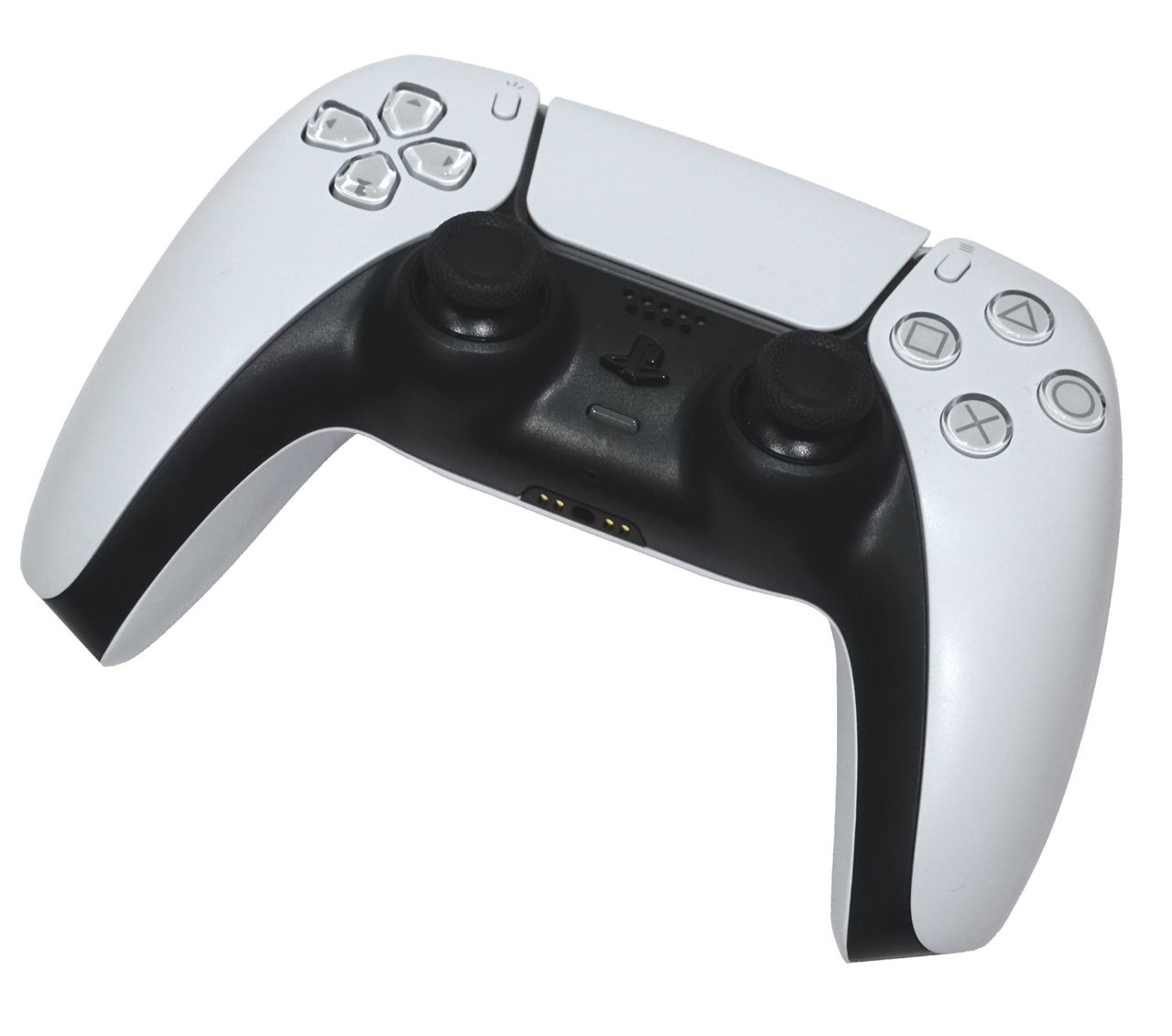
Sony QSSR base PS5 support became real on October 1, when Sony Interactive Entertainment announced Quick Spectral Super Resolution on the official PlayStation Blog and shipped it in patches for Marvel's Wolverine and Ghost of Yōtei. Those are the first — and, for now, only — two games using the system. Wolverine's version 1.002 patch turns QSSR on by default in the relevant modes alongside its previously confirmed ray-traced 60 frames-per-second default; Ghost of Yōtei added it in the same day's Complete Edition update.
The announcement sounds like a feature update. It is more consequential than that. Sony has taken an expensive visual technology created to help sell the PS5 Pro and compressed it until it can run on the original console's older GPU. That is an engineering result, a platform strategy and a quiet admission that the most important PlayStation audience is still the one that did not buy the premium machine.
Why this matters
The installed-base arithmetic is decisive. More than 60 million standard PS5 consoles are in the market, while the PS5 Pro remains a far smaller premium tier. A visual upgrade for the Pro can make a showcase title look better. A visual upgrade for the base console can change the common target developers design around.
This is AI upscaling moving from a luxury feature to mass-market infrastructure. Nvidia built the modern PC version of the argument with DLSS: render fewer pixels, then use a trained model and frame history to reconstruct a cleaner image. AMD answered with FSR and is now pushing FSR Redstone across its RX 9000-series GPUs. Sony's move says the same contest matters on fixed console hardware — not only on new graphics cards with dedicated acceleration and rising power budgets.
The broader signal is lifecycle extension. Instead of telling base-PS5 owners that image stability now requires a new box, Sony is trying to recover headroom through software. That does not erase the Pro's advantages, but it makes “old hardware” a less useful description. When a platform holder can improve reconstruction five or six years into a console cycle, the upgrade path becomes partly algorithmic rather than purely physical.
Critics will reasonably ask whether reconstruction has become a substitute for optimization. The answer depends on implementation. A poor upscaler can smear motion, shimmer on thin geometry and hide an internal resolution that has fallen too far. But the same criticism applies to checkerboarding and temporal anti-aliasing already used throughout this generation. The relevant question is not whether pixels are reconstructed; it is whether QSSR produces a more stable picture for an acceptable time cost.
What QSSR actually is
QSSR is not generative AI in the consumer-chatbot sense. It does not redesign a character, invent a new building or replace the developer's assets. The game renders a lower-resolution frame, motion vectors and other signals; the upscaler uses a trained model plus information from previous frames to estimate a cleaner, higher-resolution output. Its job is reconstruction: preserve edges, fine detail and temporal stability while the GPU spends less time drawing the native output resolution.
That distinction matters because “AI graphics” can imply uncontrolled content generation. QSSR is closer to a highly specialized image-restoration system operating inside a deterministic game pipeline. It may make mistakes — especially around disocclusion, particles, hair or fast movement — but it works on pixels the game engine has already defined.
According to Daniel Craig, Sony Interactive Entertainment's principal engineer of graphics R&D, QSSR rests on two innovations: a streamlined neural-network architecture and a hand-tuned implementation that extracts performance from the standard console. The base PS5 has no dedicated machine-learning block comparable to the PS5 Pro's roughly 300-TOPS hardware. Sony therefore leans on FP16 arithmetic, packed-math instructions and GPU-specific optimizations to fit the network inside a fixed graphics budget.
The work comes from Project Amethyst, Sony's multi-year graphics collaboration with AMD. That partnership is strategically important. Sony gets access to AMD's architecture knowledge; AMD gets a mass-market proving ground for machine-learning graphics on consoles. It also connects the PlayStation story to the wider chip contest covered in our reporting on TSMC, AMD and the hardware supply chain.
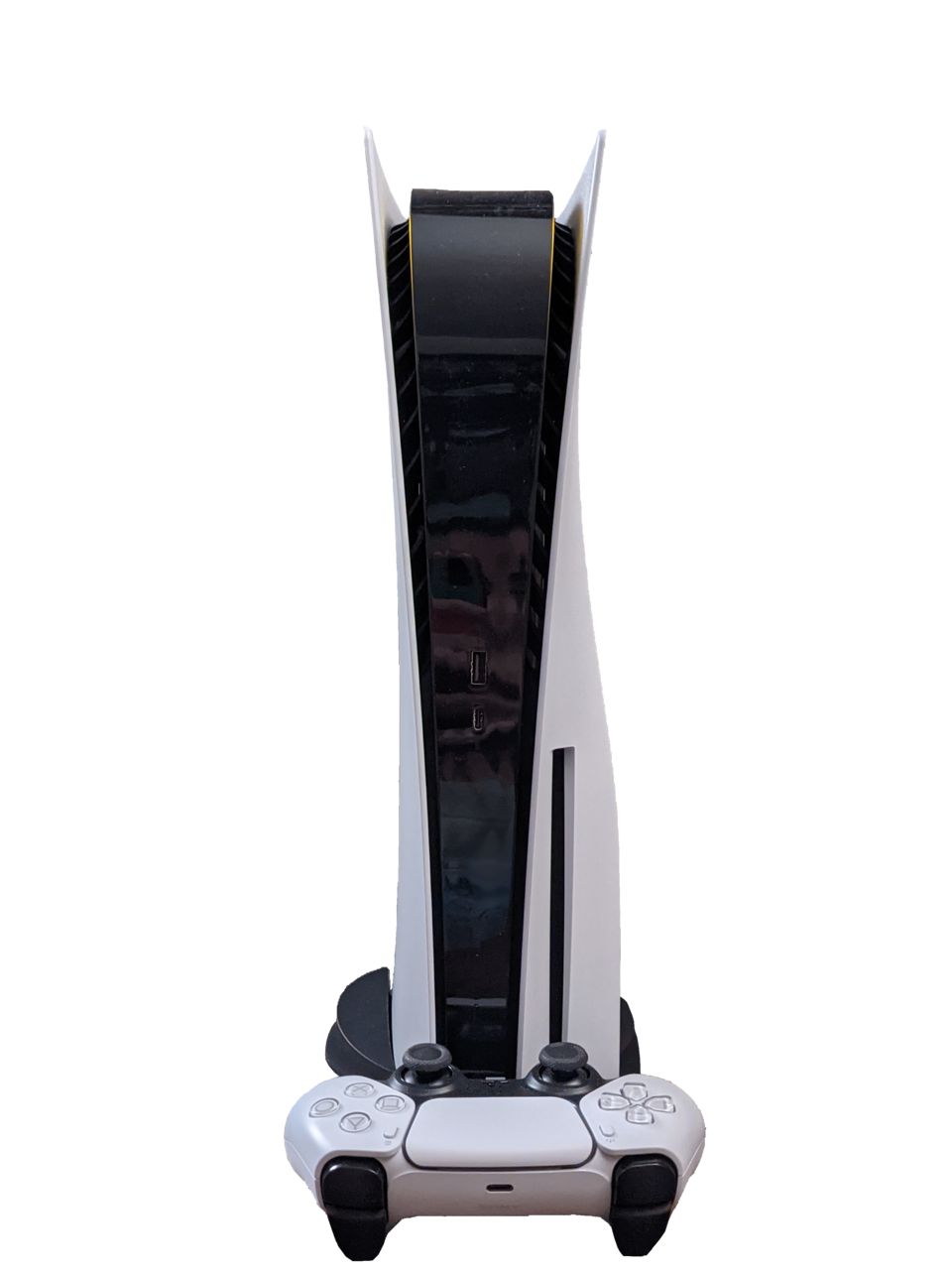
QSSR vs PSSR: same goal, different silicon
QSSR and PSSR chase the same outcome — a sharper, steadier final image from a lower-resolution render — but they do not run on equal hardware. PSSR debuted with the PS5 Pro in November 2024 and received its PSSR2 update earlier in 2026. Sony still calls it the “gold standard.” The Pro has dedicated machine-learning acceleration rated at about 300 trillion operations per second, giving its upscaler more room for a larger network and higher output targets.
QSSR is the performance-focused tier. In plain terms, Sony simplified the model and optimized its math so the original PS5 can run it alongside the game. That means the PS5 vs PS5 Pro upscaling comparison should not be framed as parity. It is a choice between a lighter network sharing the base GPU and a more capable system with specialized silicon.
The early Digital Foundry QSSR test results, reported by Dot Esports and tech-insider.org, show the trade. In Wolverine, reconstructing an 864p image to 1440p cost about 1.5 to 1.8 milliseconds more per frame than Insomniac's existing solution. Outputting at 2160p in fidelity mode raised the QSSR cost to about 4.4 milliseconds. The evidence points to 1440p as the sweet spot: enough pixels for the network to stabilize detail without spending so much of the frame budget that the gain becomes self-defeating.
That is what “performance-focused” means here. QSSR is not the most elaborate version Sony can build. It is the version the base PS5 can afford.
The first two games
Marvel's Wolverine is the more revealing test because Insomniac is enabling QSSR by default in the relevant graphics modes with patch 1.002. The studio is not presenting the feature as an experimental toggle; it is putting the result in front of ordinary players. The patch joins a default setup already designed around ray tracing at 60 frames per second, making every millisecond of reconstruction cost politically visible.
Mike Fitzgerald, Insomniac's head of technology, said: “QSSR adds more pixel-level clarity and stability to our environments, bringing out extra detail amidst the busy streets of Madripoor, the dense alleyways of Shinjuku, and many other areas across Logan's epic journey. It brings a great taste of the PS5 Pro experience to our players on PS5.” The carefully chosen phrase is “a great taste.” It promises a meaningful improvement without claiming the base machine has become a Pro.
Ghost of Yōtei offers a different benchmark. Its October 1 update adds QSSR, and Sucker Punch lead rendering engineer Jasmin Patry said the technology resolves fine character and environmental detail with “a level of temporal stability that hasn't been possible on the PS5 console until now.” Digital Foundry's early test found the unlocked performance mode running at roughly the same frame rate as the game's existing FSR 3 implementation. If that result holds across more scenes, it is important: the visual improvement may arrive without a noticeable performance penalty in that title.
PS5 QSSR: how to enable it
There is no system-wide QSSR switch. Support is added by each developer. Install the October 1 update for either launch game and choose a graphics mode that includes the feature; Wolverine enables it by default in its relevant modes. Players should not expect a console setting that retrofits QSSR into every PS5 game.
What the numbers actually mean
A frame at 60 fps lasts 16.67 milliseconds. Add 1.5 to 1.8 milliseconds, and the upscaler has consumed roughly 9 to 11 percent of that budget. In an uncapped mode, Digital Foundry translated the extra cost into roughly eight to 10 frames per second compared with Insomniac's existing upscaler. That is not free. It is a real trade between clarity and raw frame rate.
The 4.4-millisecond cost at 2160p is harsher: more than a quarter of a 60-fps frame. That explains why 1440p looks like QSSR's practical home on the base console. Reconstructing 864p to 1440p is ambitious enough to test fine edges and motion stability, but not so ambitious that the network overwhelms the rest of the render pipeline.
Ghost of Yōtei's result provides the counterexample to a blanket performance warning. If QSSR can match FSR 3's frame rate while improving detail stability, the user experiences a straightforward upgrade. If a game incurs Wolverine's measured cost, developers must decide whether the cleaner picture is worth the reduced headroom or whether another mode should preserve the old upscaler.
What will owners actually see? The likely gains are less shimmer on distant geometry, cleaner fine patterns, steadier foliage and signage during camera movement, and fewer crawling edges. What they may not see is a dramatic leap in texture quality or lighting, because QSSR cannot create source detail the game never rendered. It improves presentation; it does not remake the art.
Who wins and who loses
The clearest winners are standard-PS5 owners. Their hardware is not changing, and the QSSR patches are software updates rather than a paid upgrade. Insomniac and Sucker Punch also win because they get showcase status and a chance to shape Sony's developer guidance with shipping code rather than laboratory demonstrations.
Sony's platform team gains something more valuable: evidence that it can extend the base console's visual life without abandoning the premium tier. The same playbook shaped modern AI platforms, where the value comes not only from a model but from giving developers usable tools — an angle explored in our analysis of OpenAI's always-on agent platform.
AMD gets validation for Project Amethyst, while Nvidia gets another sign that the DLSS moat is narrowing at the console tier. Nvidia still leads in breadth, maturity and dedicated hardware across its RTX ecosystem. But a working neural upscaler on more than 60 million fixed consoles makes machine-learned reconstruction a baseline expectation rather than an Nvidia-specific luxury. The infrastructure contest behind those models is part of the same capital race examined in our report on Nvidia and OpenAI's AI-infrastructure deal.
Who loses? Alternative upscalers lose default status where QSSR proves better. Developers lose some simplicity because another reconstruction path means additional integration, tuning and quality assurance. And PS5 Pro marketing loses a small piece of exclusivity — though not its central claim. Pro owners retain PSSR's larger model, dedicated machine-learning hardware, higher output ambitions and the rest of the console's GPU advantage.
What happens next
What is known: Sony says QSSR developer tools will be offered broadly to studios that choose to use them. That makes the Wolverine and Ghost patches a launch point rather than a closed demonstration. The technology is game-integrated, so adoption depends on developers shipping updates or building it into future releases.
What is plausible but not announced: Sony's first-party teams are the likeliest early adopters because they have direct platform support and an incentive to improve flagship games. Recent titles with dynamic-resolution performance modes are obvious candidates. Older first-party games could be revisited, but each one would still need engineering and testing; a broad tool release is not a promise of universal backward compatibility.
What remains speculation: no public QSSR roadmap establishes a specific 2027 or 2028 console launch, and Sony has not said the base system will receive every future PSSR advance. The more defensible forecast is architectural: whatever follows PS5 is likely to treat neural reconstruction as core graphics infrastructure, not a feature bolted on after the GPU is designed.
That is the enduring significance of this week's update. Sony did not make the base PS5 equal to the Pro. It made AI upscaling part of the ordinary PlayStation contract. The next test is not a technology demo or another console spec sheet; it is whether studios use the tools well enough that millions of players notice steadier worlds without noticing the machinery doing the work.
Sources
- PlayStation Blog — “AI upscaling is coming to PS5” (October 1, 2026)
- Dot Esports — “PS5 QSSR AI upscaling comes to base console” (October 2, 2026)
- WCCFtech — “Sony Brings PS5 Pro-style AI Upscaling to the Base PS5” (October 2, 2026)
- ConsolePCGaming — “Sony's QSSR Upscaler Is Now Live on Base PS5 for 2 Games” (October 2, 2026)
- GamingIdeology — “Sony Releases QSSR AI Upscaling for Base PlayStation 5 Consoles” (October 2, 2026)
- tech-insider.org — “Sony QSSR AI Upscaling on Base PS5: What It Means” (October 2, 2026)
Image sources: Hardware photographs were downloaded from Wikimedia Commons and are credited individually under each image.