Broadcom Anthropic $42 billion loan
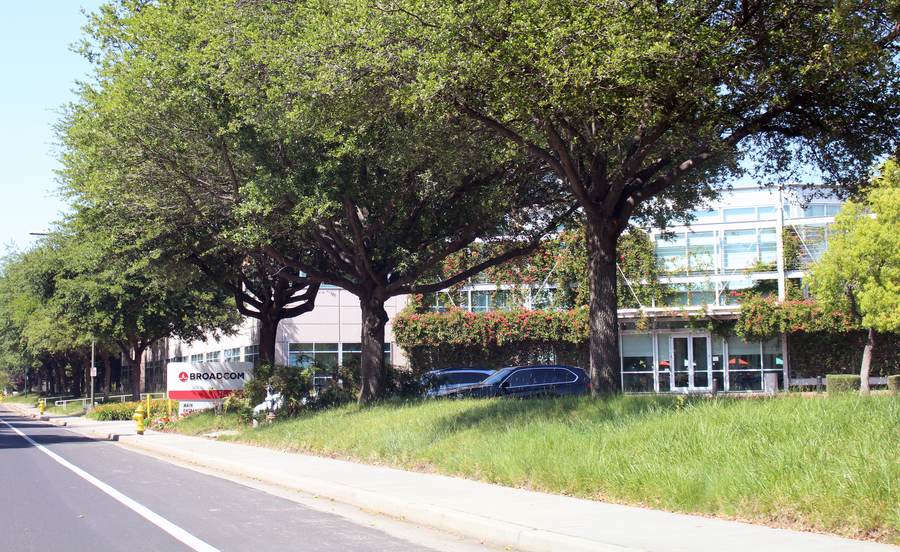
SAN JOSE — The Broadcom Anthropic $42 billion loan is the purest example yet of AI's circular financing. Broadcom has agreed to lend Anthropic up to $42 billion to finance infrastructure spending, according to Anthropic's IPO prospectus — in a Reuters exclusive published October 1, 2026. The financing, in convertible debt that could convert into Anthropic shares, covers about a third of a $125.2 billion, five-year commitment the AI company has made to lease tensor processing unit (TPU) capacity: Google-designed chips co-developed with Broadcom. Anthropic does not expect any notes to be sold before it completes its IPO, and Broadcom could designate a financing partner for the facility.
The structure makes Broadcom three things at once: chip supplier, equipment lessor, and now lender. Reuters called it "a prime example of the reciprocal spending that has animated AI skeptics on Wall Street" — and notably, Anthropic itself flagged the arrangement's dangers in its own filing, warning of "potential conflicts of interest" and cautioning that Broadcom's decisions around pricing and hardware could affect Anthropic's ability to procure enough computing infrastructure.
Why this matters: the supplier that became the bank
Strip away the financing jargon and what happened here is remarkable: the company that builds the chips is now lending the money to rent them. In a normal market, a supplier sells hardware, a bank lends money, and a lessor leases equipment — three counterparties, three sets of incentives, each checking the others. Here, one counterparty wears all three hats. Broadcom co-develops the TPUs with Google, leases the equipment through related arrangements, and now backstops the lease payments with up to $42 billion of its own balance sheet. The circularity is total: money flows from Broadcom to Anthropic and back to Broadcom, with revenue recognized on both sides of the loop.
That is why the AI-bubble debate, which has been simmering all year, will boil over on this story. The bulls say circular deals are how every technology buildout works — railroads, telecoms, cloud data centers all ran on vendor financing before demand caught up. The bears say this time is different in scale and concentration: one customer, one supplier, tens of billions, and the whole loop predicated on Anthropic's revenue eventually justifying obligations that already exceed $500 billion. Anthropic's own prospectus gives the skeptics their strongest ammunition: when even the borrower warns that its lender's pricing decisions could jeopardize its supply of compute, the conflict is not theoretical. It is disclosed.
How we got here: the vendor-financing playbook, from Lucent to Stargate
Vendor financing is not new — it is one of the oldest tricks in industrial history, and it has a body count. In the late 1990s, telecom equipment makers like Lucent and Nortel lent billions to upstart carriers to buy their gear; when the carriers failed, the equipment makers wrote off the loans and the networks went dark. The pattern has repeated in subtler forms ever since: cloud providers extending credits to startups that spend them on the same provider's cloud, chipmakers taking equity in the customers that buy their chips.
What changed is the scale — and the speed. Anthropic's own $11.6 billion cloud deal with Akamai, the Stargate-scale commitments from OpenAI, and now this $42 billion Broadcom facility are all landing within months of each other, in the same season as Anthropic's sprint toward an IPO targeting a valuation over $2 trillion. In April, Broadcom and Google expanded their partnership around next-generation TPU capacity; Anthropic is set to become the largest customer in Broadcom's bread-and-butter chip design business next year, when multiple gigawatts of that capacity begin coming online. The loan facility is best understood as the financial plumbing of that commercial relationship: Broadcom is not just selling Anthropic the future, it is financing it.
There is a second, quieter layer to the stack. Beyond Broadcom's facility, roughly $35 billion in private credit led by Apollo and Blackstone has bought TPUs to be leased to Anthropic, with Broadcom's commitment serving as a contingent backstop on the senior tranches — triggered only if lease payments default or hardware resale proceeds fall short. Anthropic deposited cash into a restricted account for Broadcom's benefit back in April 2026, and may have to add more. This is not a single loan; it is an ecosystem of interlocking commitments, each one making the others look safer than any of them is alone.
The numbers: $42 billion against $4.6 billion in revenue
The prospectus figures, as reported by Reuters and cellcog, deserve to be read slowly, because they are the whole story in miniature. Anthropic made nearly $4.6 billion in revenue in 2025 — a genuine rocketship, up roughly twelvefold. It lost more than $8 billion on operations, and its GAAP net loss was about $42 billion, roughly $34 billion of which was an accounting charge reflecting the increased estimated value of financing that could convert into shares. Compute and infrastructure spending was $7.33 billion — nearly triple 2024's level and about 58% of total operating expenses of $12.65 billion. Cash and short-term investments stood at $20.28 billion.
Set those against the obligations: $125.2 billion committed to TPU leases over five years, and $518 billion in total cloud, compute and infrastructure obligations in the coming years. That is more than 112 times 2025 revenue, and more than 25 times the cash on hand. Nearly a quarter of that $4.6 billion in revenue came from just two customers. However fast the revenue is growing, the obligations are growing into a different order of magnitude — and the $42 billion Broadcom facility, large as it sounds, covers only about a third of the TPU lease commitment alone.
The leverage ratios are the point the skeptics keep returning to, in the words of Rothschild & Co. managing partner Robert Leitao: "It feels that there's quite a concentrated bet right now on two companies being able to generate enough revenues to support all the financing that's happened." Two companies. Half a trillion in obligations. One supplier-lender-lessor at the center of it.
Who benefits, who loses — and what the skeptics say
Broadcom is the clearest near-term winner: it locks in what will be the largest customer in its core chip-design business starting in 2027, finances that customer's ability to pay, and takes convertible notes that could turn into equity in a company targeting a $2 trillion-plus valuation. If the AI buildout continues, Broadcom gets paid three ways — on the chips, on the leases, and on the loans. If it stalls, Broadcom holds a structured, collateralized position and a front-row seat.
Anthropic's win is time and optionality: the facility keeps near-term obligations fundable — the backstop triggers only on default or shortfall, not as immediate cash — while the IPO, which Bloomberg reports could begin marketing as soon as the week of November 9 and trade before Thanksgiving, raises the capital the prospectus is really aimed at. Anthropic is separately nearing a $15 billion revolving credit facility, which suggests the company knows it needs more shock absorbers. The cost is dependence: a supplier that can move pricing and hardware availability now also holds up to $42 billion in convertible leverage over you, and your own filing says so.
The critics' case has two strands. The first is concentration: revenue from two customers, compute from one supplier-lender, financing from an interlocked stack — the whole edifice has single points of failure, and the prospectus admits that payment or performance defaults could make a large part of the lease obligations due immediately while limiting use of the $42 billion facility. The second is circularity: when the vendor finances the customer that buys from the vendor, reported demand and reported revenue can rise together without any outside customer validating the economics. The bulls answer that this is how infrastructure gets built, and that Anthropic's twelvefold revenue growth is real demand, not accounting. Both things can be true. The question is what happens when the music slows — and who is left holding the notes.
What happens next
Four things to watch. First, the IPO: Bloomberg's timeline — marketing as soon as the week of November 9, trading before Thanksgiving, targeting over $2 trillion — will be the market's first real vote on whether the circularity is a feature or a bug. A blowout listing validates the model; a stumble reprices everything downstream, including Broadcom's convertible notes.
Second, whether any notes are actually sold after the IPO, and on what terms. The facility exists; its use is the signal. Third, the default triggers buried in the fine print: if Anthropic misses payments or performance milestones, large lease obligations can accelerate while the backstop narrows — the exact doom-loop structure the prospectus discloses. Fourth, the regulators. Circular financing at this scale, between a dominant chip supplier and its largest customer, is the kind of arrangement that eventually attracts questions — about transfer pricing, about disclosure, about whether "reciprocal spending" is a business model or a mirage.
The hardware itself carries obsolescence risk: TPUs bought and leased today compete with whatever ships in 2028, and hardware resale-proceed shortfalls are one of the explicit triggers for Broadcom's backstop. The AI trade has always been a bet that demand grows into supply. This filing shows, in unusual detail, just how much supply is being financed on the come — and how few hands are holding the other side of the bet.
Sources
- Reuters — "Exclusive: Broadcom to lend Anthropic up to $42 billion to lease its chips, filing says," October 1, 2026 (reporting by Echo Wang, Milana Vinn and Max A. Cherney).
- Business Reporter — "Exclusive: Broadcom to lend Anthropic up to $42 billion to lease its chips, filing says," October 1, 2026.
- AIWeekly — "Broadcom to lend Anthropic up to $42B for TPU chip leases," October 1, 2026.
- Particle News — "Broadcom to provide up to $42 billion backstop for Anthropic's TPU leases," October 1, 2026.
- Cellcog — Anthropic IPO prospectus figures and the Bloomberg IPO-marketing timeline note, October 1, 2026.
- AI Stock Wire — "Broadcom (AVGO) to lend Anthropic $42 billion for TPU lease, IPO filing reveals," October 1, 2026.